In the early 2000s, Mars received as many complaints about the peanut M&M as it did about every other company product combined.
With only 1% of peanuts grown globally qualifying to fill a peanut M&M, Mars had a tricky problem on its hands.
More than a decade and a half ago, Mars reached out to the Wild Peanut Lab at the University of Georgia College of Agricultural and Environmental Sciences to help save the peanut.
“The fundamental problem with peanut is that it has a very narrow genetic base, and there’s not the toolbox to solve those problems,” said David Bertioli, Wild Peanut Lab co-principal investigator and a Georgia Research Alliance and Georgia Seed Development Distinguished Investigator working in the Institute of Plant Breeding, Genetics and Genomics. “Essentially, the genetics of all of the peanuts in the world is derived from just two plants, so that makes it very genetically vulnerable against diseases.”
Extreme weather and climate variations had left peanuts susceptible to various diseases, fungi, pests and drought. The answer was discovered by tapping the genetic diversity found in wild peanut relatives to strengthen cultivated varieties, reducing growers’ dependence on chemical inputs while building long-term resilience into the crop.
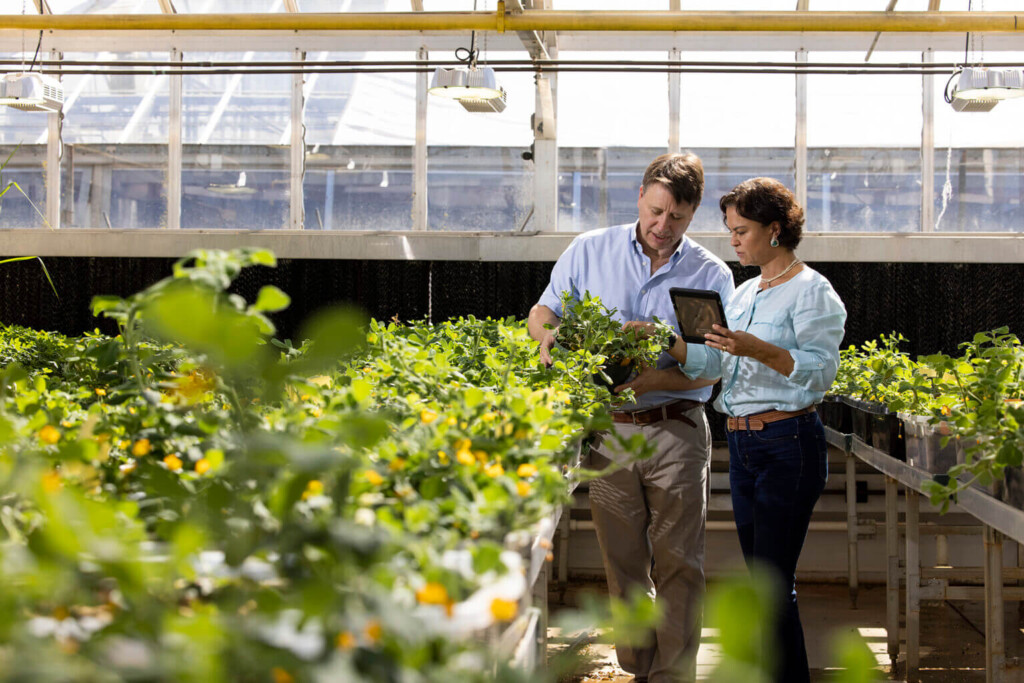
“We’re able to go back to nature, cross two wild species, get a hybrid, and then we can transfer those important traits, like resistance, to peanuts,” said Soraya Leal-Bertioli, senior research scientist in the Department of Plant Pathology and co-principal investigator at the Wild Peanut Lab.
“It’s a toolbox that can fix these problems that have plagued peanut farmers for millennia,” added Bertioli, who, with Leal-Bertioli, also serves on the faculty for the Center for Applied Genetic Technologies.
Learn more about the UGA Wild Peanut Lab at wildpeanutlab.uga.edu.