Takeaways
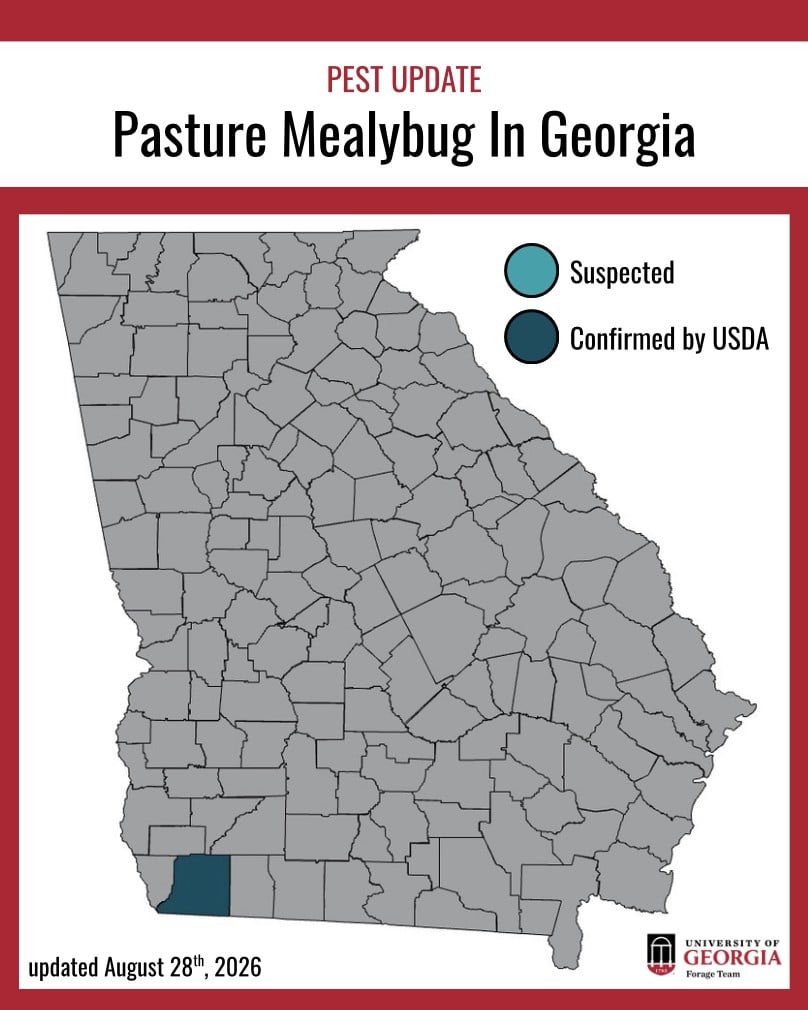
- Pasture mealybug has arrived in Georgia, with the first confirmed detection reported in the southwest corner of the state.
- Scouting and biosecurity are the best defenses for now as researchers work to identify effective management options.
- UGA Extension needs Georgians to report suspected infestations to help researchers track the pest and understand its impact.
Walking the fields is part of farming. The methodical process of scouting for anything unusual can help identify diseases, insects and other management issues before they become a big problem.
When a team of scouts on a Florida farm recently spotted an unfamiliar insect on the grass, they kept walking to determine the spread. When they realized they had crossed into Georgia, they gave Lisa Baxter a call.
Since that call, University of Georgia Cooperative Extension forage specialists have been working around the clock to track the newly arrived pasture mealybug (Heliococcus summervillei) and establish the best management options for Georgia grass producers.
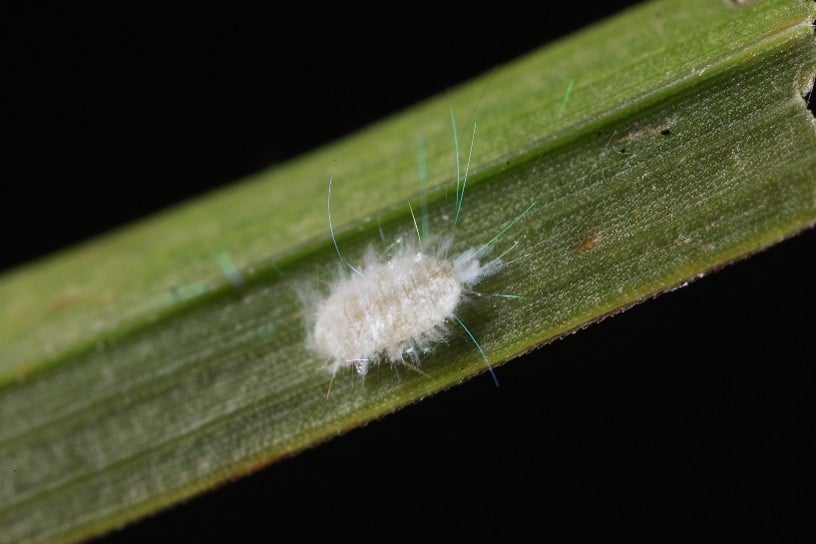
Tiny, fuzzy and white, the pest looks a lot like pieces of lint stuck to grass. Far from harmless, the pest has the potential to cause serious problems for agriculture, especially the beef industry, which relies on healthy pasture grasses for grazing animals.
Pasture mealybugs feed by extracting plant sap and injecting toxic saliva that weakens the grass. For now, Baxter has a simple message for farmers, Extension agents and anyone else wondering what they can do.
Look down.”
“We know very little about the pasture mealybug at this time,” said Baxter, state forage specialist and associate professor in the UGA College of Agricultural and Environmental Sciences (CAES). “I’m telling people not to worry yet. We just don’t know how it’s going to be.”
In a study published this week, researchers at the Center for Systematic Entomology in Gainesville, Florida, discovered a newly described species of pasture mealybug, H. novovillei.
“Multiple species and variants of Heliococcus exist and are under investigation,” said Baxter. “But management options and potential impacts are currently considered identical for H. summervillei and H. novovillei.”
A pest with plenty to eat
Pasture mealybugs were first documented causing pasture dieback in Australia nearly a century ago and have since been reported in parts of Asia, the Caribbean and, more recently, the Southern U.S. and Mexico.
What concerns Baxter about Georgia is the sheer quantity and connectivity of the mealybug’s potential habitat.
“When you think about the number of potentially affected sod fields and home lawns, and a lot of our summer crops like corn, sugarcane, rice — all of those are grasses,” Baxter said. “And then you add in roadsides on top of that, this has the potential to be much bigger than just a forage problem.”

Researchers don’t yet know whether every potential host will be equally vulnerable.
Baxter is working closely with Shimat Joseph, an associate professor in the CAES Department of Entomology who specializes in turfgrass and ornamental entomology. While pasture mealybug appears to pose a serious threat to pastures and sugar cane, Joseph said there have been only two official reports involving turfgrass — St. Augustinegrass in Texas and centipedegrass in Georgia.
“It is not clear whether it will be a problem in turfgrass,” Joseph said.
That uncertainty is driving research questions for Baxter, Joseph and their collaborators, who are developing a grant proposal to study the pest under Georgia conditions. Researchers need to determine which insecticides are effective, when treatments would be most effective, and whether natural enemies could help control populations of pasture mealybug.
Help slow the spread
Until researchers have those answers, Baxter said biosecurity is the best tool available.
Pasture mealybugs can hitchhike between fields on farm equipment, vehicles, livestock, clothing and shoes. Baxter recommends cleaning equipment between fields or farms, avoiding unnecessary driving through pastures, changing footwear and clothing after visiting a suspected infestation, keeping grazing records, and limiting traffic onto farms when possible.
There are currently no reliable insecticides for complete control. Sefina has an emergency-use label in Georgia for suppression, but Baxter said results have been mixed, and the cost may outweigh the benefit for many forage producers.
“They literally stick to everything,” Baxter said. “If you walk through an infected area, you’re going to see little white dots on your shoes.”
Baxter and team are asking producers, county Extension agents and Master Gardener Extension Volunteers to help scout and report potential infestations.
“We can train anybody to look and report, the more eyes the better,” Baxter said. “I would rather have 20 false reports just to make sure I don’t miss one that is accurate.”
UGA has established an online Pasture Mealybug Resources hub where Georgians can report suspected cases, follow the latest distribution map, and find updated management and biosecurity recommendations as researchers learn more about the pest. Visit georgiaforages.caes.uga.edu for more information.