Students cultivate crops and careers in innovative hydroponics greenhouse
Hydroponics and controlled environment agriculture with Rhuanito Ferrarezi


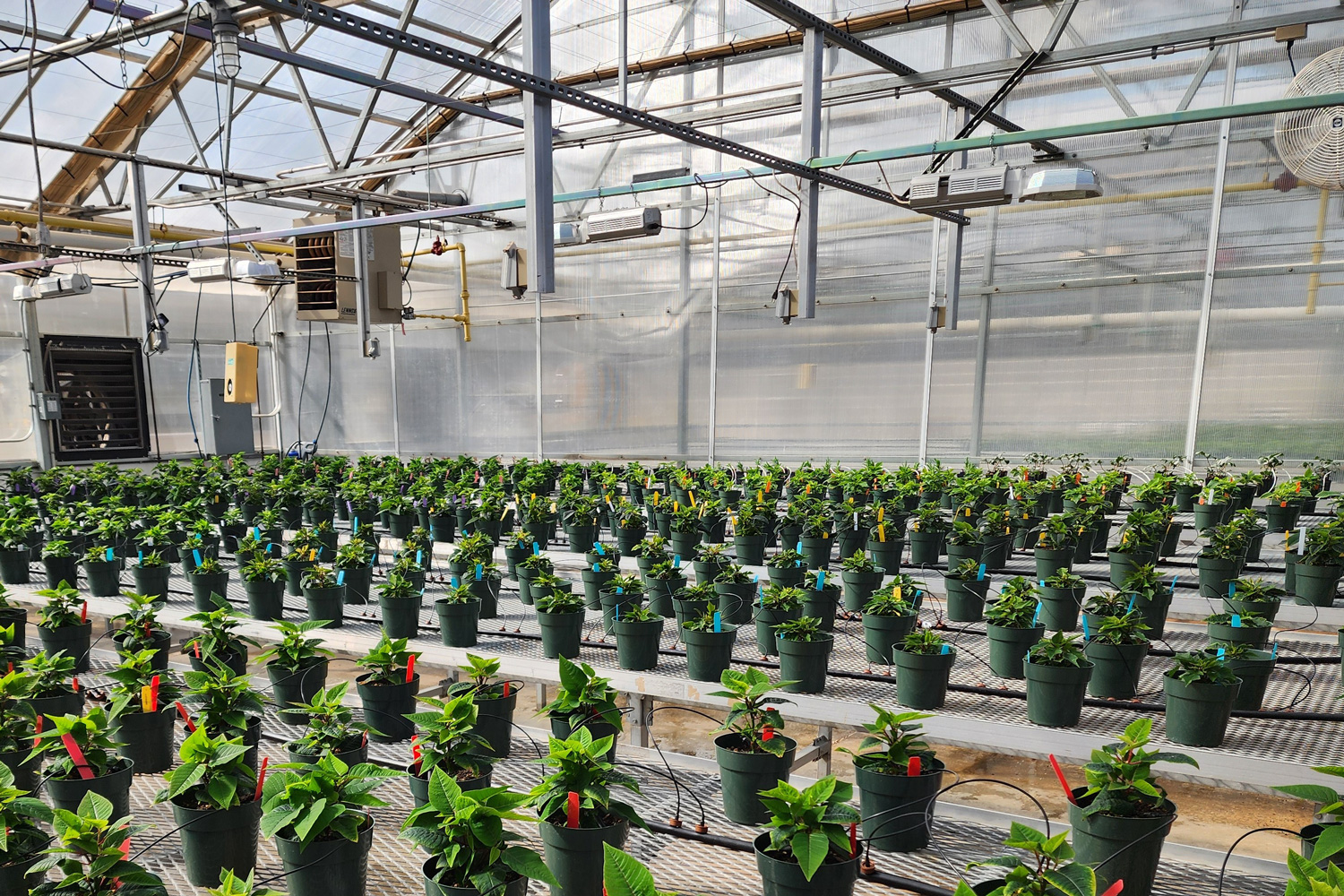
In a dedicated greenhouse on the University of Georgia’s South Campus, the scent of herbs and veggies hangs in the air as students bustle around with harvests of cucumbers, eggplants, tomatoes, peppers and lettuce. It has been a productive semester, so bins full of produce are stacked high around the greenhouse as students quietly work to the sounds of giant fans and running water that fill the room.
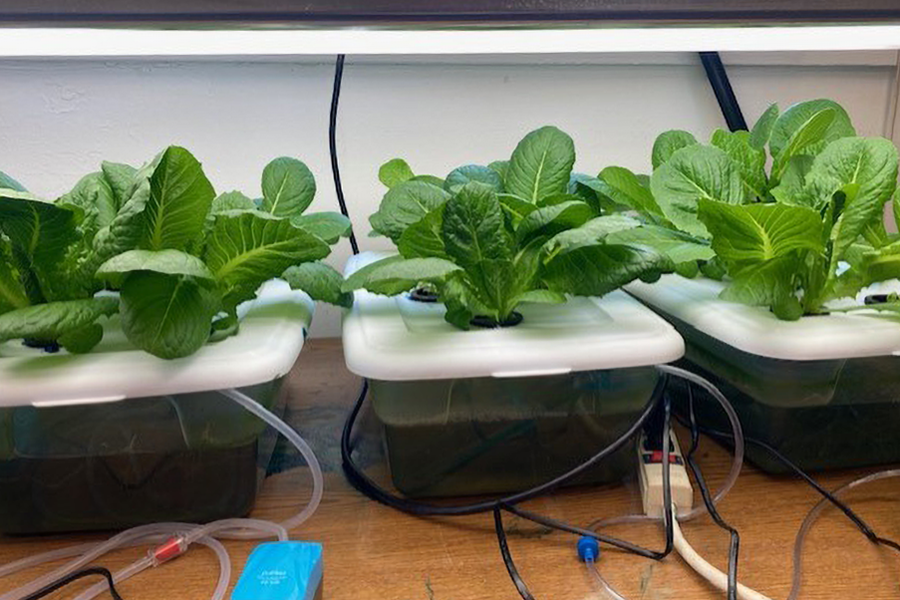
This is HORT 3200 — “Hydroponics and Protected and Controlled Environment Agriculture” (CEA) — a class in the Department of Horticulture at the College of Agricultural and Environmental Sciences. In hydroponics and CEA, students get hands-on experience growing crops in a greenhouse using soilless substrate or water systems.
Under the guidance of Associate Professor Rhuanito Ferrarezi, students perform case studies on specific crops using a hydroponics growth system to determine what conditions produce the best crop.


Rhuanito Ferrarezi, associate professor of controlled environment agriculture, focuses on irrigation, plant nutrition and cropping systems to address production challenges in greenhouse and indoor farming environments.
Rhuanito Ferrarezi, associate professor of controlled environment agriculture, focuses on irrigation, plant nutrition and cropping systems to address production challenges in greenhouse and indoor farming environments.
The class starts with a lecture from Ferrarezi on basic environmental and physiological topics and common management strategies. Then the students head over to the greenhouse and get to work.
“They learn that hydroponics is related to production in water and soilless substrate culture systems, and that both food crops and ornamental plants are commercially produced using hydroponics,” Ferrarezi said.


“In my course, you learn by doing,” Ferrarezi said. “Students see the concept, we go over the process, and then they practice.”
Innovation in agriculture
The disciplines of hydroponics and CEA are expanding as the global demand for food continues to rise. There has been increased interest in controlled environment greenhouses and vertical farms, which use less space, soil and water than traditional farming methods while maximizing growth by decreasing weather-related risk factors.
Elements like nutrient levels, light and temperature are all controllable when growing this way, allowing growers to create optimal conditions for their plants.

Students in the class learn the intricacies of hydroponic and CEA systems and quickly master every aspect of the process.
Ferrarezi also teaches essential life skills such as problem-solving, public speaking and time management. At the end of each semester, students create presentations outlining their findings, which Ferrarezi then posts on his website.

“They are learning skills they can use anywhere because this industry is super vibrant in the state,” Ferrarezi said.
Due to Georgia’s mild climate and large agriculture industry, many big names are turning to the state to establish CEA operations, opening a plethora of jobs. The class also outlines career paths in the CEA industry.


Students Sela Paw, Diego Reyes and Cassidy Copenhaver work on their project tasks during harvest at the greenhouse.
Students Sela Paw, Diego Reyes and Cassidy Copenhaver work on their project tasks during harvest at the greenhouse.
The hydroponics towers in the greenhouse run on an automated system connected to an app, which is monitored by students.
The hydroponics towers in the greenhouse run on an automated system connected to an app, which is monitored by students.
Jesse Howell, a horticulture major, tests the effects of different pH levels on plant growth.
Jesse Howell, a horticulture major, tests the effects of different pH levels on plant growth.
Learning the process
Although most have taken horticulture classes before, the students in hydroponics and CEA said they love doing a deep dive into hydroponics and the complexities of different plants in Ferrarezi’s class.
“These plants grow outside all the time. It seems so easy, but to maximize their yield, there are a lot of moving parts,” said second-year horticulture major Jalyn Kelly. Kelly’s project tests varying fertilizer combinations with cucumber, tomato, eggplant and pepper plants to find which solution produces the maximum yield.
Students are responsible for their projects over the course of the semester, and they have two attempts to produce a successful yield. Ferrarezi said he gives the students freedom to experiment with their crops — and to fail — because experience is the best teacher.
Cassidy Copenhaver, a first-year biological science major, oversees the greenhouse’s vertical hydroponic lettuce towers, which have been tested in partnership with a private company as part of a grower-driven federal grant. She said managing a system and working out problems has taught her a lot about the technical side of hydroponics.
“In terms of troubleshooting and staying on top of problems, I’ve learned a bunch,” Copenhaver said.


Students weigh and collect all produce to calculate their yield before distributing it.
Students weigh and collect all produce to calculate their yield before distributing it.
Once students have completed their projects and collected their harvest, they take some of the bounty home, while the rest of the produce is donated to the UGArden student community farm and directed to local food banks.


Expanding outside of the classroom
In addition to teaching two CEA classes, Ferrarezi advises a hydroponics club, which allows students to work in the greenhouse and experiment with CEA systems during the summer and fall semesters. Although not an official UGA club, it provides students interested in the field of hydroponics an outlet for research and hands-on experience with plants.
“Enthusiasts will come in, and they will learn more about anything they want to know in hydroponic food crop cultivation,” Ferrarezi said.


To learn more about hydroponics and how to grow your own hydroponic plants, check out “Hydroponic Gardening for the Homeowner and Small Grower,” an expert resource from UGA Cooperative Extension.
For more information about undergraduate courses and hands-on learning opportunities in UGA's horticulture department, visit hort.caes.uga.edu.


 Built with Shorthand