State of
Solutions
State of Solutions
2025 UGA CAES IMPACT SUMMARY
Dean Place defended his title at the Sunbelt Ag Expo milking contest in Moultrie, Georgia, in mid-October. (Photo by Sean Montgomery)
Dean Place defended his title at the Sunbelt Ag Expo milking contest in Moultrie, Georgia, in mid-October. (Photo by Sean Montgomery)
Science in service of the future
The University of Georgia College of Agricultural and Environmental Sciences (CAES) is a national leader in agricultural innovation across all three of our mission areas: teaching, research and Extension.
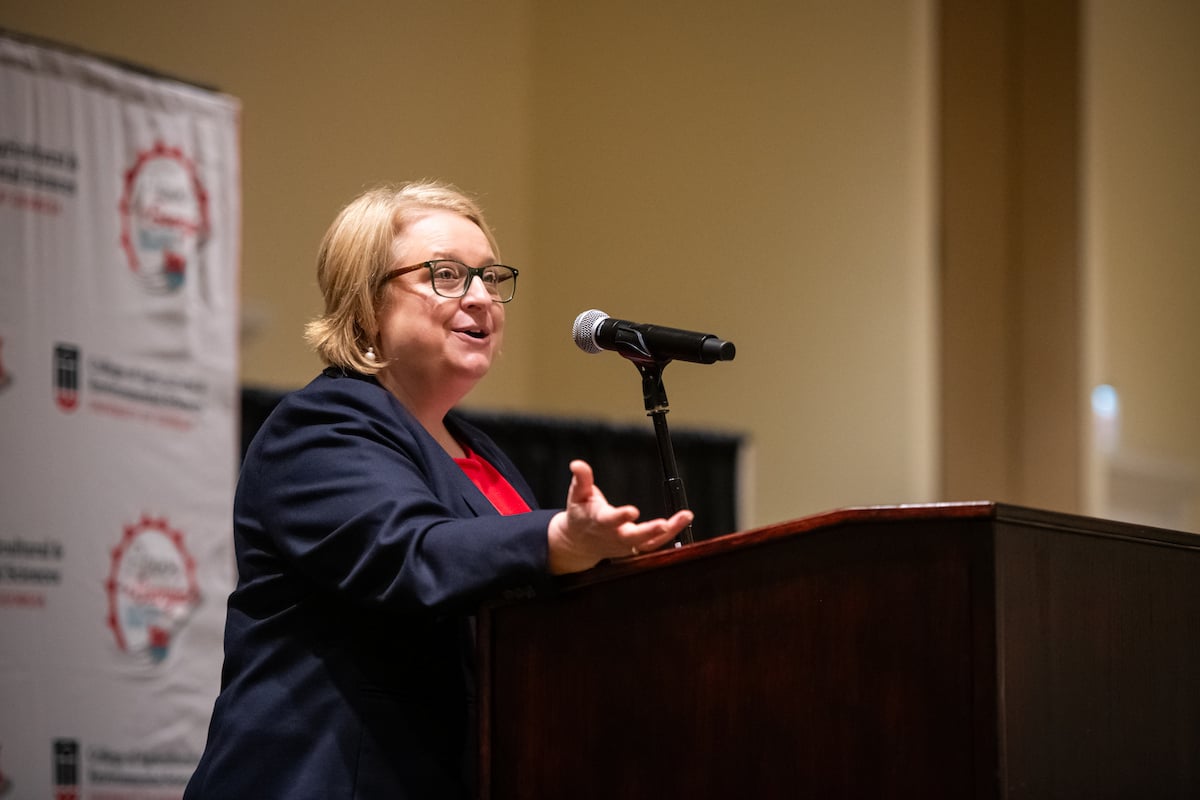
I’m proud to share the data and stories that showcase our work together over the last year, including updates on ground-breaking research that is set to change the future of agriculture, new opportunities for CAES students to gain hands-on experience and prepare for meaningful careers, and the continued impact of our Extension programs serving communities in every corner of the state.
State of Solutions reflects the dedication of our faculty, staff, students, alumni and partners who work to advance and strengthen Georgia’s agricultural and environmental impacts and to improve the lives of our citizens.
Nick T. Place, Ph.D.
CAES Dean and Director
Points of Pride
CAES is building the future of food and farming through innovation, research and strong partnerships. In 2025, our faculty, students and partners achieved milestones that are driving industry growth, sustainability and global impact.
Georgia Ag Impact Report
Measuring what matters
Agriculture remains Georgia’s No. 1 industry, generating $91.4 billion in annual economic impact and supporting more than 381,200 jobs statewide, according to the Georgia Ag Impact Report. The updated report introduces a new, interactive format that allows users to explore data by region, commodity and economic sector, making it easier for policymakers, educators and industry leaders to access insights tailored to their needs.
The resource highlights the contributions of production agriculture, food processing, forestry and related industries, offering detailed analyses of employment, value-added production and regional impact. By combining robust data with a more user-friendly layout, the report equips policymakers, industry leaders and educators with data to guide investment, workforce development, and long-term planning, ensuring Georgia’s agriculture remains strong and competitive.
Georgia Ag Impact Report
Measuring what matters
Agriculture remains Georgia’s No. 1 industry, generating $91.4 billion in annual economic impact and supporting more than 381,200 jobs statewide, according to the Georgia Ag Impact Report. The updated report introduces a new, interactive format that allows users to explore data by region, commodity and economic sector, making it easier for policymakers, educators and industry leaders to access insights tailored to their needs.
The resource highlights the contributions of production agriculture, food processing, forestry and related industries, offering detailed analyses of employment, value-added production and regional impact. By combining robust data with a more user-friendly layout, the report equips policymakers, industry leaders and educators with data to guide investment, workforce development, and long-term planning, ensuring Georgia’s agriculture remains strong and competitive.
Where discovery takes root
Advancing plant breeding
UGA is leading innovation in plant breeding, using genomics, biotechnology and artificial intelligence to better decode DNA to design resilient, high-yielding crops. Researchers in the crop design program, including Georgia Research Alliance (GRA) Eminent Scholar in Synthetic Biology Scott Jackson, are advancing disease-resistant peanut lines, improving corn stress tolerance, and applying genomic selection to accelerate variety development. The program is recruiting top talent from industry, including the recent hiring of Associate Professor Ethan Pickering, who specializes in computational tools for agriculture. Jackson also organized UGA’s first conference on synthetic crop biology, bringing leaders from around the world to discuss how new data and biological tools can lead to improved crops for Georgia and the world. The program also fosters global collaboration and hands-on student training, preparing the next generation of plant scientists.
Scott Jackson at UGA's Center for Applied Genetic Technologies (Photo by Paul Privette)
Scott Jackson at UGA's Center for Applied Genetic Technologies (Photo by Paul Privette)
Faculty from the Institute for Plant Breeding, Genetics and Genomics (IPBGG) were honored for their accomplishments in 2025, including Professor Patrick Conner being named a National Academy of Inventors Senior Member, Senior Research Scientist Soraya Leal-Bertioli receiving the Corteva Agriscience Award for Excellence in Research, and IPBGG Director Wayne Parrot receiving the 2025 Society for In Vitro Biology Lifetime Achievement Award. GRA Eminent Scholar Chair in Crop Genomics Robin Buell was elected to the National Academy of Sciences for her contributions to plant genomics, highlighting the program’s national and international impact.
Students also excelled, with two students named Borlaug Scholars and another selected as a FFAR Fellow. UGA’s Wild Peanut Lab, led by Professor and GRA/GSD Distinguished Investigator David Bertioli and Senior Research Scientist Soraya Leal-Bertioli, was featured in The New York Times for its work on a $1.18 million grant from Mars to develop disease- and pest-resistant peanut varieties. The Bertiolis received an additional $4.99 million for their research from the Gates Foundation. Collectively, IPBGG faculty obtained $11.56 million in extramural funding in 2025.
IPBGG faculty released a record-breaking 11 new plant varieties in 2025, including a new shade-tolerant turfgrass called ‘TifShade’ zoysia grass from Professor Brian Schwartz and the first herbicide-tolerant seashore paspalum from Professor Emeritus Paul Raymer. Other releases included cotton, peanut, pecan, muscadine, soybean, cotton and wheat varieties.
By translating cutting-edge research into improved crop varieties, UGA ensures Georgia farmers have tools to boost productivity, sustainability and food security.
Built for
what’s next
IIPA Director George Vellidis (Photo by Paul Privette)
IIPA Director George Vellidis (Photo by Paul Privette)
Institute for Integrative
Precision Agriculture
The Institute for Integrative Precision Agriculture (IIPA) advanced interdisciplinary research, education and industry engagement in 2025, strengthening UGA’s leadership in next-generation agricultural technologies. The institute focused on building collaboration among its more than 80 faculty members while expanding national and international partnerships across agriculture, food and forestry.
IIPA convened faculty, students and partners through a redesigned seminar series that emphasized collaborative opportunities, including emerging work in aquaculture, plant-embedded sensors and biosecurity. The institute supported graduate student success by providing travel and registration funding for major conferences and by expanding the Integrative Precision Agriculture Student Club, which grew to 32 members across the Athens and Tifton campuses and connected students with national leaders in the field.
Research and innovation were accelerated through IIPA’s multi-year seed grant program. From fiscal year 2023 to 2025, the program funded 43 projects and generated nearly $9.9 million in external funding, representing a return on investment of more than 5-to-1. These efforts resulted in dozens of peer-reviewed publications, conference proceedings and an intellectual property disclosure, fostering durable interdisciplinary teams.
IIPA also expanded UGA’s national and global profile. The institute organized the second Integrative Precision Agriculture Conference, drawing more than 200 participants, and secured commitments to host three major precision agriculture conferences at UGA between 2027 and 2029. International visibility was further strengthened through the sponsorship of the European Conference on Precision Agriculture, attended by participants from 43 countries.
In addition, IIPA advanced infrastructure and governance efforts, completing design plans for its future home and establishing a steering committee to guide strategic growth. Together, these accomplishments positioned IIPA to accelerate innovation through collaboration, workforce development and public-private partnerships.
UGA Grand Farm
UGA Grand Farm, moved from vision to reality in 2025, beginning with an early May groundbreaking that convened growers, university leadership, policymakers, partners and supporters, with remarks from UGA President Jere W. Morehead, CAES Dean and Director Nick T. Place, Georgia Agriculture Commissioner Tyler Harper and Georgia Sen. Larry Walker. Year one momentum was made possible through the commitment of 12 founding partners, including Georgia-based AgGeorgia Farm Credit and the Georgia Center of Innovation, whose early investment helped activate the site and position it for growth in 2026.
Leaders including CAES Dean Nick Place, UGA President Jere Morehead and Georgia Agriculture Commissioner Tyler Harper pose for photos on stage before the UGA Grand Farm groundbreaking ceremony in Perry, Georgia. (Photo by Sean Montgomery)
Leaders including CAES Dean Nick Place, UGA President Jere Morehead and Georgia Agriculture Commissioner Tyler Harper pose for photos on stage before the UGA Grand Farm groundbreaking ceremony in Perry, Georgia. (Photo by Sean Montgomery)
Following the groundbreaking, UGA Grand Farm completed its inaugural growing season, establishing foundational plots and operational rhythms while building feedback loops across growers, researchers, startups, UGA Cooperative Extension and corporate partners. The site hosted five field trials and welcomed 475 visitors, offering hands-on exposure to applied innovation in Georgia cotton and soybean systems.
The season also reflected international ag tech engagement through startups connected to Canada (Catalera), England (CroBio), Brazil (iCrop) and Japan (EF Polymer). In October, the site hosted its first two-day field day, featuring trial walkthroughs, partner demonstrations and direct engagement with students, Extension agents and growers.
Office of International Programs
A wider view
CAES is strengthening its global engagement in agriculture, environmental sciences and community development through expanded international learning, research and outreach partnerships. UGA Extension agents recently joined a study abroad program in Morocco to learn about global agricultural practices and community development
strategies, bringing new perspectives back to Georgia communities.
Faculty are also broadening international research connections at prestigious international partner institutions through AgINSPIRE, a program designed to foster collaboration and address shared challenges in food systems, sustainability and economic development. At the same time, CAES is expanding study abroad opportunities with new food and agriculture programs launching in 2026 and 2027, giving students hands-on experience in global production, policy and culture. Together, these efforts position UGA to prepare globally minded leaders and generate solutions informed by international insight and local impact.
Office of International Programs
A wider view
CAES is strengthening its global engagement in agriculture, environmental sciences and community development through expanded international learning, research and outreach partnerships. UGA Extension agents recently joined a study abroad program in Morocco to learn about global agricultural practices and community development
strategies, bringing new perspectives back to Georgia communities.
Extension agents ride camels to camp in Merzouga, Morocco. (Photo by Kristi Carpenter)
Extension agents ride camels to camp in Merzouga, Morocco. (Photo by Kristi Carpenter)
Faculty are also broadening international research connections at prestigious international partner institutions through AgINSPIRE, a program designed to foster collaboration and address shared challenges in food systems, sustainability and economic development. At the same time, CAES is expanding study abroad opportunities with new food and agriculture programs launching in 2026 and 2027, giving students hands-on experience in global production, policy and culture. Together, these efforts position UGA to prepare globally minded leaders and generate solutions informed by international insight and local impact.
Honored,
invested
and rising
Regenerative Bioscience Center
The Regenerative Bioscience Center (RBC) marked 2025 with significant growth, student success and national recognition. A major point of pride was the growth of the undergraduate regenerative bioscience (RBIO) degree, approved in 2021 and developed by RBC members to provide hands-on training in regenerative medicine, biomanufacturing, and biomedical imaging and computation.
Franklin West, professor of animal and dairy science and expert in stem cell biology, teaches Ella Ryann Cottrell, undergraduate regenerative bioscience student, in a lab at the Regenerative Bioscience Center. (Photo by Paul Privette)
Franklin West, professor of animal and dairy science and expert in stem cell biology, teaches Ella Ryann Cottrell, undergraduate regenerative bioscience student, in a lab at the Regenerative Bioscience Center. (Photo by Paul Privette)
Since its launch, enrollment has increased from 31 to 108 students, a 248% rise that exceeded projections and reflects the program’s growing relevance. Five percent of RBIO majors are Foundation Fellows, representing UGA’s top academic scholarship and highlighting the major’s ability to attract high-achieving students. The RBC played a central role in the program’s success, with courses taught by research-active faculty and supported by a dedicated website and integrated marketing presence.
The center also celebrated the first graduate of its doctoral program in regenerative bioscience, which was established in 2024. The program continued to expand, enrolling more than 30 students across spring and fall semesters, while RBC graduate students earned national honors, competitive fellowships, entrepreneurial training, internships and conference invitations. Among faculty achievements for 2025 were RBC Director, D.W. Brooks Distinguished Professor, and GRA Eminent Scholar Chair in Animal Reproductive Physiology Steven Stice’s election to the American Institute for Medical and Biological Engineering (AIMBE), as well as other major faculty awards, fellowships and leadership recognitions.
Hospitality and Food Industry Management
(From left) Professor John Salazar, coordinator of the Hospitality and Food Industry Management program, speaks with his student Matthew Harrington (BSA, ’23) as he works his shift at the front desk of the Georgia Center. (Photo by Andrew Davis Tucker)
(From left) Professor John Salazar, coordinator of the Hospitality and Food Industry Management program, speaks with his student Matthew Harrington (BSA, ’23) as he works his shift at the front desk of the Georgia Center. (Photo by Andrew Davis Tucker)
UGA is strengthening its leadership in hospitality education through a $5 million gift from The Delta Air Lines Foundation, the largest private investment in the program’s history. The funding supports the transformation of the Hospitality and Food Industry Management (HFIM) program by expanding student experiential opportunities through a $10.39 million renovation to add a teaching kitchen, event management lab, and beverage management lab at the UGA Georgia Center for Continuing Education and Hotel (Georgia Center). Building on this momentum, the university is actively engaging additional private fundraising partners to help close the remaining gap and fully realize the project’s vision.
In 2024-25, the UGA HFIM program generated the sixth-most management development candidates in the U.S. for Marriott’s award-winning Voyage Leadership Development Program. Through the major’s unique partnership with the Georgia Center, in addition to internships completed across companies nationwide, HFIM students gain real-world experience in hotels, restaurants, event venues and more.
By investing in modern facilities, industry partnerships and applied learning, UGA is redefining Southern hospitality for a new generation, pairing tradition with innovation to meet the evolving demands of a competitive, service-driven economy.
Cultivating something lasting
Georgia 4-H
Georgia 4-H prepares young people for life through hands-on, research-based programming delivered in rural, urban and suburban communities across the state.
In 2025, Georgia 4-H reached 201,793 students through experiences grounded in agriculture, science, leadership, civic engagement, and health and wellness.
A Georgia 4-H’er enjoys a bike ride on Jekyll Island during 4-H summer camp. (Submitted photo)
A Georgia 4-H’er enjoys a bike ride on Jekyll Island during 4-H summer camp. (Submitted photo)
Georgia 4-H also participated in the National Index Study of 4-H Youth, which measured how youth perceive their readiness for work and life. According to results, 86% said 4-H is very or extremely influential in their desire to be engaged in their communities, while 79% reported that 4-H is very or extremely influential in preparing them for college and career success. Youth also credited 4-H with helping them build strong character and responsibility, with 88% reporting a strong influence on character development, and 84% reporting growth in responsibility.
Georgia 4-H’s impact is amplified by thousands of trained volunteers and six 4-H centers that provide immersive educational experiences for youth, families and communities. In 2025, 7,107 volunteers helped Georgia 4-H ensure that 4-H youth are healthy, productive, engaged and truly “Beyond Ready.”
CAES Rural Scholars Program
The CAES Rural Scholars Program is preparing students to lead and serve Georgia’s rural communities through education, mentorship and hands-on experience.
Lauren Coley, supported by the UGA Parents Leadership Council, studies the use of mesenchymal stems in therapies to treat osteoarthritis in racehorses while studying abroad through the UGA-University of Liverpool Summer Exchange program. (Submitted photo)
Lauren Coley, supported by the UGA Parents Leadership Council, studies the use of mesenchymal stems in therapies to treat osteoarthritis in racehorses while studying abroad through the UGA-University of Liverpool Summer Exchange program. (Submitted photo)
Four new Rural Scholars — Makena Blalock, the Kelly Families/Farmview Market Scholar of Calhoun, Georgia; Halli Kate Johnson, the James and Audrey Usry Rural Scholar of Twin City, Georgia; Laney Sparks of Forsyth, Georgia, supported by Jerry Stephens; and John Haven Stalvey of Alapaha, Georgia, supported in honor of Donald and Myrtis Akins — began their first semester by engaging in leadership development, academic enrichment and community-focused learning designed to address the unique challenges facing rural areas.
The newest cohort brings the total number of students who have benefited from the CAES Rural Scholars Program to 18. The program pairs students with faculty mentors and provides experiential opportunities that connect coursework to real-world impact. Supported by philanthropic investment, the Rural Scholars Program reduces financial barriers while strengthening UGA’s commitment to rural prosperity.
By cultivating talent, fostering service, and building lasting connections to place, the program equips students with the knowledge and purpose needed to create meaningful change in Georgia’s rural communities.
_______BY
________THE
______NUMBERS
ACADEMICS
61,261 credit hours generated at CAES in calendar year 2025
211 study abroad experiences by 196 students in calendar year 2025
Students from UGA participate in the Japan Study Abroad program “Food and Agriculture Production in Japan.” In Usa City, the students explored the Usa Jingū Shrine, an eighth-century shrine known for its beautiful garden.
Students from UGA participate in the Japan Study Abroad program “Food and Agriculture Production in Japan.” In Usa City, the students explored the Usa Jingū Shrine, an eighth-century shrine known for its beautiful garden.
The number of postsecondary students enrolled for fall semester
The number of undergraduate students enrolled for fall semester
RESEARCH & DEVELOPMENT
$64.3M in research expenditures
$46.9M in federal funding
$62.7M in new awards
116 postdoctoral research associates
12 UGA Grand Farm founding partners
8 FFAR Fellows supported
by the Foundation for Food and Agriculture Research
17 student start-up companies
in the FABricate entrepreneurial pitch contest
ALUMNI & GIVING
21,762 living CAES alumni
13,715 CAES alumni living in Georgia
$14,472,129 in private support for the college
$1,125,683 CAES alumni donations
Wayne-Sanderson Farms’ $4.1 million total donation for the construction of the CAES Poultry Science Building reflects a significant commitment to the future of poultry science education, investing in the next generation of poultry science leaders. (Photo by Lavi Astacio)
Wayne-Sanderson Farms’ $4.1 million total donation for the construction of the CAES Poultry Science Building reflects a significant commitment to the future of poultry science education, investing in the next generation of poultry science leaders. (Photo by Lavi Astacio)
17 new student support funds created
704 awards benefiting CAES students
535 CAES students benefiting from awards
Total CAES endowed funds
In 2025, CAES awarded $687,950 in scholarships
Wayne-Sanderson Farms’ $4.1 million total donation for the construction of the CAES Poultry Science Building reflects a significant commitment to the future of poultry science education, investing in the next generation of poultry science leaders. (Photo by Lavi Astacio)
Wayne-Sanderson Farms’ $4.1 million total donation for the construction of the CAES Poultry Science Building reflects a significant commitment to the future of poultry science education, investing in the next generation of poultry science leaders. (Photo by Lavi Astacio)
Invest in lasting support for the people and programs driving our mission.
EXTENSION
335 county Extension agents
1,037 Extension employees
159 counties
1,661,731 in-person contacts
191,088 health and wellness in-person
Georgia 4-H youth participants
Georgia 4-H volunteers
130,136 diagnostic samples for soil, water and disease
1,828,433 educational contact hours
delivered from all Extension personnel and certified volunteers
177,338 continuing education units
provided to clients
408,745 agriculture-related in-person contacts
Growth Agents
Explore the journeys of students, faculty and innovators who are working for brighter futures in healthcare access, sustainable agriculture and more

Gianna Strub
Bachelor’s degrees in animal biosciences and biological science, minor in biology » May 2026
Gianna Strub, a senior from Cumming, Georgia, is pursuing degrees in animal biosciences and biological science at UGA with plans to become a doctor of veterinary medicine. Though she entered CAES with limited agricultural experience, hands-on learning quickly sparked her passion for the field.
A strong campus leader, Strub was a founding member of the Student Government Association Engage program and has held multiple roles with UGA Miracle, including dance marathon emcee, co-hosting a 13-hour event for more than 2,000 attendees. She also serves as a CAES Ambassador and on Miracle’s campus recruitment committee.
Strub has conducted research on dairy cattle lactation and swine nutrition and gained practical experience through an internship at Bear Hollow Zoo and a veterinary relief trip to Peru. A four-year member of the UGA Pre-Veterinary Club, she also volunteers at the Athens Area Humane Society.
A recipient of the Cordelia Anne Ellis Endowment Scholarship and the Daisy Campbell Rhodes Scholarship, Strub will begin veterinary school this fall, where she plans to advance a One Health approach benefiting animals, people and the environment.
“The leadership and faculty within CAES genuinely care for students and use all their resources to uplift students and propel them towards success. I would not be attending veterinary school if not for the research opportunities, hands-on experiences, resources for academic success and invaluable connections with mentors.”

Graham Spires
Bachelor’s degrees in avian biology, biological science and biomedical physiology, minors in poultry science and biology » May 2026
Graham Spires, a fourth-year student from Lumber City, Georgia, is a highly accomplished student at UGA. He is currently triple majoring in avian biology, biological science and biomedical physiology, with minors in poultry science and biology. Spires is on the pre-veterinary track and was accepted into the competitive Food Animal Veterinary Incentive Program (FAVIP), a partnership between CAES and the UGA College of Veterinary Medicine designed to fast-track students toward veterinary school.
Spires’ connection to the poultry industry began in high school, where a workshop introduced him to the Young Scholars Program. A subsequent CAES open house solidified his academic path. Since arriving at UGA, he has actively engaged in research and experiential learning. He serves as a teaching assistant in Associate Professor Laura Ellestad’s lab and has presented research on layer hen physiology at both the Center for Undergraduate Research Opportunities and the CAES Research Symposium. His practical experience includes a diagnostic internship focused on Salmonella and a summer internship in live operations for Tyson Foods.
A dedicated student leader, Spires served as an Avian Ambassador for three years and is currently a CAES Ambassador, helping mentor and recruit future students. He has also expanded his perspective through study abroad programs in Scotland, where he taught agricultural concepts to primary and academy students, and Poland, where he participated in a pre-veterinary One Health program.
Spires aims to become a leader in poultry veterinary medicine, continuing his advocacy for animal health and the agricultural industry.
“CAES gave me more than academic opportunities; it gave me roots and a chance to grow. Through constant support that extended beyond the classroom, beyond the university, and beyond the country, CAES shaped my development as a leader, scholar and Ag Dawg.”


Yangxuan Liu
Associate professor, Department of Agricultural and Applied Economics
Yangxuan Liu’s research centers on the economics of cotton and peanut production, with a focus on agricultural finance and agribusiness management. Liu recently received the 2025 Distinguished Extension/Outreach Program Award for professionals with less than 10 years of experience from the Agricultural and Applied Economics Association, an award that honors individuals who demonstrate professional excellence in Extension and outreach, helping farmers to innovate their practices. Drawing on her interdisciplinary expertise, she aims to strengthen Georgia’s agricultural sector while contributing to global efforts to improve agricultural productivity and meet the needs of a growing population.
Luan Oliveira
Assistant professor and precision agriculture Extension specialist, Department of Horticulture

Luan Oliveira’s primary research focuses on evaluating precision agriculture tools and agricultural machinery to enhance the production of vegetables, fruit and nut trees, among other specialty crops. The Precision Horticulture Team, under Oliveira’s leadership since he joined CAES in 2023, is committed to assessing the quality of mechanized agricultural operations, including planting, spraying and harvesting, and improving these essential processes through innovative solutions and technology applications. The team’s Drone Dock — a fully automated refueling and reloading station designed for spray drones that cover hundreds of acres at a time — won top honors at the 2025 Farm Robotics Challenge.
David Bertioli
Professor, Department of Crop and Soil Sciences

David Bertioli, a Georgia Research Alliance and Georgia Seed Development Distinguished Investigator working in the Institute of Plant Breeding, Genetics and Genomics at the Center for Applied Genetic Technologies, studies peanut genetics, genomics and evolution. With breeding programs around the globe, his work in UGA’s Wild Peanut Lab has produced improved peanut cultivars with pest and disease resistance derived from wild peanut species. The Wild Peanut Lab, led by Bertioli and co-principal investigator and Senior Research Scientist Soraya Leal-Bertioli, has received worldwide attention, including a recent front-page story in The New York Times.

Luan Oliveira shows a precision agriculture drone to a patron at UGA Grand Farm’s inaugural Field Day event in Perry, Georgia. (Photo by Chamberlain Smith)
Luan Oliveira shows a precision agriculture drone to a patron at UGA Grand Farm’s inaugural Field Day event in Perry, Georgia. (Photo by Chamberlain Smith)

James Gratzek
Director, Food Product Innovation and Commercialization Center
James Gratzek, director of UGA’s Food Product Innovation and Commercialization Center (FoodPIC), earned his doctorate in food process engineering from the UGA Department of Food Science and Technology. He returned to CAES in 2022 after nearly 30 years in the commercial food industry, where he participated in building new research and development teams, capabilities, and research facilities, and contributed to the launch of several hundred commercial products. Located on the UGA Griffin campus approximately 30 miles south of the Hartsfield-Jackson Atlanta International Airport, FoodPIC helps companies develop new food products efficiently and economically and to market those products with a high probability of success.
Research Spotlight
Products to market
The research engine at UGA continues to deliver solutions that matter, setting another record with $654 million in research and development expenditures in fiscal year 2025 and reaffirming its role as a national innovation leader. This sustained investment fuels discoveries with real-world impact, from precision agriculture and sustainable materials to public health, climate resilience and beyond.
UGA tops national rankings for commercial products brought to market for the third consecutive year, demonstrating its ability to move research from idea to impact. In the latest AUTM survey, industry partners and startups released a record number of products developed from UGA research, spanning vaccines, biodegradable plastics, virtual reality tools and new plant varieties that strengthen crop resilience. Among them are disease-resistant peanut cultivars from CAES Professor Bill Branch, Georgia Seed Development Professor in Peanut Breeding and Genetics and newly elected Fellow of the National Academy of Inventors, whose plant breeding innovations have reshaped production systems across the Southeast.
CAES Professor Bill Branch, Georgia Seed Development Professor in Peanut Breeding and Genetics and newly elected Fellow of the National Academy of Inventor
CAES Professor Bill Branch, Georgia Seed Development Professor in Peanut Breeding and Genetics and newly elected Fellow of the National Academy of Inventor
This inventive output reflects a culture where discovery, commercialization and partnership are deeply intertwined. At CAES, that connection is accelerating under Tony Llano, director of industry partnerships and project-based learning. With two decades of global agribusiness experience, Llano is strengthening connections between faculty, students and industry to tackle tough challenges and deliver practical solutions.
Got a challenge?
Talk to Llano.
His office is where research meets industry demand and where the college’s next generation of innovations find pathways to market.
Tony Llano, director of industry partnerships and project-based learning (Photo by Sean Montgomery)
Tony Llano, director of industry partnerships and project-based learning (Photo by Sean Montgomery)
A Year of Distinction
In 2025, CAES faculty and students were honored at the state, regional, national and international levels for excellence in teaching, research and Extension. From academy elections and distinguished fellowships to discipline-defining awards, these recognitions reflect the depth and impact of scholarship across the college.
C. Robin Buell
Georgia Research Alliance Eminent Scholar Chair in Crop Genomics, Department of Crop and Soil Sciences
Elected to the National Academy of Sciences
2026 Southeastern Conference Professor of the Year
Sonia Altizer
Professor and head, Department of Entomology
Ecological Society of America Fellow
William “Bill” Branch
Georgia Seed Development Professorship in Peanut Breeding and Genetics,
Department of Crop and Soil Sciences
National Academy of Inventors Fellow
Melissa Mitchum
Barry Bustillo Distinguished Professorship in Plant Nematology, Department of Plant Pathology
American Association for the Advancement of Science Fellow in Agriculture, Food and Renewable Resources
Anita Giabardo
Graduate research assistant, Institute of Plant Breeding, Genetics and Genomics
Foundation for Food and Agriculture Research (FFAR) Fellow
Mekidani Jacob Salu
Doctoral student, Department of Plant Pathology
Foundation for Food and Agriculture Research (FFAR) Fellow
Excellence in Teaching__________________
Nicholas T. Basinger
Outstanding Educator Award (Southern Weed Science Society)
Laura Ellestad
D.W. Brooks Faculty Award for Excellence in Teaching (CAES)
Cesar L. Escalante
2025 Symposium Best Teaching Case Award (International Food and Agribusiness Management)
Rhuanito S. Ferrarezi
Outstanding Graduate Educator Award (American Society for Horticultural Science)
State, Regional, National
and International Honors______________
Mark Abney
D.W. Brooks Faculty Award for Excellence in Extension (CAES)
Lisa Baxter
Junior Specialist Award (Georgia Association of County Agricultural Agents)
Merit Award (American Forage and Grassland Council)
Allison Byrd
Article of the Year (Association for Communication Excellence)
Lilong Chai
Educational Aids Blue Ribbon Award (American Society of Agricultural and Biological Engineers)
Early Career Research Award (Association of Overseas Chinese Agricultural, Biological, and Food Engineers)
Jeff Cook
D.W. Brooks Faculty Award for Excellence in Public Service Extension (CAES)
Albert K. Culbreath
Peanut Research and Education Award (American Peanut Council)
Rami Dalloul
National Chicken Council Broiler Research Award (Poultry Science Association)
D.W. Brooks Faculty Award for Excellence in Research (CAES)
Cesar L. Escalante
Honorable Mention, Bruce Gardner Memorial Prize for Applied Policy Analysis (Agricultural and Applied Economics Association)
Outstanding Mentoring and Outreach Award, Senior Category (Committee on Women in Agricultural Economics, Agricultural and Applied Economics Association)
Brian Fairchild
Phibro Extension Award (Poultry Science Association)
Yukiko Hashida
Young Researcher Award (Japanese Economic Association)
Qingguo “Jack” Huang
Golden Helix Innovation Award (Georgia Bio)
Woo Kyun Kim
D.W. Brooks Faculty Award for Excellence in Student Success (CAES)
Kevan Lamm
Distinguished Manuscript Award (North Central Region, American Association of Agricultural Education)
Yangxuan Liu
Emerging Leader Award (Farm Foundation)
Daniela Lino Lourenco
Innovation in Animal Breeding and Genetics Award (American Society of Animal Science)
Alfredo Martinez-Espinoza
D.W. Brooks Faculty Award for Excellence in International Agricultural and Environmental Sciences (CAES)
Cristiane Pilon
Early Career Award in Education (Southern Branch, Agronomy Society of America)
Bailey Award (American Peanut Research and Education Society)
Crop Science Outstanding Associate Editor (Crop Science Society of America)
CAES transforms ideas into impact.
CAES turns ground-breaking research and innovative ideas into real-world solutions, shaping a sustainable future for people and the planet.
Through hands-on learning and cutting-edge science, our students and faculty drive change that improves lives and protects the environment for generations to come.
We’re building a future to be excited about. Explore more stories, podcast episodes and more below.
 Built with Shorthand