Exploring Italy,
advancing Georgia
Nearly 15 years of preparing Georgia’s agricultural leaders to think bigger and connect broadly

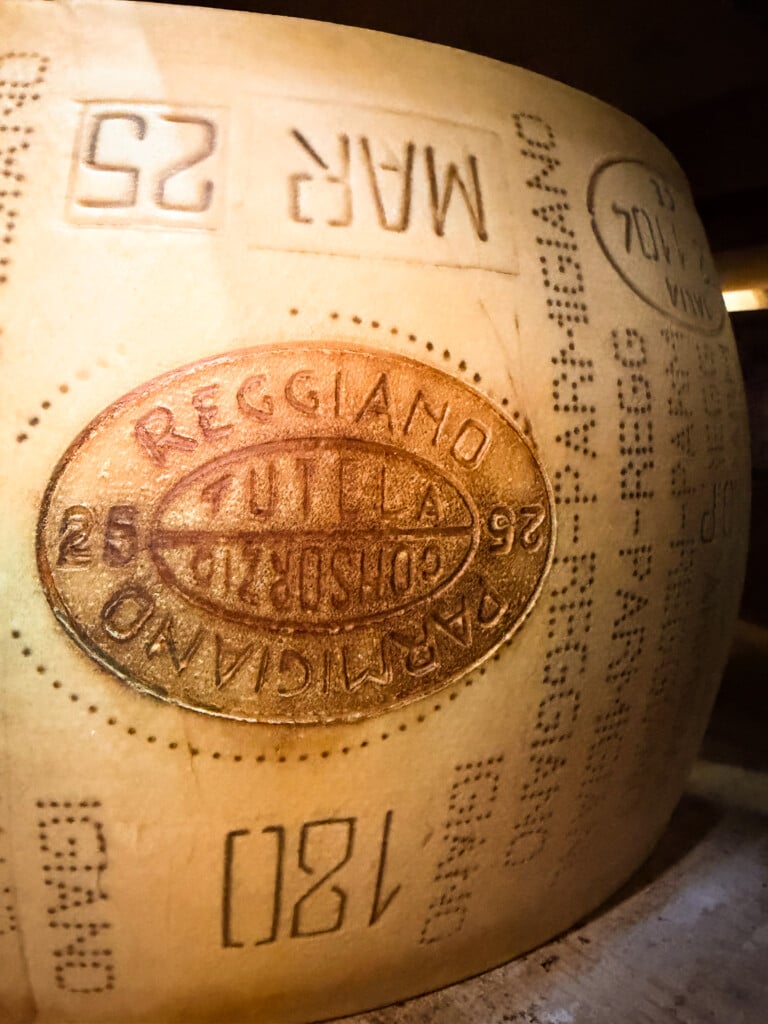
From apple orchards draped in protective netting to centuries-old vineyards and aging rooms stacked floor to ceiling with wheels of Parmigiano-Reggiano, the agricultural landscape of Italy gave a group of Georgia leaders plenty to take in.
But seeing how Italians grow food and manage natural resources was only part of the experience.
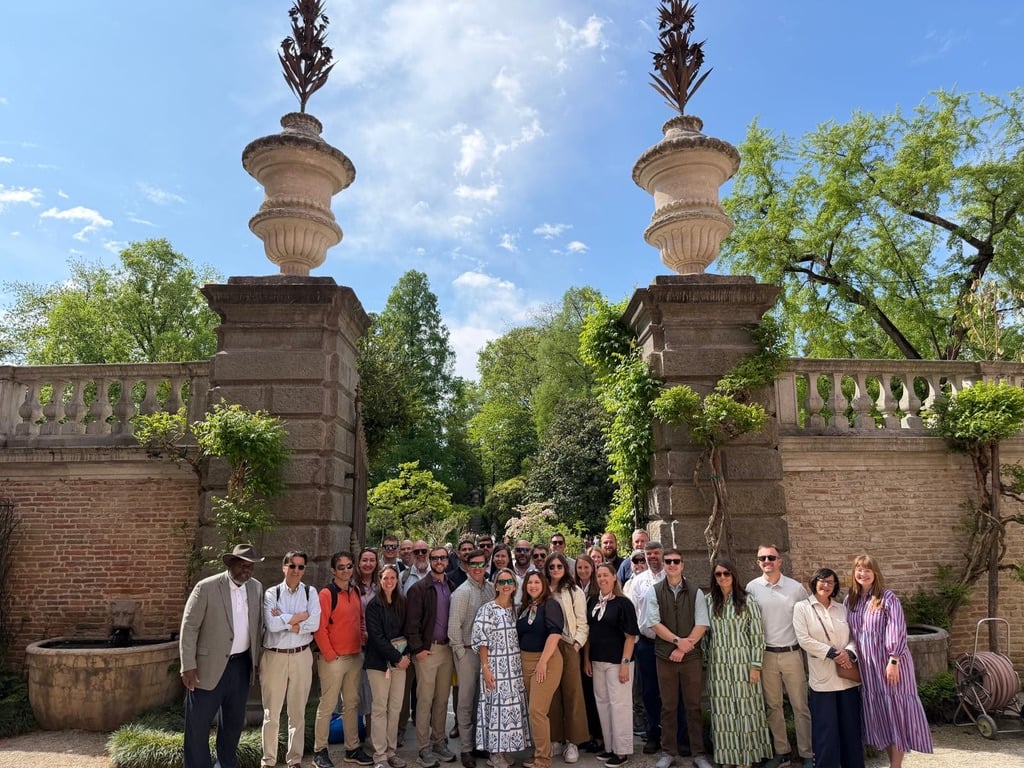
For the 2025-26 class of Advancing Georgia’s Leaders in Agriculture, Forestry and Veterinary Medicine, or AGL, traveling across Italy offered participants the opportunity to see their own industries and careers through a different lens.
“The beauty of this international trip is that it ties everything we’ve learned together,” said Adam Hammond, senior director of development for Public Service and Outreach at the University of Georgia. “We can see in a completely different country what similarities there are, what differences there are, what we can learn from one another.”
That is precisely what AGL program coordinators Lauren Griffeth and Katie Fife hope will happen.
A partnership of the UGA College of Agricultural and Environmental Sciences, Warnell School of Forestry and Natural Resources, and College of Veterinary Medicine, AGL brings together professionals from across Georgia’s agriculture, forestry, natural resources, veterinary medicine, and allied industries for an intensive leadership development experience.


Over two years, participants travel throughout Georgia, to Washington, D.C., and internationally to learn about the industries they represent and the various people, systems and challenges that intersect with their own.
Different industries, shared challenges
Fife described the program as “an inch deep and a mile wide.” The breadth is intentional, as participants may enter the program as farmers, foresters, veterinarians, educators, advocates or business leaders, but they quickly discover that many of the challenges they face are shared.
Jake Matthews, vice president of government affairs for the Georgia Forestry Association and a 2020 CAES agribusiness graduate, saw those connections emerge throughout the program.

“My biggest takeaway so far is that many of us, while coming from different backgrounds and areas of focus, mostly face very similar challenges as it relates to our specific industry,” Matthews said.
A forester searching for new timber markets, for example, may have more in common with a specialty crop producer searching for buyers than either realizes. Those connections become even more apparent when AGL takes participants beyond Georgia.


A different way of seeing
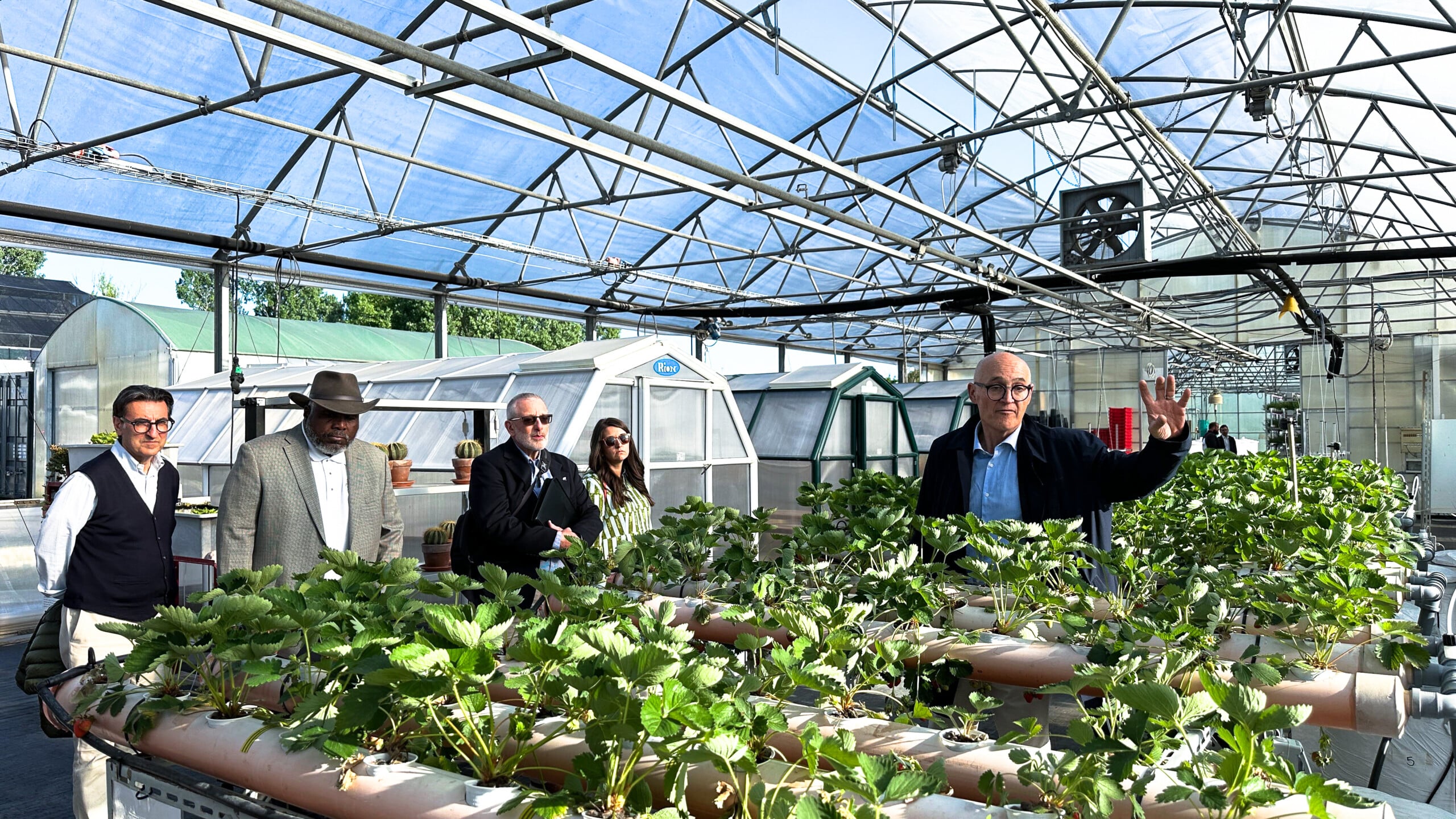
Traveling from Venice south through the Italian countryside to Rome, the AGL cohort visited farms, agricultural businesses, schools and other institutions that offered a behind-the-scenes look at how Italy approaches many of the same questions facing Georgia. For Hammond, who had visited Italy before, the difference was access.
“We all come from different fields connected to agriculture, and that’s given us the opportunity to learn a lot from each other. I’m always looking for opportunities to sharpen my leadership skills because I think that helps me lead my team more effectively and reach our goals more efficiently,” he said.

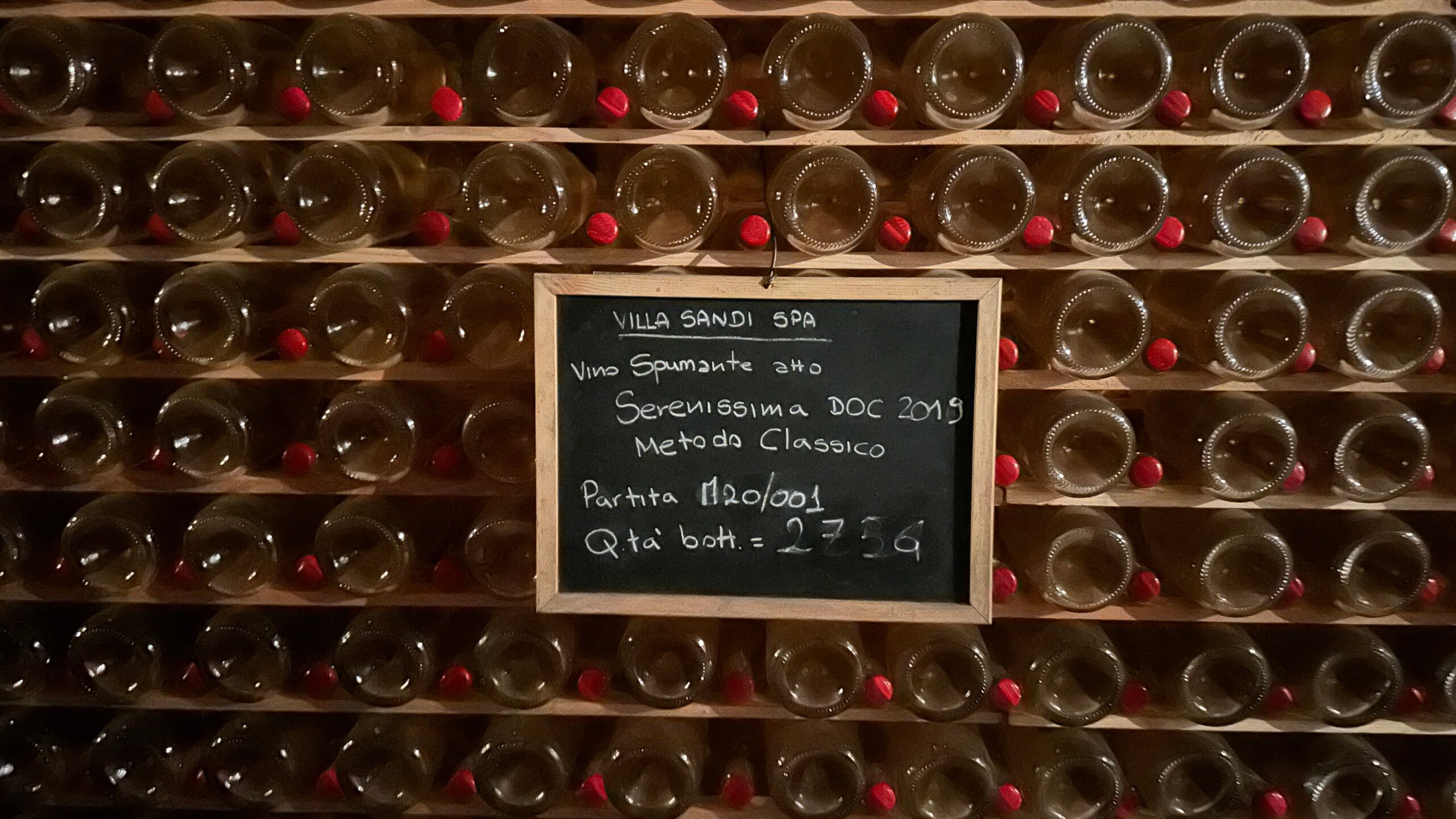
At vineyards and wineries, participants moved beyond the visitor experience to examine the science and business behind production. At an apple operation, they saw how fruit moved from protected orchards into packing and processing. Elsewhere, they encountered livestock, controlled-environment agriculture, and the production of foods deeply tied to Italy’s agricultural identity and economy.
Matthews was impressed by how seamlessly agriculture and tourism can operate together.
“Many farms and operations in Italy that we experienced had an ‘agriturismo’ component tied to it where they offered accommodations to stay, eat and experience the property over the course of several days,” he said.
Matthews saw potential in applying some of those ideas at home, particularly for small and midsized landowners looking to diversify income beyond periodic timber harvests.
Keri Riddick, executive director of the Georgia Veterinary Medical Association and a veterinarian in the AGL cohort, observed that Italy is confronting some of the same workforce challenges facing Georgia, including shortages of large-animal veterinarians and differing needs between rural and urban communities.
She also saw Italy’s emphasis on One Health — an approach recognizing the connections among human, animal and environmental health — as an opportunity to consider how strategies developed elsewhere might inform solutions at home.

“A global perspective and professional network create opportunities to think more creatively, collaborate across borders, and expand our ability to develop effective solutions for local communities and an increasingly connected industry,” Riddick said.
At two agriculture-focused high schools, Hammond found himself looking at workforce development through another cultural lens.
At one school near Cortona, students led the AGL group through their school, hazelnut fields and vineyard before demonstrating another component of their education: wine production.
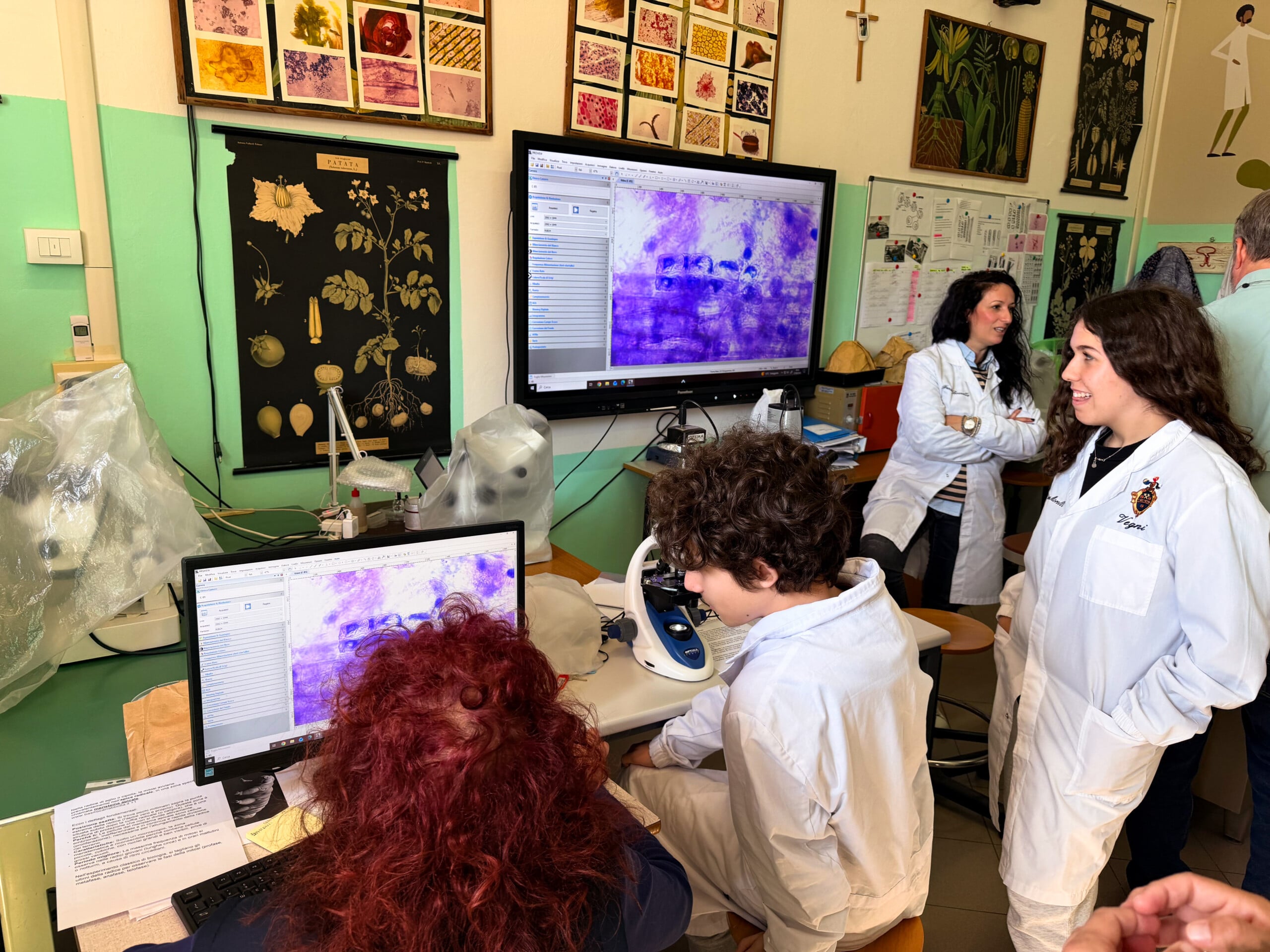
Hammond, who previously served as executive director of the Georgia 4-H Foundation, said the experience challenged some of his assumptions about what agricultural education can look like. While involving high school students in wine production might seem unusual through an American lens, in Italy, viticulture is deeply rooted in the culture and economy, making it a natural avenue for agricultural education and workforce development.
Hammond, who is working on his doctorate in agricultural leadership, education and communication at CAES, was struck by the students’ sense of ownership over their education. With their families’ support, they had chosen an agriculture-focused school and were already developing skills tied directly to their region’s economy.
“It really broadened my perspective on educational opportunities within agriculture and within leadership development,” Hammond said.
For some of the Italian students, the visit was their first opportunity to lead a tour and presentation in English. “They were able to sharpen their skills by giving these Americans a tour of their school and of their fields, and we were able to learn by seeing what their experience was like,” Hammond added.

Agriculture without borders
By the time the cohort reached Rome, those individual encounters had begun to illustrate the idea that agriculture may happen locally, but it operates within a global system.
A visit to the headquarters of the Food and Agriculture Organization of the United Nations made that connection particularly visible.
“The flags alone, when you walk up to the building in Rome, tell a story,” Griffeth said.
For Georgia leaders, understanding the international landscape has increasingly practical impacts. Participants broke into smaller cohorts based on their respective industries and had the opportunity to meet with top policy advisers who influence global trade decisions for those industries.
Regulations developed in the European Union, for example, can influence markets for Georgia’s forest products. Griffeth pointed to European efforts to prevent products associated with deforestation from entering its markets as an example of how differences in land-use practices and even definitions can complicate international trade.

Understanding those differences requires more than knowing the regulations, she said. It requires understanding the people and perspectives behind them.
“Often we view international policy as something that happens to our industry versus something we have the ability to actively engage in and shape,” Matthews added.
Hearing how Italians viewed their own political institutions — and American ones — changed the way he thought about participating in those conversations.
“If we can actively seek out those partnerships and common ground with a greater understanding of the other side of the conversation, we will be more likely to obtain a better outcome,” Matthews explained.

Bringing perspective home
Learning to recognize that common ground is part of the leadership development Griffeth and Fife hope participants carry home.
International travel intentionally removes AGL participants from familiar environments and perspectives, something that can create a “disorienting dilemma” — a moment that challenges what someone thought they understood and prompts deeper reflection, Fife explained. The goal isn’t to return to Georgia with a list of Italian practices to replicate, but to return asking different questions.
Throughout the AGL program, personality and leadership assessments help participants recognize not only their own tendencies but the value of working with people who approach problems differently.
For Griffeth, that ability to step into someone else’s experience — whether that person works in another agricultural sector, another Georgia community or another country — is itself a leadership skill.