Takeaways
- High energy costs in greenhouse farming: Electricity accounts for 30% to 50% of operating costs in controlled environment agriculture, making unnecessary greenhouse lighting a costly expense.
- Plant-driven LED automation: UGA researchers are developing a system that automatically adjusts LED lighting based on plants’ real-time photosynthetic activity.
- Smart farming replaces rigid timers: By replacing preset lighting schedules with plant-driven controls, the technology could reduce energy waste while supporting more efficient greenhouse production.
Walk through an agricultural greenhouse during late spring, the heat of summer, or early fall, and you might notice something counterintuitive: overhead lights blazing away while the sun shines brightly above.
Because traditional lighting systems run on rigid timers or simple schedules, supplemental lights often stay on regardless of how much natural sunlight hits the leaves or whether the crops actually need it.
The cost of inefficient greenhouse lighting
According to the American Council for an Energy-Efficient Economy, controlled environment agriculture (CEA) facilities use roughly 45 megawatt-hours per year for typical operations. High-intensity production facilities can consume between 8,700 and 70,000 megawatt-hours per year. For CEA operators who spend 30% to 50% of their operational budgets on electricity, those unnecessary hours of light translate directly to wasted money.
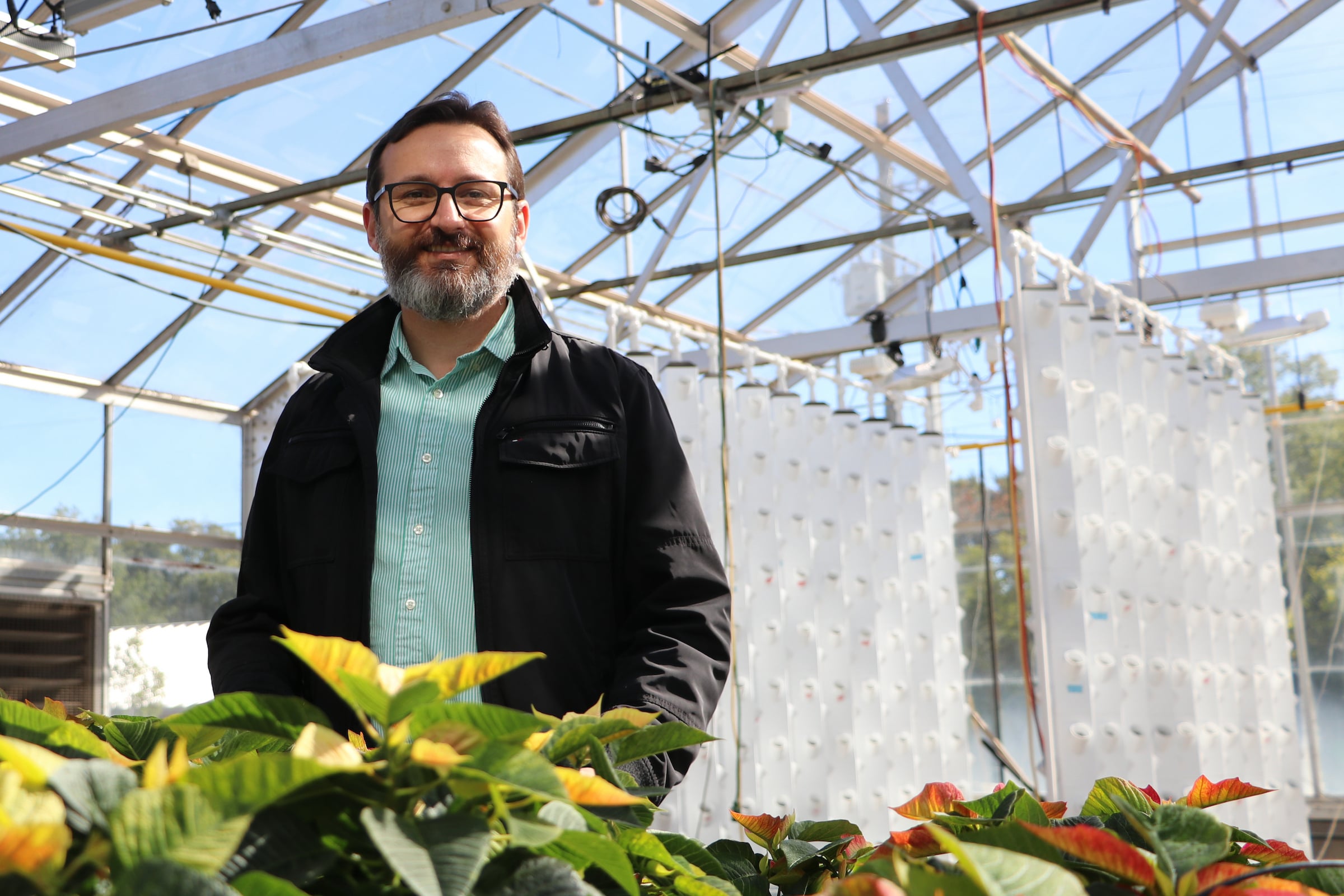
Researchers at the University of Georgia’s College of Agricultural and Environmental Sciences (CAES) are developing a system that gives plants a direct voice in controlling their own environment.
Led by Rhuanito Ferrarezi, a horticulture professor at CAES, the team is using a grant from the U.S. Department of Agriculture’s National Institute of Food and Agriculture (NIFA) to test a system that automatically adjusts LED lighting based on plants’ real-time photosynthetic activity. Team members included horticulture research scientist Matt Housley and horticulture doctoral student Nintya Avriantari.
Giving plants control over their environment
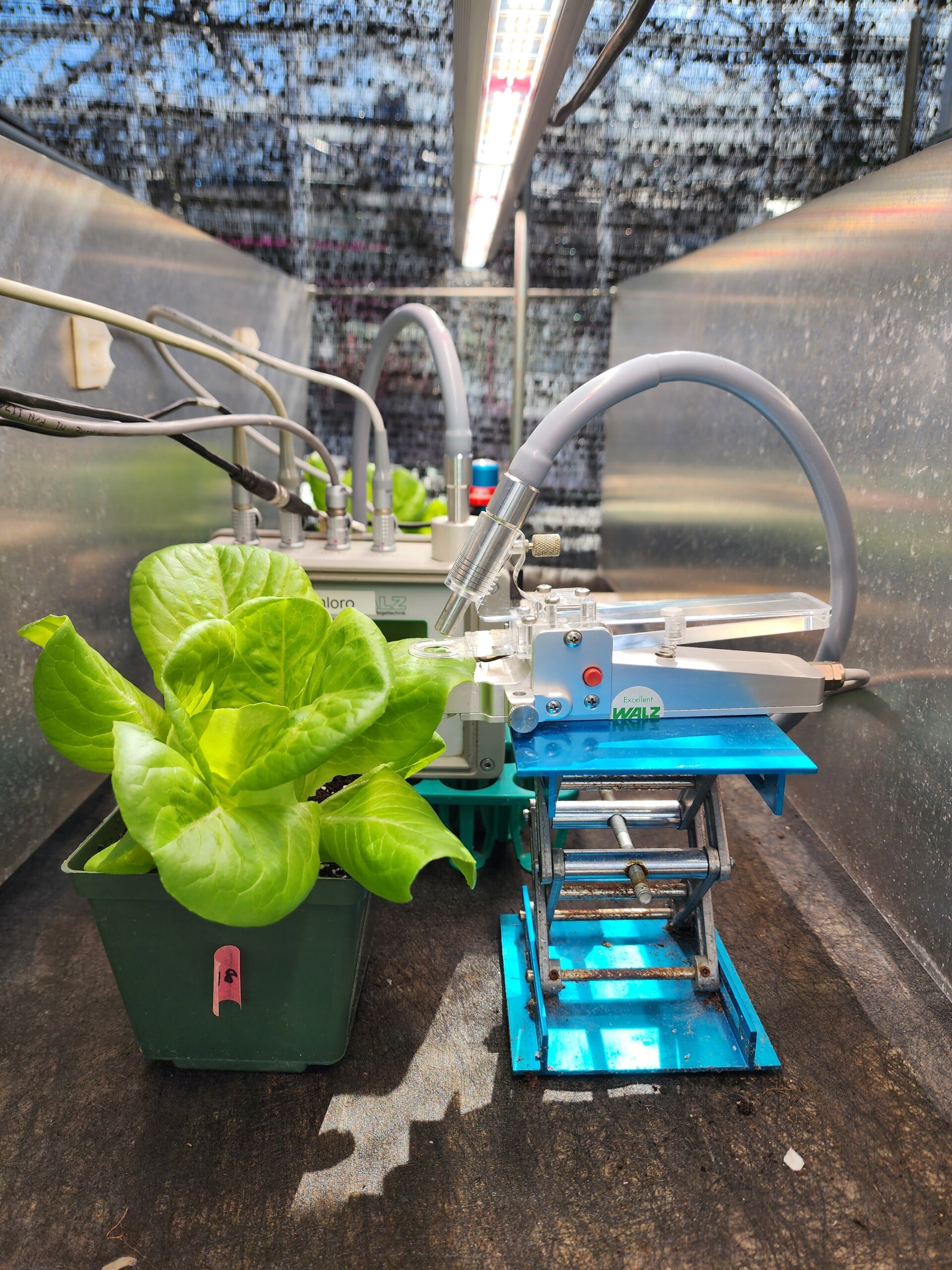
When plants receive more light than they can process for photosynthesis, they dissipate the excess energy as heat or as a faint light emission called chlorophyll fluorescence. By integrating a commercial fluorometer with a data logger and automated control system, the UGA research team created a dynamic biofeedback loop.
“Plants receive a lot of light, so they dissipate that energy; otherwise, they will fry and burn,” Ferrarezi said. “We decided that chlorophyll fluorescence would be a great indicator. We can monitor chlorophyll fluorescence using a fluorometer, which indicates light dissipation. We use that as a threshold.”
Instead of relying on a preprogrammed schedule, the system measures fluorescence levels so the plants effectively communicate when they are light-saturated and when they require supplemental lighting.
“We are trying to set up a system based on a fixed photosynthetic rate,” Ferrarezi said. “When the light levels are below a certain threshold, the LED lights get brighter. We want to guarantee LED lighting is triggered by what plants need — not by a calendar, not by a timer.”

The concept originated more than a decade ago during a UGA photosynthesis course. While early efforts focused on private commercial development, the new federal grant lets Ferrarezi’s team validate and scale the technology for academic research and commercial use.
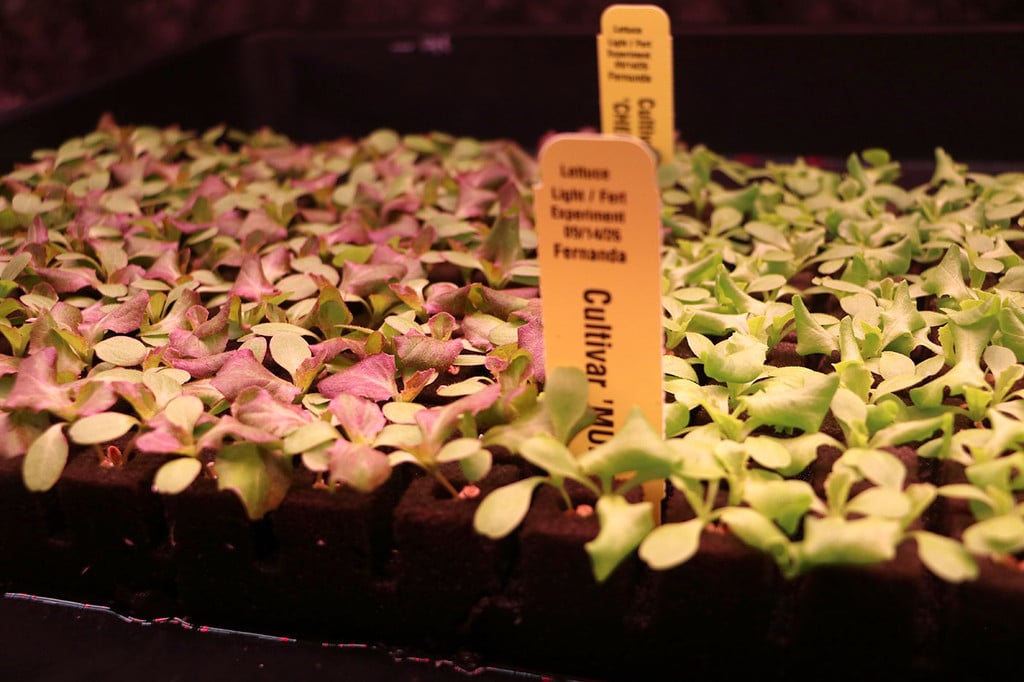
Initial trials in tightly controlled growth chambers yielded strong results across multiple crops, including lettuce.
“We’ve done it in growth chambers with a few crops,” Ferrarezi said. “We’ve done it for one day — it works beautifully. We’ve done it for a whole lettuce crop — it works great.”
Initial studies confirmed that the biofeedback mechanism can maintain consistent crop yields while trimming power use. Rather than attempting to accelerate growth through nonstop illumination, the primary metric is light-use efficiency: producing the same yield while using less electricity.
Replacing timers with real-time photosynthetic needs
Moving the technology from laboratory growth chambers into greenhouses introduces complex real-world variables. In actual greenhouses, sunlight intensity shifts by the millisecond as clouds pass overhead or building structures cast shadows.
Factors such as changing humidity, temperature, and vapor pressure deficit, as well as different greenhouse covering materials — including glass, plastic, and polycarbonate — create additional challenges.
The team is also working to solve technical control issues, such as electrical usage spikes that occur whenever high-powered lighting systems turn on.
“What we are trying to find is a way to actually guarantee that the system turns on and off dynamically in greenhouses,” Ferrarezi said.
To address these dynamic factors, the research team is taking a holistic systems approach and expanding testing beyond leafy greens to include fruiting crops, such as cucumbers and tomatoes, as well as ornamentals.
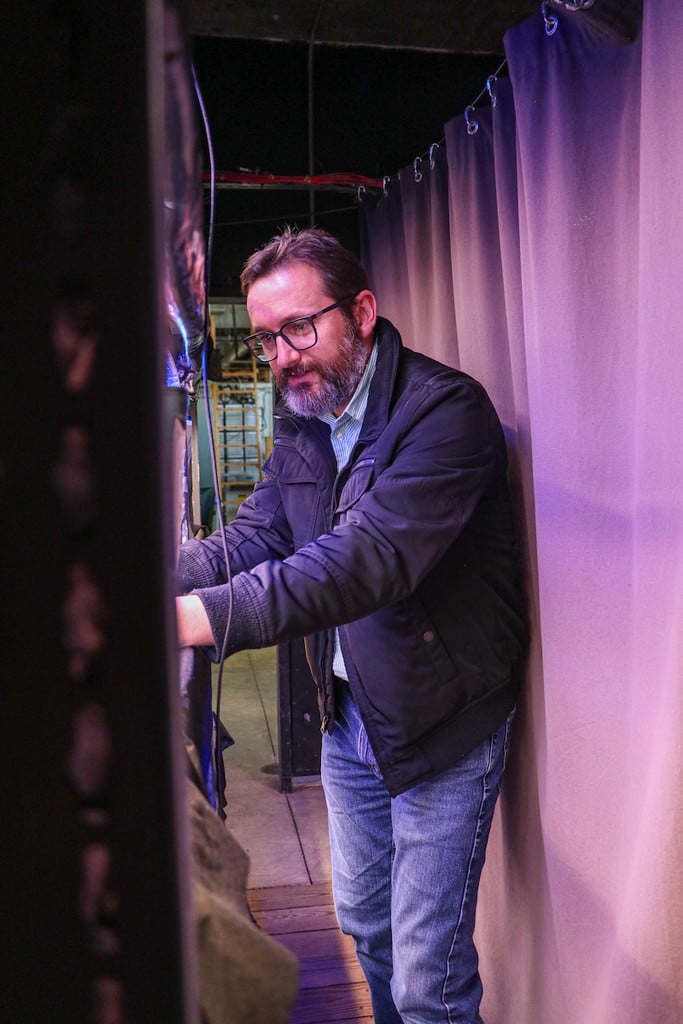
“We can validate something in the lab, but I’m interested in trying to combine the factors that growers face in the real world,” said Ferrarezi, who is focusing on a systems approach to the research. “How do I explain that my system works or does not work if I have five other variables influencing the results? That is the challenge.”
As the project progresses, the research team plans to move from preliminary greenhouse trials to larger facilities while incorporating advanced machine learning models to optimize system responses.
“Our goal is to take the guesswork out of controlled environment agriculture,” Ferrarezi said. “By integrating artificial intelligence with real-time plant physiology, we are building tools that allow growers to maximize yields, enhance quality, lower operating expenses and adopt more sustainable practices.”
About the Ferrarezi Lab
The Ferrarezi Lab at CAES specializes in controlled environment agriculture, focusing on crop physiology and production solutions for greenhouses and indoor farms.