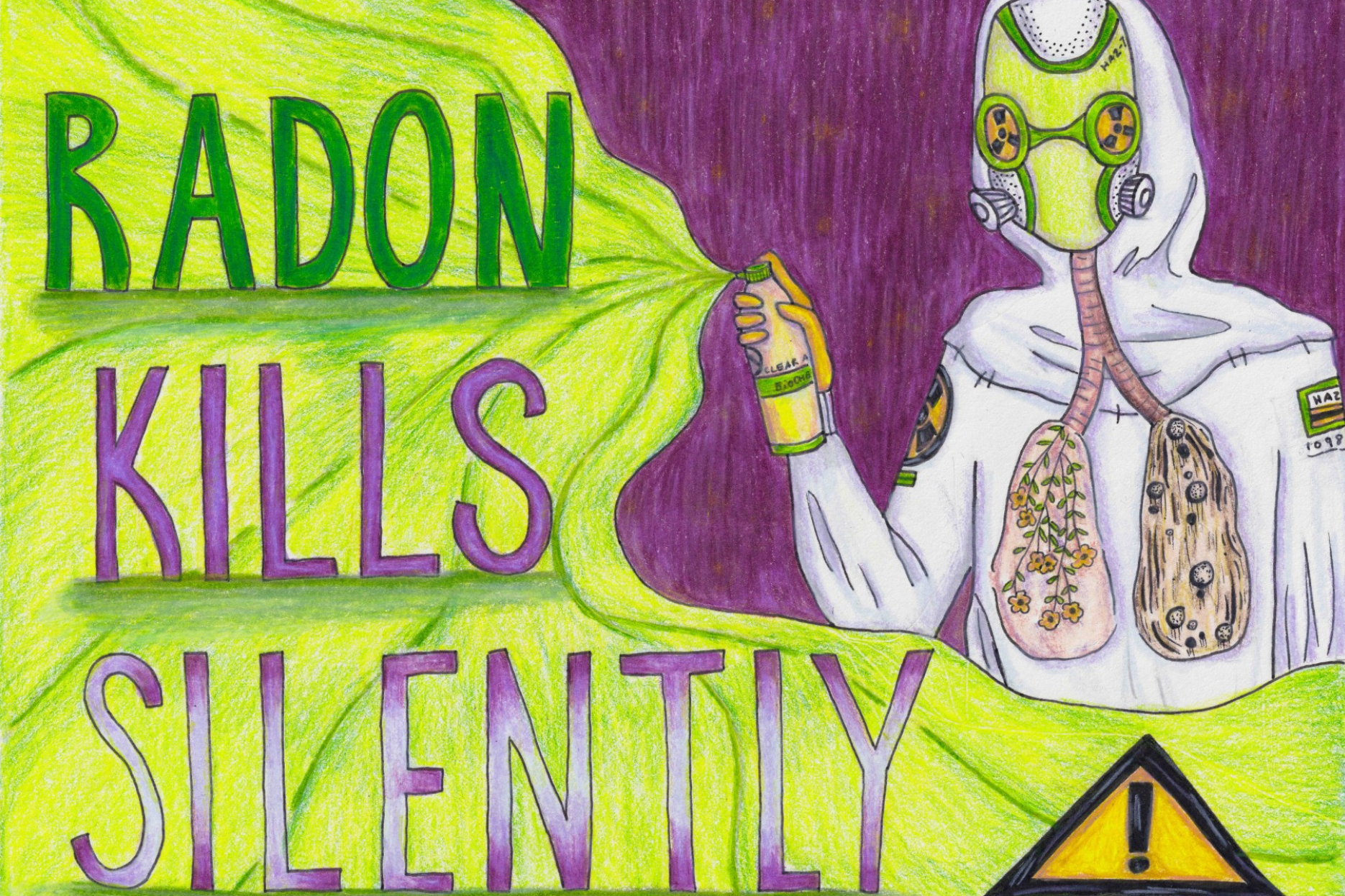
Taking action against radon
Demystifying the silent killer affecting tens
of thousands of Americans each year
What is radon and where does it come from?

Radon is a colorless, odorless radioactive gas. Naturally occurring uranium in Earth’s crust breaks down into radium, which further breaks down into radon.

How does this affect Georgia residents?
Since radon emanating from rocks and soil isn’t noticeable, dangerous levels can build up easily. By testing once every two years, residents can monitor whether the radon level in their home needs to be mitigated.
What are the effects of radon?
Radon is the second-leading cause of lung cancer in the U.S. Nonsmokers have a higher chance of getting lung cancer from radon than from secondhand smoke. Smokers have a significantly higher risk of lung cancer due to radon gas.


Using data collected from 1990-2024, more than 26,000 homes in Georgia had elevated levels of rradon levelsadon. If 75% of those homeowners mitigated their radon levels, more than 53,000 lives could be saved.
How do I test for radon?

Radon tests can be purchased from radon.uga.edu, select University of Georgia Cooperative Extension county offices and most major hardware stores. Once you have two elevated radon tests, experts with UGA Radon can help explain the next steps you should take.
The Environmental Protection Agency recommends that homes with a radon level of 4 picocuries per liter (pCi/L) or higher should be mitigated.

What is radon mitigation?
Certified radon mitigators can install a system that will divert the radon away from your home and into the atmosphere where it can safely dissipate.

Busting myths about radon
Myth
Only basements and crawlspaces are at risk for elevated levels of radon.
Fact
While radon does collect there, any building with a ground floor can have elevated levels.
Myth
Only those who live in the Piedmont region of Georgia need to test for radon.
Fact
Radon can accumulate anywhere, and preventative testing can and does save lives.
Myth
Radon is only found in the air.
Fact
Radon can also build up in water. For those on municipal water, radon levels are already being monitored. Those with well water can use water radon testing kits available through radon.uga.edu.
Myth
Ventilation, like opening a window, is enough to mitigate radon.
Fact
Opening a window can help, but it is not enough to substantially and permanently lower radon levels. Only mitigation systems that direct radon gas out of the home can ensure a reduction in levels.
Need a physical version of this resource?
This information is available as a two-page printable infographic.
Cultivate your curiosity
Listen to our podcast episode with expert Rebecca Cantrell, radon educator for UGA Extension in the College of Family and Consumer Sciences to learn even more. For additional resources, visit radon.uga.edu.