
UGA Extension partners expand Alzheimer’s care and resources in rural areas
Written and photographed by Cal Powell
Collages by Katie Walker



Forget us not
The gloves go on first. More like oven mitts, really: yellow and cumbersome.
Next come the goggles, creating a foggy mess of the outside world.
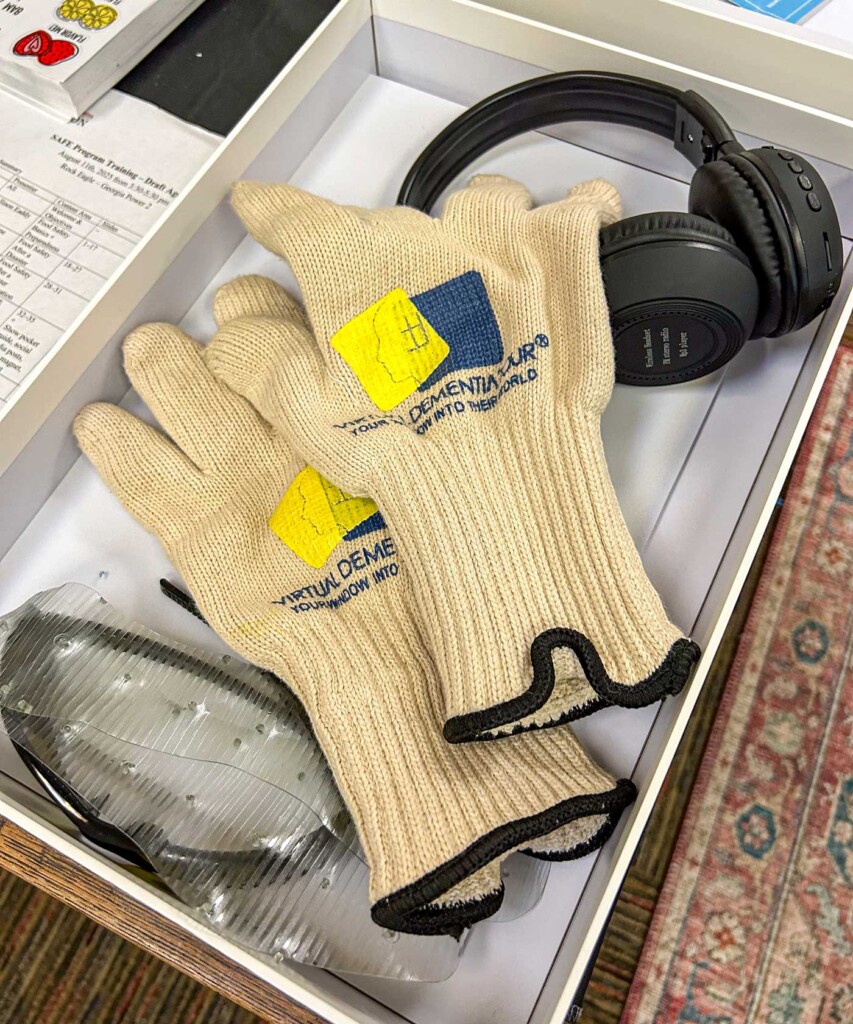
Then the headphones, blaring radio static, sirens and white noise. And finally, plastic shoe inserts with uncomfortable raised bumps that mimic neuropathy.
The Virtual Dementia Tour attendant then leads you by the hand into a dimly lit room in the hallway of the McDuffie County Courthouse. Bookshelves line one wall, filled with random household items like plates and boxes of cereal.
There’s a water cooler in one corner and a small picture of an elderly woman on another wall.
You stand there, alone and disoriented. For five minutes? Twenty minutes?
The attendant comes over, taps you on the shoulder and asks you something. You can’t hear her. You can barely see her. You shrug. She disappears back into a dark corner.
You’re lost, shuffling in the dark.
Mercifully, after an indeterminate amount of time, the attendant grabs your hand, leads you out of the room and slips off the hideous accessories. She asks you a few questions.
You struggle for words. You’re just glad to be out of that room.
A growing challenge in rural Georgia
You have just experienced a small illustration of what it is like for the 1 in 9 Americans age 65 and older who has Alzheimer’s disease and related dementia (ADRD), a group of conditions marked by memory loss and cognitive decline that eventually requires full-time care. Georgia is among the states with the highest prevalence of Alzheimer’s dementia, at approximately 12%.
With age the greatest risk factor for ADRD, the prevalence of Alzheimer’s is predicted to grow dramatically as the U.S. population ages, putting an enormous strain on the healthcare system and caregivers.
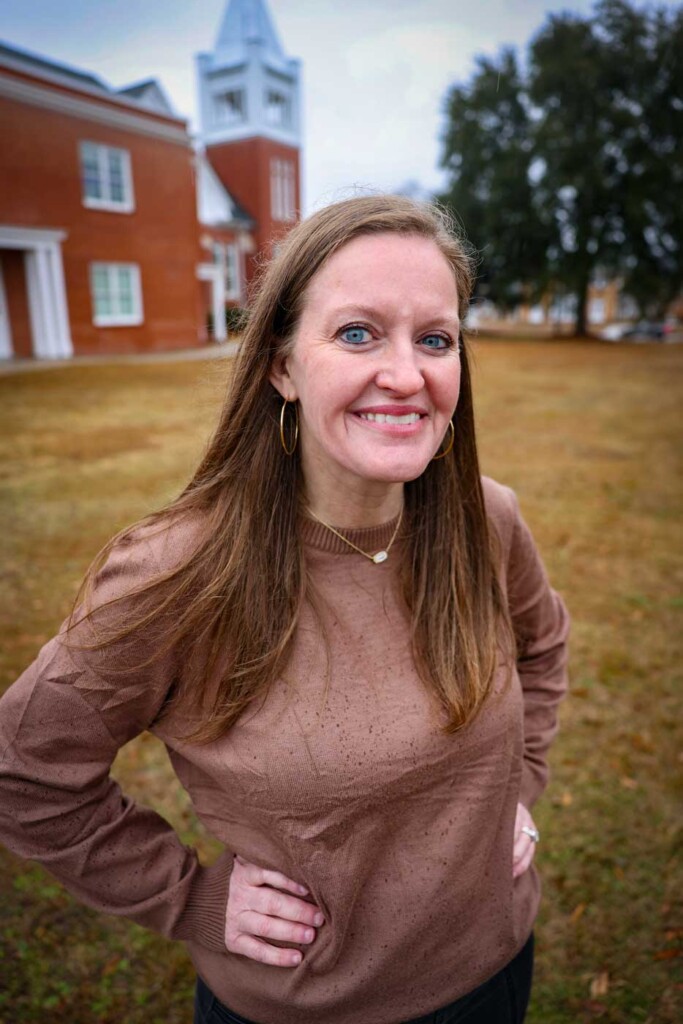
Allison Eaddy is the Family and Consumer Sciences agent for University of Georgia Cooperative Extension in McDuffie County and a certified Virtual Dementia Tour trainer. Located about 30 miles west of Augusta, rural McDuffie County is home to roughly 22,000 people.
In addition to helping local residents file their taxes and leading workshops on preparing healthy meals, Eaddy facilitates a support group for families affected by ADRD.
They meet monthly for emotional support and information about available resources, which are scarce.
“It’s a sweet time,” Eaddy said. “You just want to help them, but there’s never enough education, never enough resources. They are begging for help.”
Dementia support is not typically an area of outreach for Extension agents, but Eaddy partnered with the Cognitive Aging and Education (CARE) Center to provide support and programming through an initiative with the UGA Archway Partnership and the UGA College of Public Health. The experience has been life-changing.
“I’ve definitely found a passion for it,” she said. “This is why I want to come to work.”
Sanctuary in shared experience
April Reese is the UGA Extension administrative assistant for McDuffie County, sharing office space with Eaddy.
A Thomson native, she’s also a caregiver for her 81-year-old grandfather, who was diagnosed with dementia four years ago.
Reese grew up fishing and gardening with him. After school, she helped around the gas station he ran. His symptoms were minor at first. He’d forget names, leave the stove on, repeat himself. When the symptoms worsened, the family sought a diagnosis.
They check on him every day, but the disease takes an emotional toll.
He’s saying, ‘I’m no good, I’m a burden, I need to just go on,’” Reese said. “We constantly tell him, ‘Granddaddy, you’re not a burden. We’re going to get through this step by step.’ We stay positive as much as we can, but we know some days it helps and some days it doesn’t.”
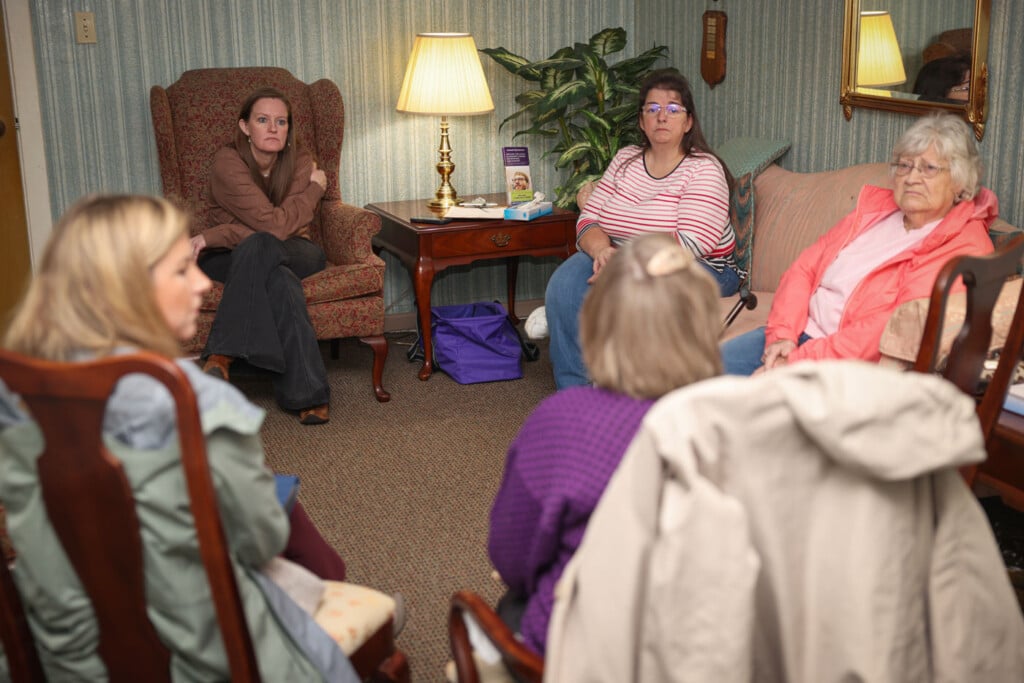
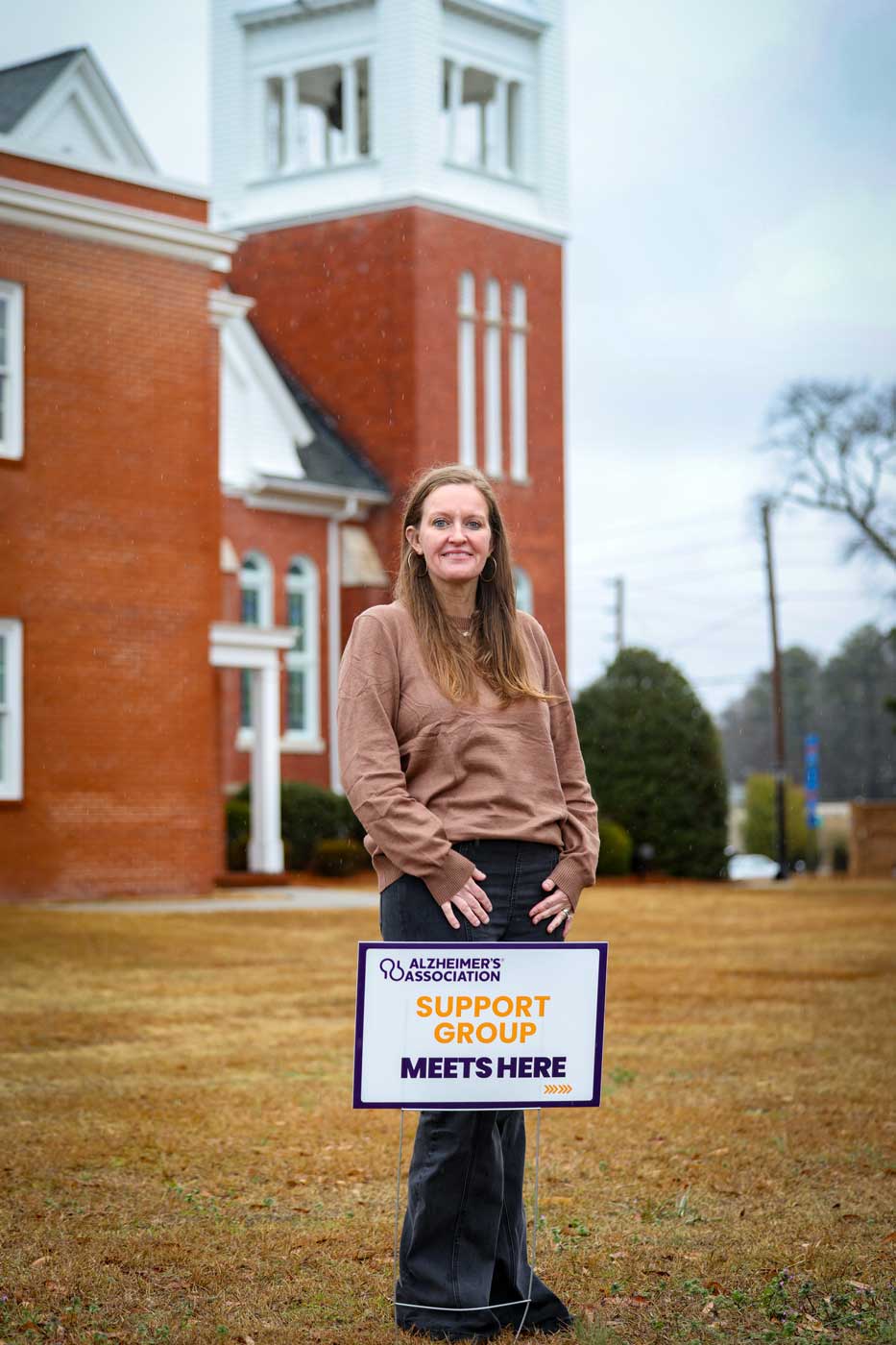
About a year ago, Reese began attending the monthly support groups held a short walk from her office at Thomson First Methodist Church.
She didn’t say much at first. As she got more comfortable, she began speaking up, but mostly she just listens. “It helps,” she said.
“When someone is diagnosed, it does take a toll on the family. You not only lose them once, but lose them again at the end. That’s tough to grasp because I’m used to him always being there,” Reese said.
At a recent support group, participant Jane Wilkerson shared how she copes with the loss of her husband. They were married for 63 years before dementia took him.
She told the group she got a small dog. One cold winter night after her husband died, she took the dog out of its kennel and propped it up on the bed beside her. The dog discovered the electric blanket and soon fell asleep.
“There were little snoring noises and a little movement,” Wilkerson said, “and it’s like my husband is on the other side of the bed. It’s been so soothing to me.”
“It helps to have somebody who has been in your shoes,” Reese said. “Even if you’re having a bad day, like Mrs. Jane said, ‘Call me. I’ll talk to you.’ You’ve got somebody there to listen to you and won’t look down on you.”



It helps to have somebody who has been in your shoes,” Reese said. “Even if you’re having a bad day, like Mrs. Jane said, ‘Call me. I’ll talk to you.’ You’ve got somebody there to listen to you and won’t look down on you.”

Shifting community mindsets
McDuffie County has become a focal point of the CARE Center’s outreach efforts.
Launched by College of Public Health faculty members Jenay Beer and Lisa Renzi-Hammond, the center is a clinical, research and outreach hub delivering education and support for people with dementia and their caregivers.
The center began holding public forums in McDuffie County about five years ago. From there, outreach expanded as CARE Center researchers leveraged Eaddy’s connections to build inroads into the community through needs assessments and educational events.

“We couldn’t do it without Allison,” said Andrew Kiselica, an associate professor in the College of Public Health and a CARE Center neuropsychologist. “She is definitely going above and beyond to make our jobs easier.”
Along the way, Eaddy discovered a passion for Alzheimer’s and dementia research and outreach, completing the UGA Institute of Gerontology certificate and becoming certified as a Virtual Dementia Tour trainer.
“People are thirsty for education and answers,” Eaddy said. “I see that need, and it pushes me to want to give that to them.”
She has provided the virtual tour to community leaders, assisted living employees, first responders and local law enforcement. Gradually, mindsets are beginning to shift.
When a call comes in involving someone with Alzheimer’s disease, first responders now know sirens and radios can be distracting.
“It’s been eye-opening for them,” she said. “I tell people it changes sympathy into empathy.”
Pathways to early intervention
Newer technologies have emerged in recent years that make Alzheimer’s screening more efficient. Kiselica is leading a pilot program in McDuffie County to conduct digital cognitive assessments and collect blood biomarkers that can detect signs of Alzheimer’s dementia. This project is funded through seed grants from the Rural Engagement Workshop for Academic Faculty and the Georgia Clinical and Translational Science Alliance.
“My long-term goal would be to work with Extension and the Archway Partnership to have a permanent screening presence,” Kiselica said. “Given that Extension has a statewide presence, the potential to screen thousands of people is there. If we can keep it a simple, streamlined process, I think we can make a dent in the problem.”
It’s a small step toward addressing a much larger problem, but Eaddy isn’t deterred. Having witnessed signs of progress in her community, she sees a glimmer of hope.
“We’re developing a foundation here in McDuffie County,” she said. “We’re raising awareness and increasing education, but we still have much more to do. I don’t think it’ll ever be enough until we find that cure.”


News media may republish this story. A text version and art are available for download.