A scientist at heart
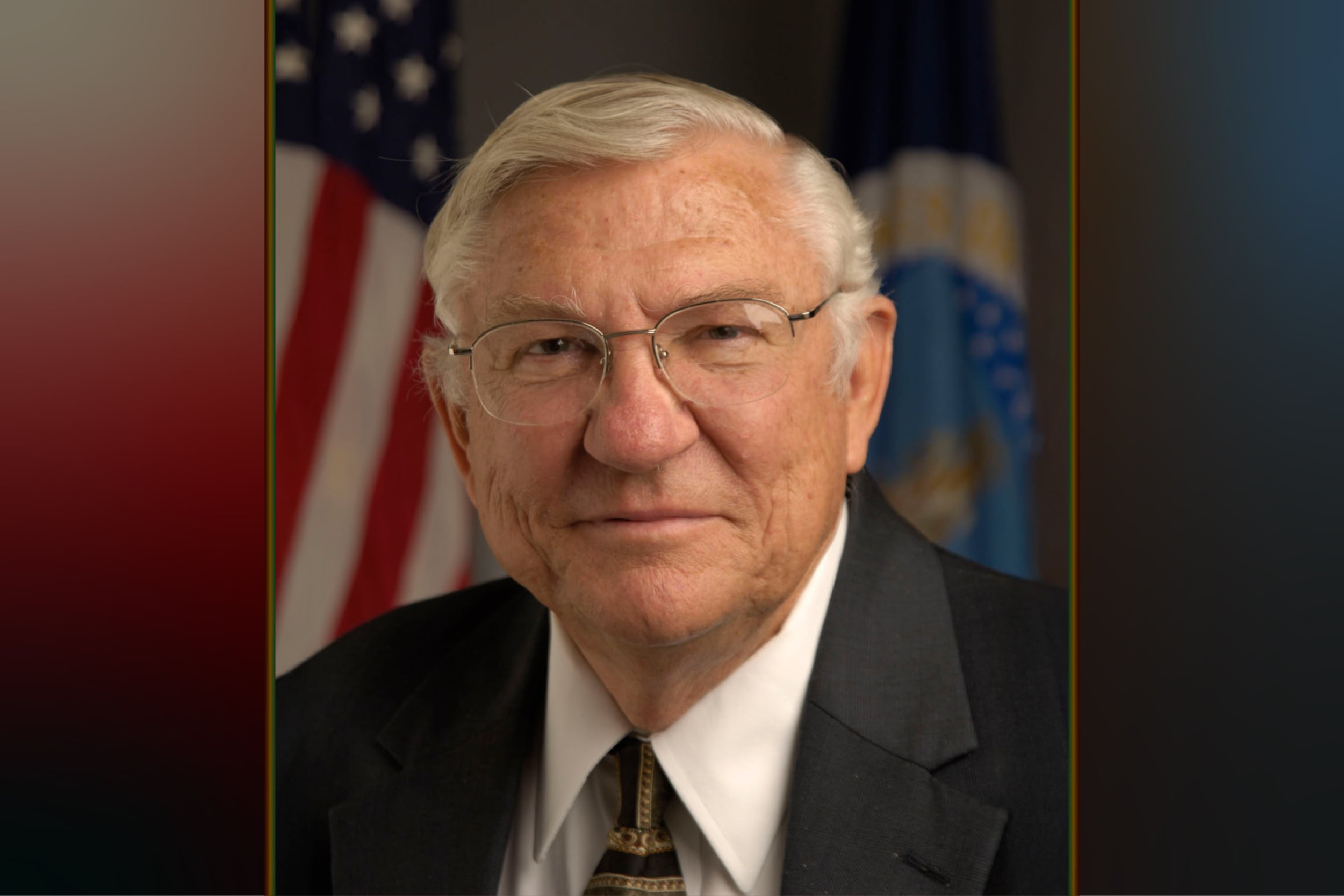
Gale Buchanan had found his footing.
Born in 1937, Buchanan grew up on a peanut farm in Madison County, Florida, where he spent long days hoeing weeds from his parents’ peanut rows. For much of his early life, he expected to follow in his father’s footsteps, until a county 4-H agent intervened, encouraging him to visit the University of Florida and enroll in college.
What might have been a life spent working the fields became a career devoted to asking agricultural questions — and answering them through science.
As a researcher, Buchanan returned to the problem he once toiled over: “What was the best way to reduce weed pressure on peanuts without simply drowning them in herbicides?”

The answer he developed alongside colleague Ellis Hauser — twin-row planting —proved to be both practical and enduring. By changing the geometry of how peanuts are planted, the approach allows farmers to increase yields by up to 15% while significantly reducing the amount of herbicide needed. The method remains widely used in modern production agriculture today.
“I had found myself,” he said. “I loved teaching and conducting research.”

The overnight transition
Then came the phone call.
After 16 years of teaching and research, Buchanan was asked to serve as dean and director of the university’s Alabama Agricultural Experiment Station. His first instinct was to say no.
“I was brimming with new ideas for my research program, so I initially declined,” he said. “I loved what I was doing and had just returned from a sabbatical at the Weed Research Organization near Oxford, England, with many, many ideas I wanted to pursue.”
But the university was persistent in their offer. Given until the next day to reconsider, Buchanan and his wife, Carol, talked late into the night. By morning, he had his answer.

“The ask had come from one of my most favored and respected administrators, so I knew I had to weigh the decision very carefully,” he said. “Eventually, I succumbed to the idea.”
The transition was jarring in its immediacy. “My move from teacher-researcher in blue jeans and boots to dean and director in a three-piece suit was literally overnight,” he remembered.
While it was a change of clothes and a change of calling, it was not a change of conviction. Throughout every role that followed, Buchanan remained determined to build systems that provide researchers the space and resources to do their best work.
“As an administrator, you don’t get a feeling of success from your own teaching or research,” Buchanan said. “The only success you feel is when your faculty and staff achieve something.”
Building from the ground up in Tifton
After more than two decades at Auburn, Buchanan made the career leap that brought him closer to his Florida roots. He arrived on the University of Georgia Tifton campus in 1986 as the resident director of the Coastal Plain Station, one of three UGA agricultural experiment stations, with a deliberately open mind.
“I didn’t intend to make any major changes until I got a better feel for the lay of the land,” he said.
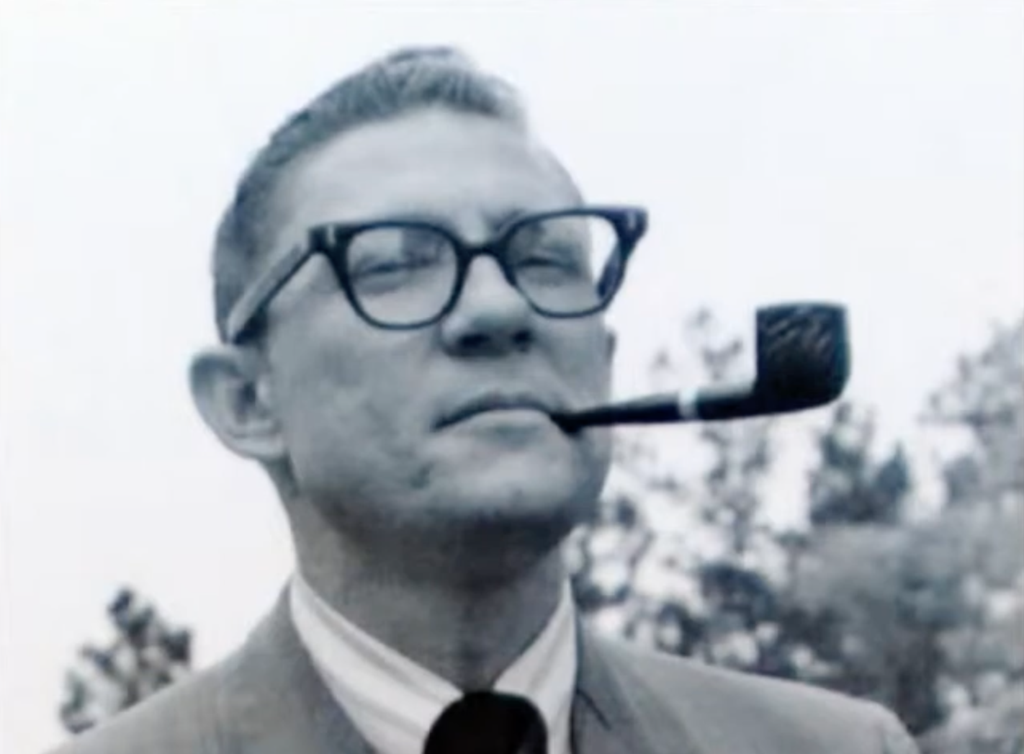
What he found was a capable research community operating within a system that didn’t always support it well. Despite managing thousands of acres, the station lacked sufficient high-quality research land near campus. Equipment was scattered across individual programs, and laboratory and support infrastructure failed to keep pace with what the scientists needed.
“I saw there was much work to be done,” said Buchanan.
Over the years that followed, he focused on the fundamentals: acquiring research land, moving toward shared equipment and centralized support, recruiting key personnel, upgrading facilities, and establishing a communications team that connected the station’s work to the communities around it. The goal, as he framed it, was coordination rather than control.
A question worth asking
One of the most consequential outcomes of his tenure in Tifton began after a visit with U.S. Sen. Wyche Fowler, who asked, “Why can’t agriculture be environmentally sound?”
Buchanan turned that conversation into a proposal that, after years of federal lobbying, institutional negotiation and sustained coordination among multiple partners, eventually became the National Environmentally Sound Production Agriculture Laboratory (NESPAL).
“I still marvel at how all the pieces came together,” Buchanan recalled.

The National Environmentally Sound Production Agriculture Laboratory (NESPAL) in Tifton was born from a question about how agriculture and environmental stewardship can work together. It stands as one of Buchanan’s most enduring contributions, supporting research that serves both producers and the land. (Submitted photo)
Expanding the mission in Athens
In 1995, Buchanan moved to Athens to become dean and director of UGA’s College of Agricultural and Environmental Sciences (CAES). The work he had begun in Tifton — pulling research, teaching and UGA Cooperative Extension into a more coherent whole — now had a larger canvas.
He pushed to bring all three into closer alignment, but the effort ran into resistance.
“I was not always a popular person,” he said, but he pressed ahead, believing that integration was central to the land-grant mission. Under his leadership, the college established an Advisory Council drawing together academic and industry leaders, and launched the Congressional Agricultural Fellowship program, which would become recognized as a national model.
A new degree in agriscience and environmental systems was offered from UGA-Tifton — the first four-year UGA degree earned entirely off the Athens campus.
The college also deepened its ties with the corporate and agribusiness sectors, growing its budget to more than $170 million despite severe cuts at the state level.
From Athens to Washington
In 2005, then-President George W. Bush nominated Buchanan to serve as undersecretary for research, education and economics at the U.S. Department of Agriculture (USDA), a role the U.S. Senate confirmed in 2006.
With the passage of the 2008 Farm Bill, he also took on the responsibilities of USDA chief scientist. It was the latest in a long line of roles he had not pursued but accepted the same way each time: Someone asked, he and Carol talked it over, and he said yes.
Unwavering commitment
His career moved from the laboratory to the administrative office, from Tifton to Washington, D.C., from conversations about peanut rows to testimony before the U.S. Senate.
The research programs, facilities and institutional structures Buchanan helped build are still in use across Georgia and continue to accelerate the agricultural research programs that set CAES apart.
Asked how he feels about what he’s accomplished, he’s quick to credit others.

“I didn’t do it,” he said. “Other people did the work.”
It’s a line he returns to often, and it isn’t modesty for its own sake. It’s how he has always understood the job.
“If there’s one thing a dean does,” he said, “it’s help put together the team that gets the work done.”
When he reflects on what has stayed with him most, he doesn’t recount policy wins or building dedications.
“I’ve enjoyed every single job I’ve had, and I wouldn’t say one job has been more exciting than the other,” he said. “But personal satisfaction probably has to go to the research. The feeling you get when you do a good piece of research and get the paper published is a tremendously exciting feeling.”
That feeling never left him, and neither did the conviction that gave his career its shape.
“I think we all need to find a way to reignite the enthusiasm for the land-grant university,” Buchanan said.
I’m still as committed to agriculture as I was when I got paid to be committed to it. Agriculture is fundamental. The people that started the land-grant movement really had something, and we need to do everything we can to keep it going — because it’s our future.”
Final farewell
As he reflects on a lifetime devoted to agriculture, research and service, Buchanan will deliver his farewell address at UGA-Tifton on April 14.
The lecture event, which will be held at the UGA Tifton Campus Conference Center, offers an opportunity to celebrate his enduring impact on the CAES community.