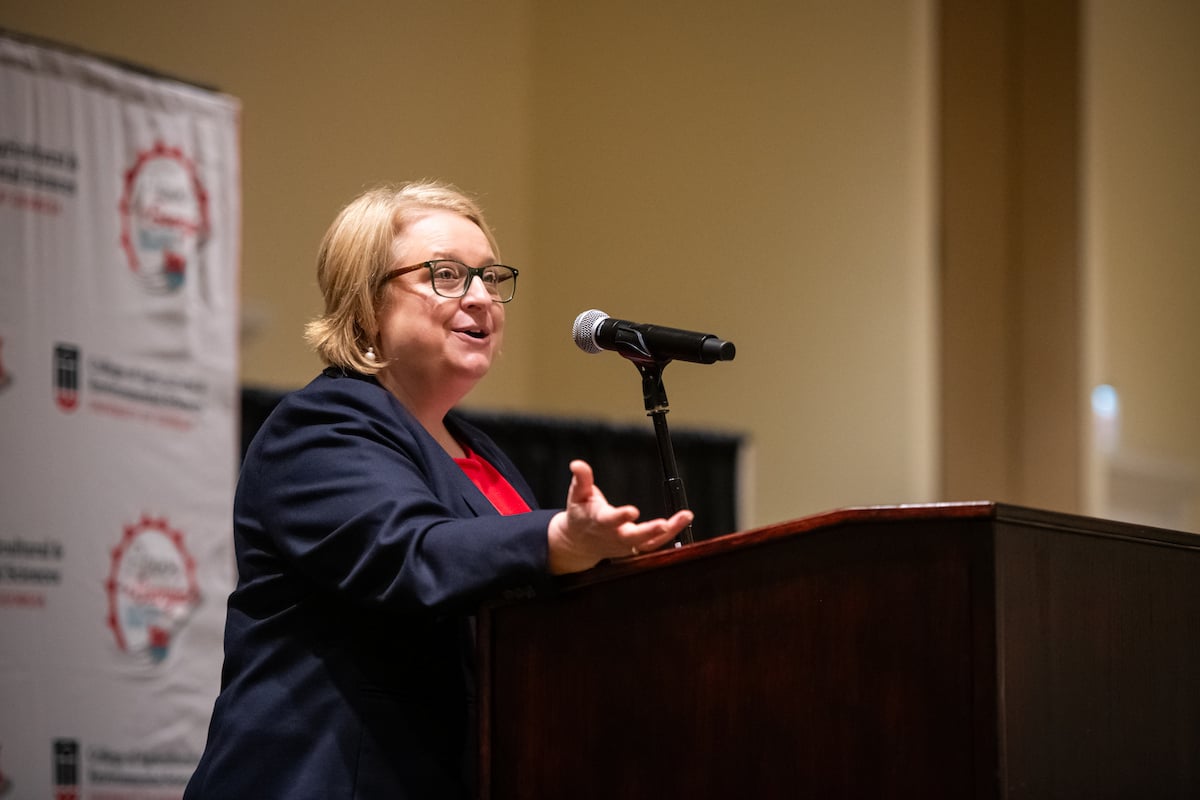
UGA crop genomics pioneer Robin Buell recognized as 2026 SEC Professor of the Year
C. Robin Buell, Georgia Research Alliance Eminent Scholar Chair in Crop Genomics at the University of Georgia, has been named the 2026 Southeastern Conference Professor of the Year, the conference’s highest faculty honor.

Buell becomes the fourth UGA faculty member to receive this award, which recognizes scholarly excellence and transformational impact in teaching, research and service at SEC institutions.
An internationally recognized leader in plant genomics, bioinformatics and computational biology, Buell is a professor of crop and soil sciences in the College of Agricultural and Environmental Sciences. Her work has been instrumental in developing large-scale genomic datasets used by scientists worldwide to improve crop resilience and productivity.
Mapping global food
Buell was part of a team that mapped the first genome sequence of a plant species and later led national efforts to decode the genomes of rice and potato, two of the world’s most important food crops. For more than two decades, she has maintained the Rice Genome Annotation Project database, which provides valuable data to the global rice research community. Additionally, she has generated large-scale datasets for several medicinal plant species and mapped the genomes of multiple plant pathogens.
As director of the Plant Center at UGA, Buell leads interdisciplinary efforts to advance plant science through biochemistry, genetics, genomics, synthetic biology and breeding innovation. Her research focuses on unlocking the full potential of plants to improve agricultural efficiency, develop sustainable biofuels and create crops that thrive in changing environments.
One of her projects, BioPoplar, reimagines how poplar trees can support the bioeconomy. By altering the tree’s genomic architecture, her team is engineering poplar as a platform crop for renewable energy and production of biomaterials for medical or diagnostic uses.

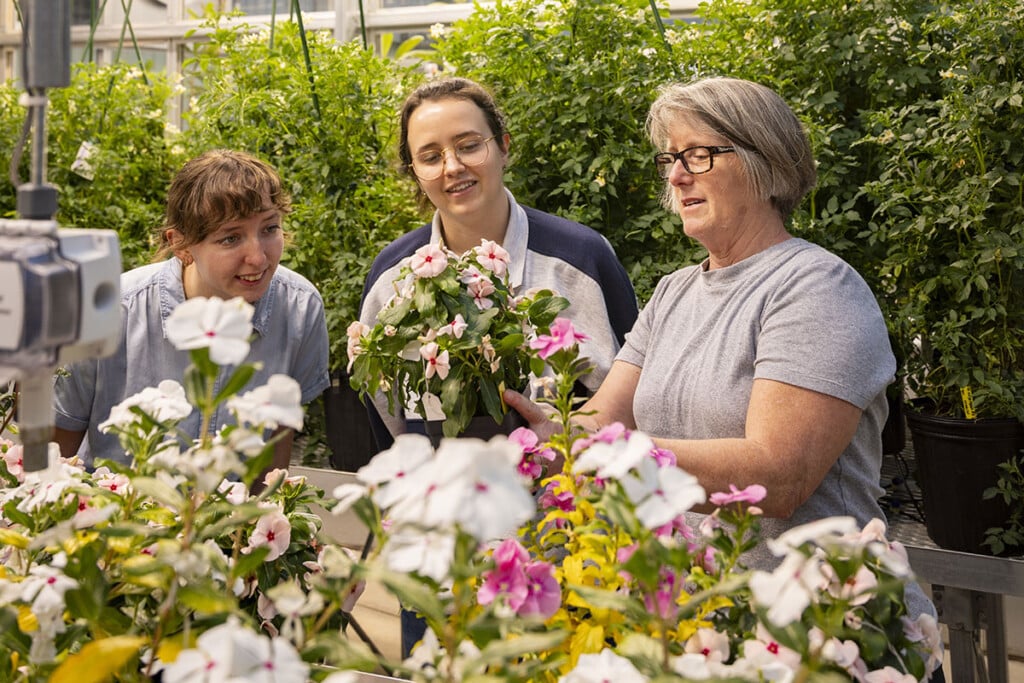
Buell’s recent work includes ground-breaking advances in medicinal plant genomics, particularly discoveries that may enable more effective use of cancer-treating vinca alkaloids, a class of chemotherapy drugs derived from the Madagascar periwinkle plant (Catharanthus roseus).
Medicine from nature
Buell’s recent work includes ground-breaking advances in medicinal plant genomics, particularly discoveries that may enable more effective use of cancer-treating vinca alkaloids, a class of chemotherapy drugs derived from the Madagascar periwinkle plant (Catharanthus roseus).
Buell has studied the plant intermittently since 2009 and is currently leading a $650,000 grant from the U.S. Department of Agriculture’s National Institute of Food and Agriculture to build a germplasm panel representing all Catharanthus roseus varieties. The goal is to analyze and identify genes associated with alkaloid production.
“Right now, the genome is 600 million bases. Using genomics and inheritance studies, we can identify the regions of the genome associated with quantitative traits, such as the type and ratio of alkaloids produced,” Buell said. “Once we identify the regions that control production of vinca alkaloids, we can try to breed plants that incorporate as many of those traits into the genome and potentially produce more
vinca alkaloids.”

This research is particularly significant because researchers have not yet successfully performed gene editing on the existing DNA of Catharanthus roseus or created a transgenic plant by inserting desired genes from another species.
Buell is encouraged by the potential to increase production of anticancer agents critical to human medicine.
“Most people know periwinkle as an ornamental plant rather than as a medicinal plant; it’s easy to grow. Also, nothing eats it — not deer, not rabbit, not bugs — because the alkaloids it produces disrupt cellular processes. That is why it works as an anticancer drug,” she said. “It is exciting that the USDA supports research into natural products, as there are limited sources to fund studies like these.”
The SEC Professor of the Year is selected by conference provosts from among the 16 Faculty Achievement Award winners, one from each SEC institution. UGA is the first SEC institution to have four recipients of the honor.