Takeaways
- Georgia 4-H released loggerhead sea turtle Neptune to the Atlantic Ocean after four years in rehabilitation and Environmental Education programming.
- Neptune helped thousands of Georgia 4-H visitors learn about sea turtles, coastal habitats and conservation.
- A satellite tracking device will let researchers and the public follow Neptune’s ocean journey for about 18 months.
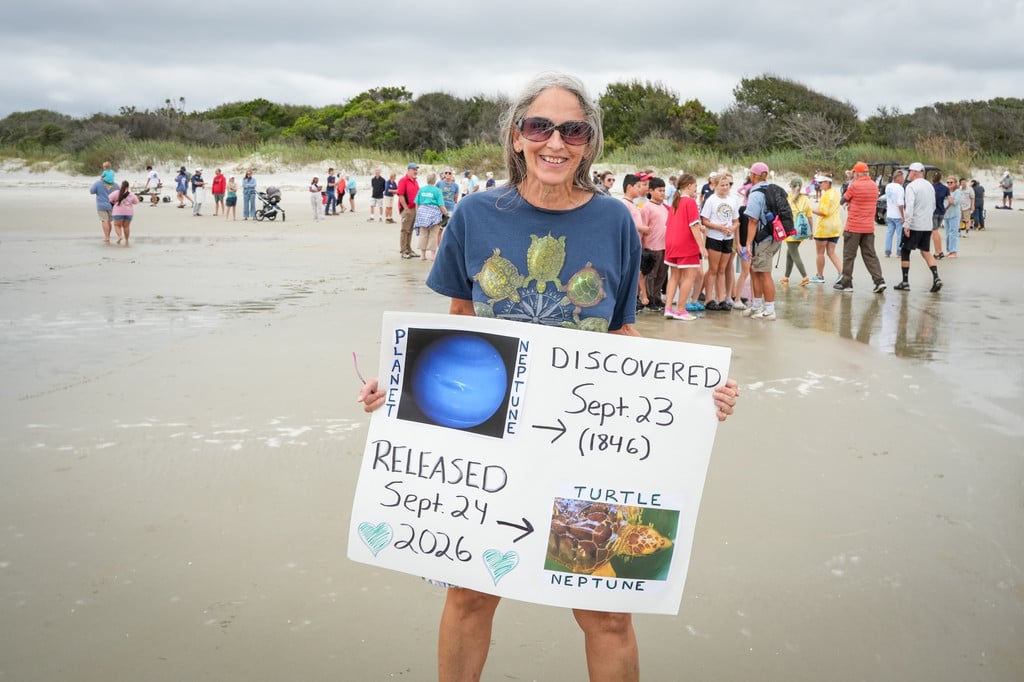
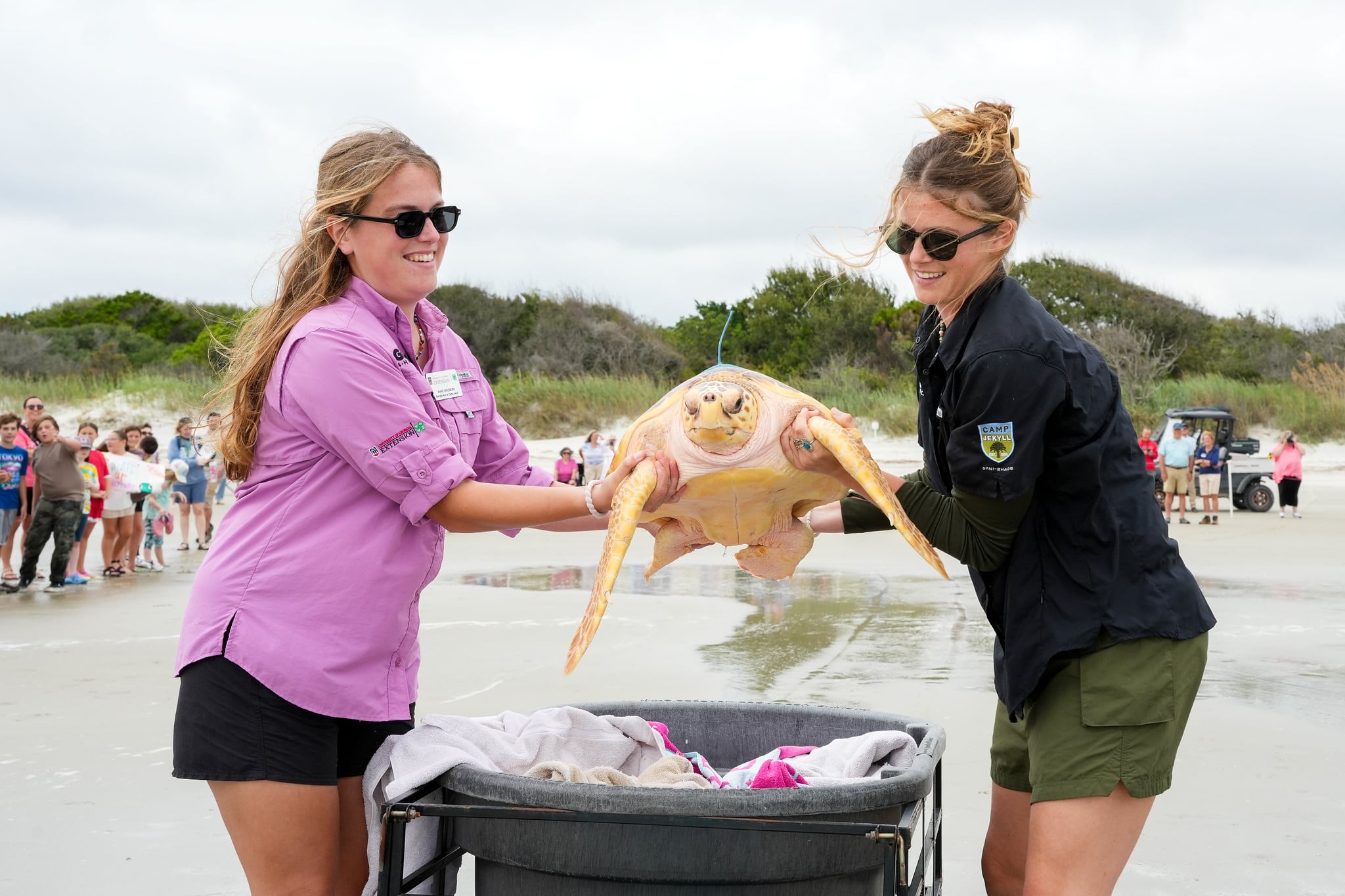
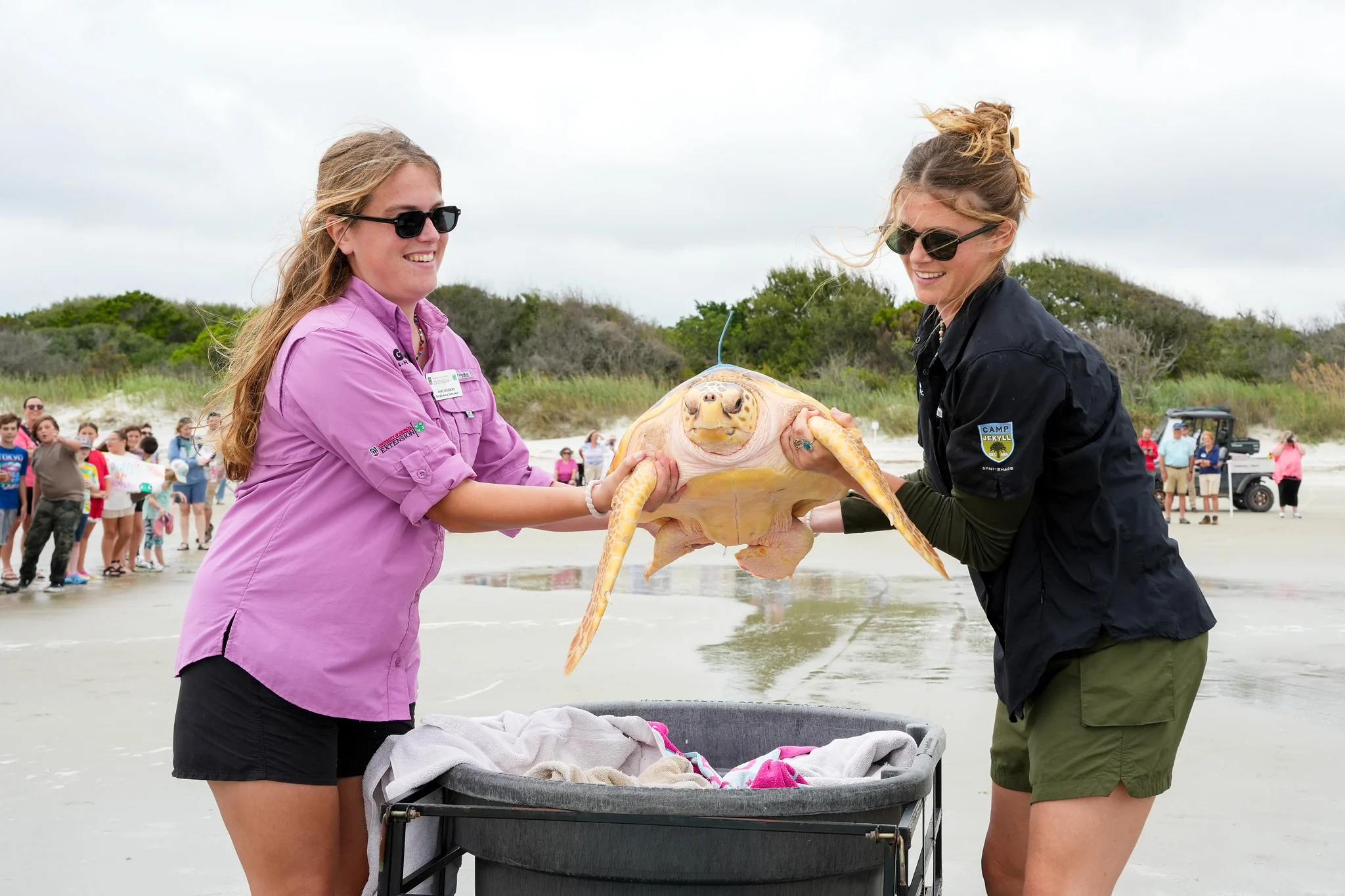
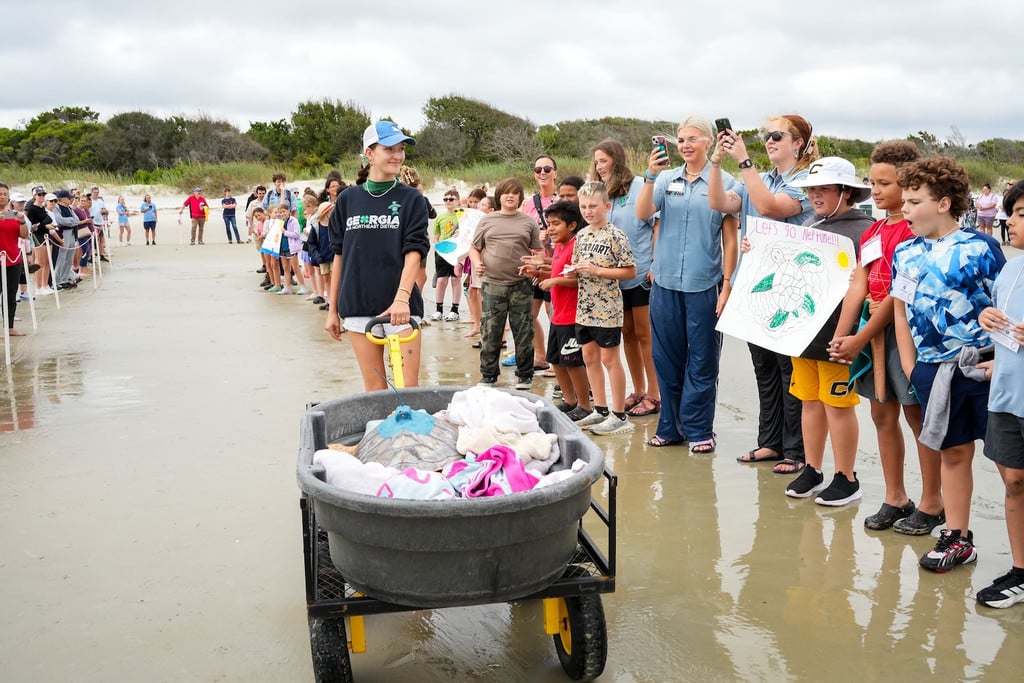
Hundreds of well-wishers gathered on Jekyll Island’s Glory Beach on Sept. 24 to wave farewell to Neptune, a loggerhead sea turtle and beloved resident of Georgia 4-H Tidelands Nature Center as the turtle returned to the Atlantic Ocean after four years in rehabilitation and environmental education programs.
After being found trapped in a monitored nest with seven other hatchlings, Neptune was rescued in August 2022 by conservation biologists from the Georgia Sea Turtle Center and Jekyll Island Authority. The center’s rehabilitation staff cared for Neptune until February 2023, when the turtle became an animal ambassador at Tidelands Nature Center and Georgia 4-H at Camp Jekyll.
Neptune weighed just 19.6 grams upon arrival at the sea turtle center as a hatchling, growing to 32 pounds and 20.5 inches prior to being released.
Visitors at the 4-H centers learn about the habitat, diet, life cycle, and characteristics of sea turtles and other reptiles with help from Neptune and other species of animal ambassadors. Georgia 4-H Environmental Education staff provide thoughtful care to sea turtles as they mature to an appropriate size for release. Neptune has been an important part of education programs for thousands of Georgia’s youth.
Neptune’s mother, Adelina, was tagged for the first time on Jekyll Island in 1994. She regularly returns to the island, with almost all her documented nesting activity taking place there in the last 32 years. In 2026, Adelina laid five nests on Jekyll Island. Sea turtles are known to live between 50 and 100 years in their natural habitats.
Inspiring the next generation of conservationists
“Ambassador sea turtles like Neptune inspire children and adults alike to develop a personal connection with the natural world, drawing them closer to the cause of conservation,” said Clara Coughlan-Smith, program specialist at 4-H Tidelands Nature Center. “Neptune’s charismatic energy touched thousands of in-person visitors, and the interactive tracking map allows that reach to continue growing.”
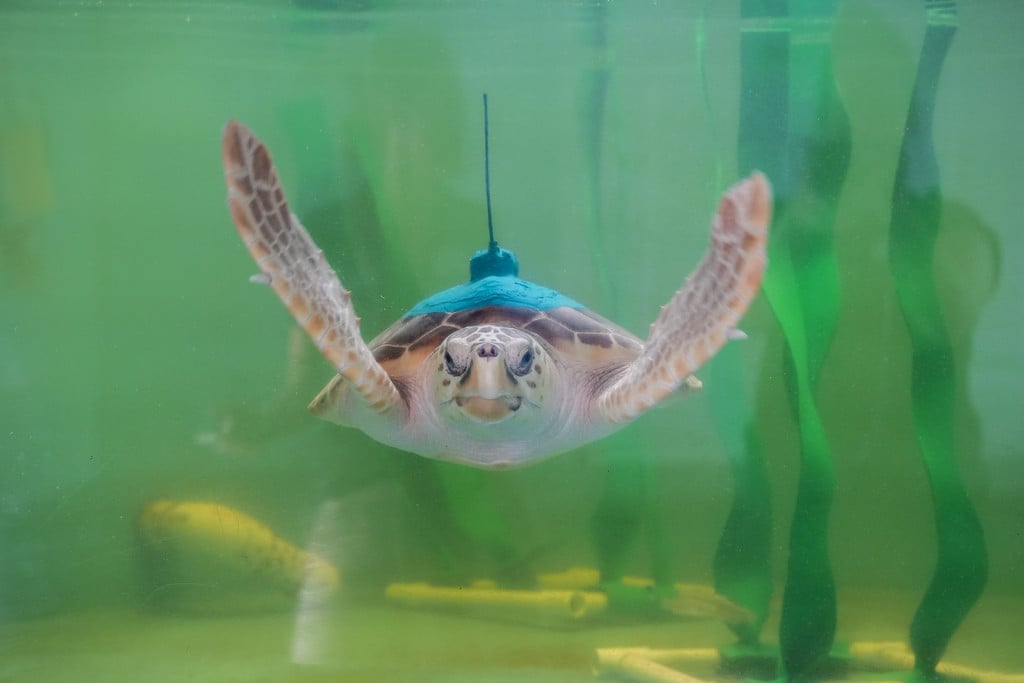
Coughlan-Smith coordinated the placement of a specialized tracking device affixed to Neptune’s shell that allows scientists, educators and fans to follow the turtle’s journey in the Atlantic Ocean with a digital map to collect the data from the device.
Following Neptune’s journey in the Atlantic
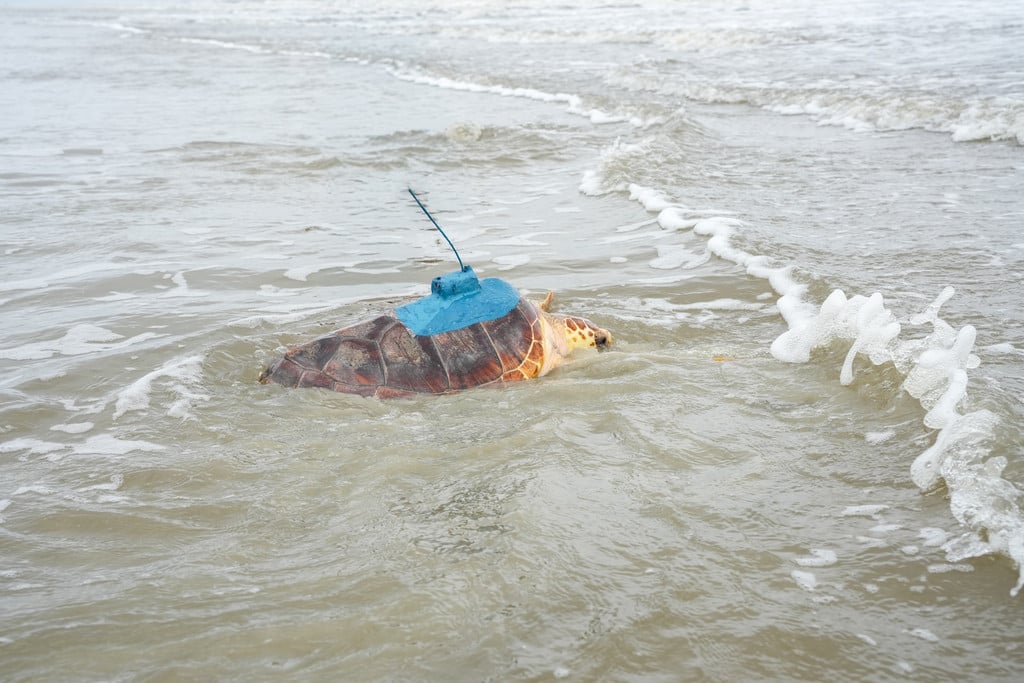
The tracking device will report Neptune’s location for approximately 18 months. Collected data will be used to study and teach sea turtle habits.
When the turtle surfaces to breathe, the whip antenna sends signals to satellites once both copper posts on the tracker clear the water. Turtle behavior and environmental factors can affect the tracker’s longevity and effectiveness.
Track Neptune’s progress at ga4h.org.
A partnership supporting coastal conservation
“We extend sincere thanks to the Jekyll Island Authority’s Georgia Sea Turtle Center and conservation teams for partnering with 4-H to contribute to and share Neptune’s release with Jekyll Island visitors,” said Dawn Zenkert, coordinator of 4-H Tidelands Nature Center.
Rehabilitation staff at the sea turtle center provided ongoing veterinary care and a pre-release exam for Neptune and many Jekyll Island Authority staff and rangers supported release logistics. Emily Mullis, 4-H volunteer from Baldwin County, assisted with Neptune’s transport during the release.
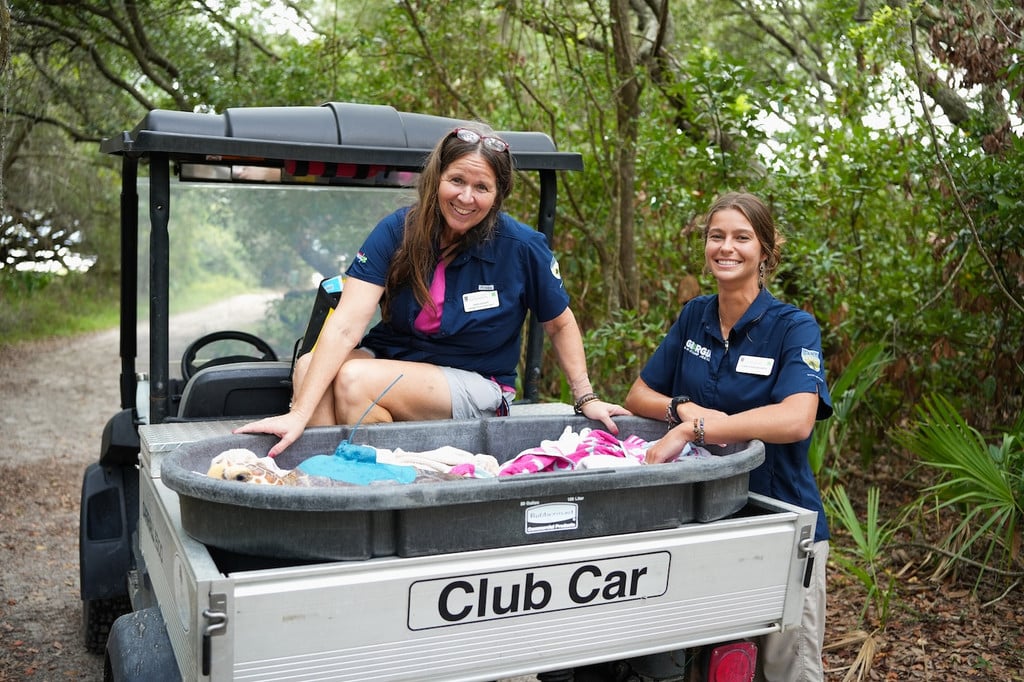
Established in 2007 on Jekyll Island and operated by the Jekyll Island Authority, the Georgia Sea Turtle Center is an institution devoted to the rehabilitation of injured sea turtles and preservation of the delicate balance of the oceanic ecosystem.
Georgia 4-H Tidelands Nature Center is located on the southwest side of Jekyll Island and offers coastal ecology programs for the public and for school groups. Kayak tours, canoe rentals and a live coastal species exhibit gallery are also available.
The Georgia 4-H Environmental Education program is available from September through May at six Georgia 4-H facilities every year, providing opportunities for high-quality day and overnight educational experiences. The research-based curriculum correlates to the Georgia Standards of Excellence, providing hands-on learning in the context of the real world.
Georgia 4-H empowers youth to become true leaders by developing necessary life skills, positive relationships, and community awareness. As the premier youth leadership organization in the state, 4-H reaches hundreds of thousands of people annually through UGA Extension offices and 4-H facilities.
For more information about Georgia 4-H and the Georgia 4-H Environmental Education program, contact your local UGA Extension office or visit georgia4h.org/ee.