Spore to store mushroom forum highlights growing demand for specialty crops
Written by
Emily Cabrera
Photography and design by
Lavi del Carmen Astacio
Mushrooms have long had a place in agriculture and in delicious culinary dishes, but the attention they are getting right now feels different — pointing toward real economic potential.

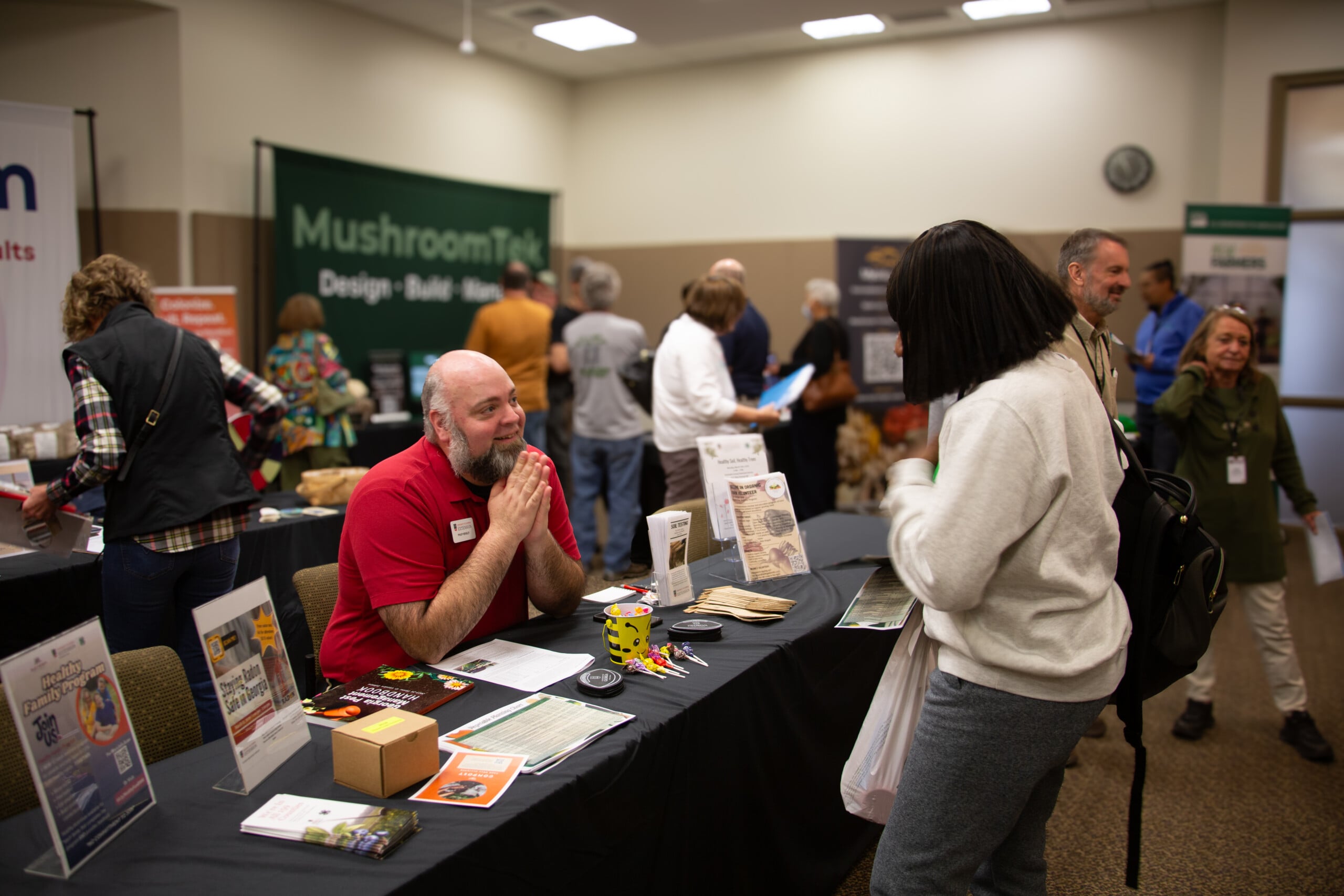
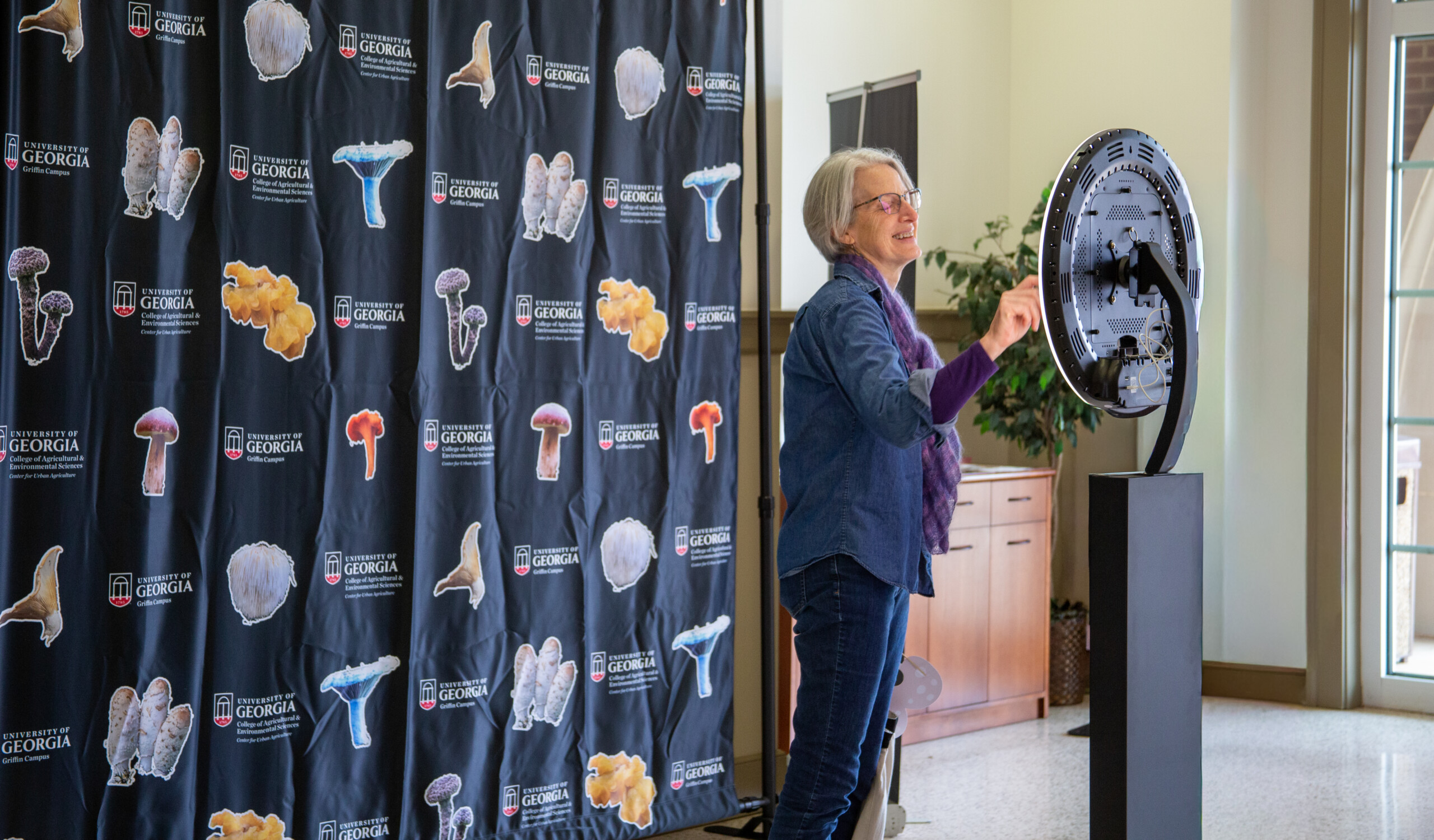
The University of Georgia Center for Urban Agriculture brought together a blend of chefs, researchers, farmers and fungi enthusiasts at its second Spore to Store Urban Mushroom Symposium last month on the UGA Griffin campus.
Over two days, attendees from Georgia and neighboring states explored the full range of mushroom potential, from their traditional culinary appeal to emerging frontiers like mycelium-based building materials, fungi-derived fabrics, and even NASA-funded research into living habitats for space.

Center director Bethany Harris organized the event to bring together groups that don’t often have the chance to learn from one another. UGA Cooperative Extension faculty and university researchers shared updates on cultivation techniques, while nonprofit organizations and government agencies focused on food access and cottage food business opportunities. Chefs offered perspectives on specialty varieties, researchers connected with small-scale growers, and enthusiasts traded foraging stories with commercial cultivators, creating a space where practical knowledge moved freely across disciplines.


Keith Fielder, UGA Extension agent and county Extension coordinator in Hancock and Putnam counties, didn’t set out to build a program around mushrooms. First, he took a workshop out of his own interest, then tried growing them at home and had success.

From there, he started offering classes to Master Gardener Extension Volunteers. When those filled quickly, he started leading public workshops, 4-H youth programming and, eventually, trainings for other agents who wanted to take the idea back to their own counties.

Because Extension programming is driven by local needs, Fielder said the response has made it easy to see where interest is growing in his county. With every workshop filling and waitlists continuing to build, culinary mushroom production is clearly resonating.
Keith Fielder, the ANR Extension agent for both Hancock and Putnam county.From the first mushroom log to full-scale production
Culinary mushroom production is a rapidly growing niche as researchers explore mushrooms’ potential in health and pharmaceutical applications.

Mushrooms offer a highly bioavailable source of protein and contain all essential amino acids required for human nutrition, along with fiber, vitamins and antioxidants, while remaining low in fat and calories. That combination of nutrient density and versatility is part of what is driving their widespread appeal.
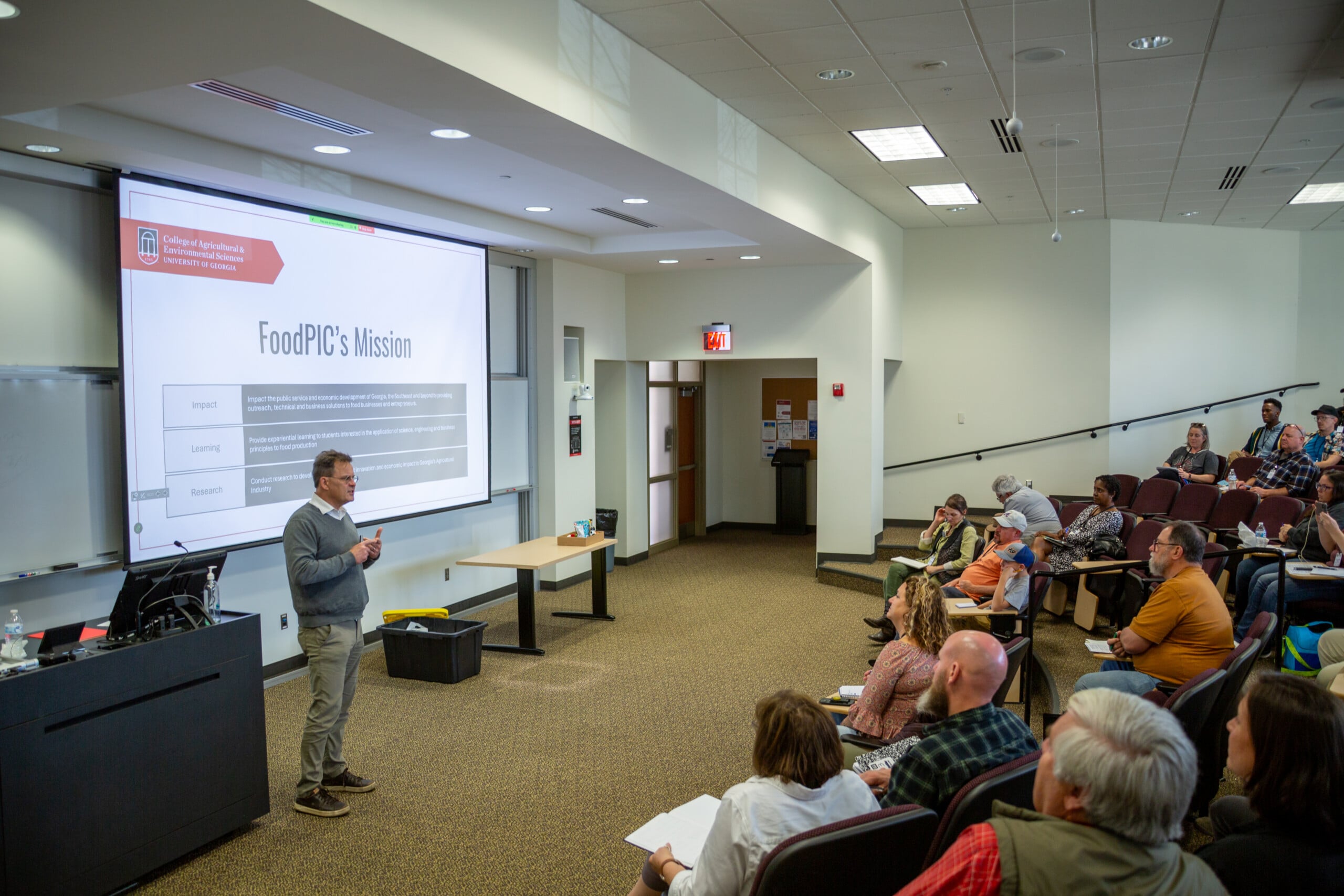
To accommodate the diversity of attendees, the symposium offered three tracks: one focused on research and new applications; another on practical production — what it actually takes to grow and scale production for a small farm business; and a third for hobbyists and first-time growers who are still figuring out where to begin.

For those who couldn’t attend in person, sessions were livestreamed, allowing virtual audiences to engage and ask questions in real time. But the in-person conversations are what sparked palpable excitement. Harris said that’s why these events matter — so people can ask questions on the spot, compare notes and build relationships that last beyond a single workshop.





Turning demand into opportunity
Chefs have a quiet way of shaping people’s palates, turning unfamiliar ingredients into something scrumptious, and interest from the culinary side isn’t letting up, with chefs drawn to varieties like lion’s mane, oyster and shiitake for their texture and versatility in the kitchen.

Mushrooms carry flavor, mimic familiar proteins and offer something entirely new, giving chefs room to experiment and build dishes that feel both surprising and deeply satisfying.

For growers, demand from restaurants is part of the draw, but so is the way mushrooms fit into a farm operation. Mushrooms don’t require much space and they don’t depend on good soil or full sun, allowing growers to set up in a corner of a property that wouldn’t work for anything else and still produce a viable crop. In smaller or urban settings, every square foot matters.
Fresh lion's mane mushroom. Lion's mane (Hericium erinaceus) pulls double duty in the kitchen and in the supplement cupboard. Compared to crab or lobster when cooked, it's also studied for it's potential benefits to boosting brain function. A bushel of chesnut mushrooms.. Chestnut mushrooms (Pholiota adiposa) have a somewhat nutty or earthy flavor, and hold up well in the pan.Timing helps, too. Mushrooms often come on before other crops are ready, which gives growers something to bring to market early. Many sell directly at farmers markets or to restaurants, where specialty varieties can bring in more revenue than traditional produce. Mushrooms can also be dried and stored, then rehydrated later, which extends their shelf life and gives growers a little more control over when and how they sell.

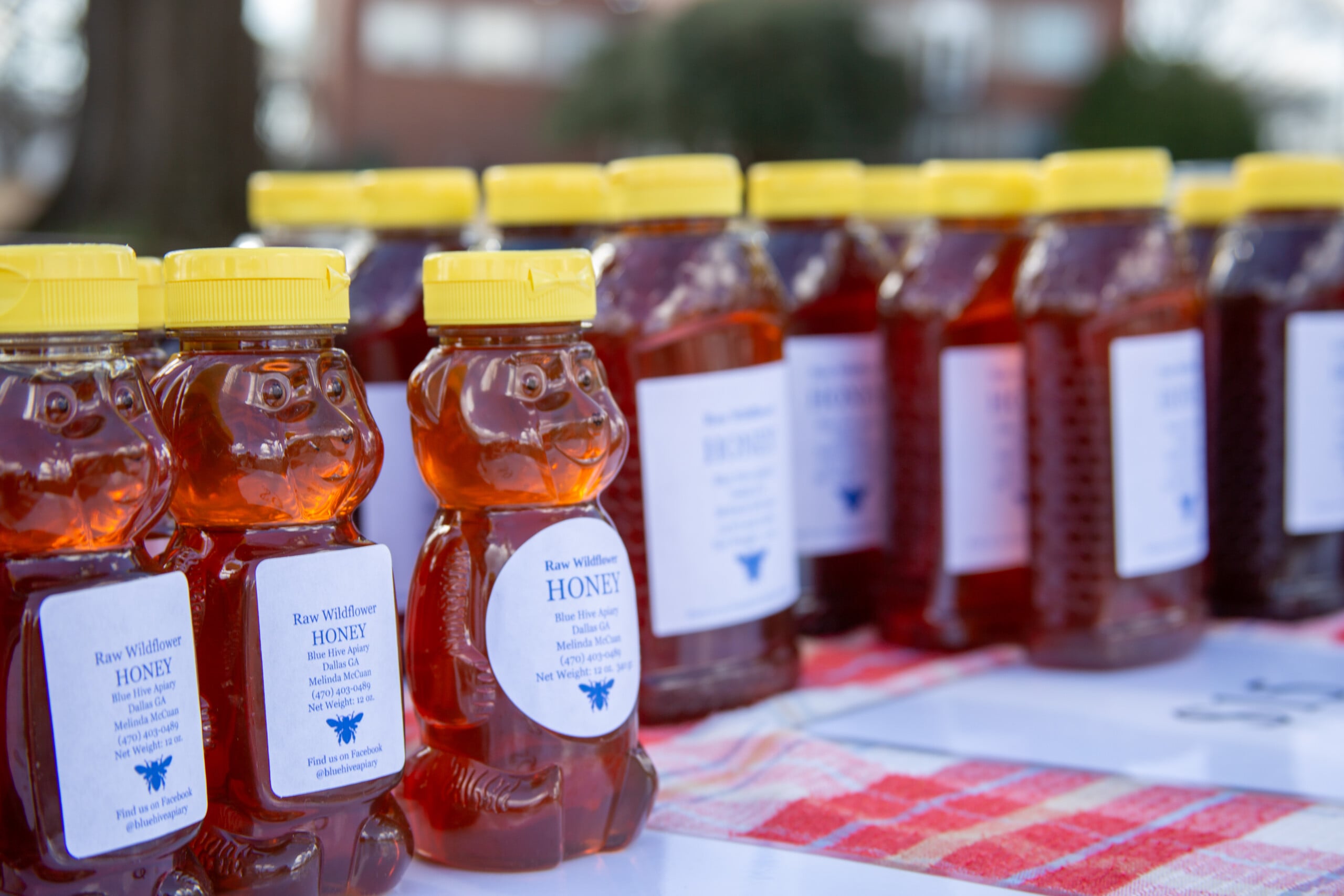
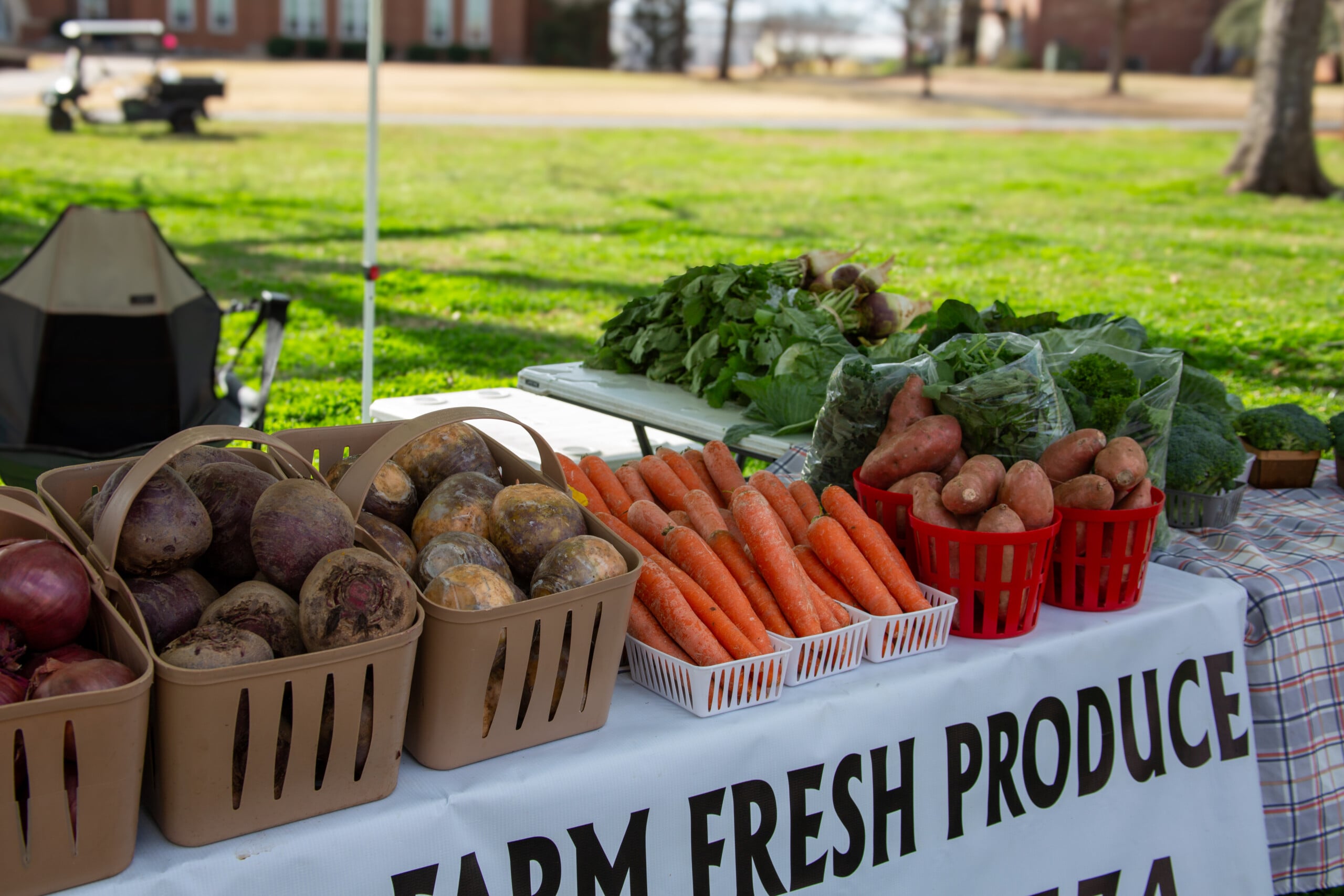
Tucked alongside the symposium, the Mushroom Market offered a glimpse of what that potential looks like in practice.

Attendees meandered between tables of fresh mushrooms and value-added products, chatting with growers and asking questions about varieties, storage and cooking. It was a simple setup, but effective at showing how quickly mushrooms can move from production to point of sale, and how easily they fit into direct-to-consumer markets like these.



King trumpet mushrooms, also known as king oysters, are easy to grow and are a tasty meat substitute.