Takeaways
- Four CAES faculty are being recognized among UGA’s top research award winners, highlighting the college’s range from lab science to real-world application.
- The researchers’ work tackles pressing challenges, from breaking down “forever chemicals” to improving drought-tolerant turf and developing sustainable food products.
- Together, their research shows how discovery at UGA moves beyond theory, shaping industries, communities and environmental solutions.
During Honors Week each spring, the University of Georgia honors the discoveries, inventions, scholarly creativity and entrepreneurial breakthroughs that define its research mission.
At the UGA Research Awards Banquet on April 2, four faculty members from the College of Agricultural and Environmental Sciences (CAES) will be recognized for achievements spanning environmental innovation, turfgrass breeding, food technology entrepreneurship and the study of insect societies.
The awards are sponsored by the UGA Research Foundation and administered through UGA’s Office of Research.
Distinguished Research Professor: Qingguo “Jack” Huang
The Distinguished Research Professorship recognizes senior faculty whose work has achieved international prominence and transformational impact within their discipline.

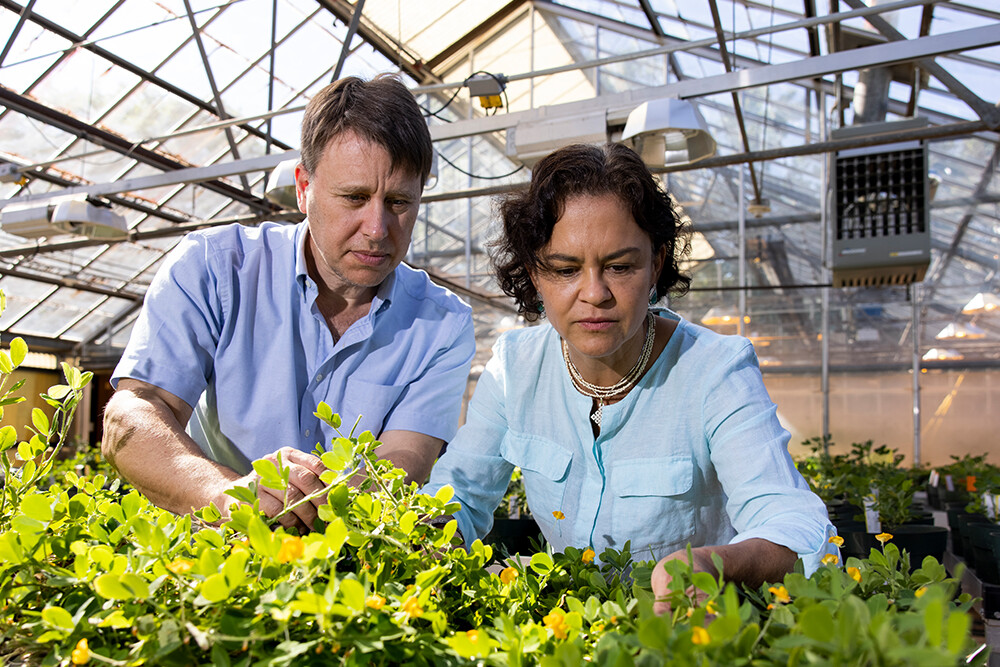
Qingguo “Jack” Huang, professor in the CAES Department of Crop and Soil Sciences, has spent his career developing technologies to remediate contaminants in water and soil, particularly compounds that resist conventional treatment.
Among the most pressing targets of his research are per- and polyfluoroalkyl substances (PFAS), often called “forever chemicals” because they persist in the environment for decades.
Through catalytic technologies he developed and refined at UGA, Huang has found ways to break down these highly stable pollutants in contaminated water, leading to patented technologies now licensed and commercialized for real-world cleanup applications.
With more than 200 peer-reviewed publications, sustained federal funding and industry partnerships, Huang has helped establish UGA as a national leader in PFAS research and remediation.
Inventor of the Year: Brian Schwartz
The Inventor of the Year Award recognizes UGA faculty whose discoveries have produced impactful technologies and intellectual property with real-world reach.
Brian Schwartz, crop and soil sciences professor and lead turfgrass breeder on the UGA Tifton campus, has spent decades developing cultivars that have reshaped the industry.
He is co-developer of ‘TifTuf’ hybrid bermudagrass, a drought-tolerant variety that has become the most commercially successful release in the history of UGA’s turfgrass breeding program.

Since its release, ‘TifTuf’ has generated more than $13 million in gross licensing revenue and has grown to more than 110 sublicensed producers, collectively selling roughly 3 billion square feet of sod worldwide.
Schwartz has also led the development of ‘Tif3D’ bermudagrass, Australis zoysiagrass and ‘TifShade’ zoysiagrass and contributed to more than a dozen other turfgrasses and ornamentals bred at UGA.
Entrepreneur of the Year: Kevin Mis Solval
The Entrepreneur of the Year Award honors UGA faculty founders who have successfully launched companies built on university research.
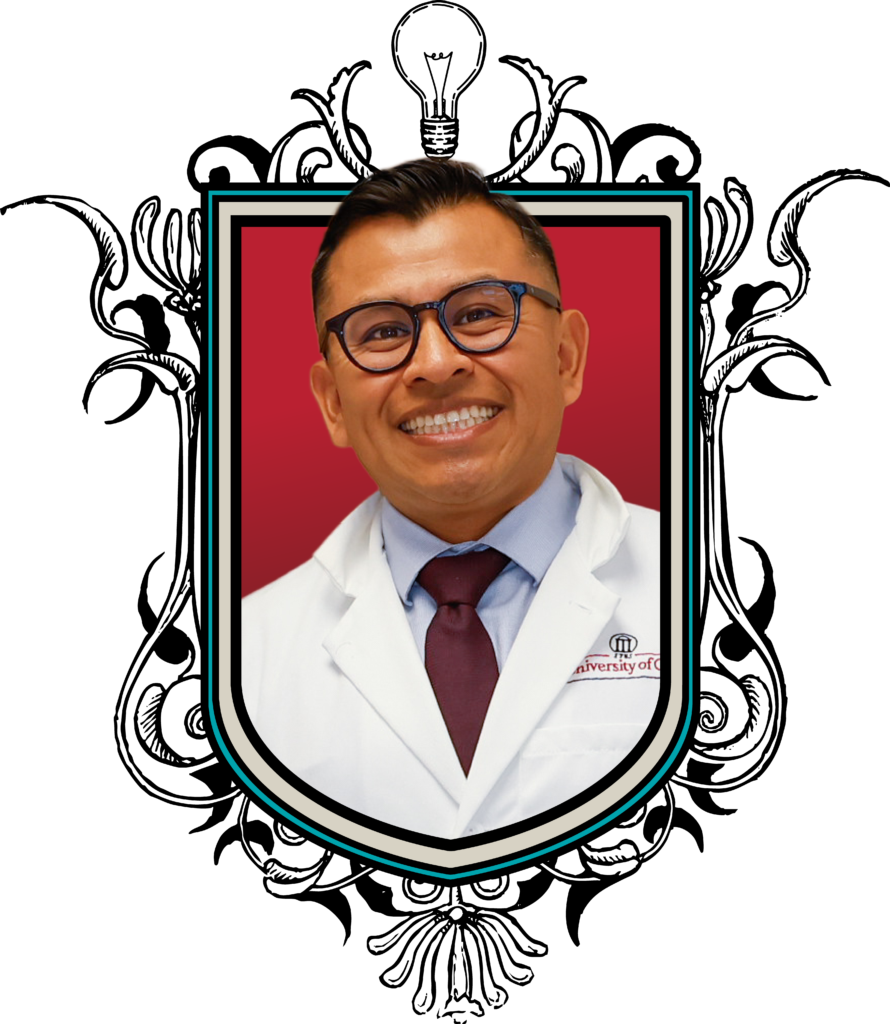
Kevin Mis Solval, associate professor in the CAES Department of Food Science and Technology on the UGA Griffin campus, co-founded JellyCoUSA on a premise that sounded unlikely until it worked — converting cannonball jellyfish, abundant along the Georgia coast, into high-value collagen peptides for use in health and wellness products.
A specialist in sustainable food processing and blue proteins — which are sourced exclusively from aquatic organisms — Mis Solval built the company around technology developed at UGA.
The innovative approach offers an alternative to mammalian collagen sources while creating economic opportunities for rural and coastal fishing communities by transforming an underused marine resource, often seen as a nuisance, into a valuable commercial ingredient.
JellyCoUSA licensed its technology through a Georgia Startup License. Mis Solval’s research and Extension programs have drawn support from the U.S. Department of Agriculture, the Georgia Research Alliance, UGA Marine Extension and Georgia Sea Grant, and UGA’s Innovation Gateway.
Postdoctoral Research Award: Haolin “Horace” Zeng
The Postdoctoral Research Award recognizes the contributions of postdoctoral scholars to the university’s research efforts.
Haolin “Horace” Zeng, a postdoctoral associate in the CAES Department of Entomology who earned his doctorate in entomology from CAES in 2022, studies how ant colonies function as complex, highly organized societies. His research draws on behavioral experiments, chemical ecology, population genetics and computational modeling to examine how selfish genetic elements — genes that prioritize their own survival — influence the social structure of colony organization, reproduction and collective decision-making.

That mix of methods has produced new insights into the dynamics of cooperation and conflict in insect societies. Zeng has published as first or senior author in journals including Proceedings of the National Academy of Sciences, Behavioral Ecology and Sociobiology, and Ecology and Evolution, with additional studies under review. His work has attracted National Science Foundation support and has led to collaborations across biology, physics, computer science and the arts.
Zeng is also an active mentor to undergraduate and high school students and a committed science communicator.
Advancing discovery at CAES
The four awardees work in disparate fields — ant genetics, PFAS chemistry, sod production, jellyfish collagen — but together they represent the breadth of CAES research and its reach, spanning from academic journals to consumer products.