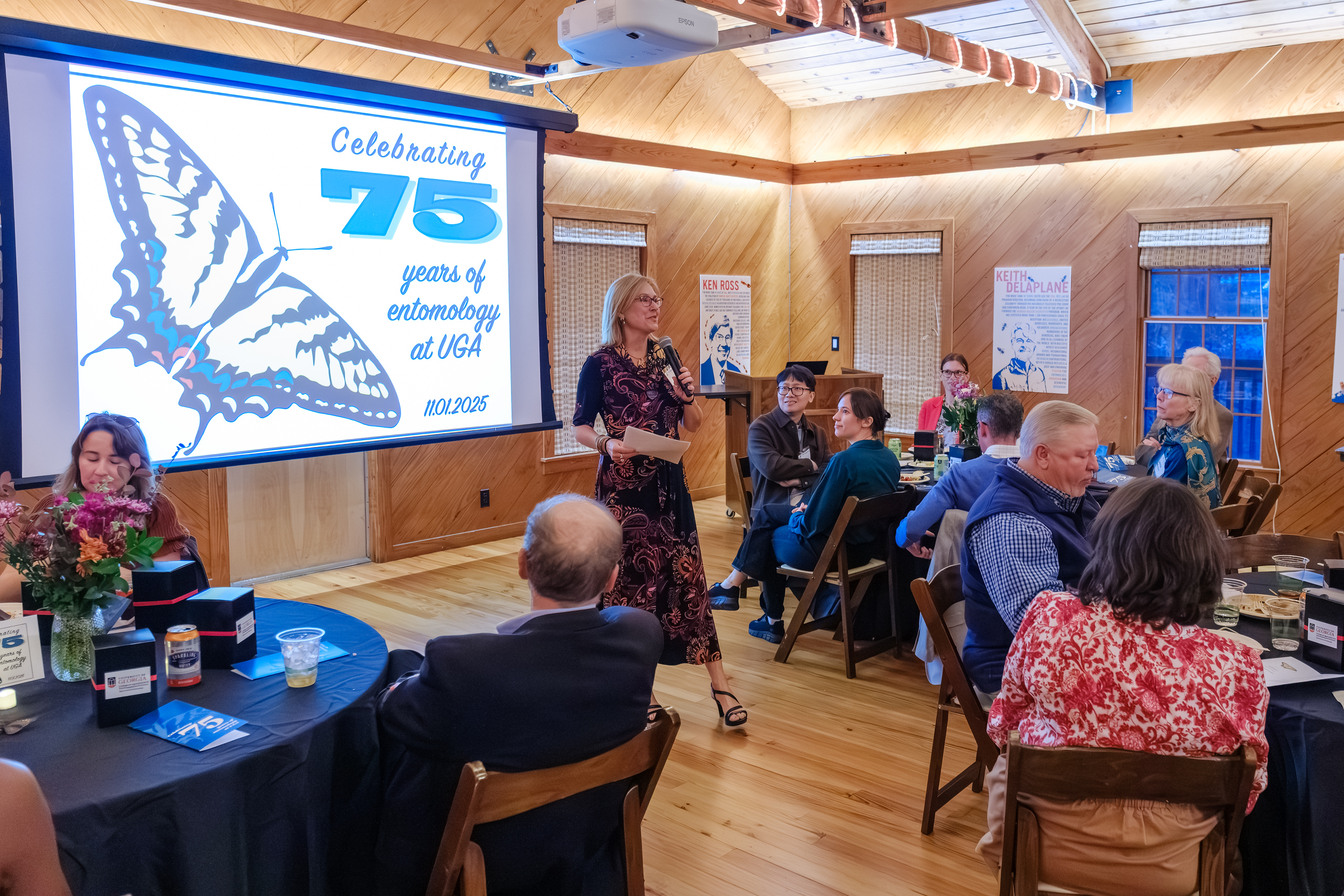
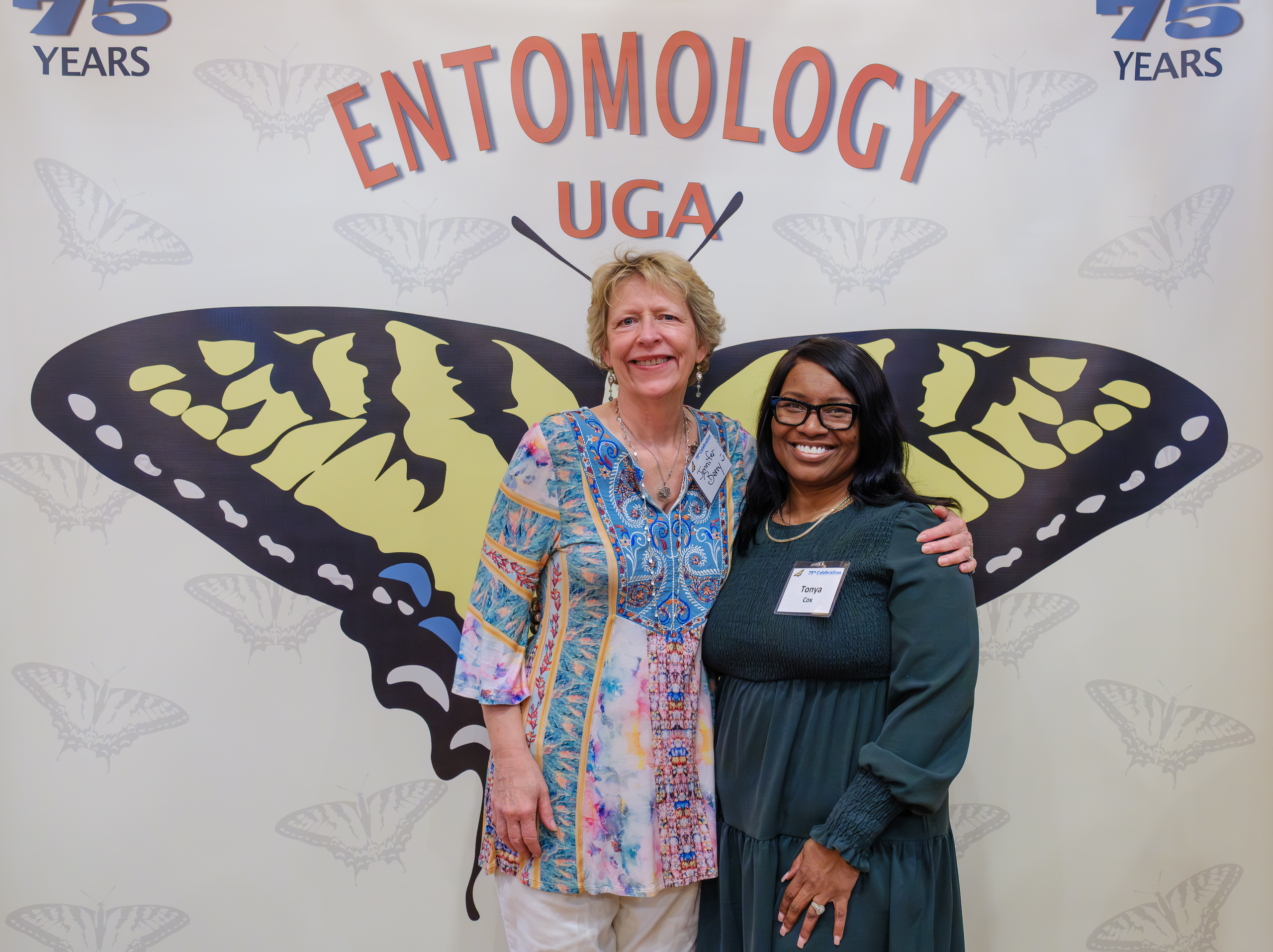
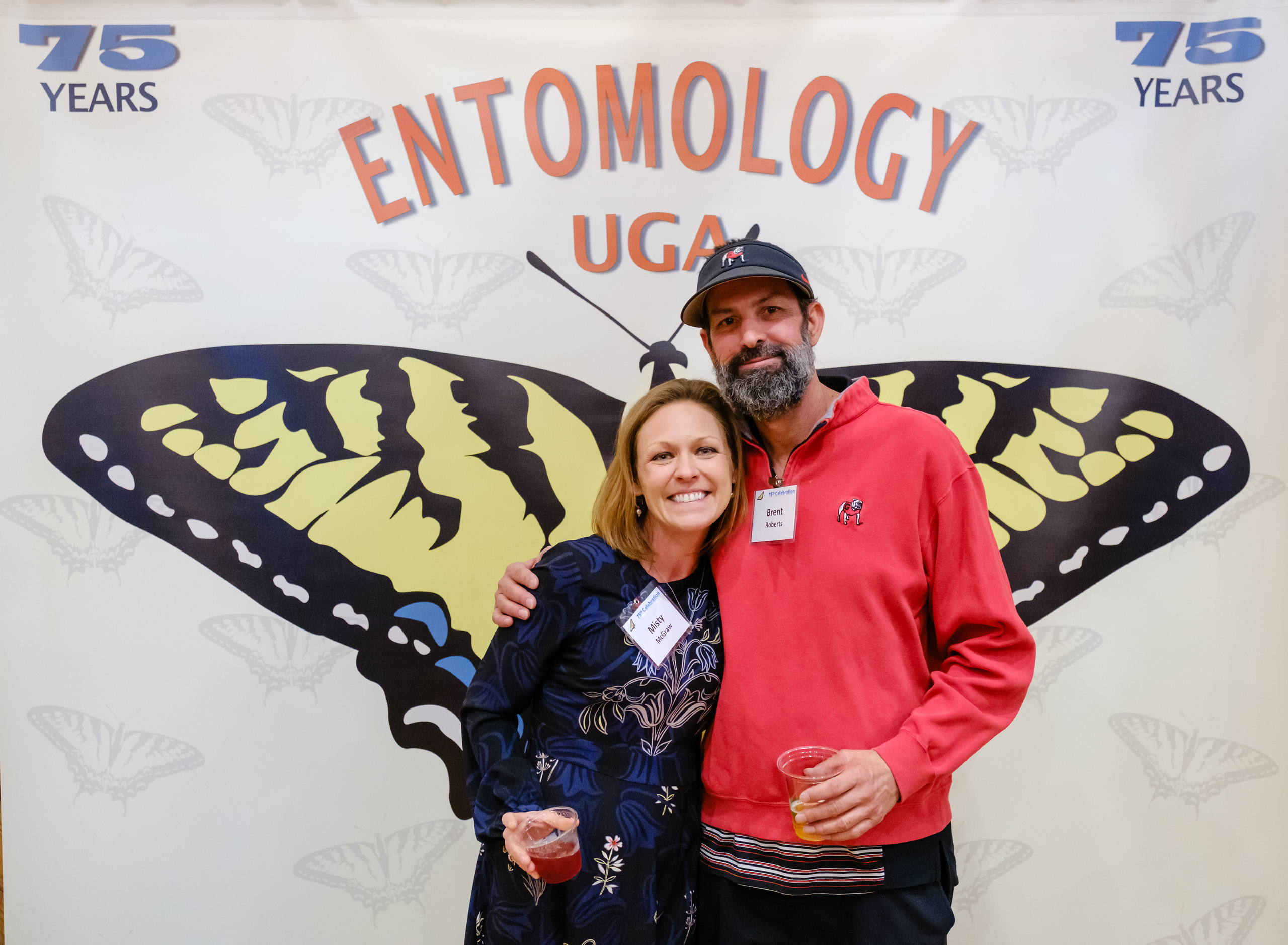
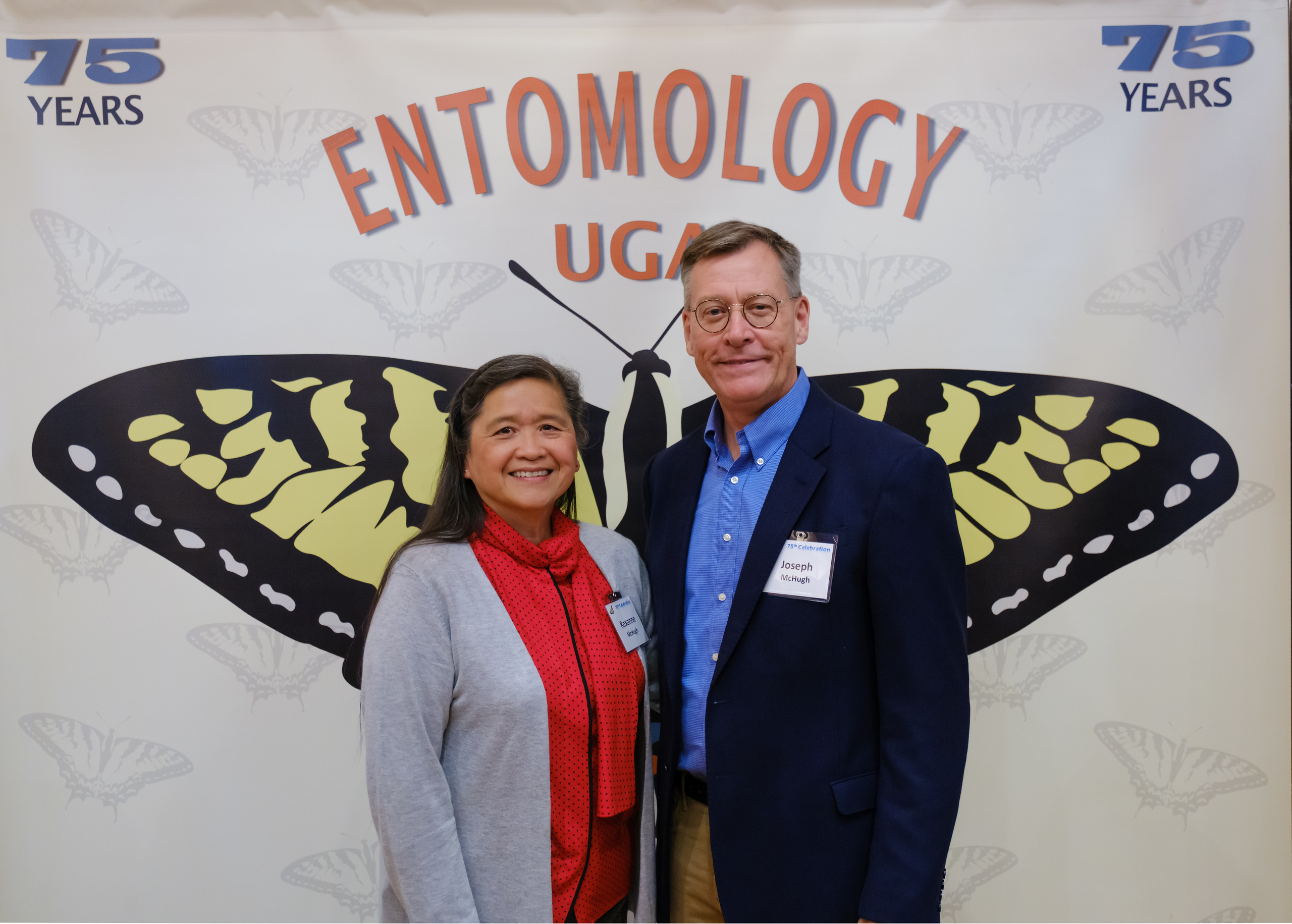
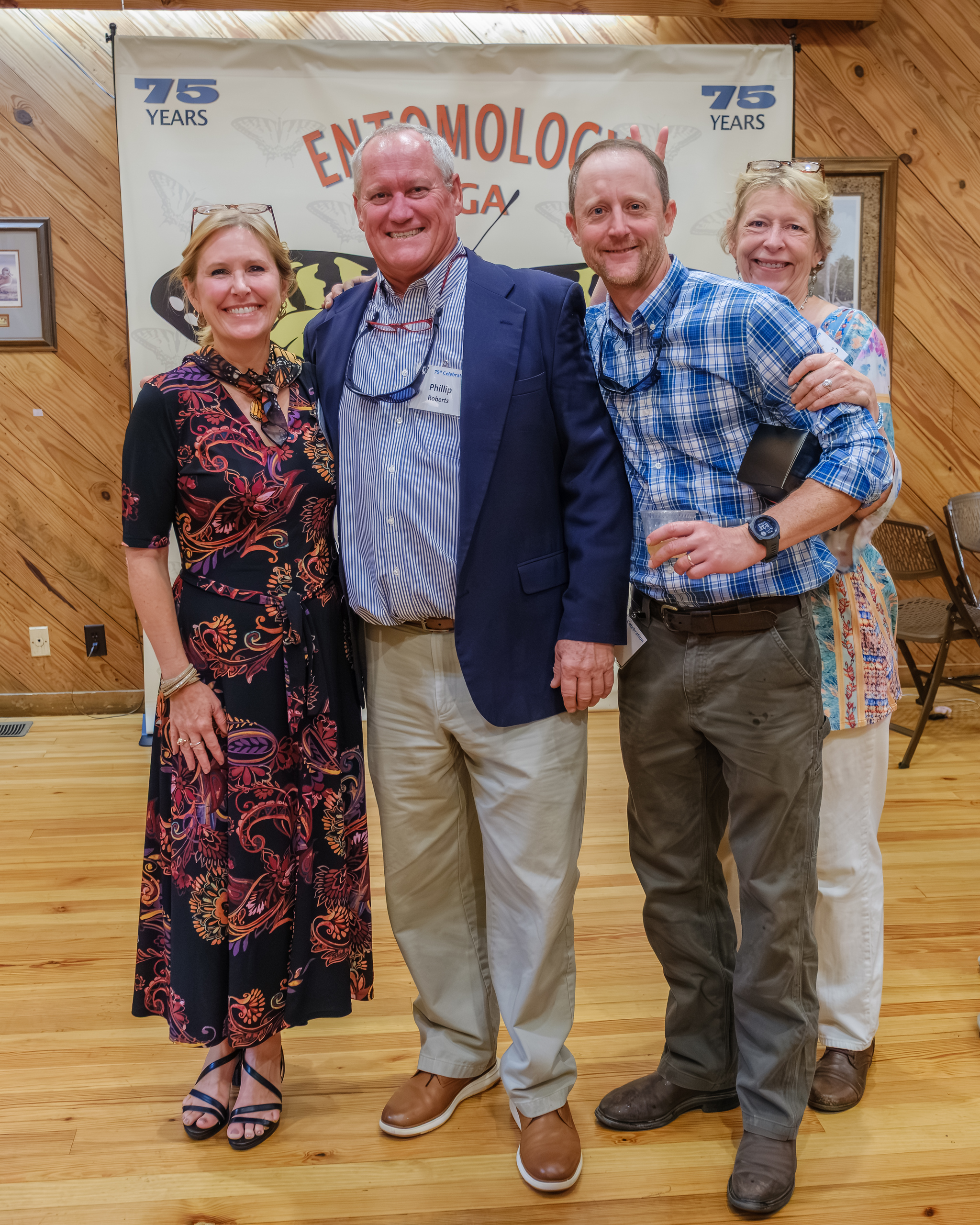
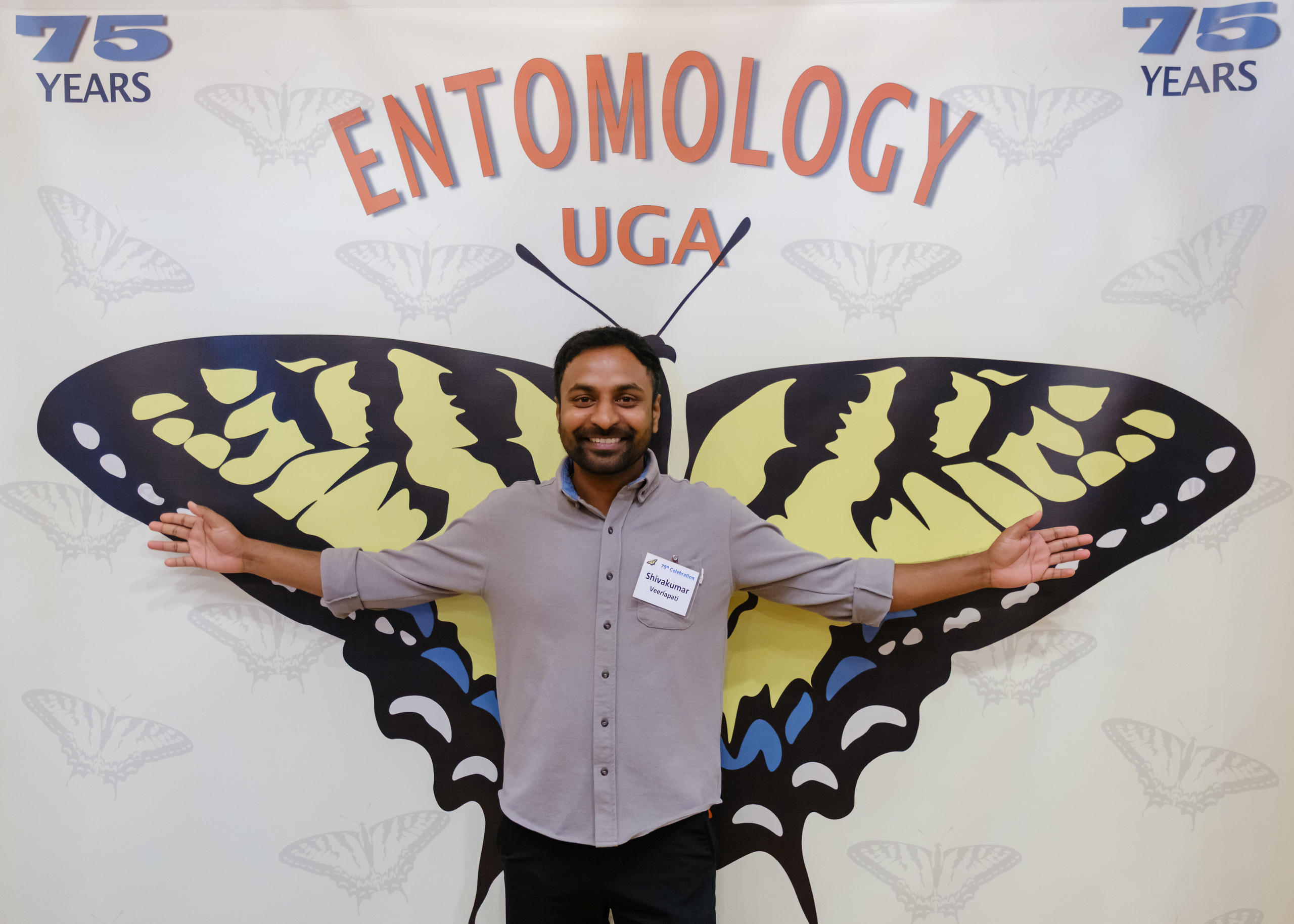
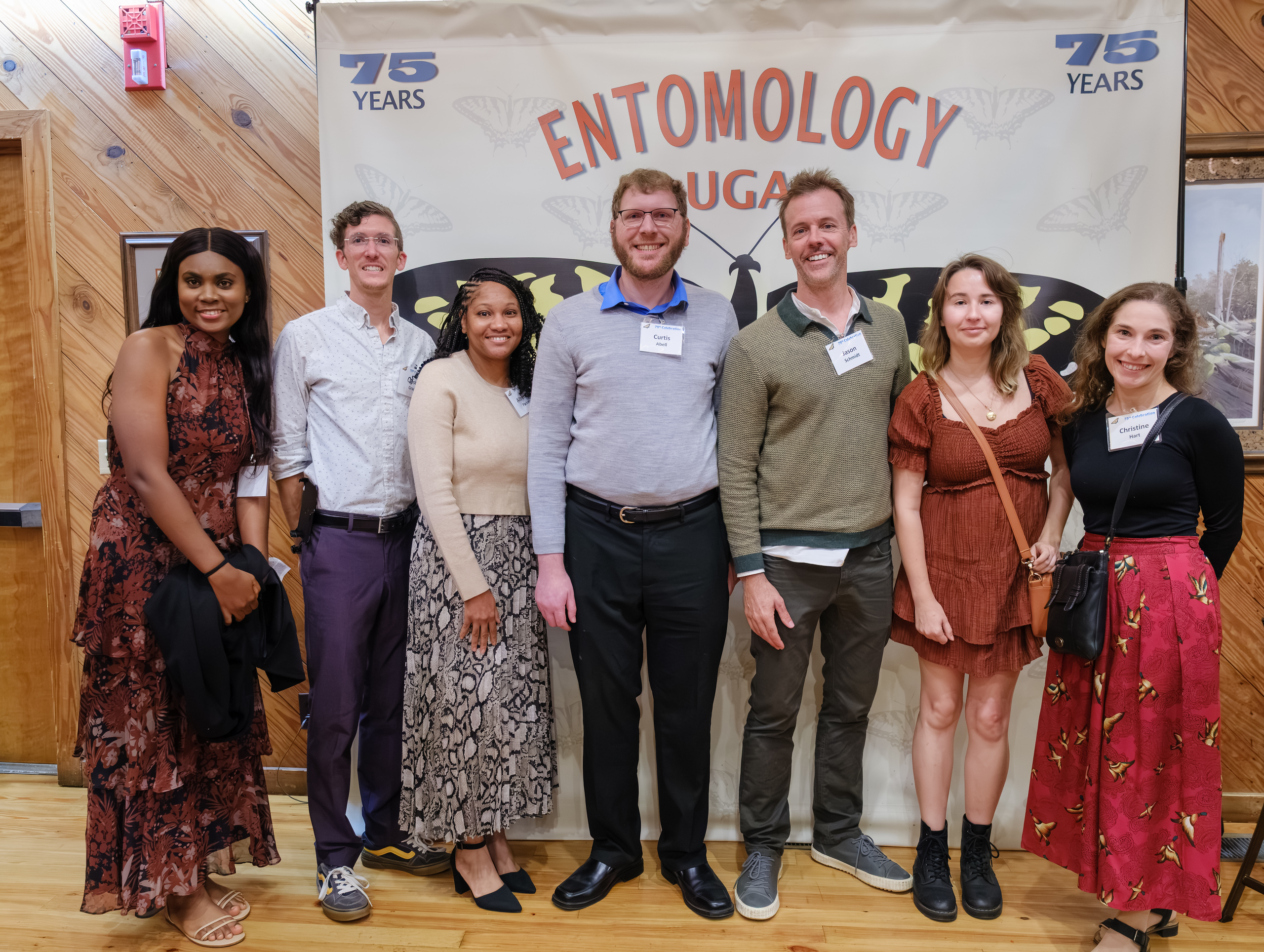
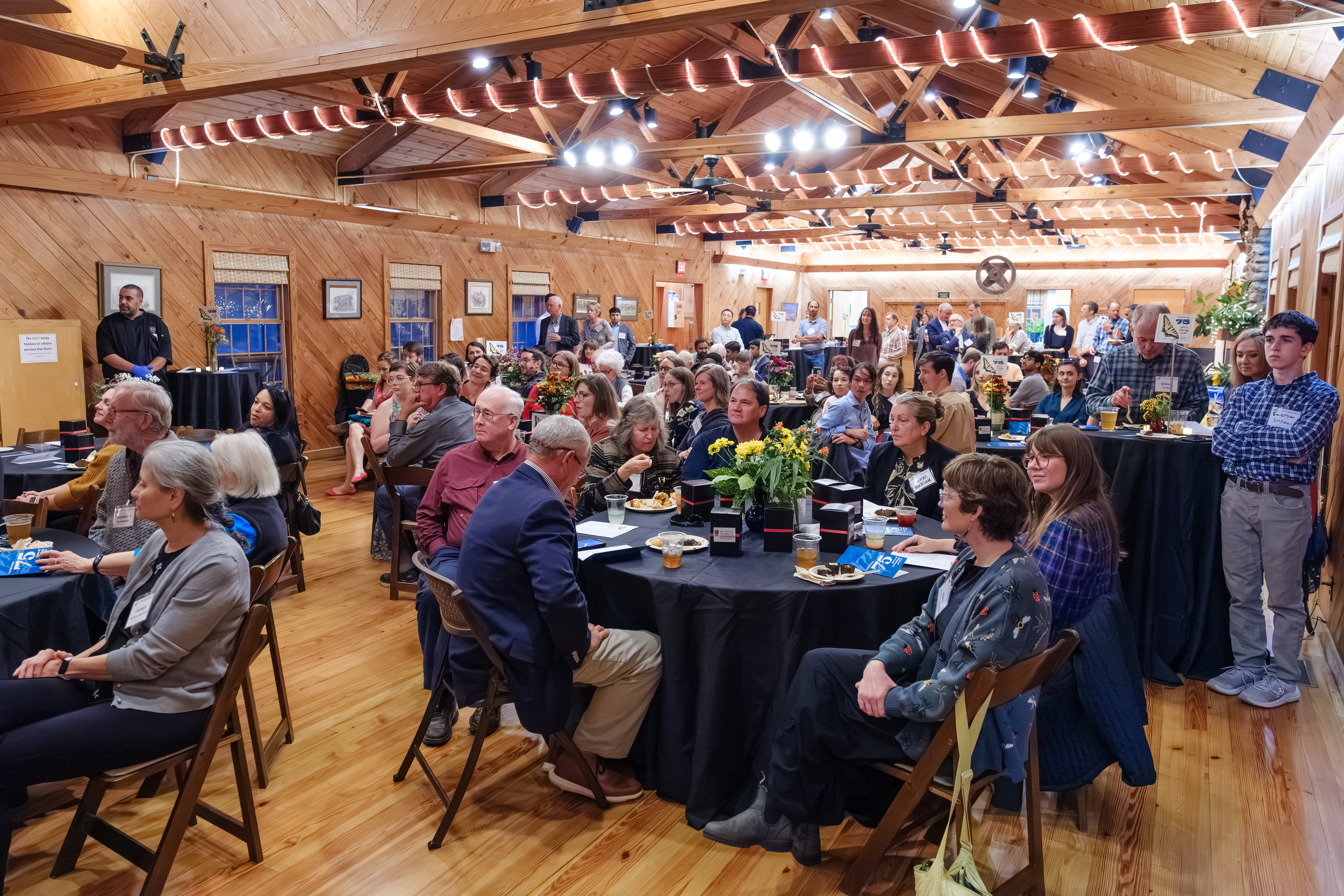
On Nov. 1, the University of Georgia Department of Entomology celebrated its 75th anniversary, highlighting decades of pioneering research, education and community impact, and honoring the legacy of nine recent emeritus professors.
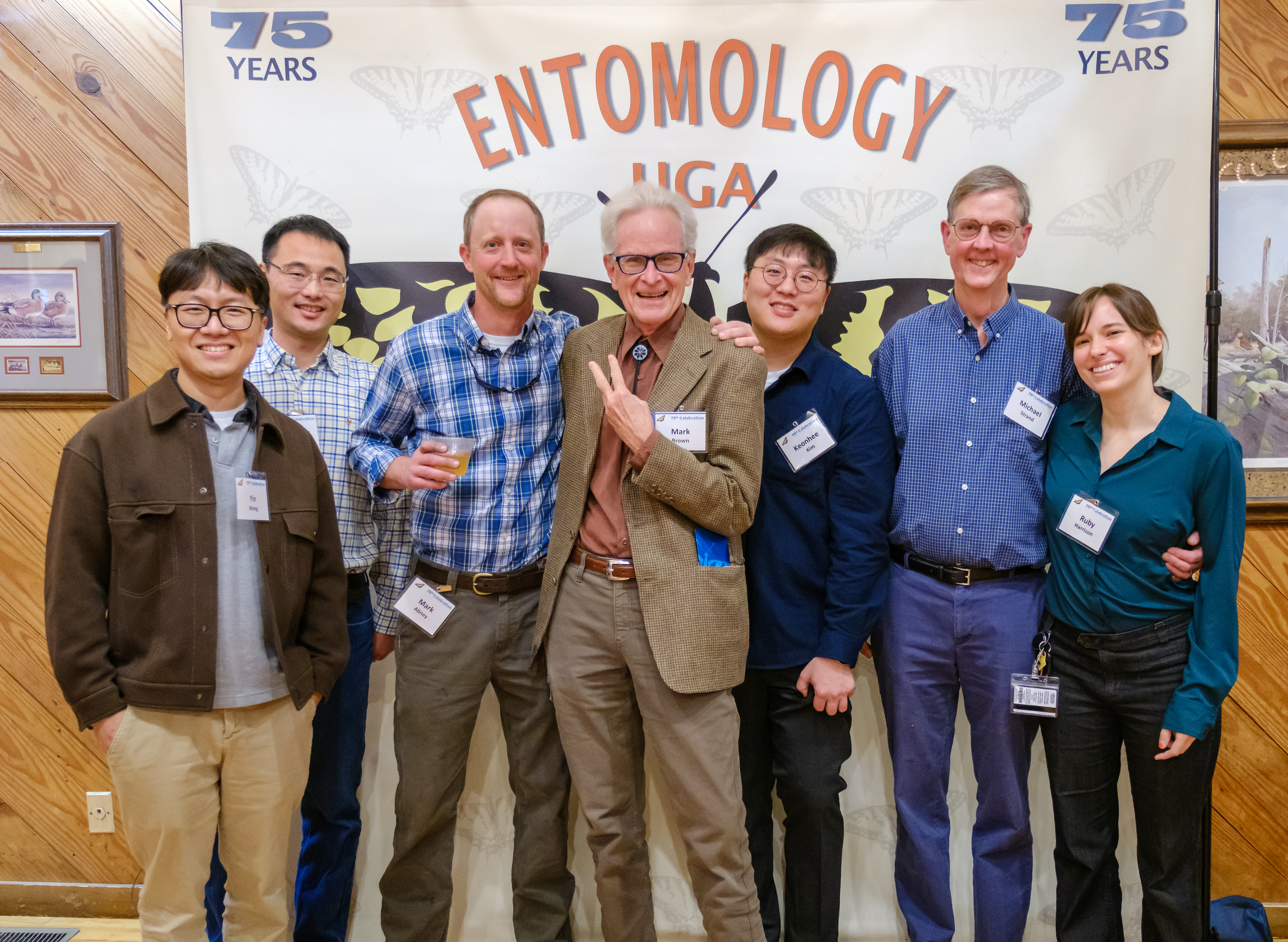
In addition to the evening’s honorees, the department welcomed more than a dozen previously retired and emeritus professors to the event and celebrated their years of service, trailblazing research, support of students and work with industry partners and growers.
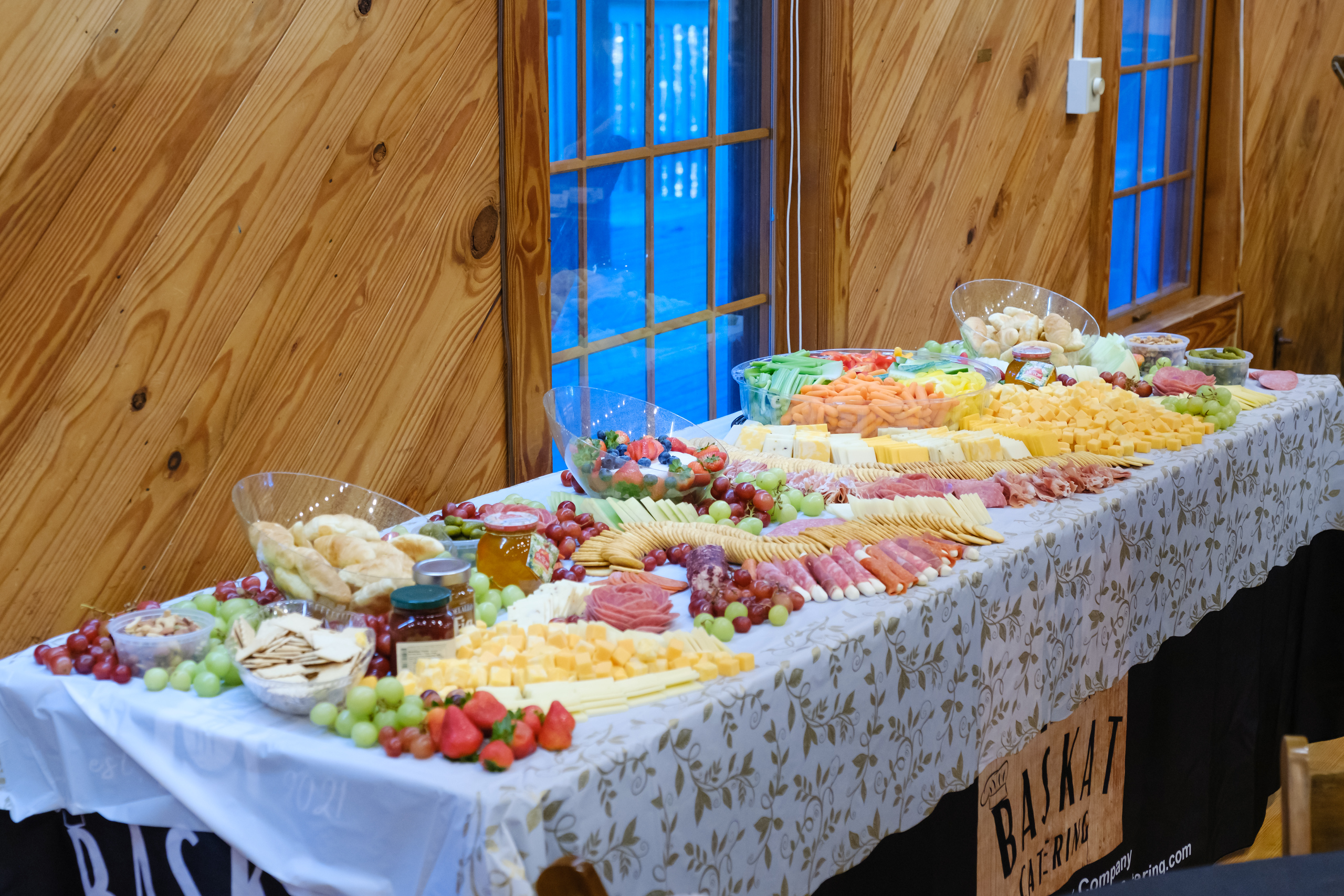
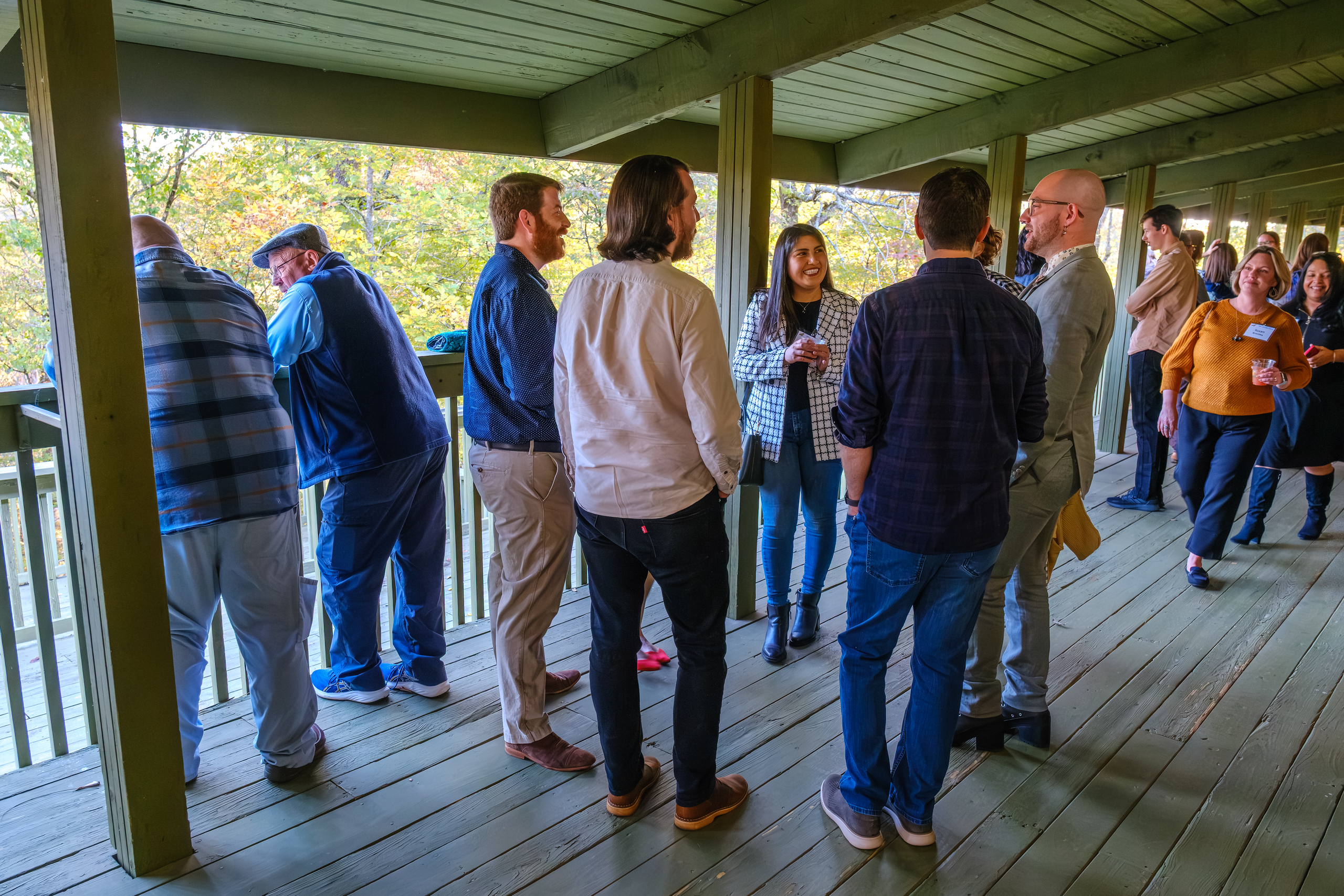
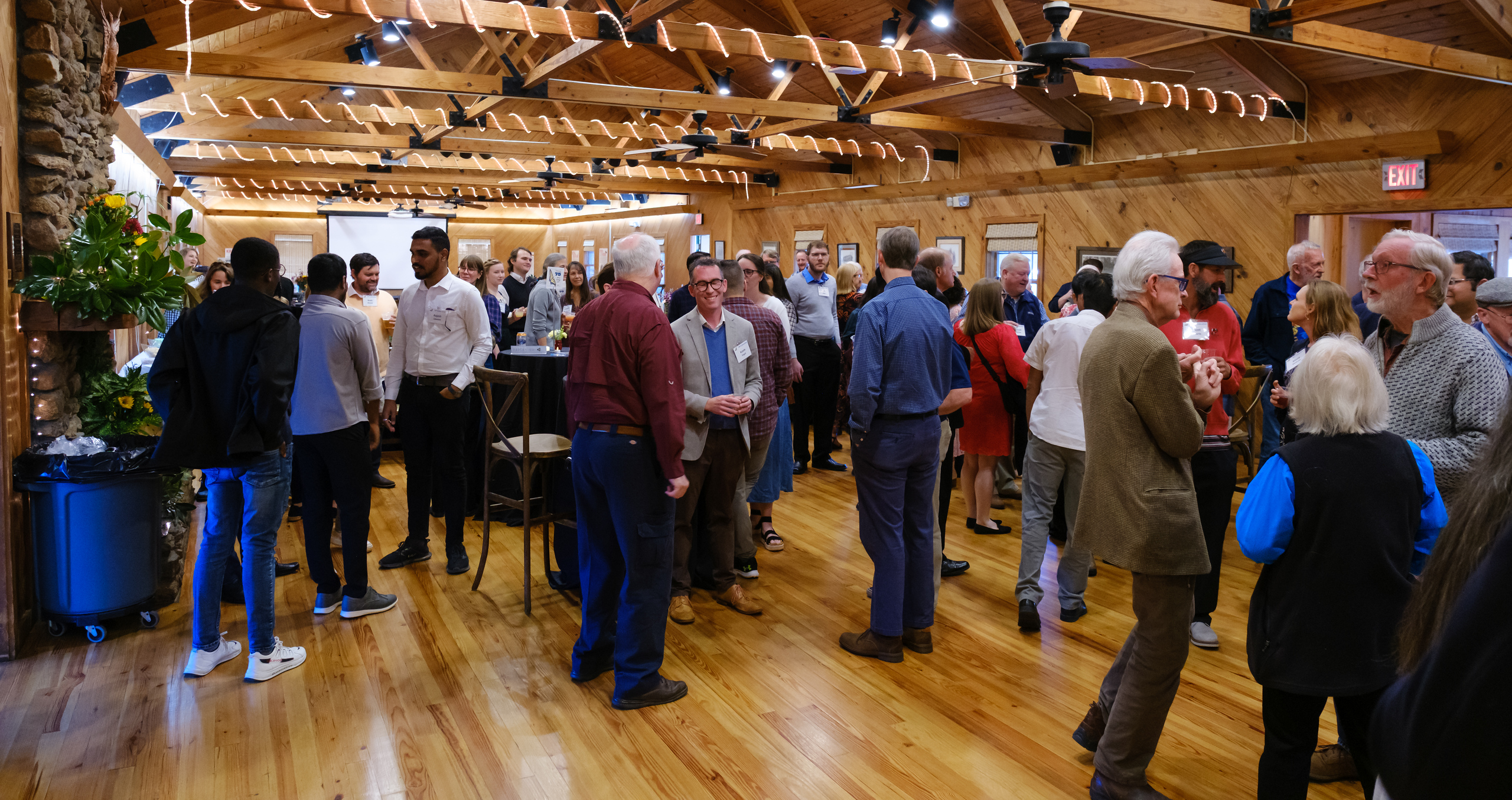
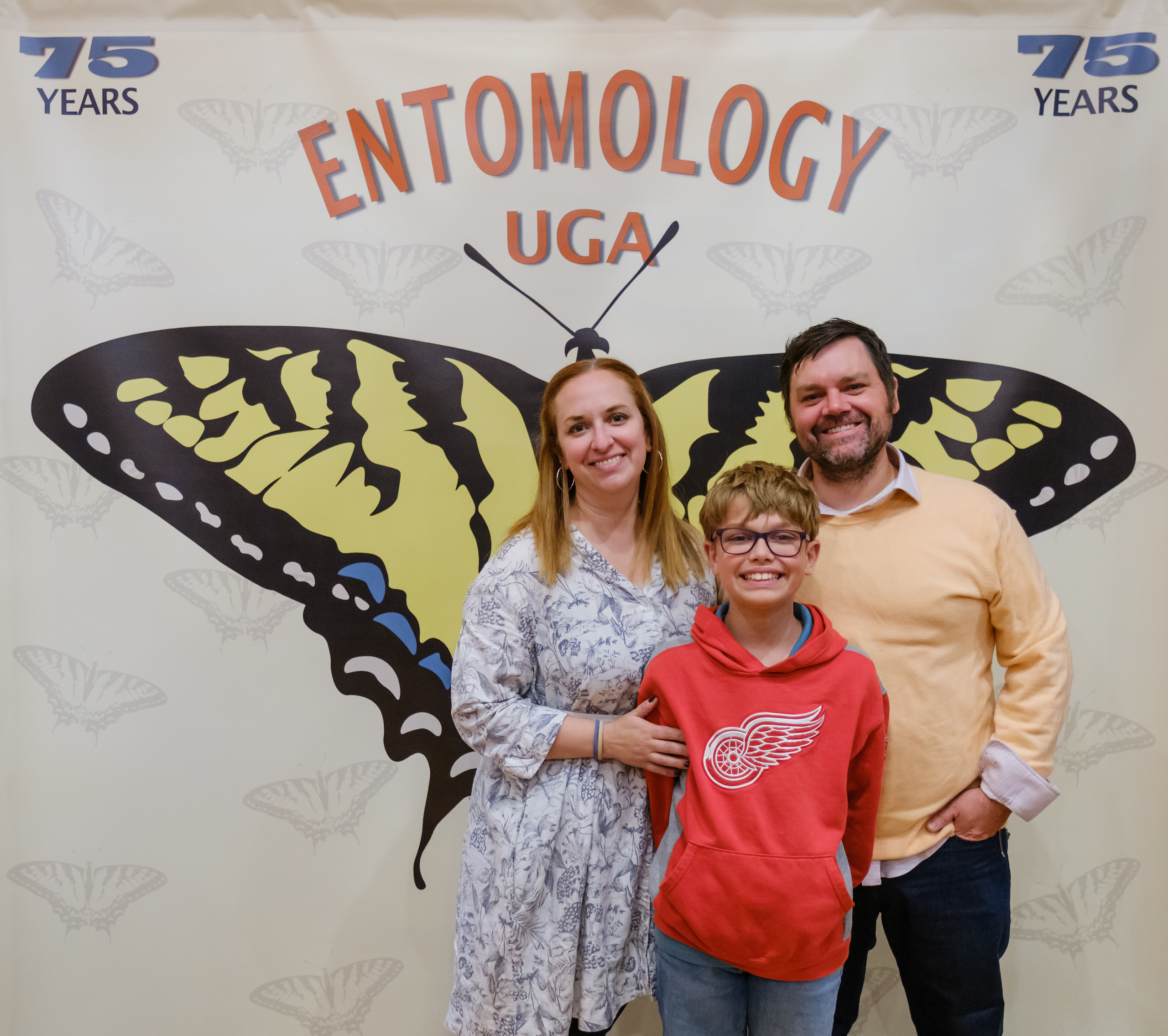
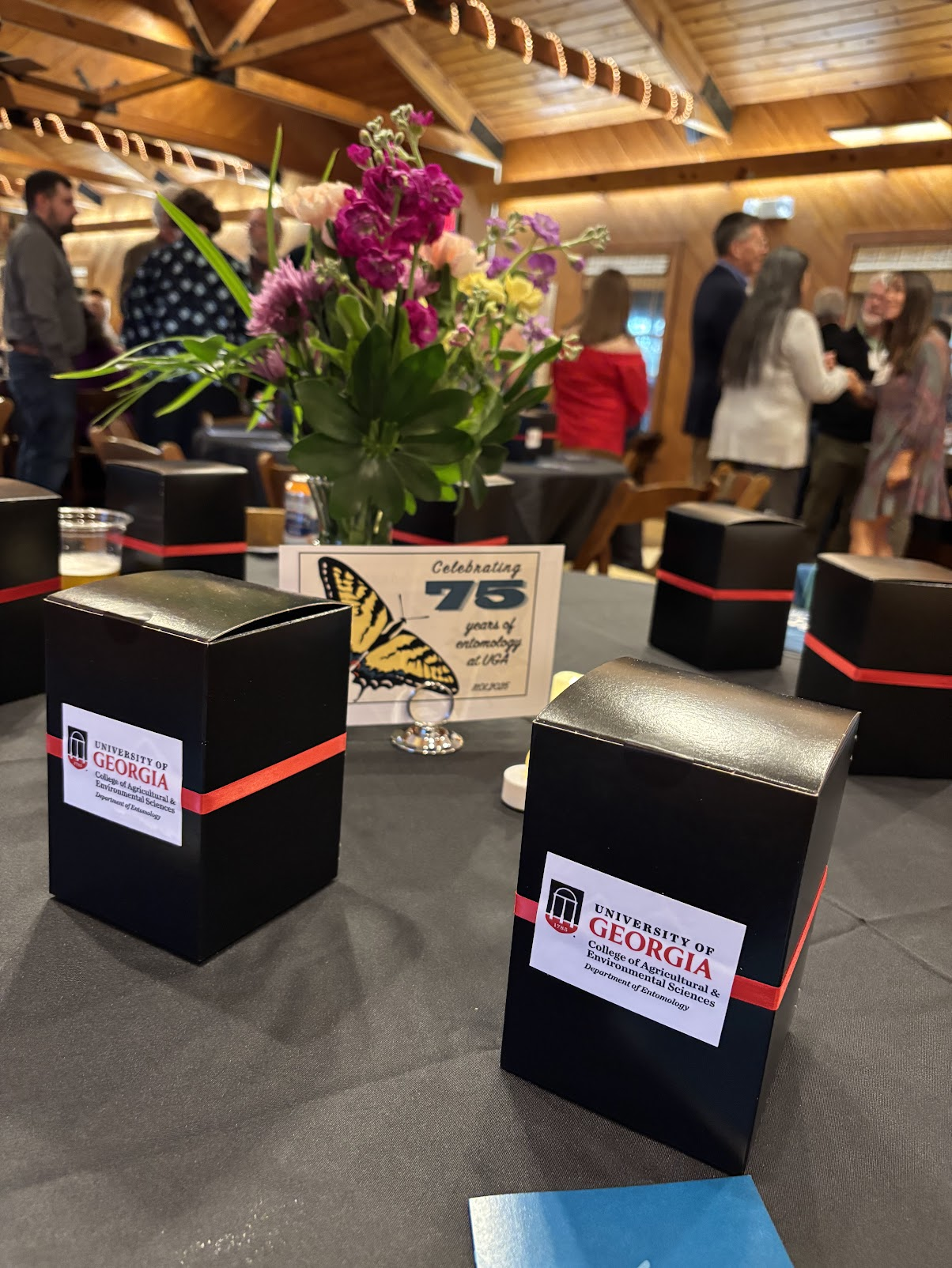
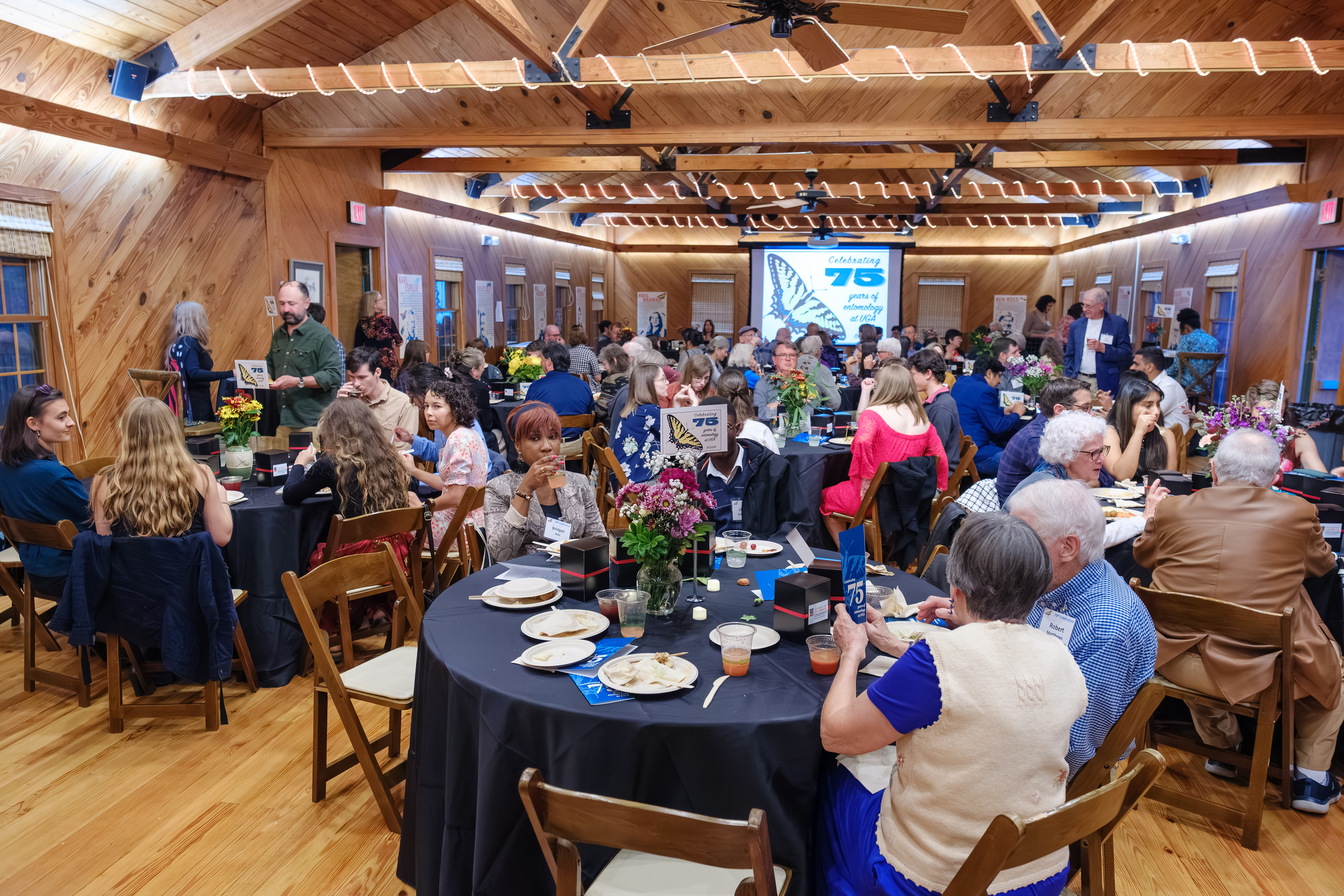
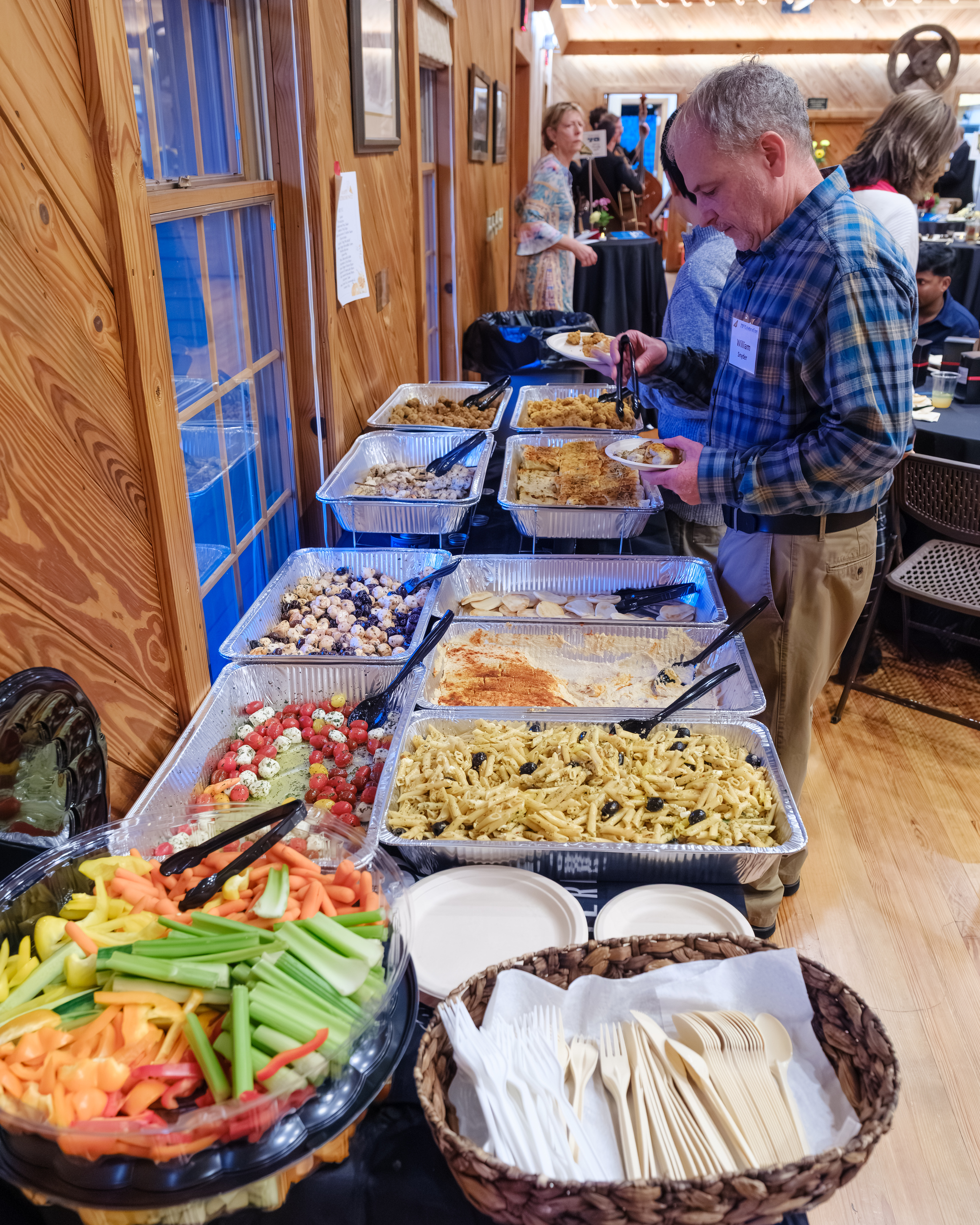
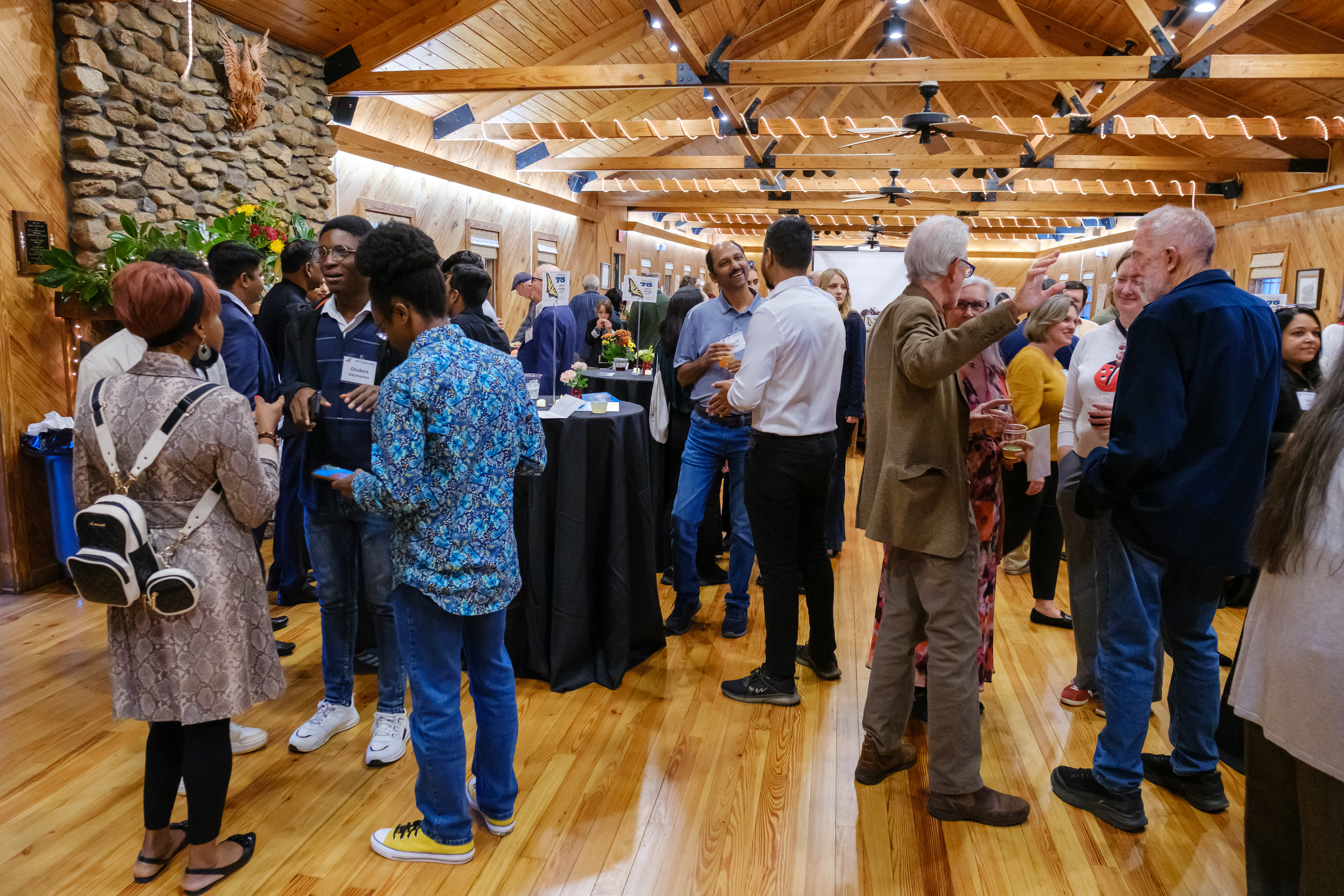
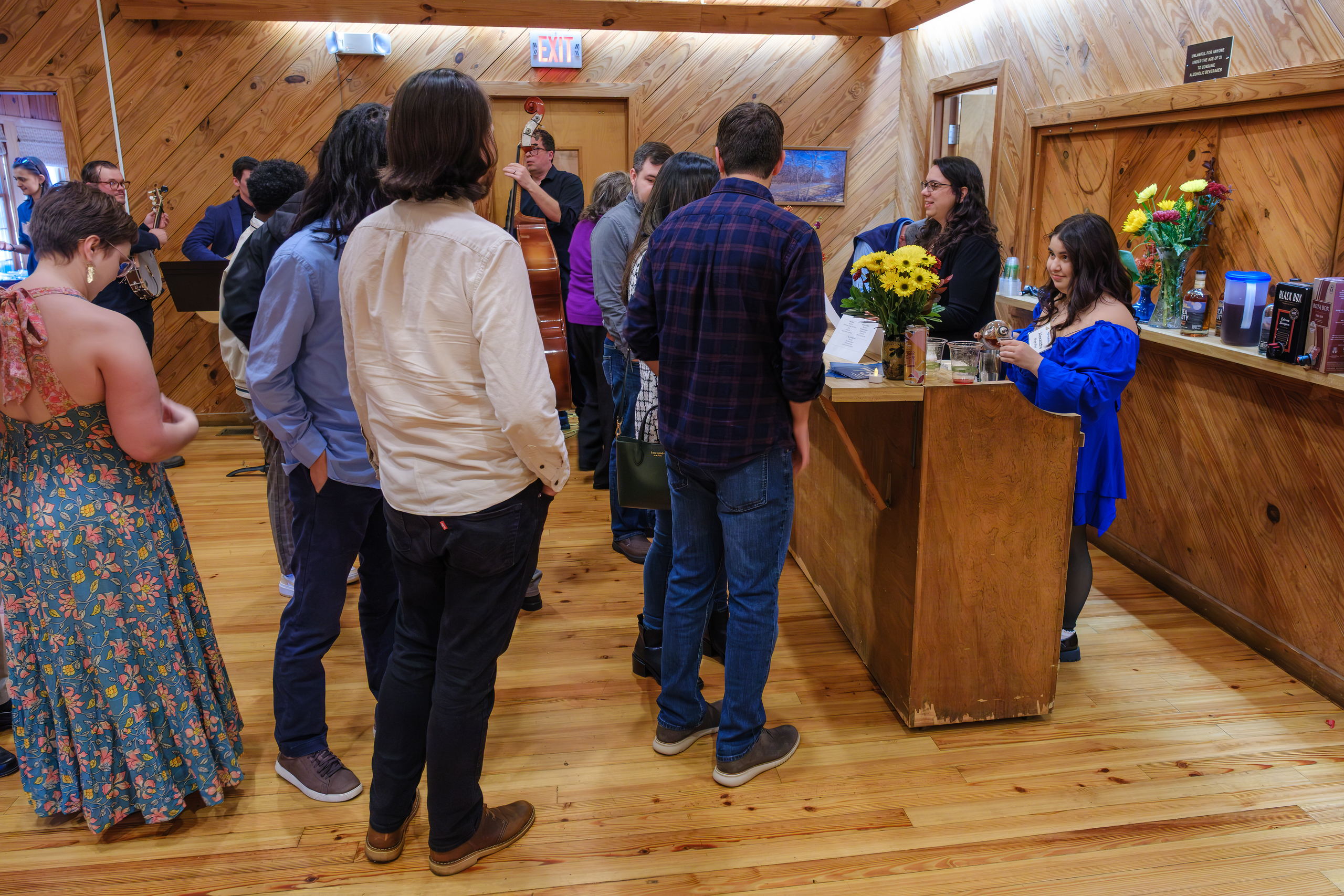
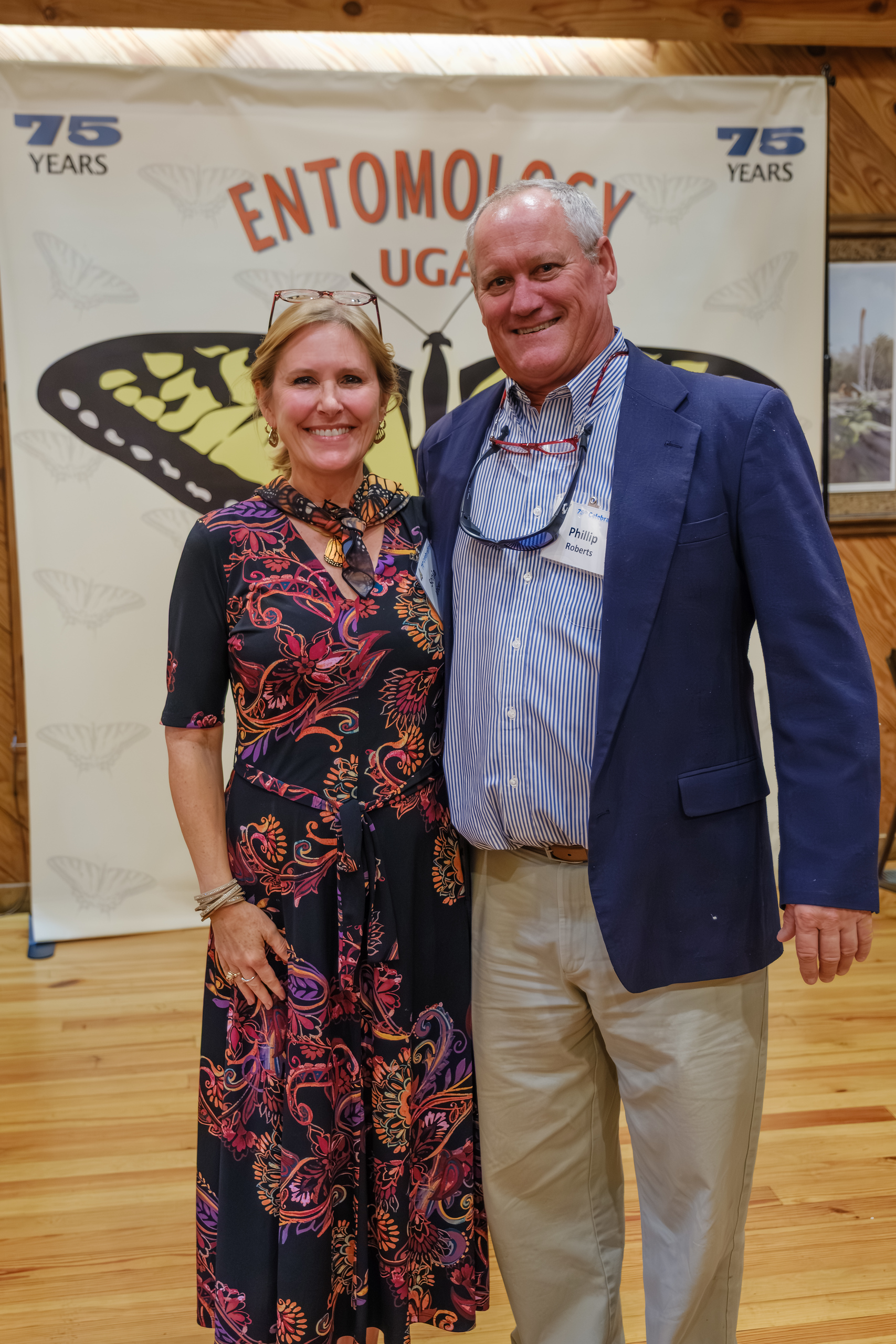
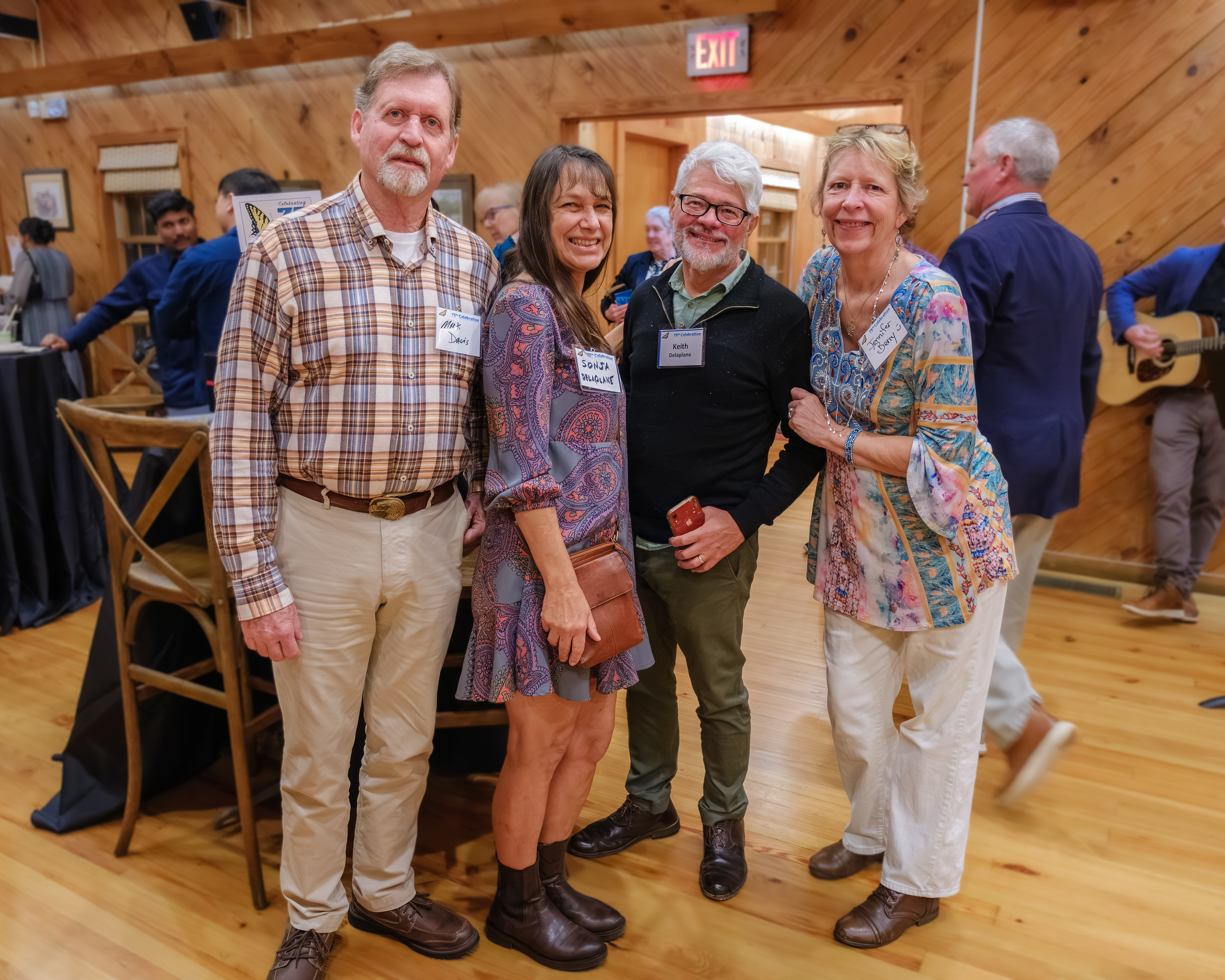
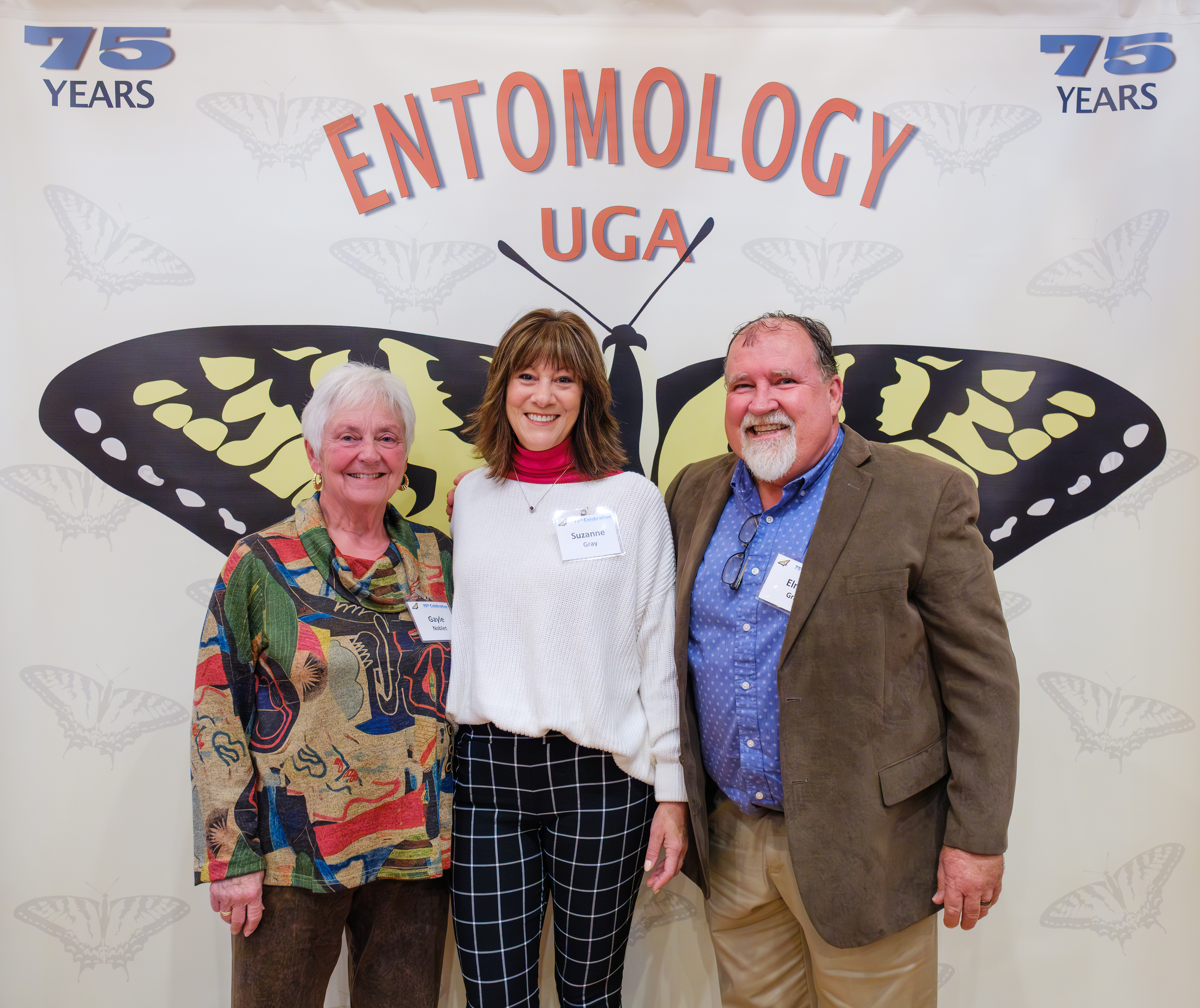
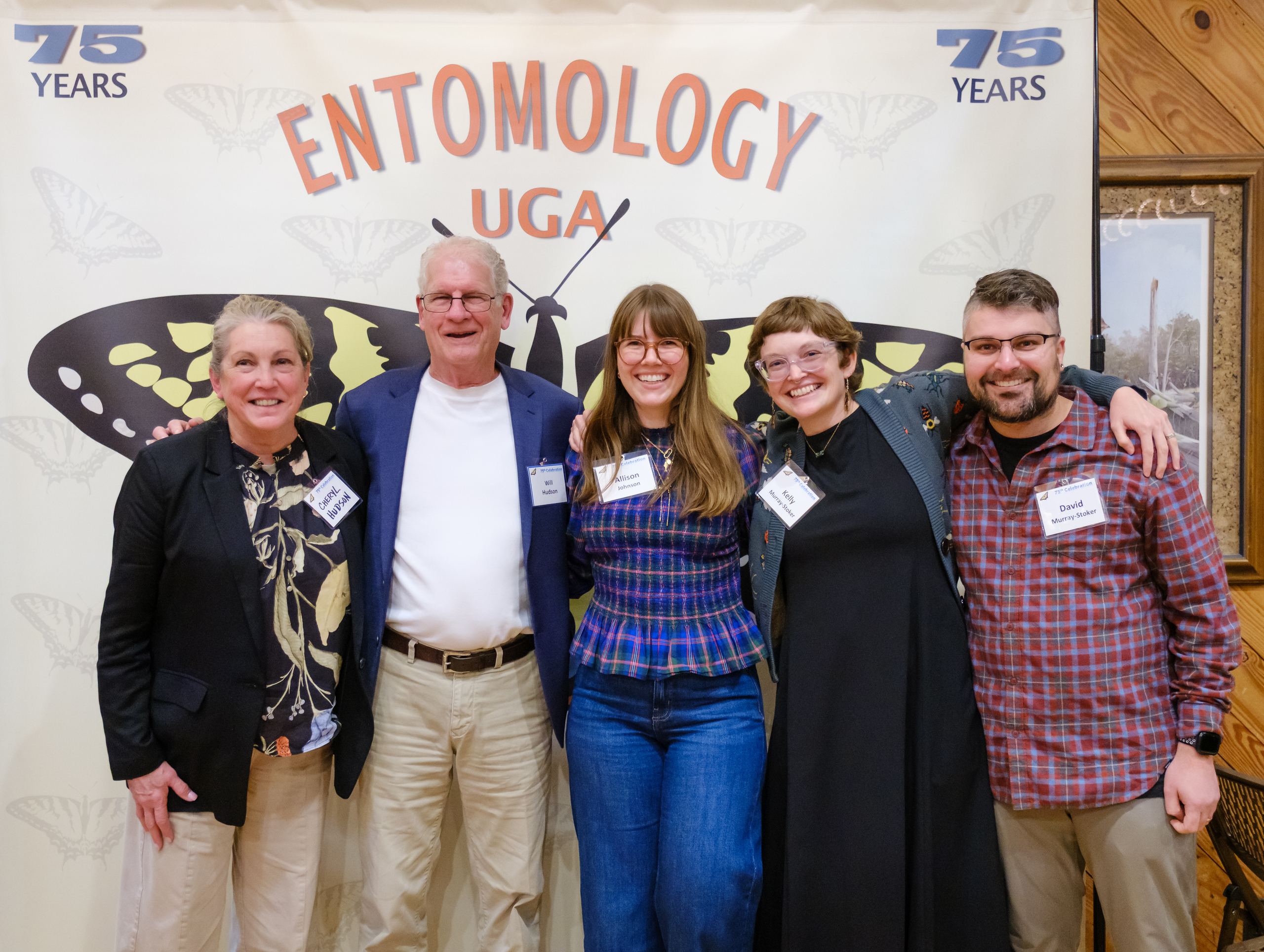
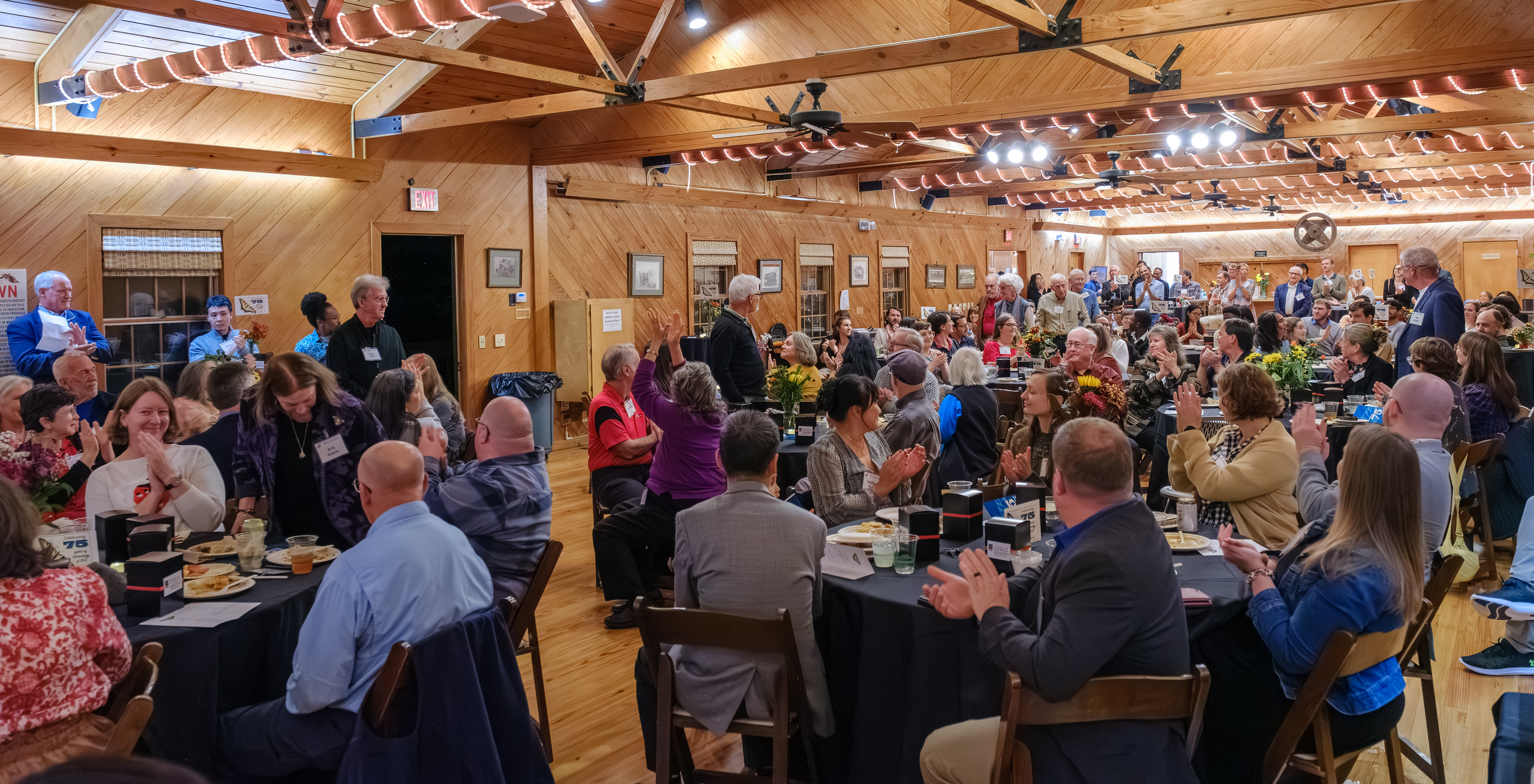
More than 150 guests attended the event to connect with friends and colleagues, reflect on the department’s legacy and look ahead to a bright future. Attendees included faculty, staff, students, friends and family of the honorees.
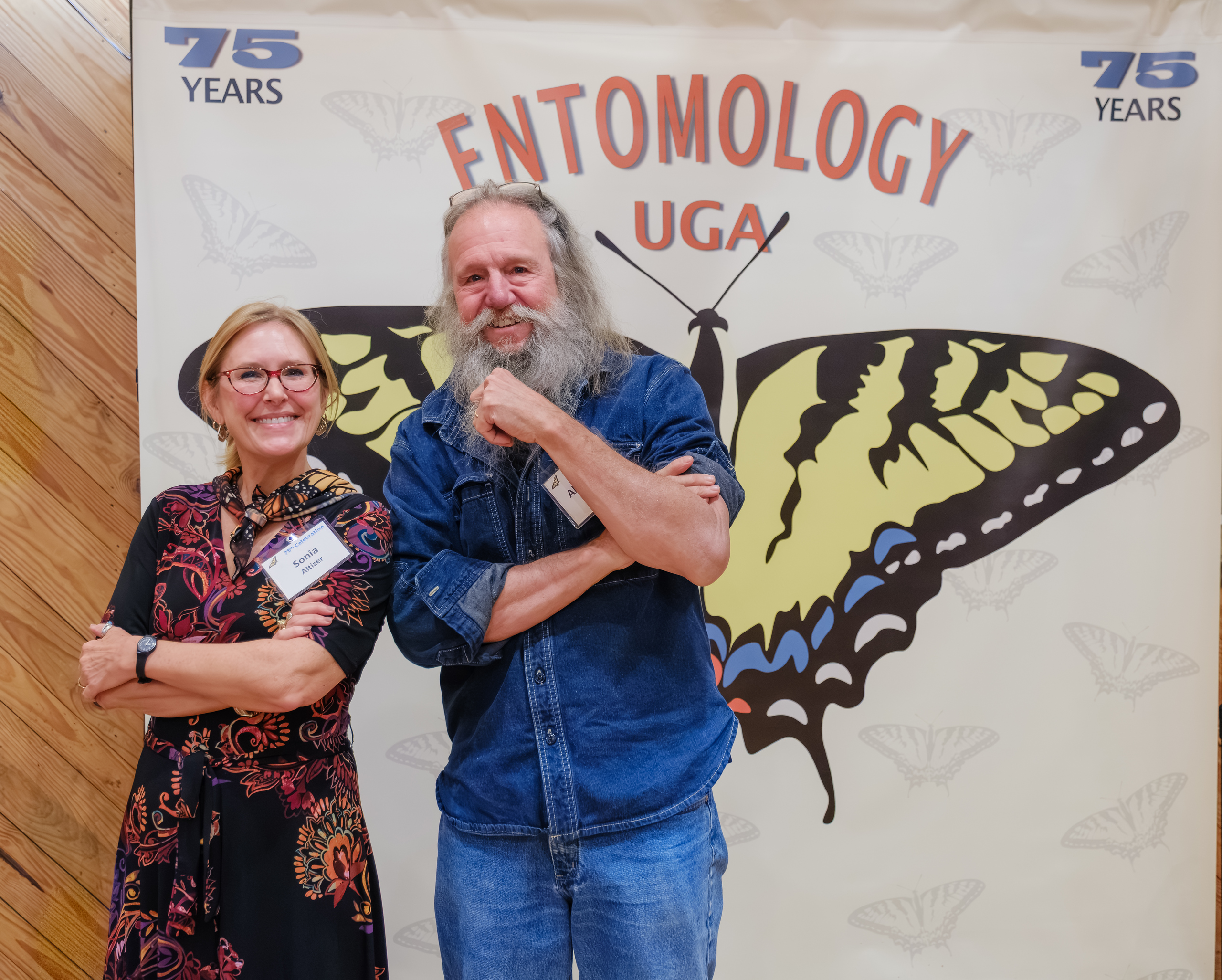
“From groundbreaking work on insect physiology and behavior to practical solutions for pest management and insect conservation, the achievements of tonight’s honorees are truly remarkable,” said Sonia Altizer, entomology department head and professor in the College of Agricultural and Environmental Sciences (CAES). Their collective work as entomologists has put UGA on the map as one of the best programs in the country and set a course of excellence that we continue to follow.”
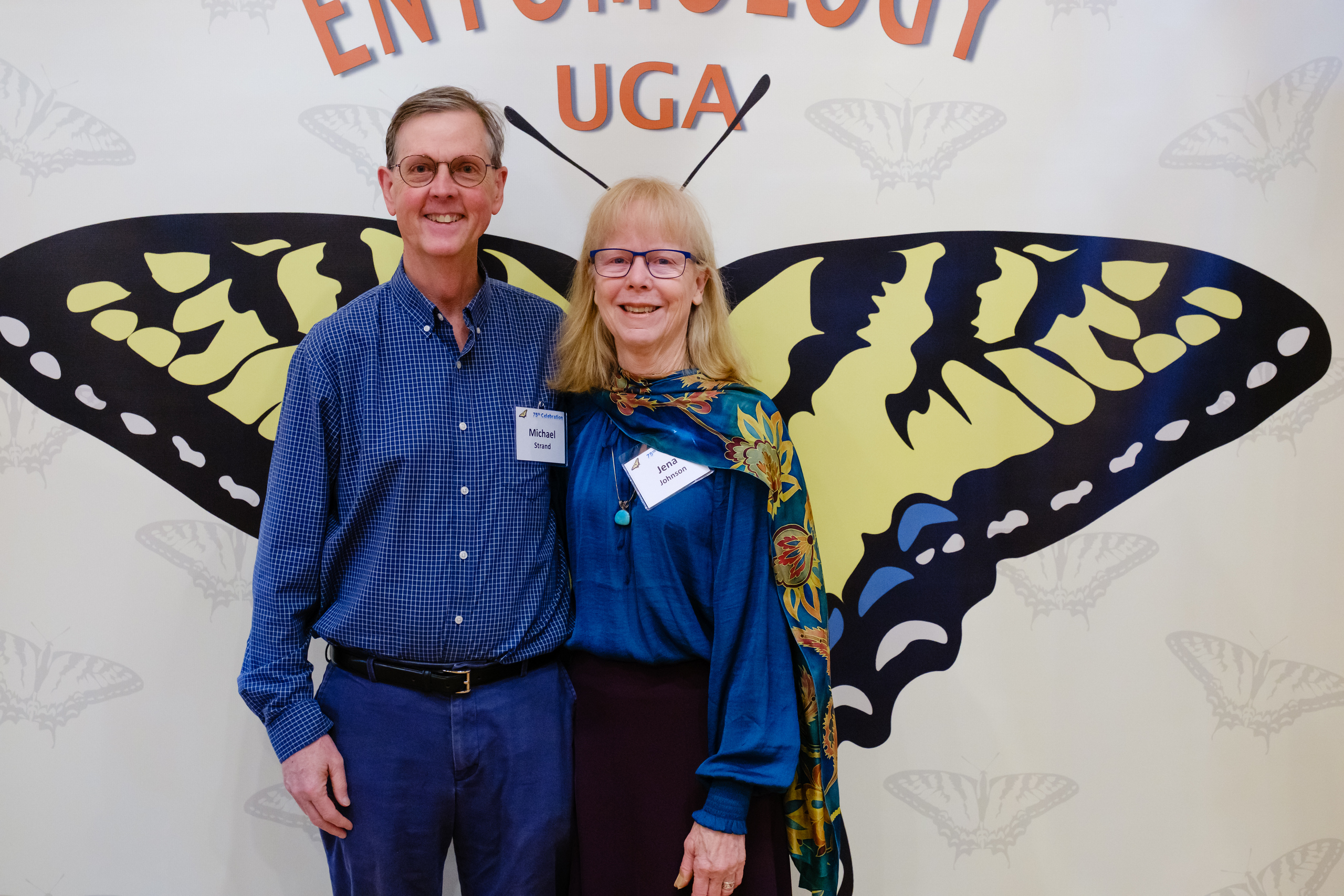
Recent emeritus honorees include:
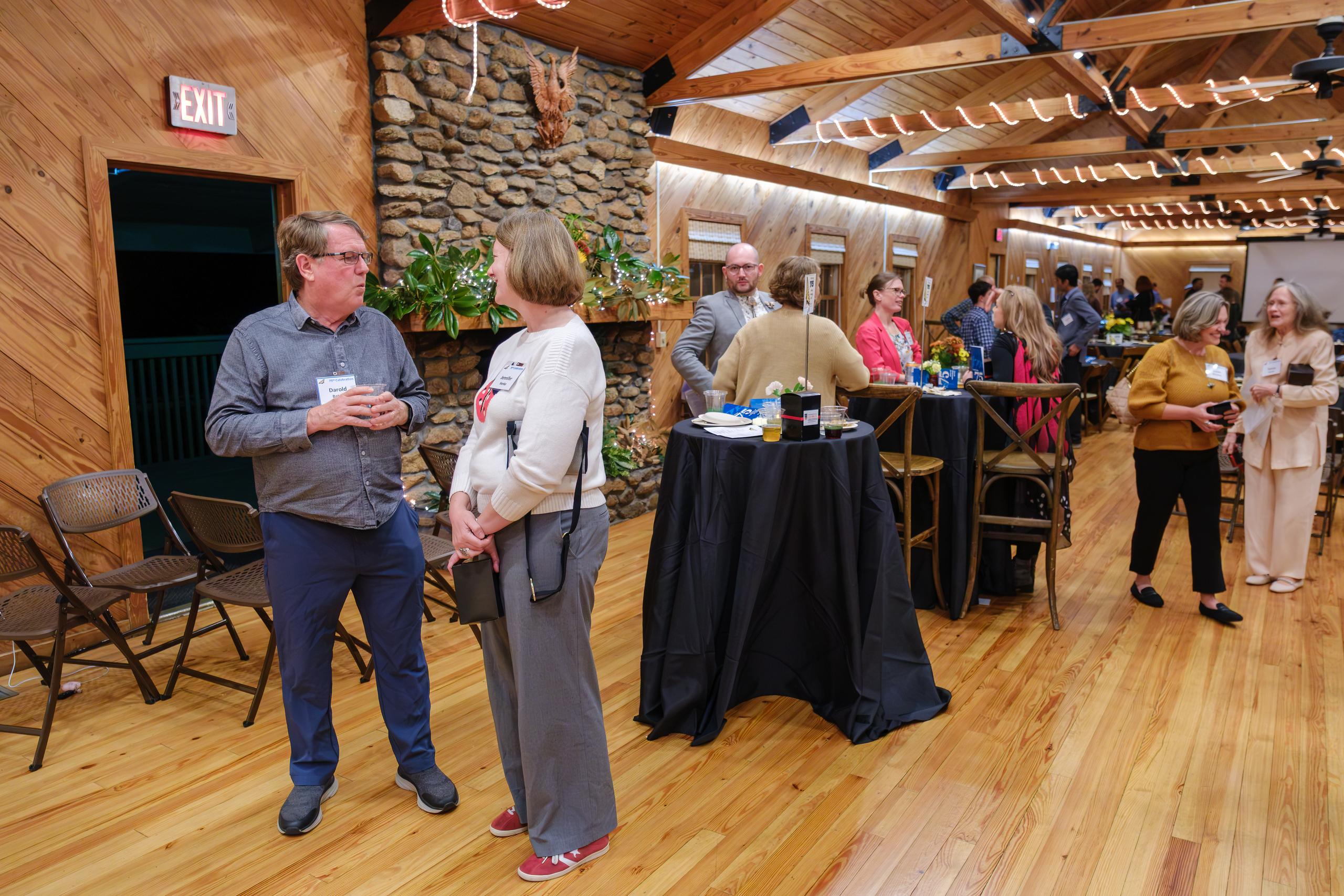
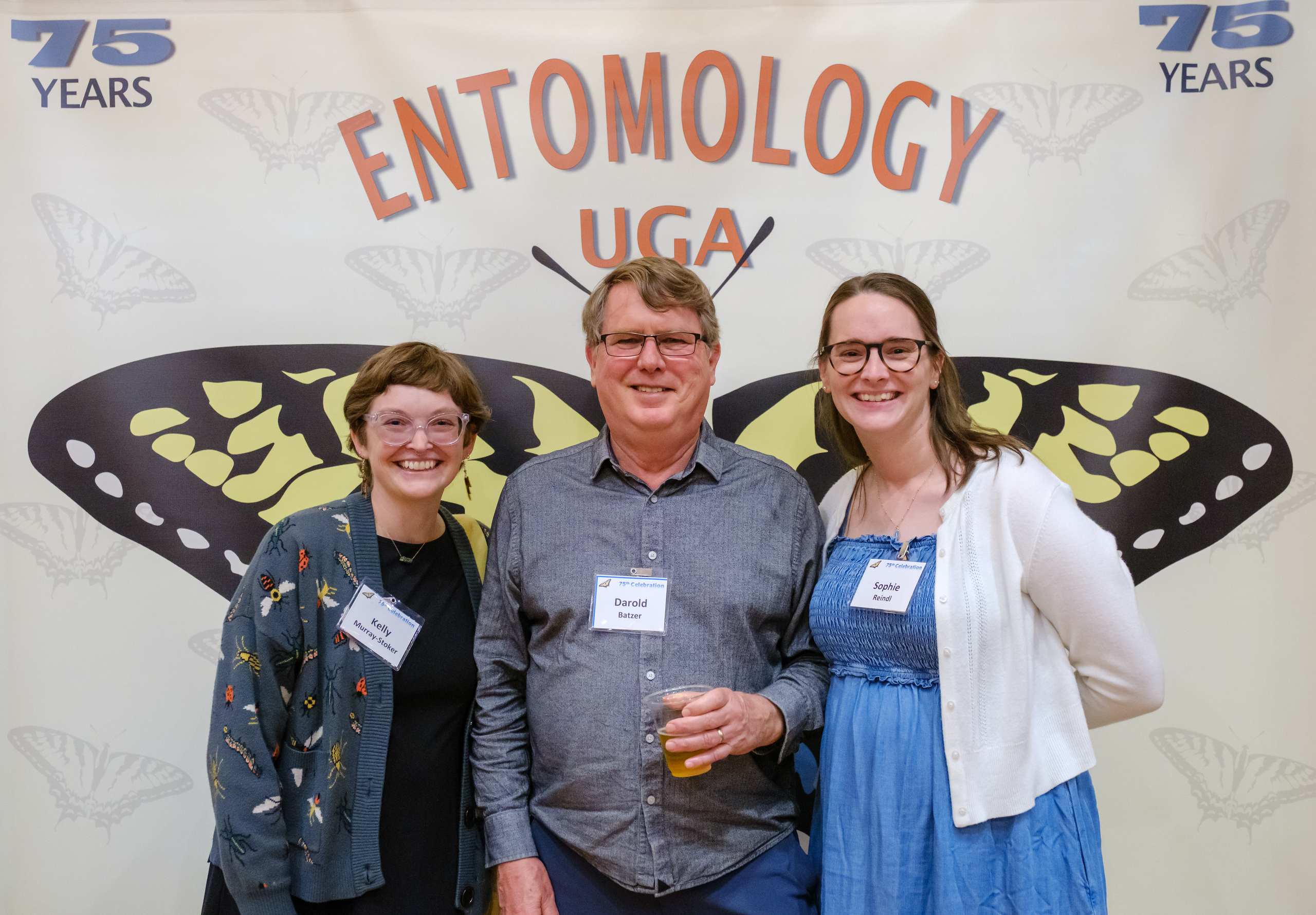
Darold Batzer
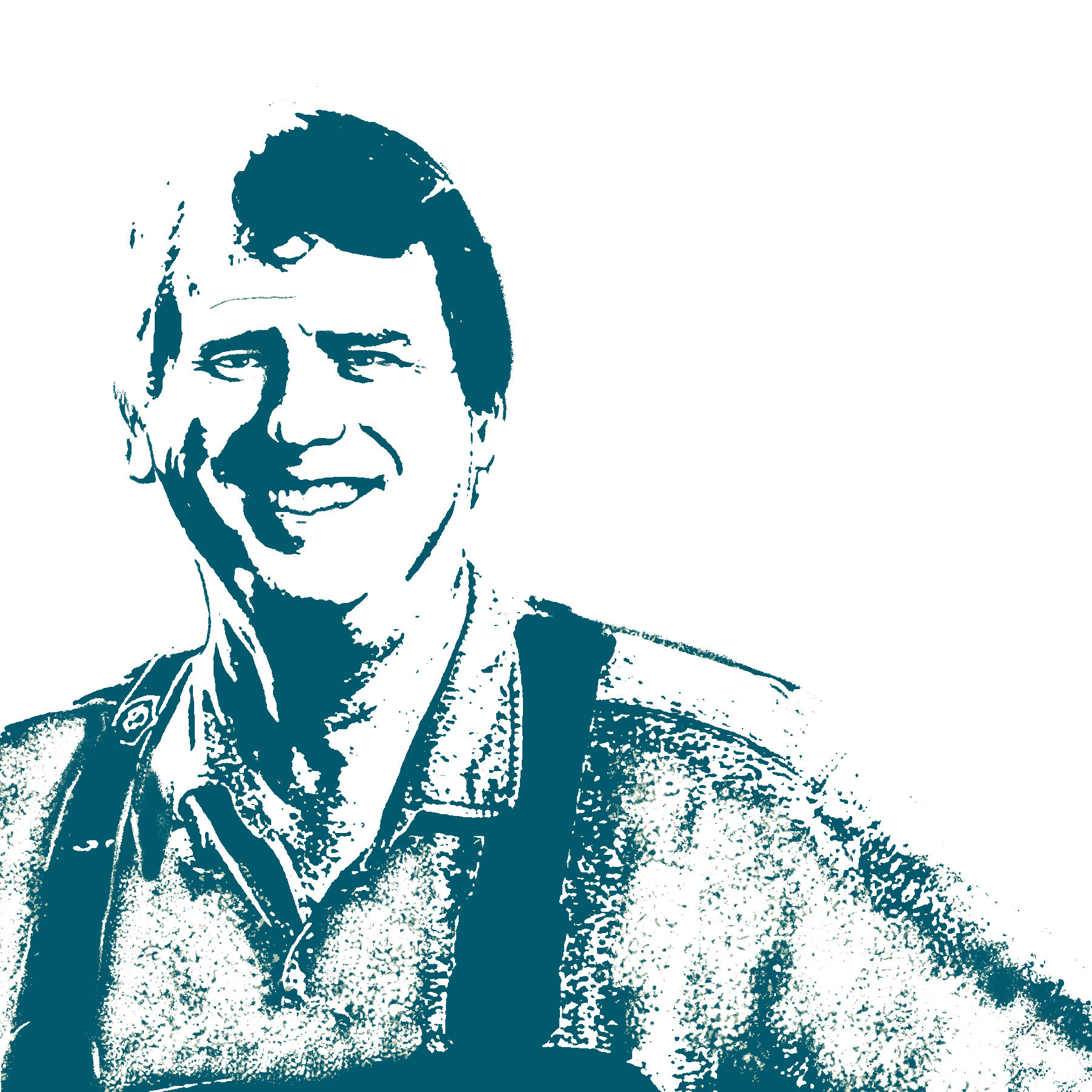
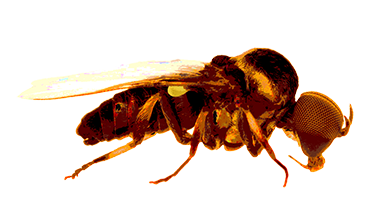
Darold Batzer has been a leader in wetland entomology for more than two decades. He has published more than 150 journal articles and book chapters and has won teaching awards at both the college and national levels. His years of work were recognized in 2022 when he was named a Fellow of the Society of Wetland Scientists.
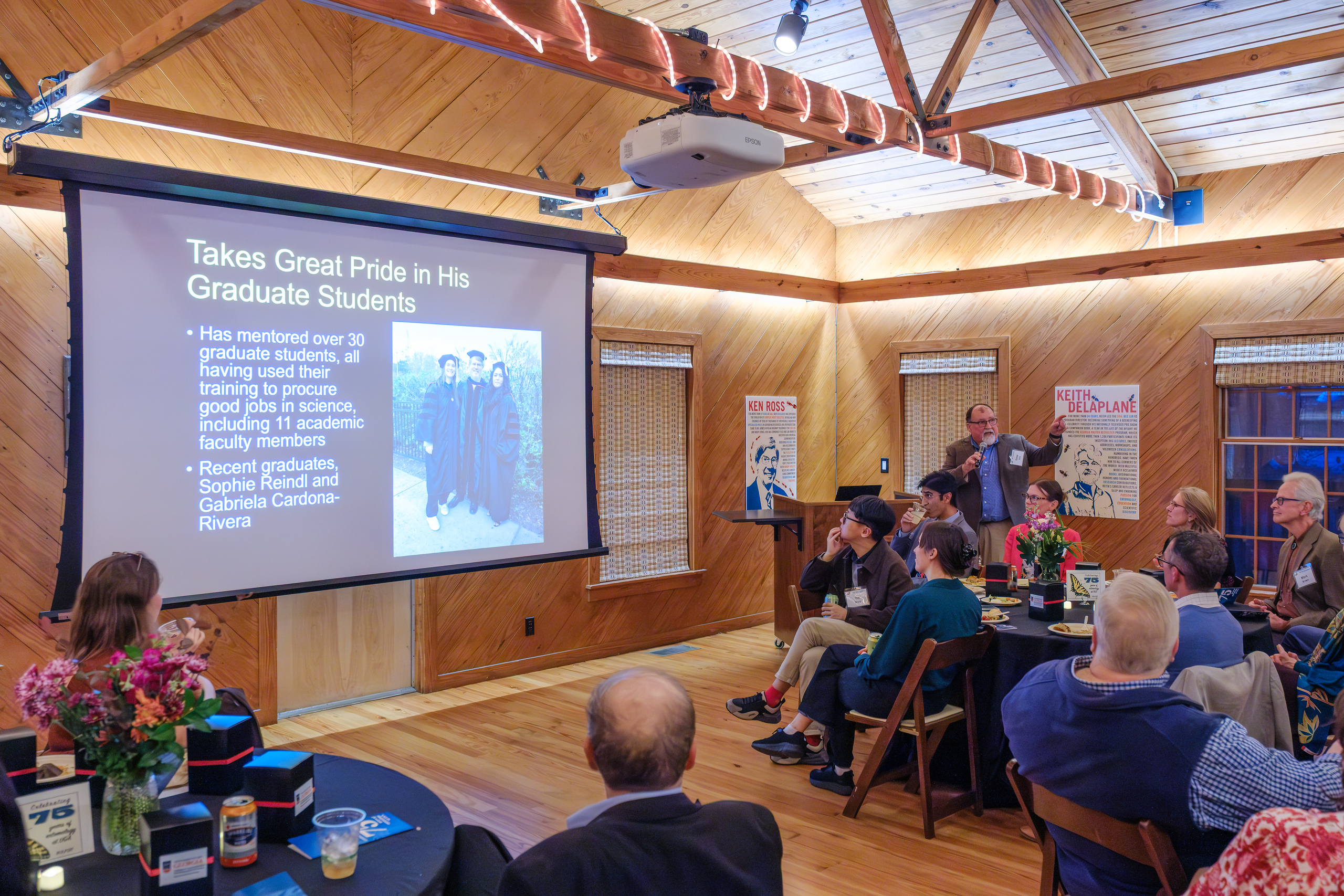
Batzer is most proud of collaborating with colleagues around the world and mentoring more than 30 graduate students, including 11 who went on to become faculty members. These partnerships have helped establish wetland invertebrate ecology as a significant international research specialty.
In recent years, Batzer has helped secure National Institutes for Health funding for the UGA Black Fly Research and Resource Center and has played a key role in shaping its scientific contributions. To colleagues, Batzer is known for his calm demeanor, dry humor and steady intellectual support. To his family, he is a devoted husband, father, traveler and outdoorsman.
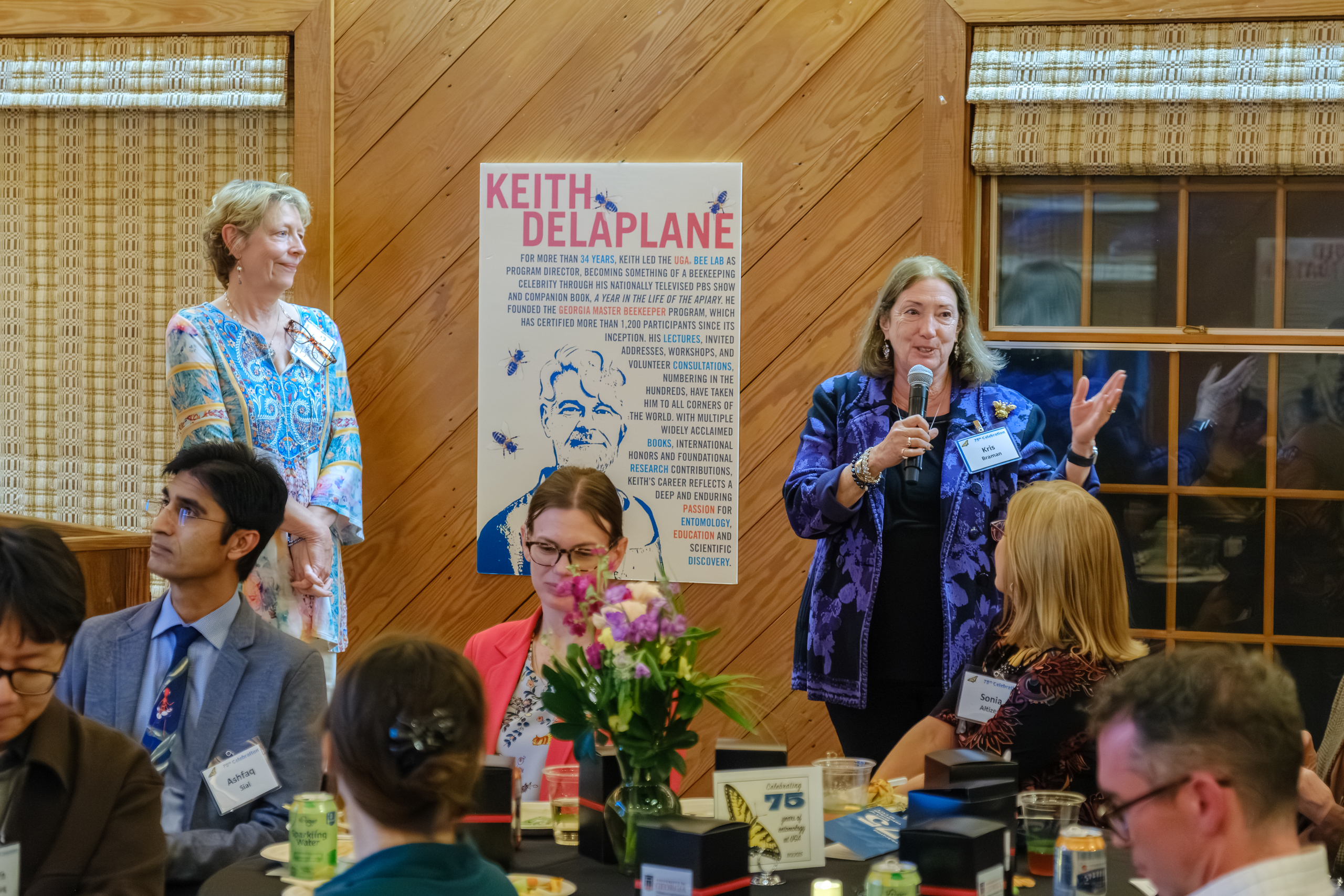
Kris Braman
Kris Braman’s 45-year career in entomology reflects her deep commitment to nature, teaching and applied research. Raised in rural upstate New York, she studied at the SUNY College of Environmental Science and Forestry before working as a research technician and lab manager at the University of Kentucky, where she completed her doctorate while raising two sons.
Braman later joined UGA’s Griffin campus, specializing in turf and ornamental entomology.

She taught 46 courses ranging from turfgrass management to pollinator conservation and advised 26 graduate students. Her scholarship includes 167 refereed papers, 16 book chapters and nearly 100 expert resources from UGA Cooperative Extension.
Her contributions earned major honors, including the Georgia Green Industry Association’s 2012 Environmental Friend of the Year and honorary membership in the Entomological Society of America in 2023. Known for her integrity, warmth and mentorship, Braman served as department head and shaped generations of students and colleagues. Her influence continues to guide both the UGA entomology department and the broader scientific community.
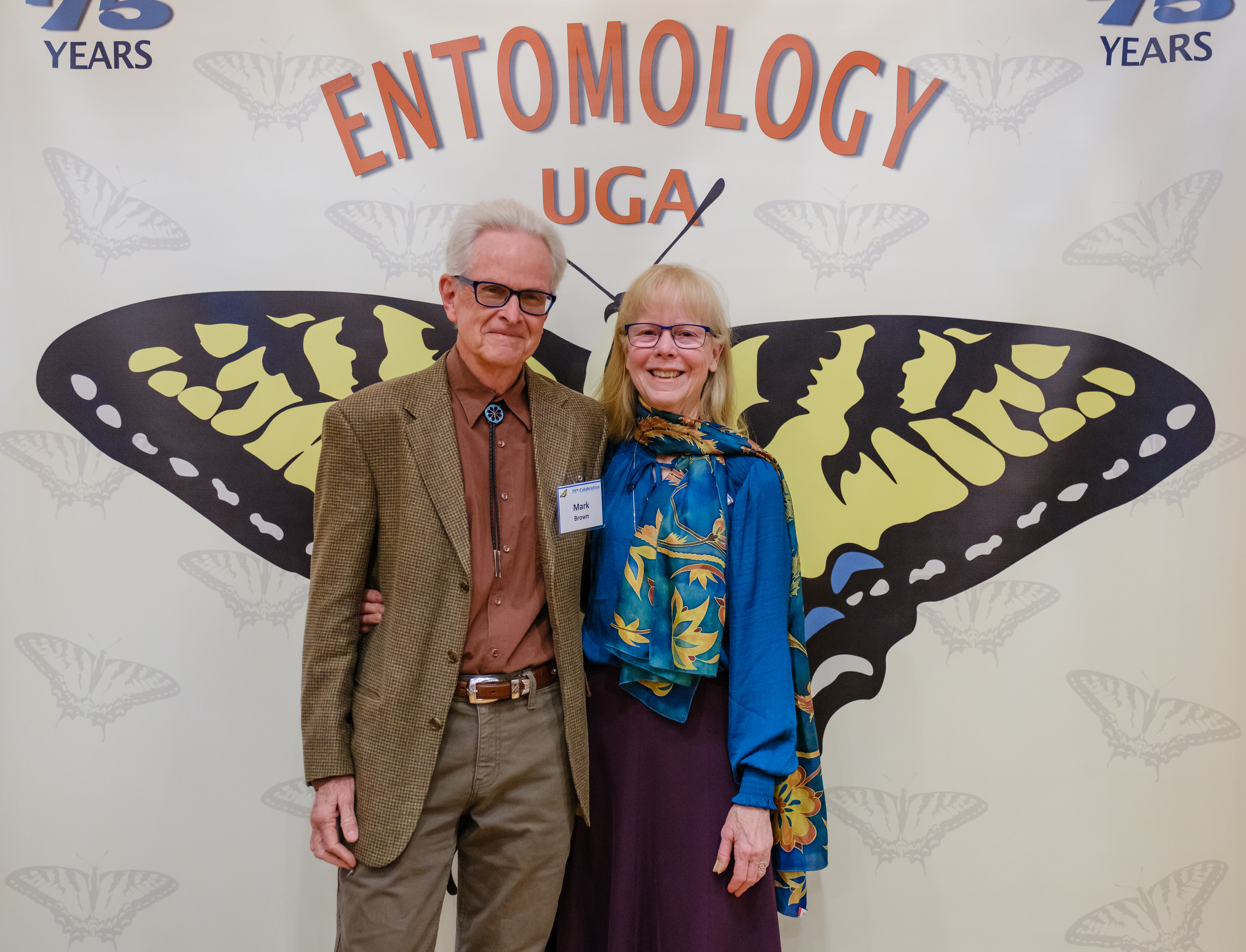
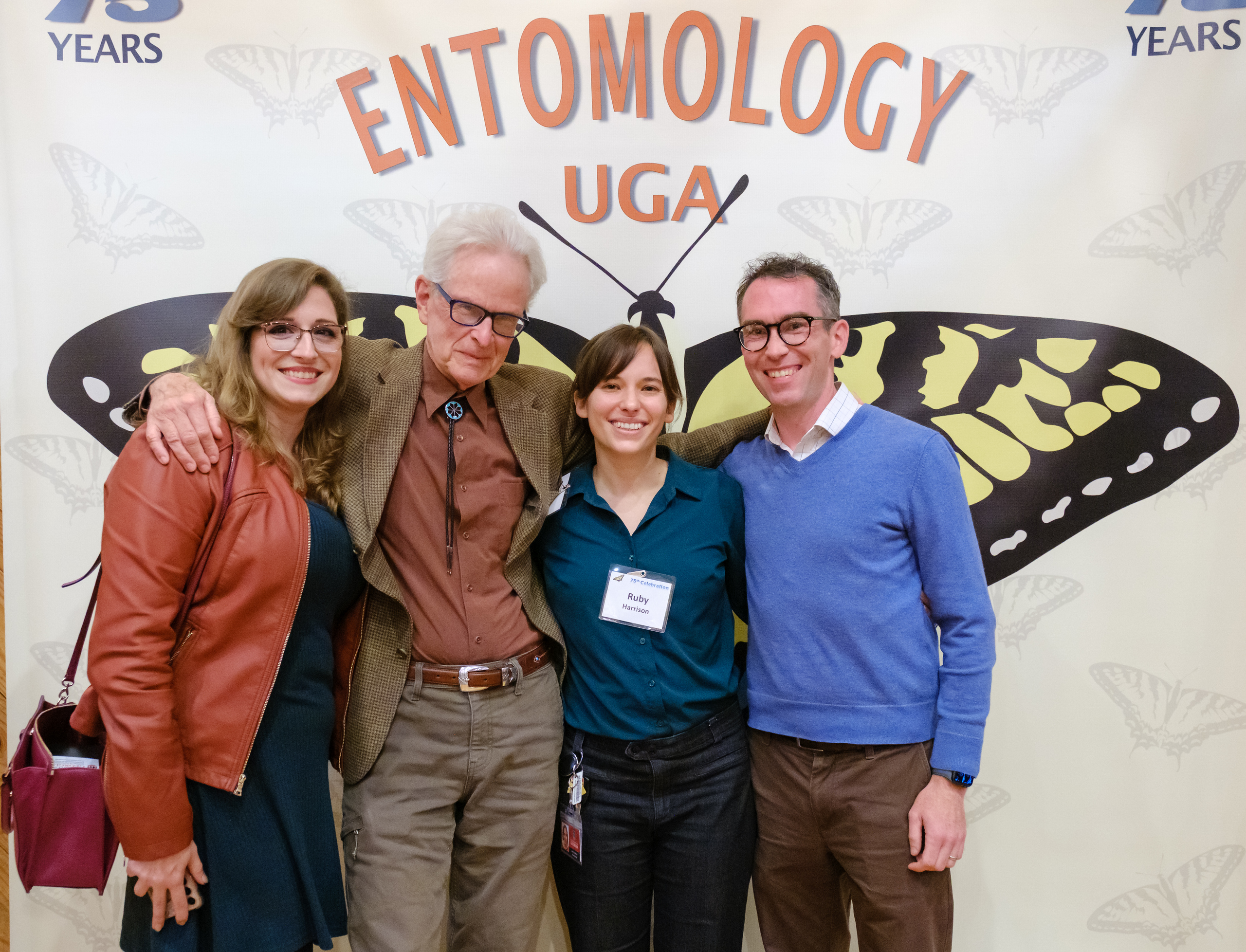
Mark Brown
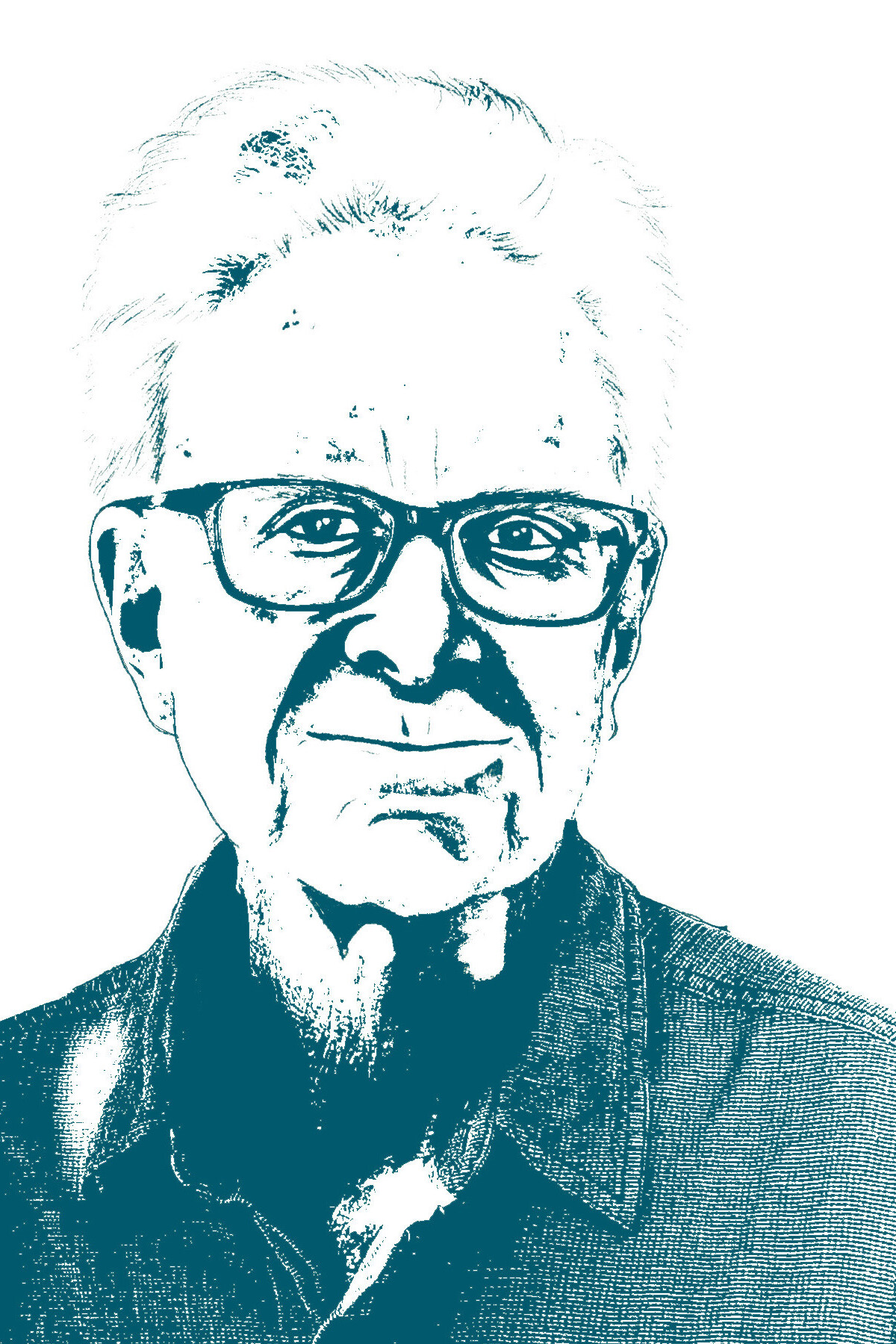
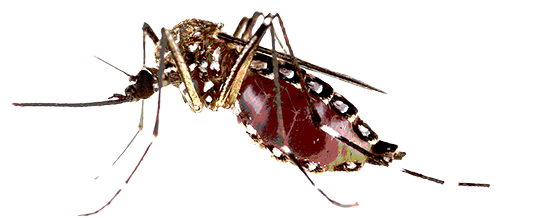
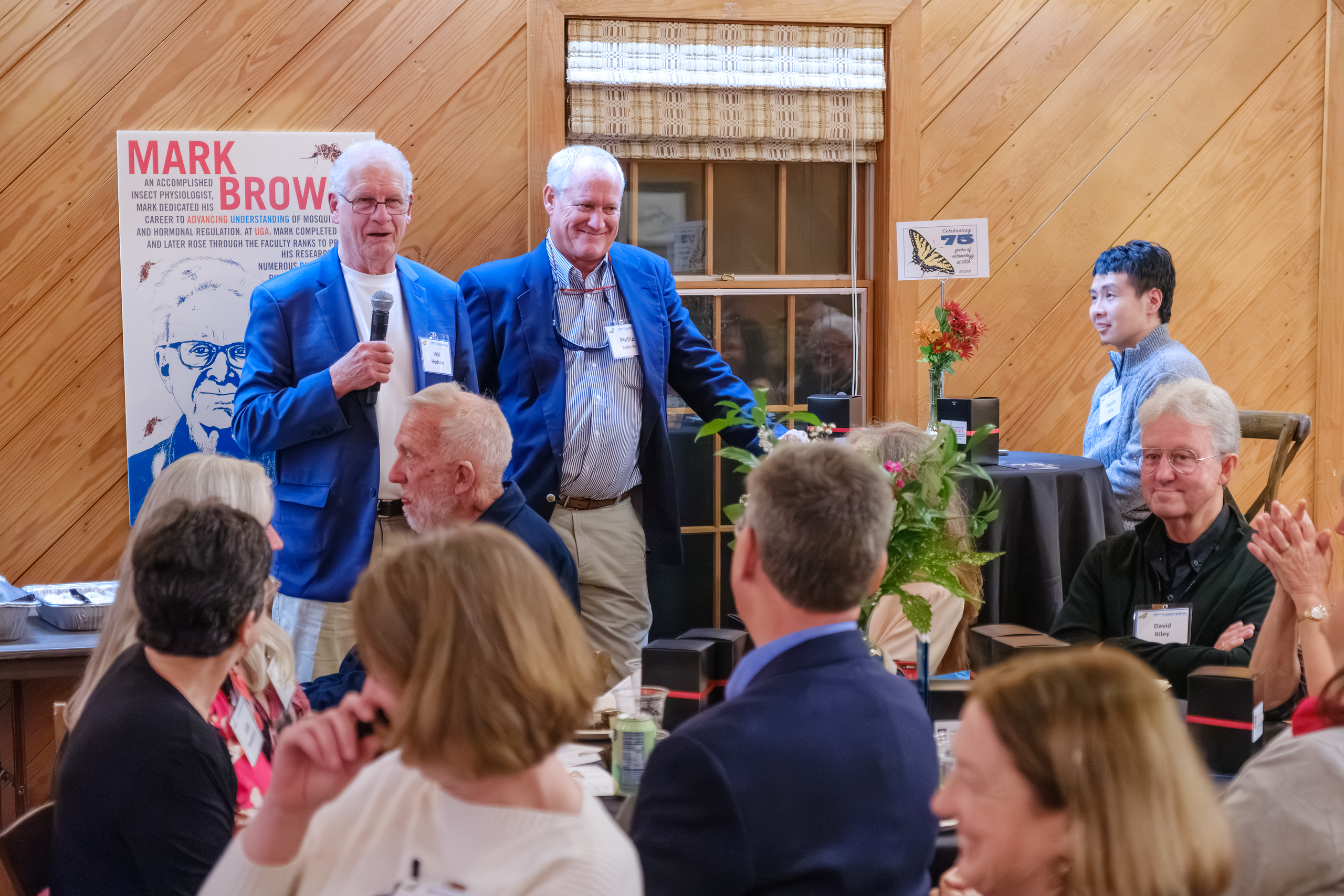
Mark Brown built a distinguished career as an insect physiologist specializing in mosquito biology and its implications for human health. A native of northwestern New Mexico, he earned an undergraduate degree from the University of New Mexico in 1978, a master’s in entomology from Washington State University in 1980 and a doctorate from UGA in 1985 under Arden Lea. His work in mosquito physiology became the foundation of his professional life.
Following postdoctoral and research roles at CAES, Brown joined the UGA faculty in 1995, becoming a full professor in 2007 and retiring in 2025. His research produced key insights into the hormonal regulation of mosquito development and reproduction, advancing understanding of disease-vector biology.
A gifted teacher, Brown influenced insect physiology instruction nationally and mentored numerous graduate students and postdoctoral researchers who went on to successful scientific careers. Outside academia, he is known for his appreciation of Georgia’s culture and landscapes and for his productive home garden, whose harvest he generously shares with friends and colleagues.
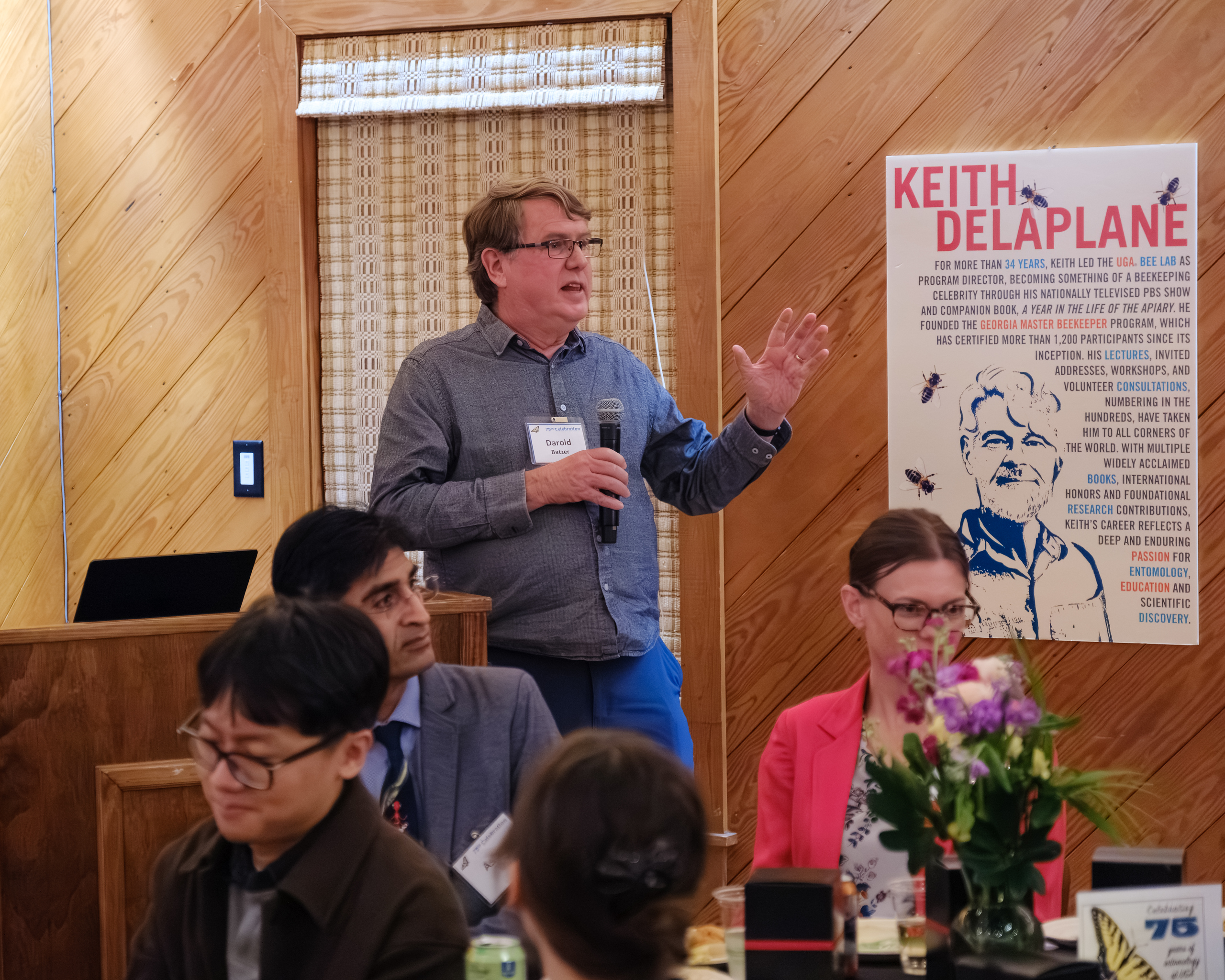
Keith Delaplane
For more than 34 years, Keith Delaplane led the UGA Bee Program and became a nationally recognized authority in apiculture. Early in his career, his PBS series “A Year in the Life of the Apiary” and its companion book brought him widespread recognition. His pioneering research established North America’s first economic threshold for Varroa destructor mites and advanced integrated pest management strategies.
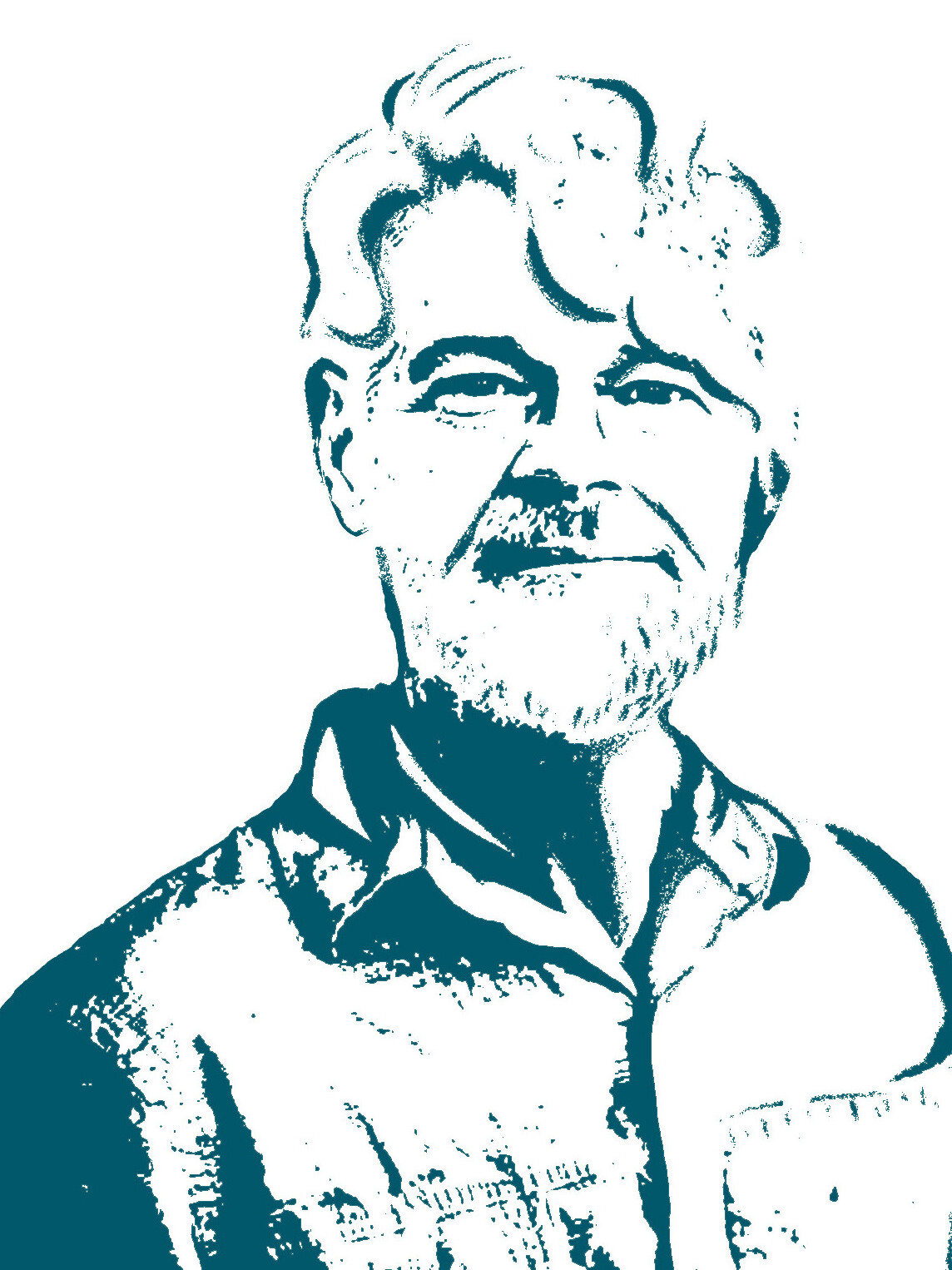
He also helped define honey bee pollination efficiency, contributed to standardized research protocols and explored the evolutionary basis of polyandry in honey bee queens. He and his collaborators produced more than 300 scholarly and popular publications.
Delaplane also founded the Georgia Master Beekeeper Program, which has certified more than 1,200 participants since 2002, and he regularly lectured around the world. Honors include UGA’s Walter B. Hill Fellowship in 2009 and induction as an Honorary Member of the Order of the British Empire in 2014. His books, including “Crop Pollination by Bees” and “First Lessons in Beekeeping,” remain standard references, and his 2024 book “Honey Bee Social Evolution” is considered a landmark work.

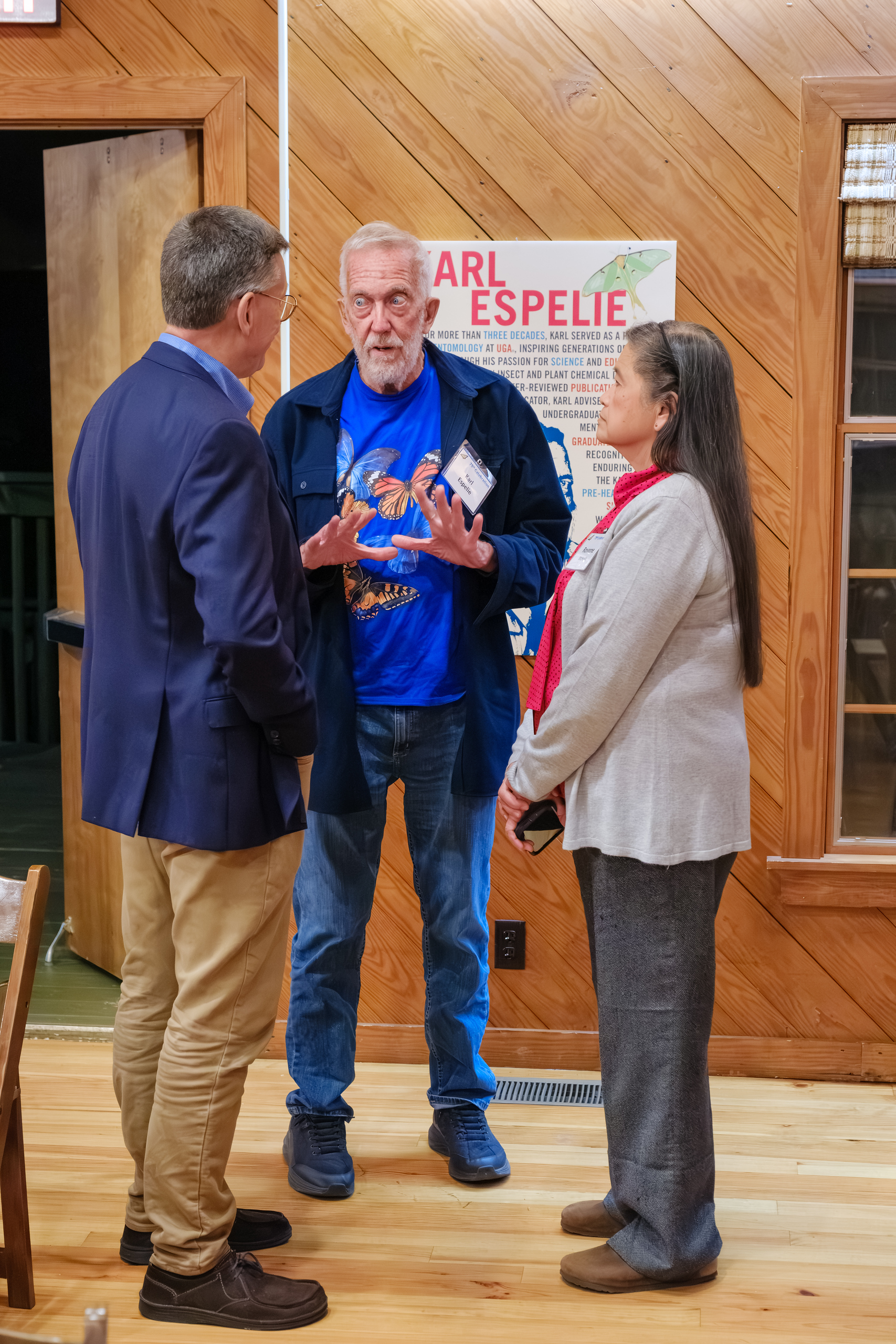
Karl Espelie
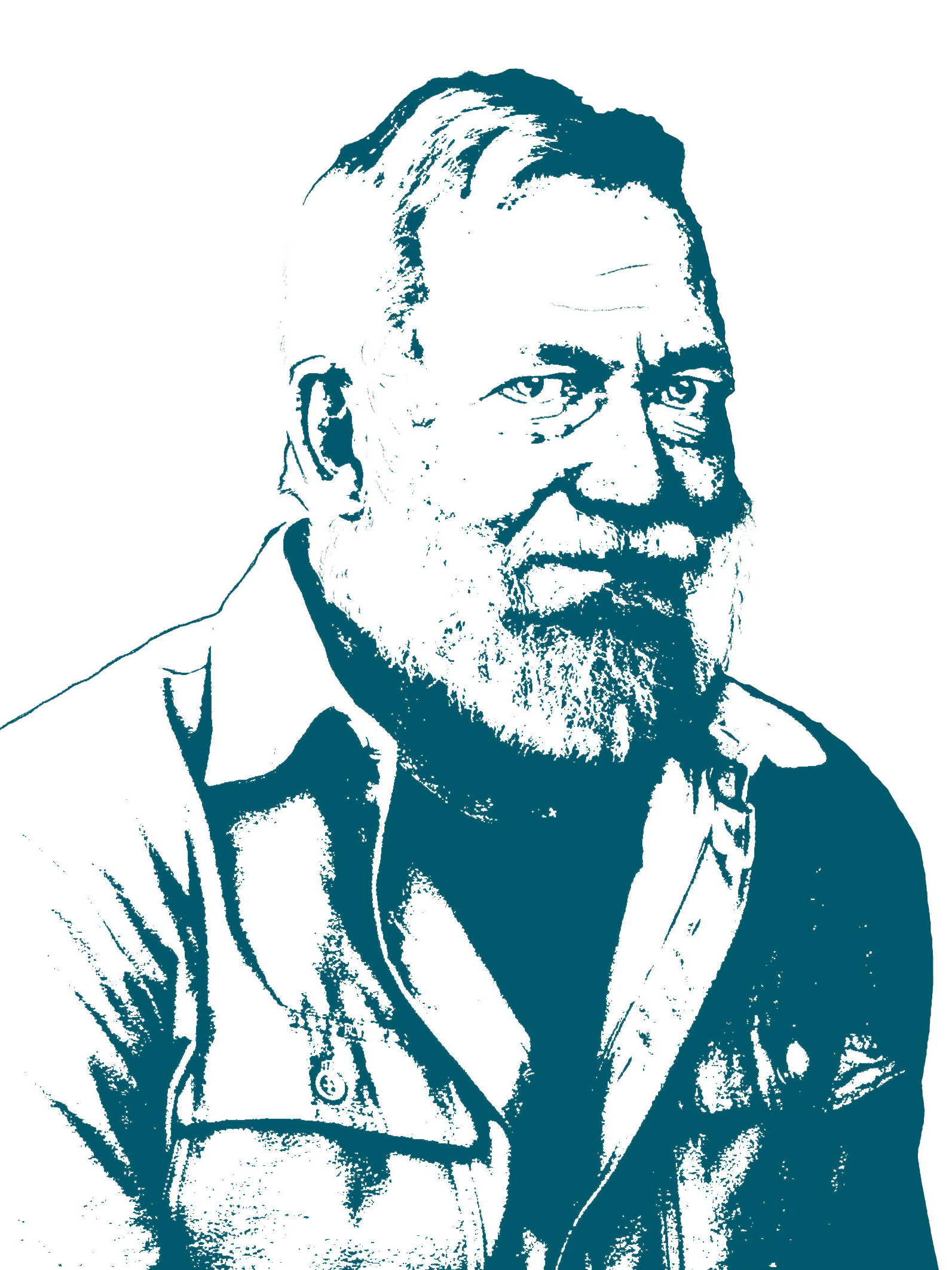
Karl Espelie joined the UGA Department of Entomology in 1986 as a research scientist, became a faculty member in 1991 and retired as professor in 2021. A graduate of Augustana College, he earned his master’s and doctoral degrees in biochemistry from the University of Wisconsin-Madison and held research positions at Caltech, Cancer Research UK and Washington State University before coming to UGA.
At CAES, Espelie conducted influential research on insect and plant chemical interactions, contributing nearly 60 peer-reviewed papers and book chapters. He advised nine graduate students and served on numerous departmental and university committees.
Espelie was deeply committed to student success, teaching and mentoring thousands of undergraduates across entomology, biology and pre-health programs. Known for his accessibility and dedication, he received multiple teaching awards and played a major role in strengthening support for pre-health students at UGA. His legacy endures through the Karl Espelie Pre-Health Student Support Fund, established to honor his 34 years of mentorship.
William G. Hudson
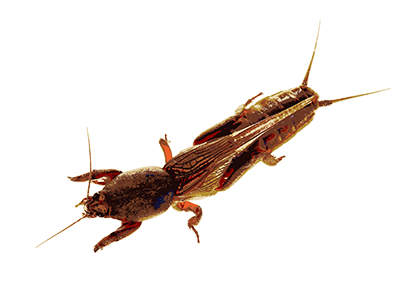
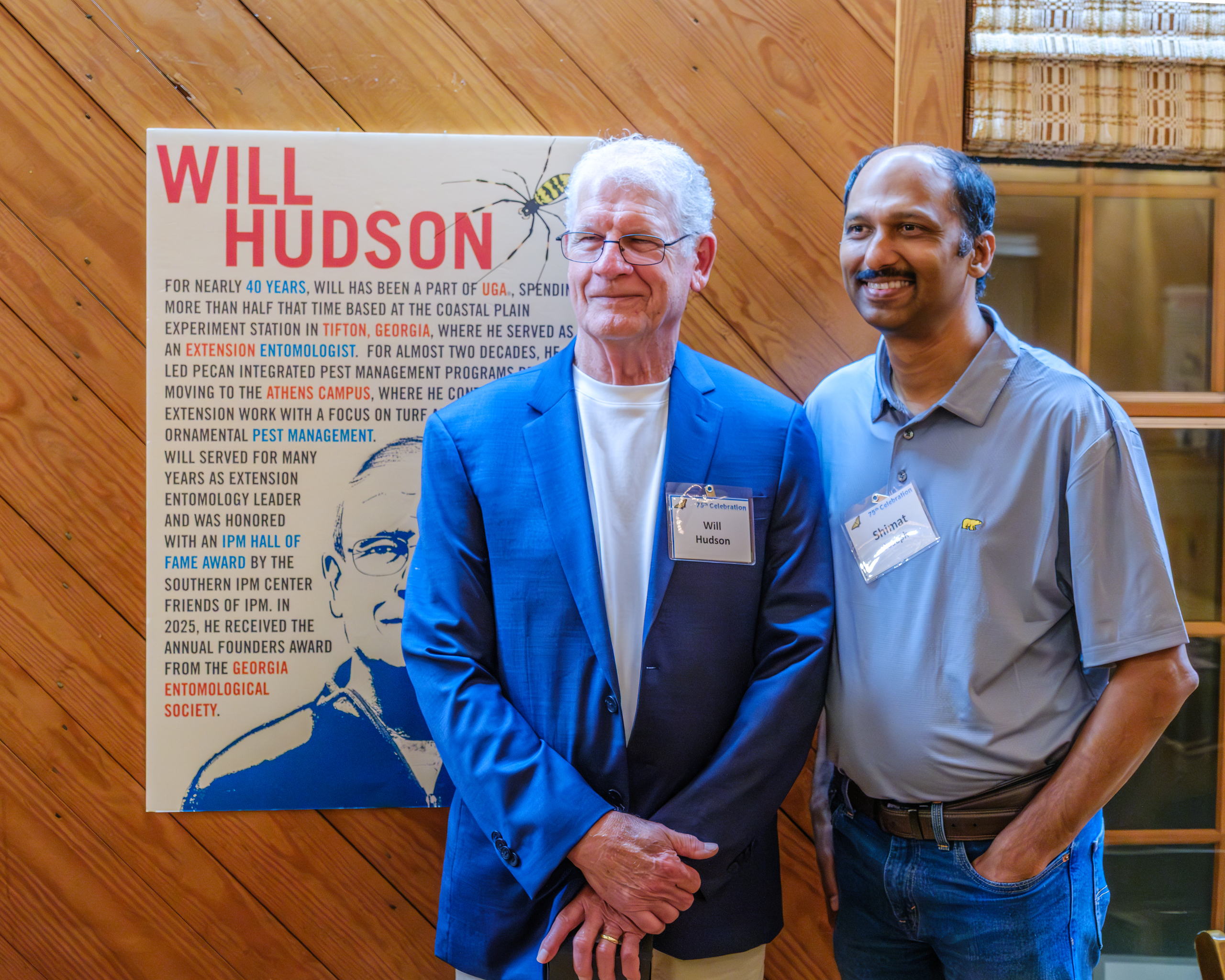
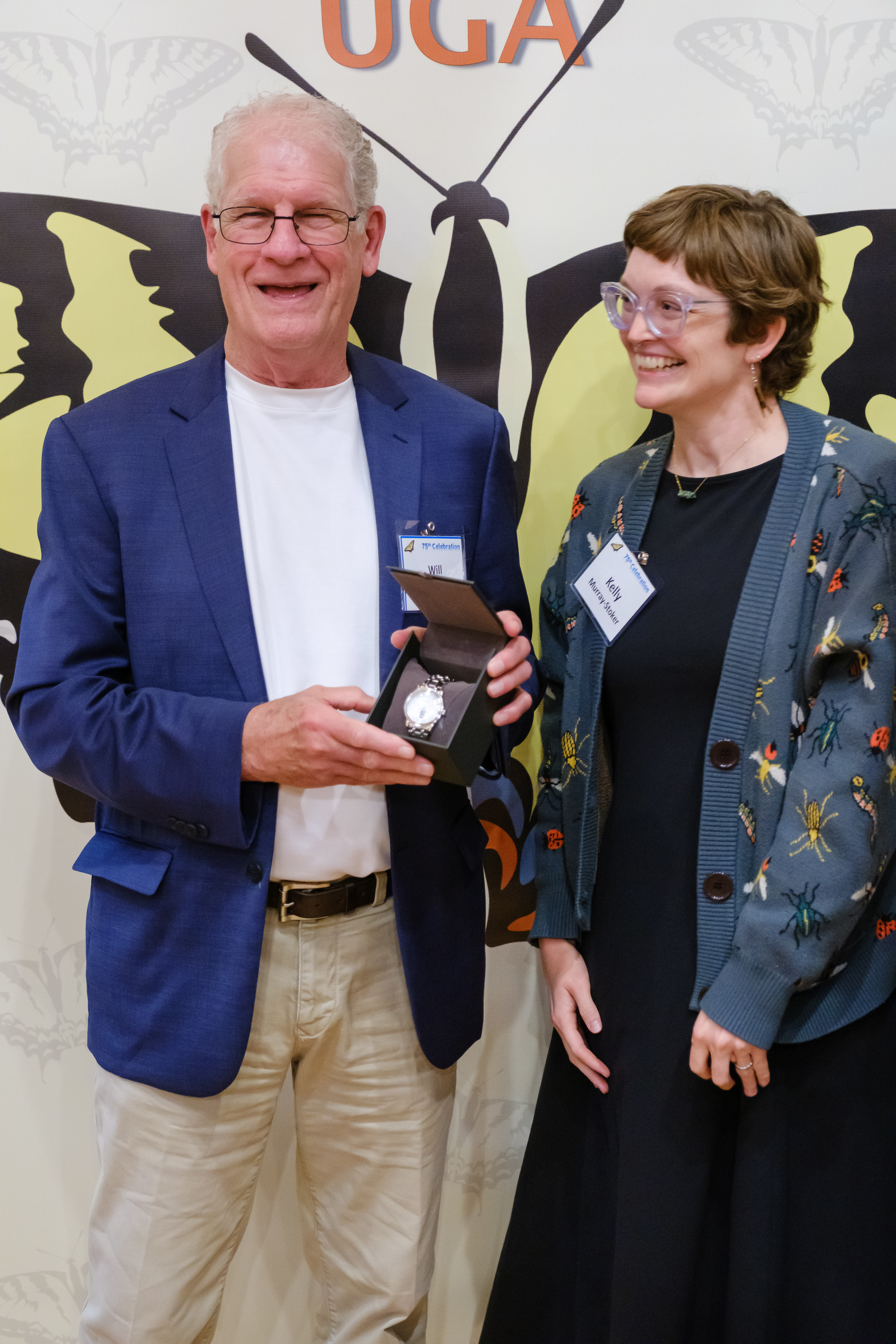
William G. “Will” Hudson built a notable career in entomology and Extension education during more than three decades at UGA. After earning a mathematics degree and serving four years as a U.S. Naval officer, he completed a zoology degree and a master’s in entomology at Auburn University. He earned his doctorate at the University of Florida in 1985, where he developed key sampling and biological control methods for mole crickets.

Hudson joined UGA in 1988 as a UGA Extension entomologist at the Coastal Plain Experiment Station in Tifton, specializing in turf, ornamentals, forages and later pecan integrated pest management. In 2011, he moved to the Athens campus, continuing statewide outreach and teaching turf and ornamental pest management. Known for his practical, grower-focused approach, Hudson led UGA’s Extension entomology program for many years.
His service earned numerous honors, including the Southern IPM Center’s Friends of IPM Hall of Fame Award in 2023. In 2025, he was named a Founder of the Georgia Entomological Society in recognition of his lasting contributions to IPM and Extension science.
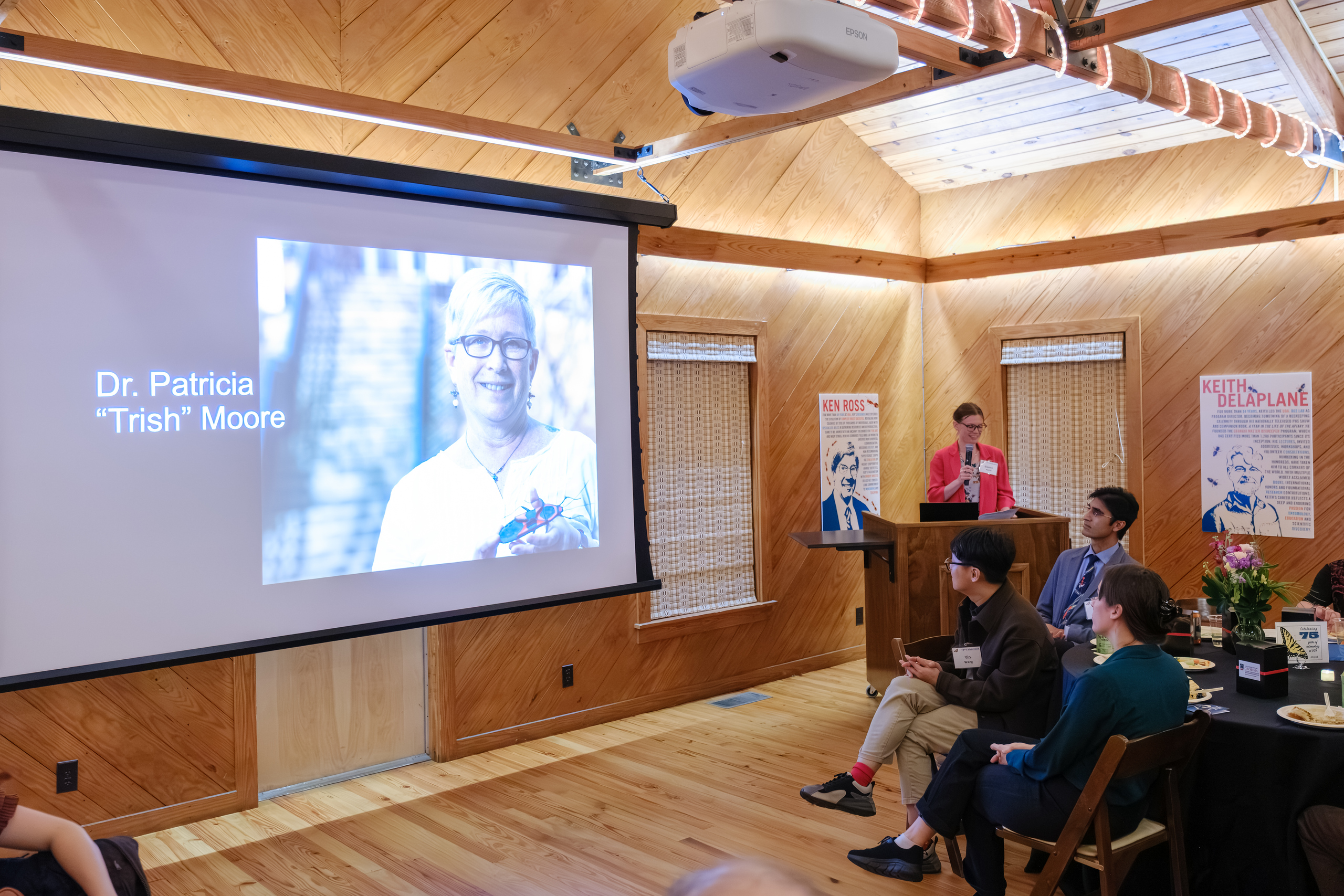
Patricia “Trish” Moore
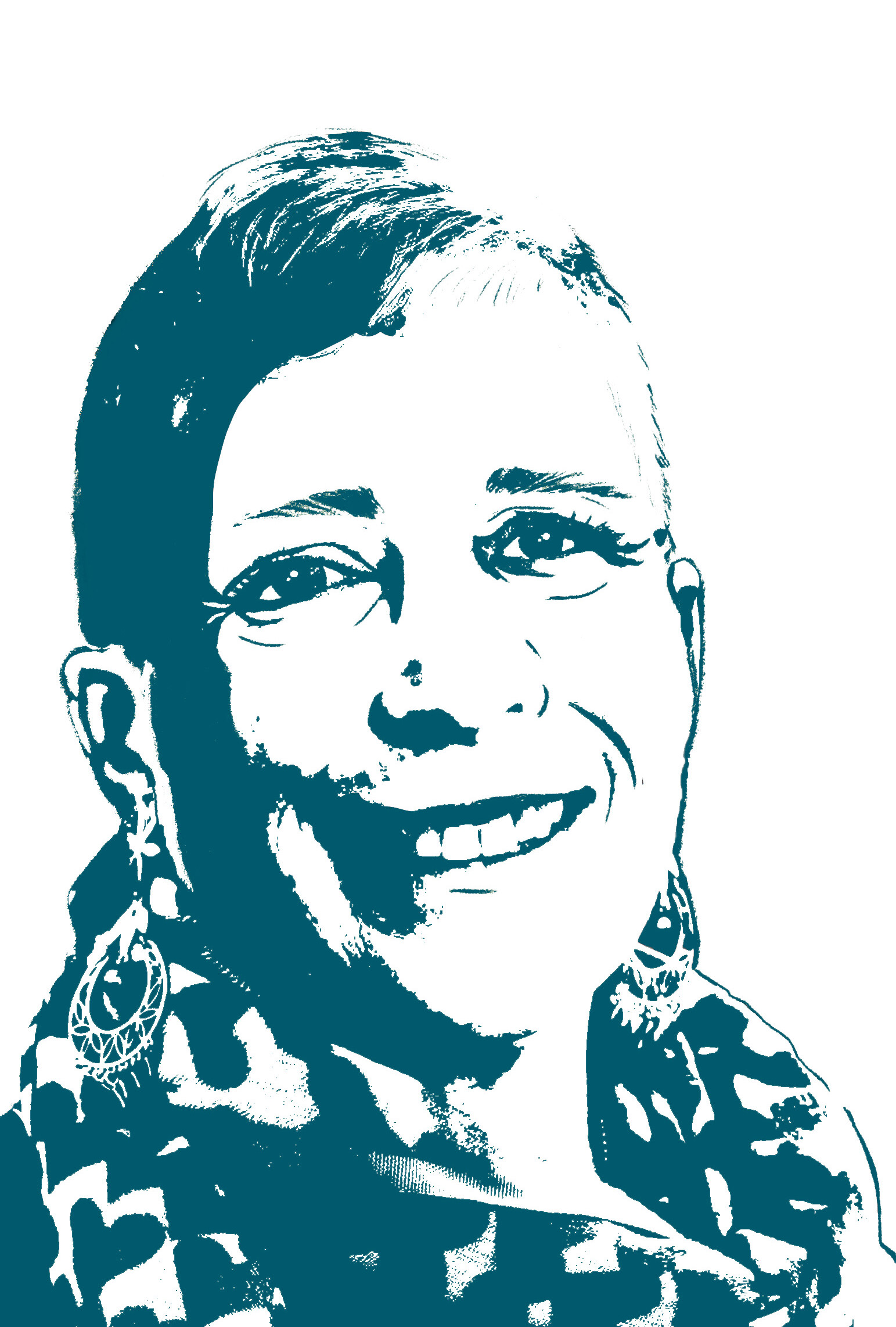
Patricia “Trish” Moore studies the evolution of life history and gamete biology in insects, with emphases on sexual selection, conflict and aging. Originally trained in plant cell biology, she shifted to entomology to apply mechanistic approaches to reproductive evolution. Working with non-model insects, her microscopy-based and experimental research has revealed how sexual selection shapes physiology and behavior.
Moore is equally recognized for excellence in teaching.
She participated in Project Kaleidoscope’s second cohort in 1996, later became a Fellow of the United Kingdom’s Higher Education Academy, and was named a National Academy Education Fellow in the Life Sciences. At UGA, she transformed introductory biology instruction, earning the D.W. Brooks Award for Excellence in Teaching and induction into the UGA Teaching Academy.
In 2022, she was named a Josiah Meigs Distinguished Teaching Professor, and in 2024 she received the U.S. Department of Agriculture’s Excellence in College and University Teaching Award. She has co-led multiple National Science Foundation education grants while maintaining an active research program, exemplifying integrated excellence in research, teaching and service.
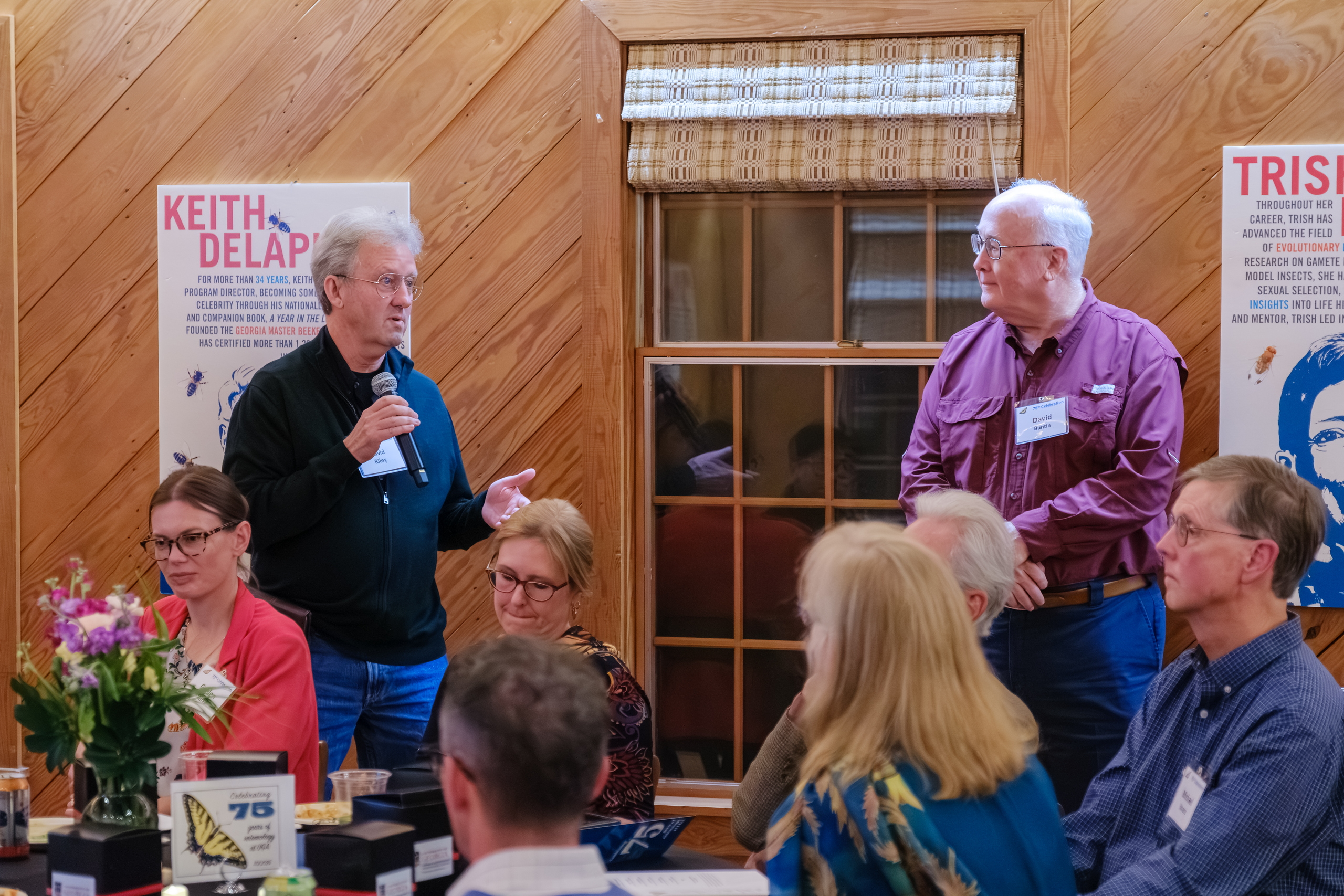
David Riley
David Riley grew up as one of 11 children in a family that lived across several states before settling near Athens, Georgia, where his father worked as a weather forecaster and his mother as a registered nurse. He earned a bachelor’s degree in agronomy from UGA in 1981 and began his career at the UGA Institute of Ecology, now Odum School of Ecology, where he once taught school namesake Eugene Odum how to drive a tractor.
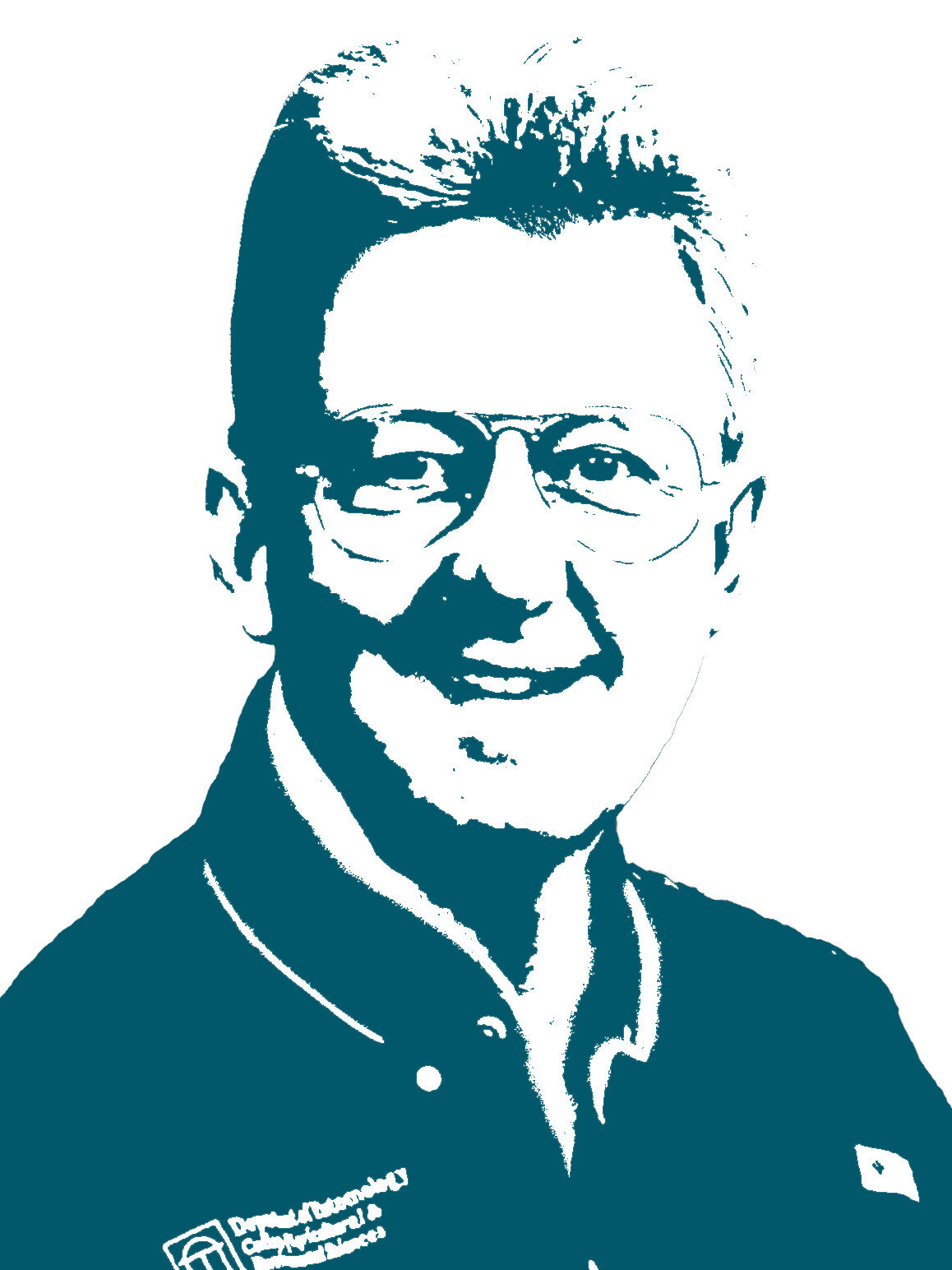
From 1981 to 1983, he served in the Peace Corps in Ecuador, working in vegetable production.
Riley completed his master’s degree at North Carolina State University in 1986 and his doctorate at the University of Florida in 1990. He began his faculty career as a vegetable entomologist at Texas A&M University in Weslaco before joining the UGA Tifton campus in 1996.
His research focuses on interactions between major vegetable pests and their host plants, earning him the Entomological Society of America’s Recognition Award in Entomology in 2017. Riley advised 28 graduate students, 44 master of plant protection and pest management (MPPPM) students and 24 additional graduate researchers. He recently co-authored the textbook “Vegetable Insect Management in Georgia” with Alton “Stormy” Sparks, now in publication with UGA Press.
Ken Ross
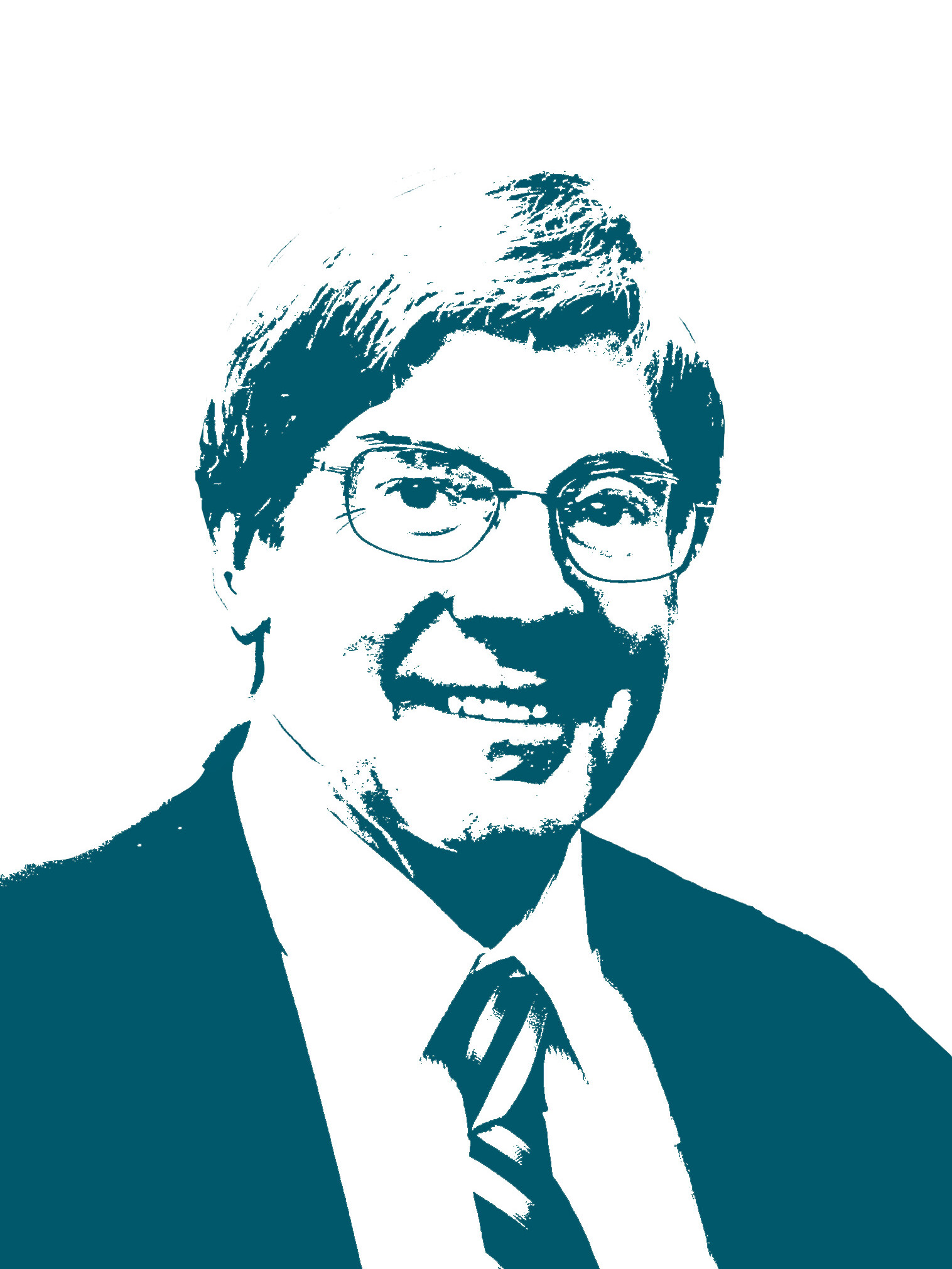
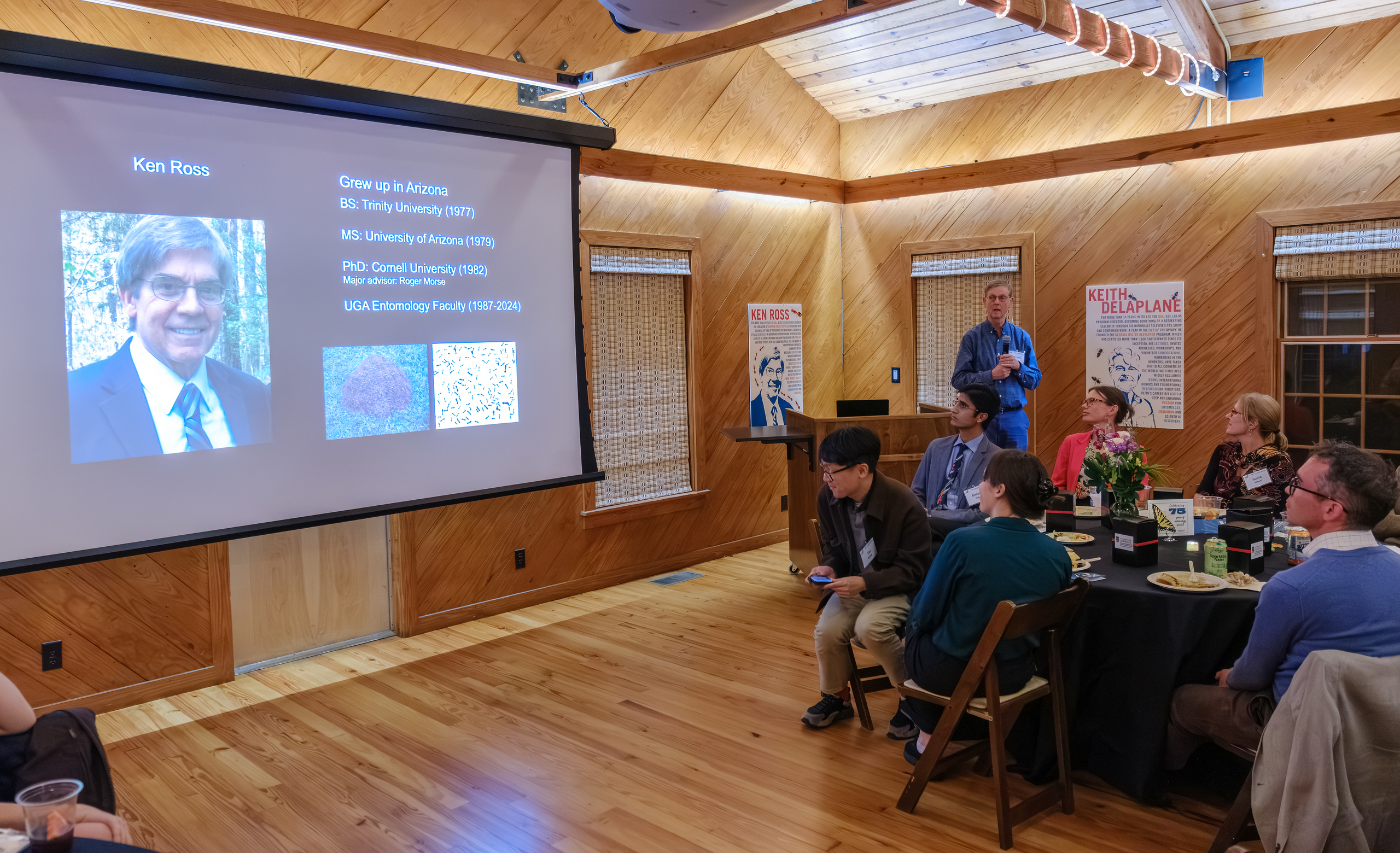
Ken Ross’s early years in the western U.S. eventually took him to Trinity University in San Antonio, where he earned a bachelor’s degree in biology, followed by a master’s degree from the University of Arizona studying black widow spiders. In 1979, he began doctoral work at Cornell University focusing on wasps. There he met Bob Matthews, a connection that brought him to UGA in 1984 for a postdoctoral position working on fire ants — continuing what he jokingly notes as a clear thematic trend.
In his fourth decade at UGA, Ross’s research centers on the evolution of complex insect societies and how colonies of tens of thousands of individuals with specialized roles in foraging and reproduction arise. Known for a remarkable tolerance to fire ant and wasp stings, he has conducted extensive field and laboratory studies revealing how chemical communication, breeding biology and nonrecombining “super genes” influence the evolution of highly cooperative animal groups.
Despite his fascination with difficult insects, Ross is equally devoted to mentoring and teaching, a commitment that has defined his career.
Learn more about research, Extension and learning opportunities in the UGA Department of Entomology at ent.uga.edu.