Takeaways
- Two CAES doctoral students were selected for the competitive 2025–28 FFAR Fellows program, joining a national cohort dedicated to advancing global food and agriculture research.
- Fellows Anita Giabardo and Mekidani Jacob Salu will conduct cutting-edge research in plant breeding and plant pathology, contributing to more resilient crops, improved disease resistance and sustainable agricultural systems.
- The FFAR Fellows program strengthens UGA’s role in developing future agricultural leaders by providing funding, mentorship, and professional development focused on global food security and innovation.
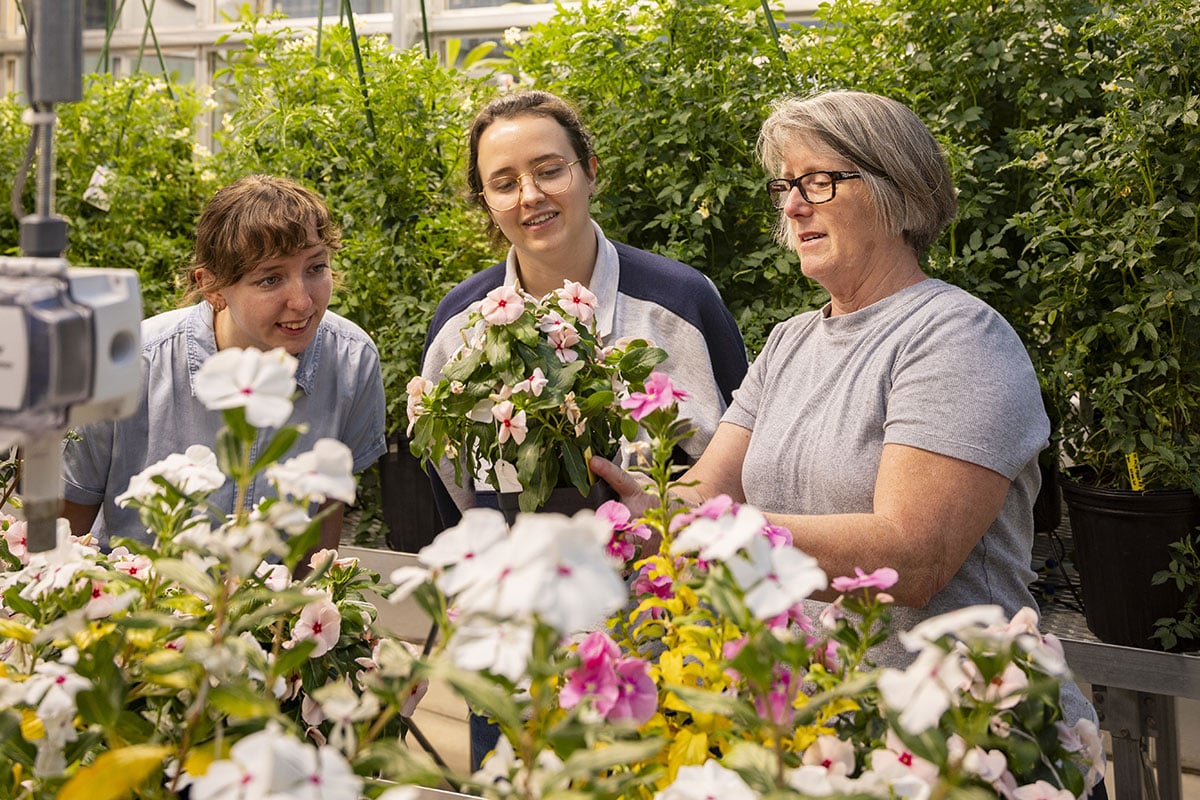
Two doctoral candidates at the University of Georgia’s College of Agricultural and Environmental Sciences (CAES) have been selected for the eighth cohort of the prestigious Foundation for Food and Agriculture Research (FFAR) Fellows program, a three-year initiative designed to cultivate the next generation of food and agriculture research leaders.
The fellows will conduct research aligned with FFAR’s global challenge areas and engage in professional development designed to prepare them for leadership across academia, industry and government.
Meet the FFAR Fellows
Anita Giabardo, Institute of Plant Breeding, Genetics and Genomics

Anita Giabardo is a graduate research assistant with UGA’s Institute of Plant Breeding, Genetics and Genomics (IPBGG) and the Center for Applied Genetic Technologies.
She is part of the 2025-28 FFAR Fellows cohort, sponsored by the IPBGG with funding from Georgia Crop Improvement Association, Georgia Seed Development and UGA. Her research focuses on plant breeding, genetics, and genomics — specifically improving traits that support resilient crops and sustainable agricultural systems.
“It is such an exciting time to be in plant breeding. We can get to know the genes behind our favorite traits using quantitative genetics and population studies and then introgress those traits in our favorite cultivars,” Giabardo said. “Or we can validate those findings using genome editing tools and even use these same innovative tools to improve our commercial crops and work towards ensuring livelihood for everyone, farmers and consumers.”


Learn more about Giabardo at storymaps.arcgis.com.
Mekidani Jacob Salu, Department of Plant Pathology

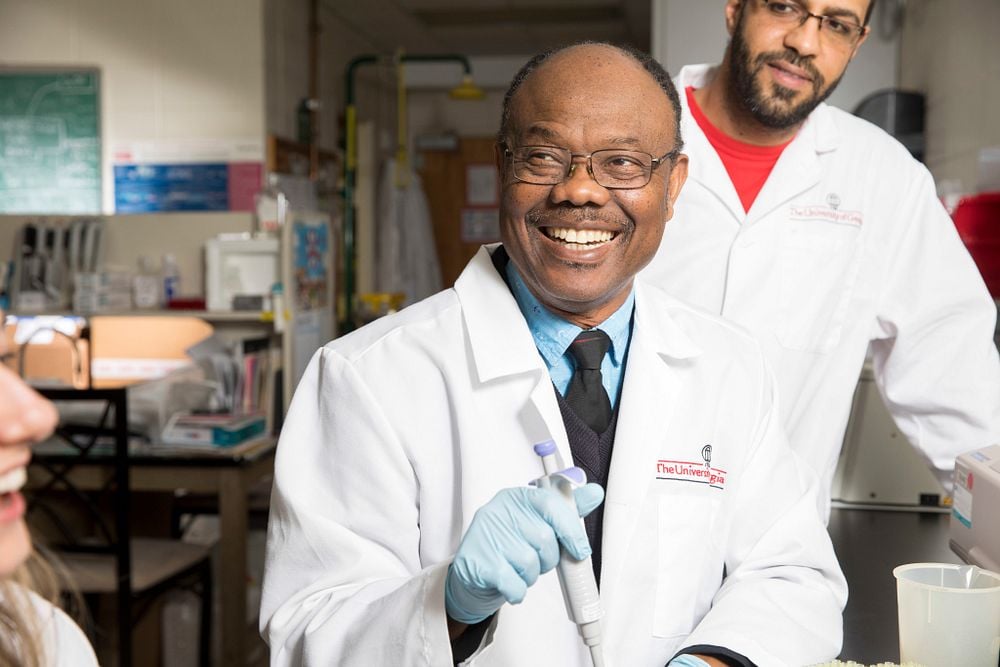
Mekidani Jacob Salu is a doctoral student in the Department of Plant Pathology and Center for Applied Genetic Technologies and a 2025-28 FFAR Fellow sponsored by Corteva Agriscience™.
His research focuses on identifying and functionally characterizing virulence genes of the soybean cyst nematode on broad-spectrum resistant soybean varieties, a key step toward building stronger, more disease-resistant crops.
“For me, agriculture is not just about growing crops — it’s about growing equity, resilience and opportunity,” Salu said. “Every experiment I run carries a piece of home with it, and I hope my work continues to make science more meaningful for farmers everywhere.”


Learn more about Salu at storymaps.arcgis.com.
Investing in future food security
Agricultural systems around the world face mounting pressures, from climate change and resource limitations to emerging pests and pathogens. The FFAR Fellows program equips early career scientists with both research funding and professional development training that prepares them to tackle these complex challenges collaboratively.
By their selection as FFAR Fellows, Giabardo and Salu exemplify UGA’s commitment to developing innovative solutions that promote global food security, sustainability and resilience. Since the program began in 2018, 11 UGA students have been named FFAR Fellows, nine of those from CAES.
“Programs like the Foundation for Food and Agriculture Research (FFAR) Fellows are transformational for our graduate students. They provide far more than research support; they cultivate leadership, professional confidence, and the mentorship networks that set students up for long-term success,” said Anthony Llano, director of industry partnerships and project-based learning at CAES.
“We are committed to preparing the next generation of scientists and innovators, and opportunities like this ensure our students gain the skills, perspectives and industry exposure needed to thrive in a rapidly evolving agricultural landscape. We are delighted to see CAES students selected as FFAR Fellows, and we are confident the experience will be deeply impactful.”

Looking ahead
Through the support of CAES and UGA’s Office of Research, the new fellows will pursue scientific research while building the leadership and communication skills needed to connect their research with industry, policy and community stakeholders.
Over the next three years, Giabardo and Salu will engage in FFAR’s intensive professional development workshops, leadership training and networking opportunities while conducting research that may lead to improved crop varieties, enhanced disease management and more sustainable food systems.
The outcomes of their work will build knowledge and help farmers, agribusinesses and communities around the world.
FFAR supports collaborative research to develop solutions to food and agriculture challenges. The FFAR Fellows program supports doctoral-level scientists early in their careers, equipping them with the research and professional skills needed to become leaders in agricultural innovation.
For more information, visit ffarfellows.org.