Takeaways
- Early detection of yellow-legged hornets in Georgia is critical to protecting honey bees and agriculture: Identifying and reporting sightings in spring helps eliminate queens before colonies grow and reduces long-term ecological and economic damage.
- Georgia’s response to invasive yellow-legged hornets relies on trapping, tracking and public reporting: The Georgia Department of Agriculture and UGA are using thousands of traps and community reports to locate and eradicate nests statewide.
- Residents play a key role in stopping the spread of yellow-legged hornets by reporting suspicious insects and nests: Experts recommend taking photos from a safe distance and submitting them for identification rather than trying to confirm sightings independently.
When the non-native yellow-legged hornet (Vespa velutina) was first confirmed in Georgia in August 2023, a single sighting quickly evolved into a coordinated, statewide response. What began with a concerned beekeeper has become an ongoing effort involving researchers, state officials, and the public all working to track and contain a growing ecological threat.
That effort is expanding, fueled not only by surveillance and public reporting but also by new research from the University of Georgia that is helping scientists better understand how the hornet behaves, spreads and impacts local ecosystems.
UGA Bee Program Director Jamie Ellis said public awareness remains one of the most critical tools in managing the invasive species.
“If you see a suspicious nest or insect, my first recommendation is to take a picture from a safe distance and submit the corresponding information through the Georgia Department of Agriculture website,” Ellis said.
Public reporting plays a vital role as well. Sightings from residents and beekeepers help narrow search areas and accelerate the response.
The Georgia Department of Agriculture developed a dedicated website to provide updated information and detailed photos of the yellow-legged hornet alongside similar pests for identification purposes, as well as an online reporting tool for those who believe they may have discovered a yellow-legged hornet or nest.
Beyond reporting, residents can turn to UGA Cooperative Extension for guidance. UGA specialists have developed additional educational resources, including identification guides and resources to support county agents and the public.
Building a detection network
Since 2023, the Georgia Department of Agriculture has relied on a combination of trapping, reporting and tracking to locate hornet populations. More than 3,200 traps have been deployed, and over 150 nests have been identified and eliminated statewide.
These traps serve two critical functions: confirming whether hornets are present in an area and intercepting queens early in the season before they can establish new colonies.
“If you think about it, killing a single queen in spring in a trap is better than killing a whole colony in August,” Ellis said. “Every queen that you capture in spring is a queen that will not get to make a nest.”
Following hornets back to their nests
Once hornets are detected, crews shift to tracking them, a process that is surprisingly low-tech and labor-intensive.
Teams capture live hornets, mark them and release them to observe their flight paths back to hidden nests. By triangulating repeated sightings, they can locate nests often concealed high in tree canopies.
While researchers are exploring new technologies such as miniature tracking devices, Ellis emphasized that most of the work still depends on “foot power” and careful observation.
While detection efforts continue, new research led by bee program researcher Lewis Bartlett, assistant professor in the Department of Entomology and Odum School of Ecology, is providing a clearer picture of why the yellow-legged hornet is such a successful invader.
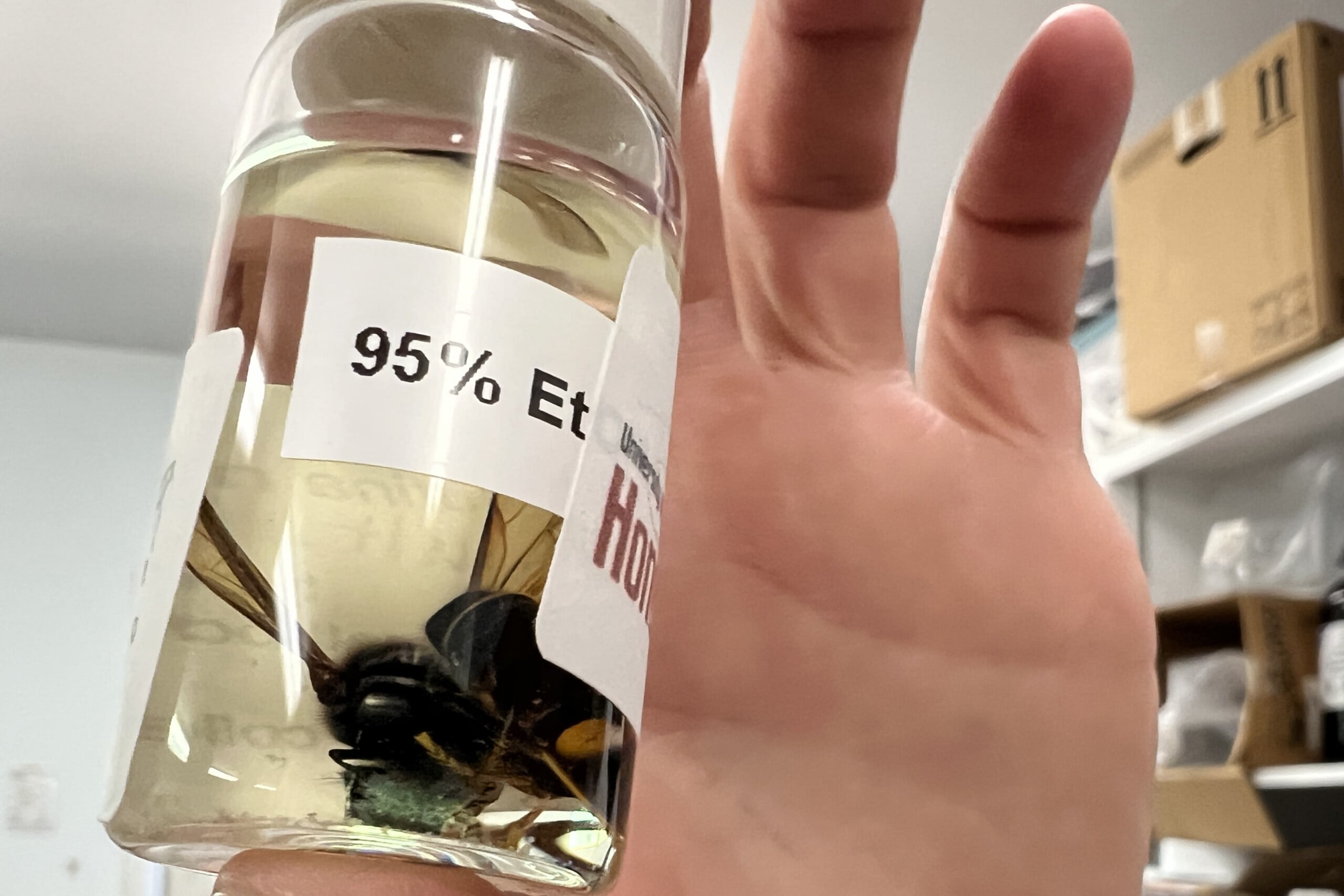
By analyzing genetic material from larval waste inside collected nests, Bartlett and his team can reconstruct what hornet colonies have been eating throughout the season.
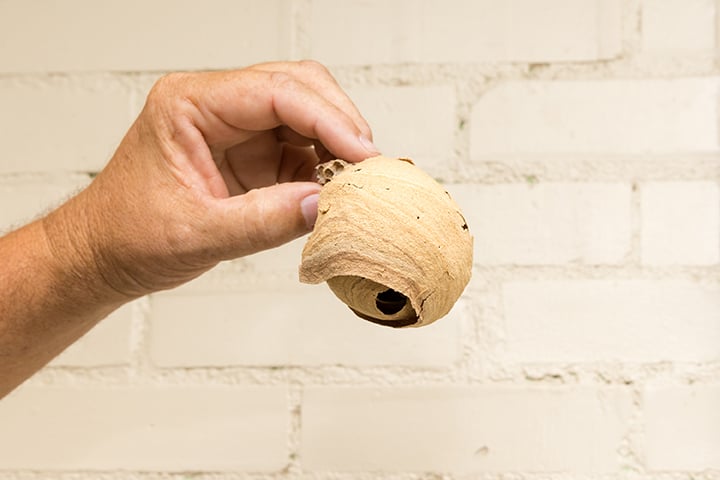
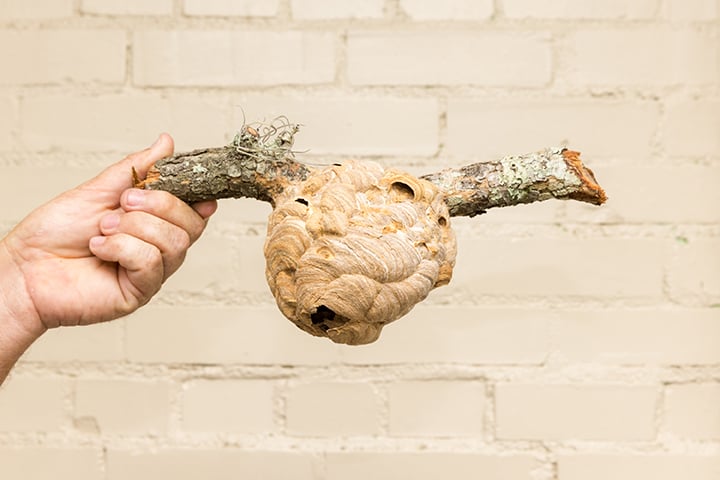
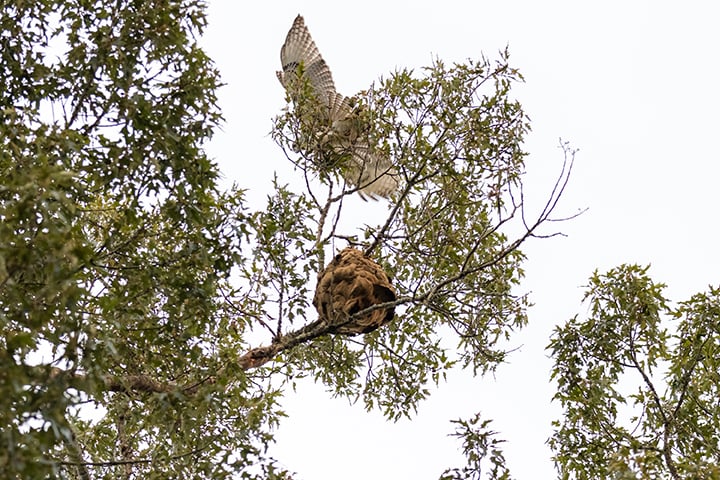
“The larvae produce a fecal pellet that essentially records what they’ve been fed,” Bartlett explained, noting that the DNA within those pellets can be sequenced and matched to species in global databases.
The findings confirm that honey bees make up a significant portion of the hornets’ diet, but they also reveal a much broader feeding pattern.
“They’re eating lots of different insects,” Bartlett said, including butterflies, flies, beetles and native wasps.
In addition, his team has documented evidence of hornets scavenging protein from unexpected sources such as discarded meat, trash and even roadkill.
“They’ll get whatever they can to feed their growing brood,” Bartlett said.
Why diet matters for control efforts
Bartlett said understanding what hornets eat has immediate and long-term applications.
“One of the things we want to know is when they’re really switching to targeting honey bee colonies,” he said, explaining that seasonal feeding patterns could help beekeepers better protect hives.
The research also highlights broader ecological risks. Because the hornets prey on a wide range of insects — including beneficial pollinators and native species that provide pest control — their impact could extend far beyond managed honey bee colonies.
Perhaps most importantly, the work could inform future management tools.
“If we can’t eradicate them, we need to know what baits they’ll take,” Bartlett said, describing the possibility of developing targeted baiting systems that hornets would carry back to their nests.
Where the hornets came from
Genetic research is also changing what scientists understand about how the hornet arrived in the U.S.

Bartlett said early assumptions pointed to Europe, where the species has been invasive for decades, but DNA evidence suggests otherwise.
“The genetics indicate it’s not from the European population,” he said. “It likely came directly from its native range in Asia.”
Pinpointing the exact origin remains difficult due to gaps in global genetic data, but the findings suggest a direct introduction through international trade rather than secondary spread from Europe.
Like many invasive species, a single fertilized queen hidden in soil, plant material or shipping containers can establish a new colony on her own.
Seasonal biology plays a major role in detection and control. Queens emerge in spring and build small embryo and primary nests, often under eaves or low structures. As colonies grow, they relocate to larger secondary nests high in trees, where they remain through summer and fall, making them significantly harder to find and eliminate.
“We’re in that transition period now between the primary nest and the secondary nest,” Ellis said. “That’s why the Georgia Department of Agriculture has put out alerts, because the nests are easier to identify and eradicate right now.”
How the hornets are spreading
The yellow-legged hornet has now been detected in both Georgia and South Carolina, with evidence suggesting it is spreading along the southeastern coast.
Bartlett said that spread is likely driven by a mix of natural and human-assisted movement. Wind patterns may also help push populations northward, contributing to the observed coastal spread.
“They can hitch a ride when queens are overwintering,” he explained, noting that dormant queens can be transported long distances in shipments or materials.
Because the yellow-legged hornet is now invasive across multiple continents, researchers are working together internationally to share knowledge and strategies. Bartlett said teams in the U.S. are collaborating with scientists in Europe and Asia to better understand the species and coordinate research efforts. This global network helps ensure that lessons learned elsewhere can inform the response in Georgia and across the southeastern United States.
Why honey bees are especially vulnerable
The threat to honey bees comes down to evolutionary history, Bartlett said.
In the hornet’s native range, local honey bees have developed defensive behaviors to evade attacks. In contrast, the Western honey bees used in the U.S. lack these defenses and are more easily captured.
“These hornets are highly efficient predators of bees,” Bartlett said.
Hornets often hover near hive entrances, catching bees mid-flight. Even when colonies survive, constant predation pressure can reduce foraging and weaken the hive.
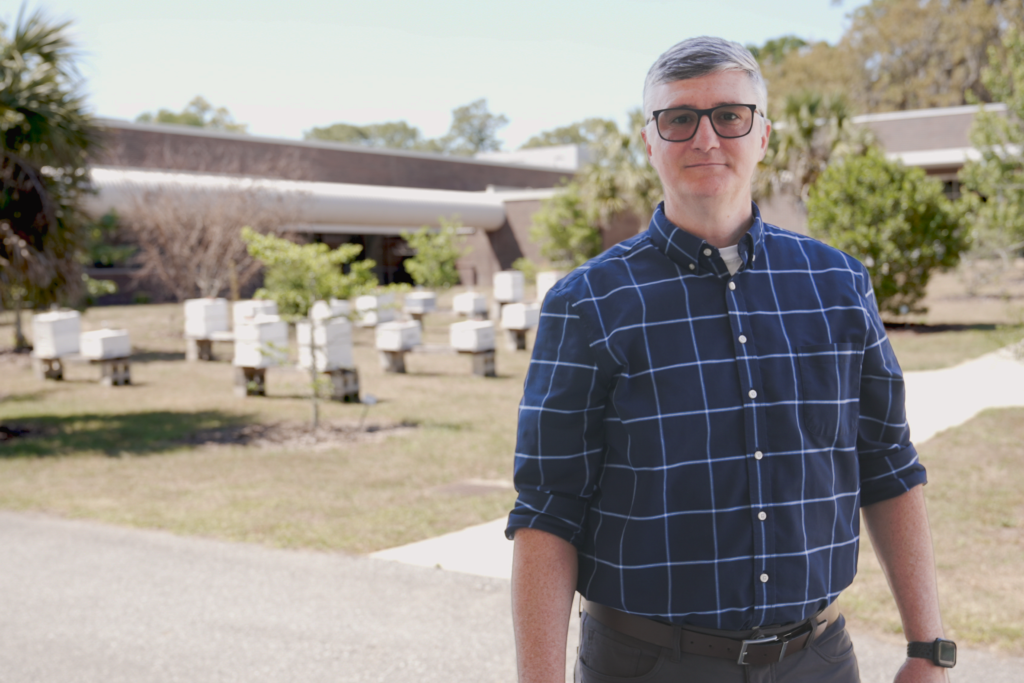
“Apiaries are like consistently available buffets for the hornets,” Ellis added.
What to look for — and what to do
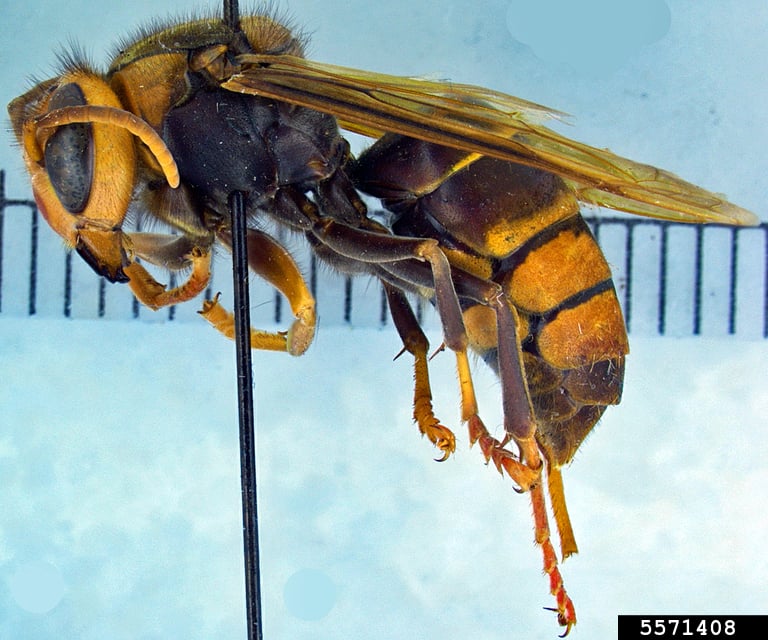
Identifying yellow-legged hornets can still be difficult for the general public. The insects are about an inch long, with dark bodies and distinctive yellow lower legs. Rather than relying on certainty, experts emphasize reporting anything unusual.
“When in doubt, point it out,” Ellis said.
Residents are encouraged to take photos from a safe distance and submit them through the Georgia Department of Agriculture reporting system.
For now, Georgia’s strategy remains focused on detection and eradication. But researchers are also preparing for the possibility that long-term management may be necessary.
That future may include targeted baiting strategies informed by Bartlett’s research into the hornet’s diet and behavior.
While much remains uncertain, one thing is clear: collaboration between scientists, state agencies and the public will determine how successful those efforts are.
“Anything we can do to get the word out helps us combat this invasive species,” Ellis said.
For regular updates on eradication efforts in Georgia, subscribe to the Georgia Department of Agriculture’s periodic Yellow-Legged Ledger, which provides the latest available information on the pest.