Takeaways
- New World screwworm remains a low-risk but closely watched threat, and UGA Extension experts urge livestock producers to stay informed but not alarmed.
- Screwworm larvae feed on living tissue in animal wounds, causing serious infestations that require prompt treatment, wound care and veterinary guidance.
- Producers can help prevent impacts by monitoring livestock, limiting unnecessary animal movement and relying on trusted sources such as the U.S. Department of Agriculture’s Animal and Plant Health Inspection Service and UGA Extension.
Recent headlines about the New World screwworm (NWS) have raised concern among livestock producers, but University of Georgia Cooperative Extension specialists say there’s no need to panic, just stay informed.
During a recorded webinar for agents and livestock professionals, UGA experts shared what producers need to know about the pest, how it affects animals and what steps to take if a case is suspected.
What is the New World screwworm?
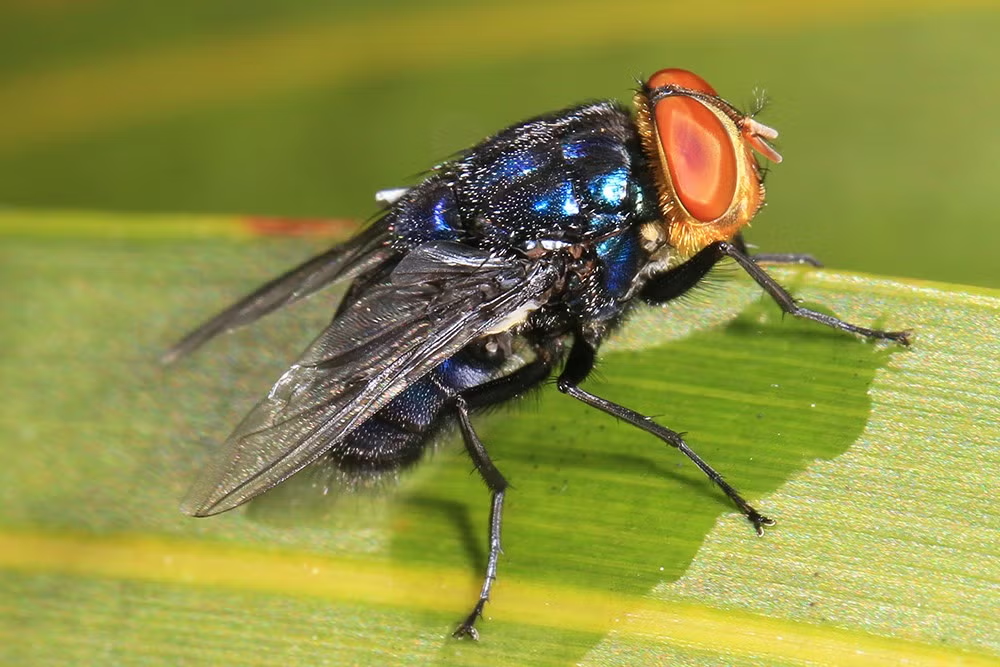
The New World screwworm is a fly whose larvae pose the real threat. While adult flies are harmless, females lay eggs in open wounds on animals. Once hatched, the larvae feed on living tissue, worsening injuries and attracting additional flies, explained Nancy Hinkle, UGA Extension veterinary entomologist.
This pest was first detected in Georgia in 1933 after arriving on imported cattle. Though eradicated in the U.S. decades ago, it remains a concern due to the potential for reintroduction, Hinkle said.
How it affects livestock
Animals with screwworm infestations often show signs of distress, including irritation, loss of appetite and unusual behaviors like head shaking. Wounds may emit a foul odor as larvae feed and multiply.
Because animals cannot remove the larvae on their own, treatment requires physically removing the maggots and properly cleaning the wound, often with veterinary guidance.
While the biological impacts of screwworm infestations are well documented, producers are also concerned about the potential economic consequences for the livestock industry.
“It’s really limited at this time,” said Will Secor, assistant professor in UGA’s Department of Agricultural and Applied Economics. “The markets really aren’t showing many signs of an impact.”


A proven control strategy
Raymond Fitzpatrick, UGA Extension Agriculture and Natural Resources agent for Franklin County, highlighted one of the most effective tools against NWS: the sterile insect technique (SIT). This method involves releasing sterilized male flies into the environment. Because female screwworm flies mate only once, breeding declines rapidly when they mate with sterile males.
This approach has been successfully used in past eradication efforts and remains a key strategy if the pest reappears.
Although current impacts remain limited in the U.S. — the pest has so far only been detected in one New Mexico county and several Texas counties — past outbreaks demonstrate why continued monitoring and control efforts are important.
“Adjusted for inflation, the impact is $732 million in producer losses to the cattle industry,” Secor said of a USDA analysis of a 1976 Texas outbreak. “The overall ripple effects through the rest of the economy would have been about $1.8 billion.”
UGA emphasizes prevention, awareness and reliable information
What producers should do:
- Avoid using pesticides off-label.
- Stay informed through trusted sources such as USDA, screwworm.gov and UGA Extension.
- Minimize unnecessary livestock movement.
- Maintain a strong relationship with a veterinarian.
If you suspect a case:
- Contact your local Extension agent and veterinarian.
- Clean wounds and submit samples if advised.
- Follow all treatment and withdrawal guidelines carefully.
- If a case is confirmed, limit animal movement, maintain strict sanitation and closely monitor livestock for additional signs of infestation.
Stay alert, not alarmed
Accurate information is critical, said Allison Johnson, UGA Extension Agriculture and Natural Resources agent for Dade County, noting that social media can amplify fear rather than facts.
“Don’t panic,” she said.
The current situation does not pose a significant economic threat to Georgia producers, though it remains something worth monitoring, Secor said.
And while consumer concerns have the potential to affect markets, food safety experts emphasize that beef remains safe to eat.
“There’s been a lot of communications from USDA and others saying that the beef is still safe,” Secor said.
For more detailed information, visit the Integrated Pest Management NWS resources website.