UGA College of Agricultural & Environmental Sciences Field Report
  • Stories
    Almanac

    Science in service of humanity and the environment

    Read our annual magazine here

    READ


    Dive into engaging stories that showcase our statewide, national and global impact.

    Check out our written stories here

    LOOK


    Browse curated photo galleries capturing the people, places and programs that bring CAES to life.

    Check out our photo galleries here

    WATCH


    Experience our stories through videos that highlight our people, projects and passions in action.

    Check out our video library here

    LISTEN


    Tune in to “Cultivating Curiosity,” our podcast featuring in-depth conversations with CAES experts.

    Check out our podcast here
  • Expert Resources

    Expert Resources


    From farms and gardens to families and finances, our expert resources empower Georgians with trustworthy, practical science.

    Gardening
    Invasive species
    Food and food safety
    Ants, termites and other pests
    Pollinators
    Livestock
    Emergency preparedness
    Home safety and maintenance
    Health, family and finances
    Nutrition
    Water quality
    Lawn maintenance and landscaping
    Turfgrass
    View all topics

    What is an Expert Resource?


    We publish unbiased, research-backed expert advice to empower Georgians with practical, trustworthy information they can trust.

    These resources are written and reviewed by experts in the UGA College of Agricultural and Environmental Sciences and the UGA College of Family and Consumer Sciences.

    Learn how we produce science you can trust
  • Events
  • Contact
  • Read
  • Look
  • Watch
  • Listen
Subscribe
  • LinkedIn
  • Facebook
  • Instagram
  • Stories
    Almanac

    Science in service of humanity and the environment

    Read our annual magazine here

    READ


    Dive into engaging stories that showcase our statewide, national and global impact.

    Check out our written stories here

    LOOK


    Browse curated photo galleries capturing the people, places and programs that bring CAES to life.

    Check out our photo galleries here

    WATCH


    Experience our stories through videos that highlight our people, projects and passions in action.

    Check out our video library here

    LISTEN


    Tune in to “Cultivating Curiosity,” our podcast featuring in-depth conversations with CAES experts.

    Check out our podcast here
  • Expert Resources

    Expert Resources


    From farms and gardens to families and finances, our expert resources empower Georgians with trustworthy, practical science.

    Gardening
    Invasive species
    Food and food safety
    Ants, termites and other pests
    Pollinators
    Livestock
    Emergency preparedness
    Home safety and maintenance
    Health, family and finances
    Nutrition
    Water quality
    Lawn maintenance and landscaping
    Turfgrass
    View all topics

    What is an Expert Resource?


    We publish unbiased, research-backed expert advice to empower Georgians with practical, trustworthy information they can trust.

    These resources are written and reviewed by experts in the UGA College of Agricultural and Environmental Sciences and the UGA College of Family and Consumer Sciences.

    Learn how we produce science you can trust
  • Events
  • Contact
  • Read
  • Look
  • Watch
  • Listen
Subscribe
  • LinkedIn
  • Facebook
  • Instagram
Subscribe
  • LinkedIn
  • Facebook
  • Instagram

  1. Home
  2. Gaelen R Burke

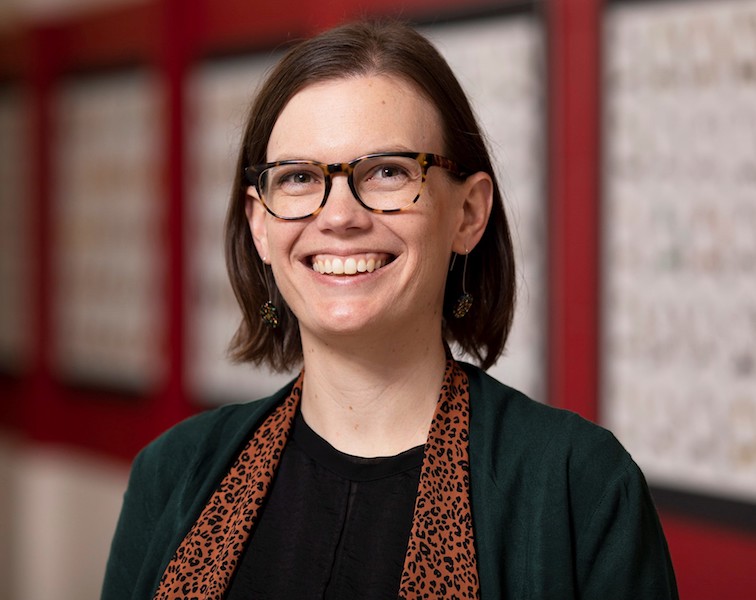
Gaelen R Burke


Professor
Entomology

Gaelen Burke
Gaelen Burke
Areas of expertiseAboutEducationAwards and honorsScholarly works

Areas of expertise

GeneticsMedical MicrobiologyMicrobiologyZoologyImmunologyEvolutionary Biology

About

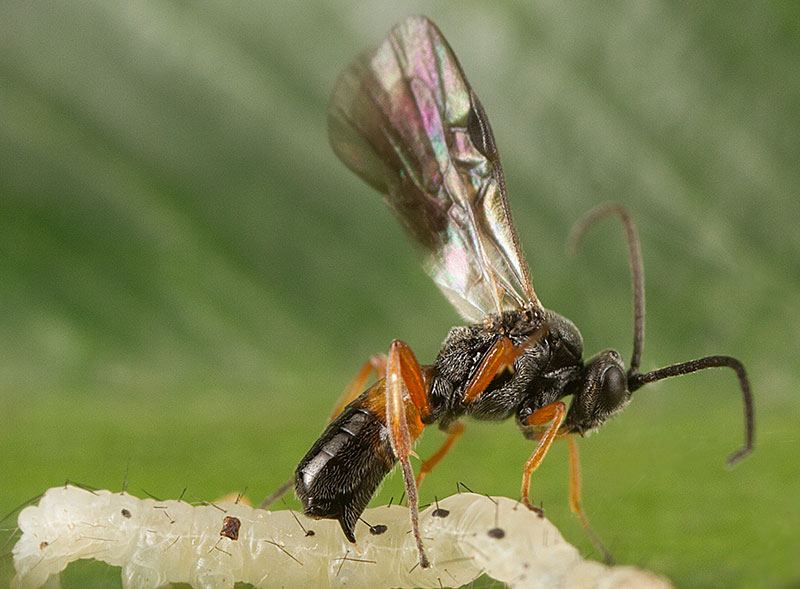
Hereditary symbiosis is a common mechanism by which eukaryotic hosts can acquire traits beneficial for their fitness. Many insects have symbiotic associations with bacteria that trace back millions of years, whose function and evolution are well characterized. Insects can also possess more recently derived symbionts that are closely related to free-living bacteria, and often play a role in host defense. My dissertation focused upon Serratia symbiotica, a recently derived symbiont that infects aphids and provides protection against heat stress, and possibly also plays a nutritional role. I studied several aspects of the biology of recent symbionts, including the diversity of functional roles and evolution among hosts for single lineages of symbionts, the molecular mechanisms that contribute to defense, the early stages of symbiont genome evolution, and interactions with hosts.While bacteria are well recognized to form beneficial symbiotic associations with metazoans, viruses are usually viewed as non-living, parasitic entities that interact with hosts in ways that only benefit their own transmission and persistence. Parasitoid wasps have viruses that have been associated with their hosts for 100 million years, and have evolved to be beneficial symbionts. These polydnaviruses (PDVs) are essential to the survival of the waspโ€™s offspring, which depend upon PDV gene products that suppress host immune defenses.PDV persists as an integrated provirus in wasps, and is transmitted through the germ line, while replication to form virus particles only occurs in the reproductive tract of female wasps. Little is currently known about how virus- and wasp-derived genes interact to regulate viral replication and maintain the symbiotic association. For the past several years I have focused upon the function and evolution of beneficial viruses of parasitoid wasps, and also of beneficial bacterial symbionts of important forest insect pests known as adelgids.

Education

Doctor of Philosophy, Ecology and Evolutionary Biology

University of Arizona The, AZ, United States (2010)

Bachelor of Science, Microbiology, General

University of Queensland The, Australia (2005)

Bachelor of Science, Genetics, General

University of Queensland The, Australia (2005)

Awards and Honors

  • 2016 CAES Undergraduate Research Mentor of the Year (2016)
  • Office of the Vice President of Research Postdoctoral Research Award (2013)
  • Ruth L. Kirschstein National Research Service Awards (NRSA) for Individual Postdoctoral Fellows (2012)
  • R. F. Chapman Graduate Student Prize for Research in Insect Science (2010)

Scholarly Works

  • Facultative Symbionts in Aphids and the Horizontal Transfer of Ecologically Important Traits, ANNUAL REVIEW OF ENTOMOLOGY, (2010).
    Oliver KM, Degnan PH, Burke GR, Moran NA
  • Massive genomic decay in Serratia symbiotica, a recently evolved symbiont of aphids., Genome Biol Evol, (2011).
    Burke GR, Moran NA
  • Effects of facultative symbionts and heat stress on the metabolome of pea aphids., ISME J, (2010).
    Burke G, Fiehn O, Moran N
  • Distribution, expression, and motif variability of ankyrin domain genes in Wolbachia pipientis., J Bacteriol, (2005).
    Iturbe-Ormaetxe I, Burke GR, Riegler M, O'Neill SL
  • Systematic analysis of a wasp parasitism arsenal, MOLECULAR ECOLOGY, (2014).
    Burke GR, Strand MR

View full list of scholarly works

Contact

grburke@uga.edu 706-542-1863

Mailing Address

136 Cedar St., Building C
Room 530G
Athens, GA 30602

Shipping Address

136 Cedar St., Building C
Room 530G
Athens, GA 30602

  • https://www.ent.uga.edu/personnel/faculty/burke.htm
  • https://blog.caes.uga.edu/burkelab/

Stories

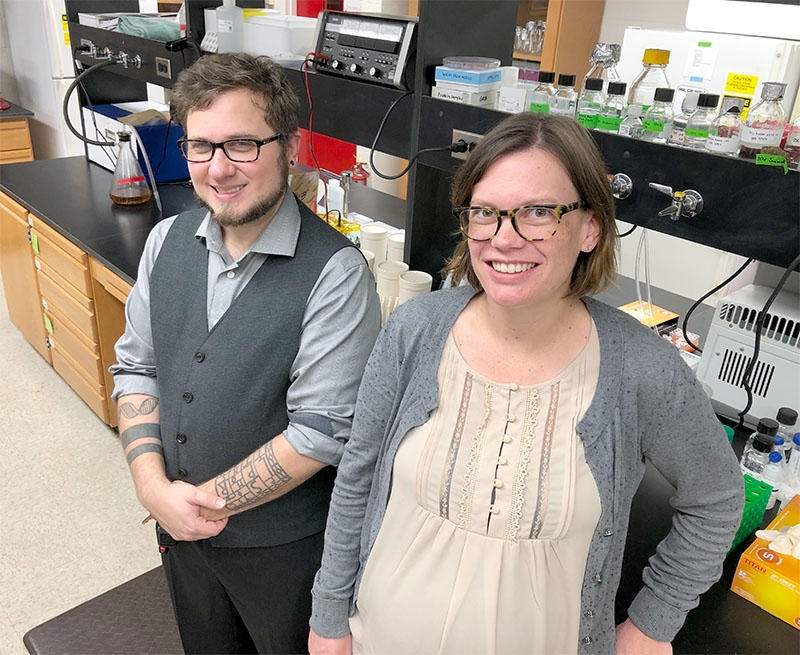
  • From left to right, Gaelen R. Burke, Matthew Evans and Ingie Hovland smile in this composite image of their professional headshots
    Profiles, Awards and Leadership
    March 16, 2026

    Three faculty receive UGAโ€™s highest early-career teaching award

    Share

    Copied!
  • A person wearing glasses smiles in front of a blurred background
    Leadership
    Jan. 9, 2026

    UGA selects faculty, campus leaders for Advanced Leader Program

    Share

    Copied!
  • The Taipei skyline glimmers under the golden hour, with skyscrapers framed by foliage
    Research
    Sept. 23, 2025

    Faculty expand global research connections through AgINSPIRE

    Share

    Copied!
  • Entomology
    Jan. 27, 2025

    CAES researchers study how parasitic wasps use ancient viruses to ensure survival

    Share

    Copied!
  • May 3, 2022

    How some beneficial insects use viruses to protect their young

    Share

    Copied!
  • Feb. 26, 2019

    Two UGA CAES faculty receive National Science Foundation CAREER grants

    Share

    Copied!

About CAES

CAES Home

Overview

History

Administration

Jobs

Personnel Directory

Privacy Policy

Accessibility Policy

AI Guidelines

Affiliations

UGA Cooperative Extension

Tifton Campus

Griffin Campus

University of Georgia
  • Schools and Colleges
  • Directory
  • MyUGA
  • Employment Opportunities
  • Copyright and Trademarks
  • UGA Privacy Policy
  • Submit a Student Complaint
#UGA on
© University of Georgia, Athens, GA 30602
706‑542‑3000