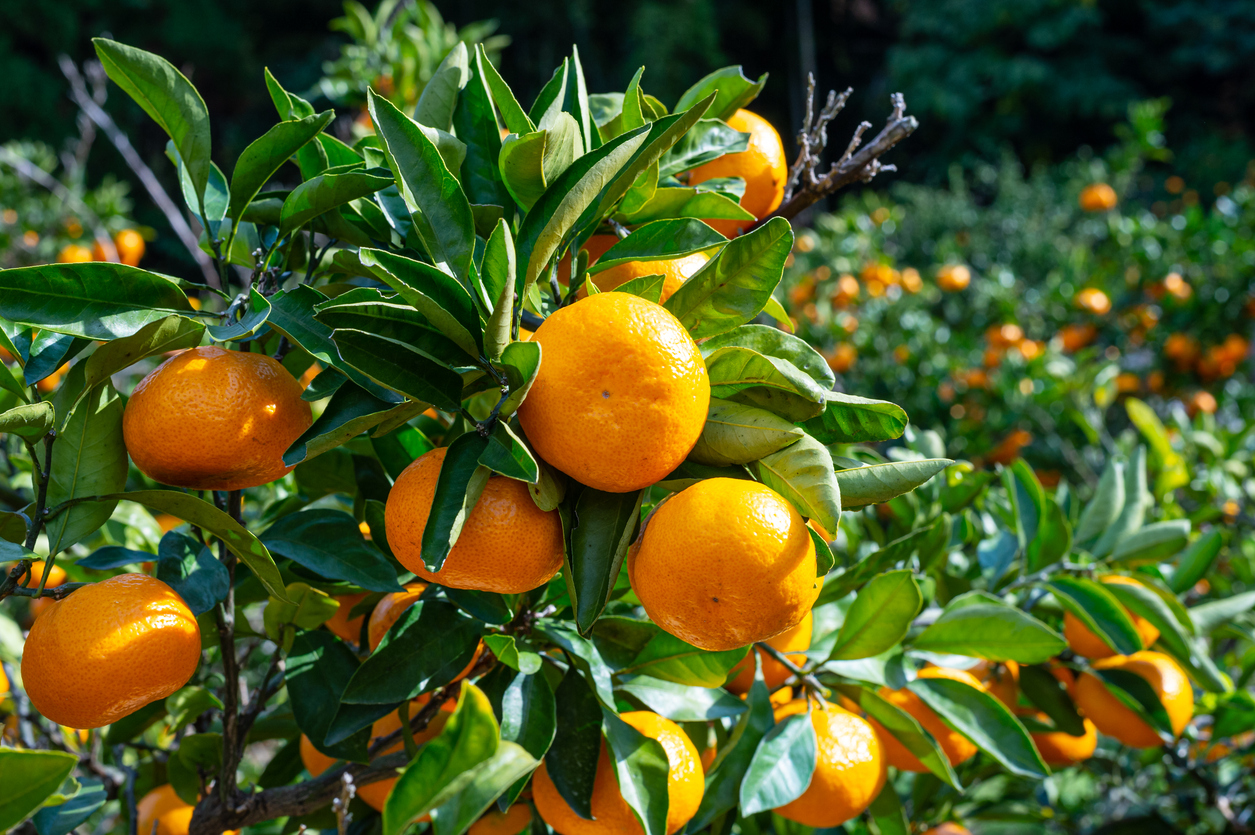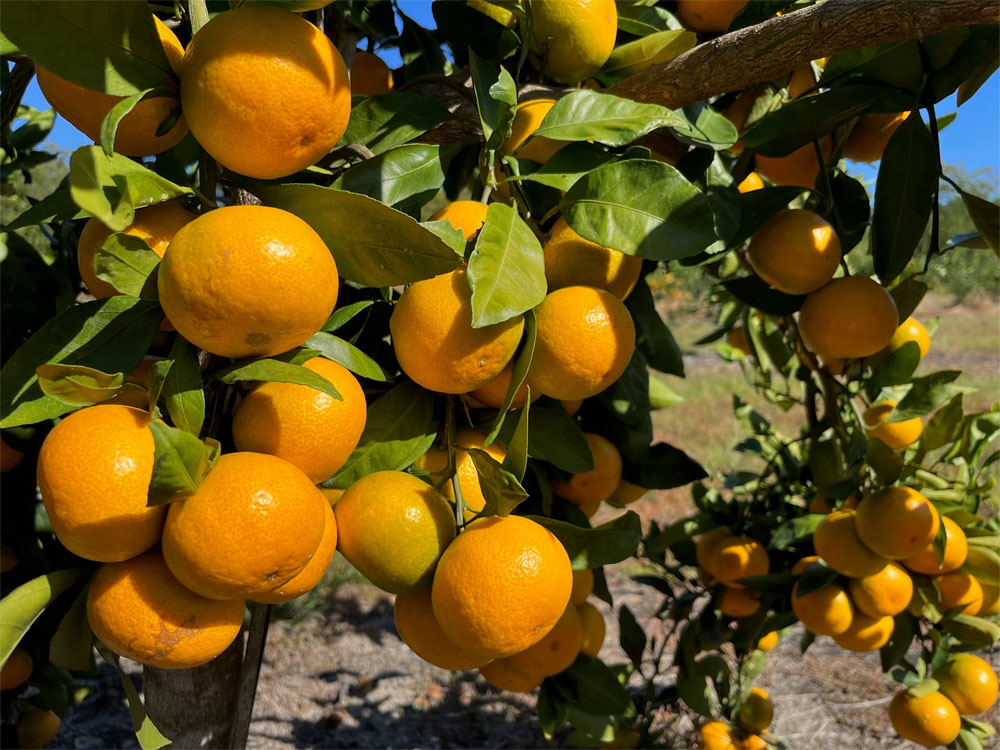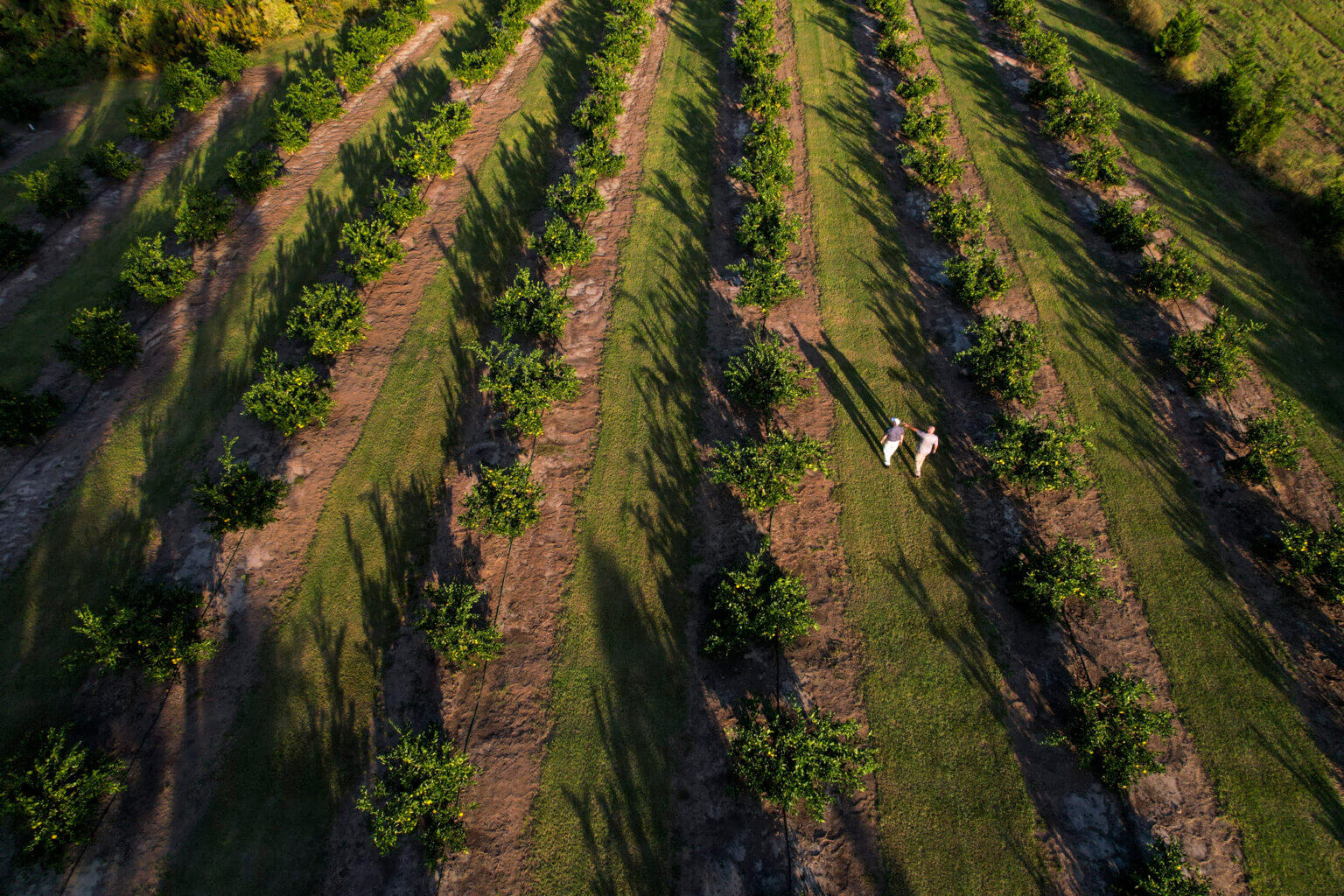

The commercial citrus industry in Georgia has only recently been established, with most groves planted after 2014. Initially, satsuma mandarins (Citrus unshiu) on trifoliate rootstocks (Poncirus trifoliata) were planted because of their cold hardiness, seedlessness, and ease of peeling. Satsuma fruits begin to attain commercial maturity in early November and usually avoid hard freezes in southern Georgia. As of 2022, approximately 75% of the 3,300 acres of citrus planted in Georgia are satsumas, but that proportion is trending downward.
To strengthen the new Georgia citrus industry, growers recently have begun to diversify their citrus varieties. Little is known about how these varieties will perform under Georgia weather and soil conditions. Therefore, research is necessary to determine what varieties can best tolerate Georgia’s winter weather and to determine cultural norms such as maturation time, fruit quality, and insect and disease tolerance.
Risks of citrus variety diversification in Georgia
Because few citrus varieties have the documented cold hardiness of satsumas, diversifying citrus varieties in Georgia comes with risk. Fruit freezing on the trees is possible if varieties are not ready for harvest before hard freezes occur. Therefore, it is important to grow varieties that can be harvested before January. Hard freezes can occur in southern Georgia between November and March, but most commonly occur after January. Recently, some winters have been milder, with low temperatures hovering near 30 degrees Fahrenheit. If these trends persist, it may be possible to harvest fruit well into the winter months.
In general, temperatures of 28 degrees Fahrenheit that last for several hours can cause fruit damage, but other factors that determine damage include fruit location on the tree, duration of the freeze, and peel thickness. Growers should review climate data available through the University of Georgia weather network to determine the earliest freeze dates and duration of freezes in their local region.
Total soluble solids (Brix)
Taste panels have revealed that consumers’ preference for different citrus fruits is not based on sugar content alone but rather on a blend of sugars and acid. The average consumer wants a pleasantly tart or subacid fruit, and this requires certain ratios of sugar to acid. For this reason, total soluble solids, which are mostly sugars, and the total-soluble-solids-to-acid ratio are important parameters to consider when determining whether citrus fruit is ready to harvest. Citrus does not continue to ripen after harvest, so the fruit must be allowed to reach peak maturity on the tree.
In addition to sugars, total soluble solids include certain organic acids, vitamins, potassium, very small amounts of inorganic salts, and organic compounds that are responsible for the characteristic flavors of various citrus fruits. The Brix scale is a measure of total soluble solids dissolved in the juice. Sugars constitute about 80% of the Brix value. Brix is measured in degrees Brix, which is equivalent to a percentage. Brix levels rise as fruit matures during the season.
Percent acid
Citric acid is the primary acid found in citrus fruit, but fruit may also contain small amounts of malic, succinic, and tartaric acid. Acid levels decrease the longer the fruit remains on the tree. The ratio of Brix to acid helps determine fruit quality. To calculate the ratio, the percentage of Brix is divided by the percentage of acid. For example, juice with a Brix of 10 and an acid level of 0.9 has a Brix-to-acid ratio of 11.1.
Brix/acid ratio
The Brix/acid ratio is more important in determining acceptable flavor when Brix levels are low than when they are high. As fruit maturity progresses, the ratio can become higher as the sugar rises and acid drops. Very high ratios, however, can result in insipidly sweet juice without tartness, which is not desirable.
Georgia does not currently have maturity standards for citrus, but some states require a minimum Brix level and a minimum Brix-to-acid level for each classification of fruit and stage of maturity. In Florida this is determined by the Florida Department of Citrus and the Florida Citrus Commission. Florida has five major marketing classifications: orange, grapefruit, tangerine, tangelo, and other varieties that may be given a separate identity. Each classification has specific standards.
Examples of Brix/acid ratios from Georgia
On November 8, 2021, 60 fruit from ‘Owari 874’ satsumas on ‘US-942’ rootstocks growing in Valdosta, Georgia, were juiced and evaluated for Brix and acid. The trees were planted in 2014 and had a Brix of 10.2 and acid level of 0.92. The Brix-to-acid ratio was 11.1, which indicates quality fruit. For comparison, the commercial-standard Brix-to-acid ratio for satsumas in Louisiana is 10.
Having a minimum Brix level is important. If fruit has both low Brix and low acid levels, the Brix-to-acid ratio could appear acceptable but still be misleading. An example is ‘Miho Wase’ satsumas on ‘Rubidoux’ rootstock that were juiced on October 20 in Valdosta from trees planted in 2016. The Brix from 30 juiced fruit was 7.0 and the percent acid was 0.65. The ratio of 10.8 normally would indicate a quality fruit, but the taste was poor because of the low Brix level.
Fruit with both high Brix and high acid levels, such as ‘Sugar Belle’ mandarins, may have a low Brix-to-acid ratio but still have a pleasing flavor because of the higher Brix level. For example, 40 random fruit were picked and juiced from ‘Sugar Belle’ mandarin trees on four different rootstocks in Valdosta on January 4, 2022. The Brix level of the juice was 14.2 and the acid was 1.5152. The Brix-to-acid ratio was 9.4, but the flavor was considered outstanding.
Evaluation of 29 Georgia-grown citrus varieties
In December 2021, five citrus fruits, with a few noted exceptions, were picked and juiced into one sample from each variety/rootstock combination represented in the publication. All plantings were from Lowndes and Lanier counties except for ‘Pink Frost’ grapefruit and ‘Grand Frost’ lemon, which came from a planting in Tift County. For each sample, Brix was tested using an Atago 3810 digital pocket refractometer and acid was derived using a Mettler Toledo automatic titrator.
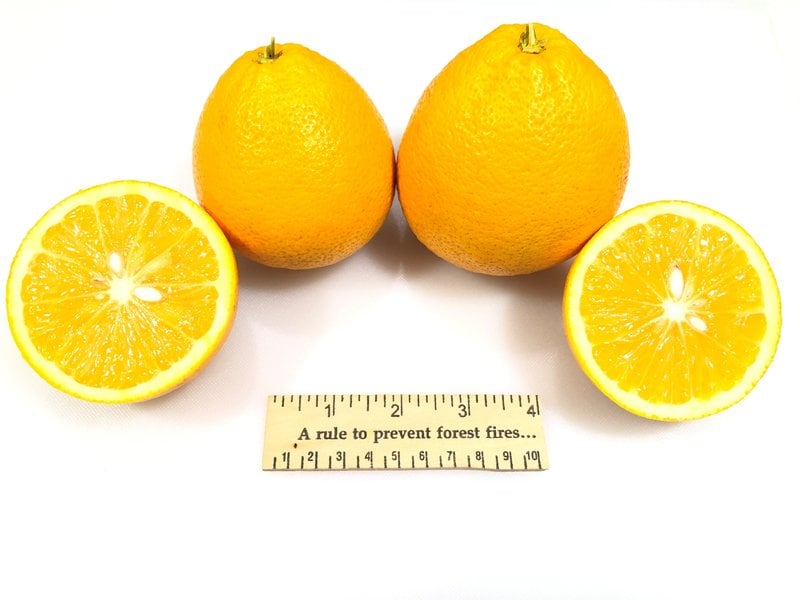
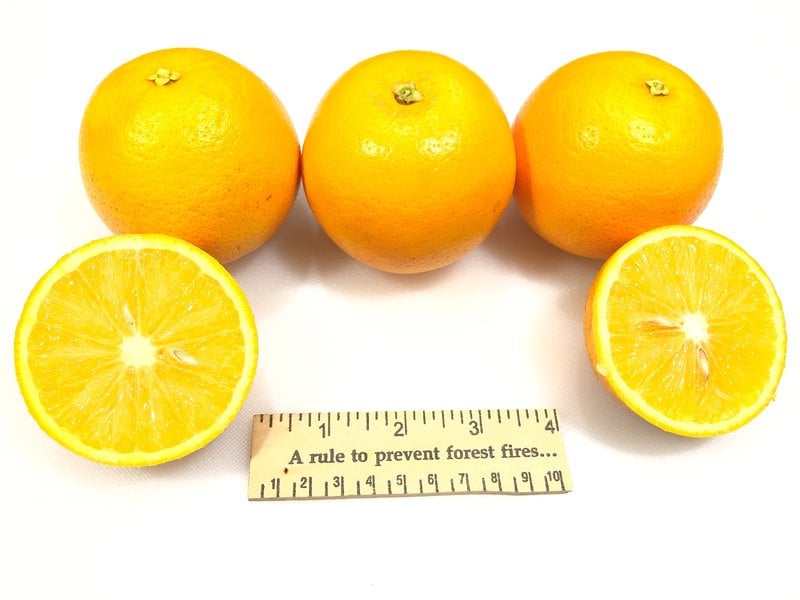
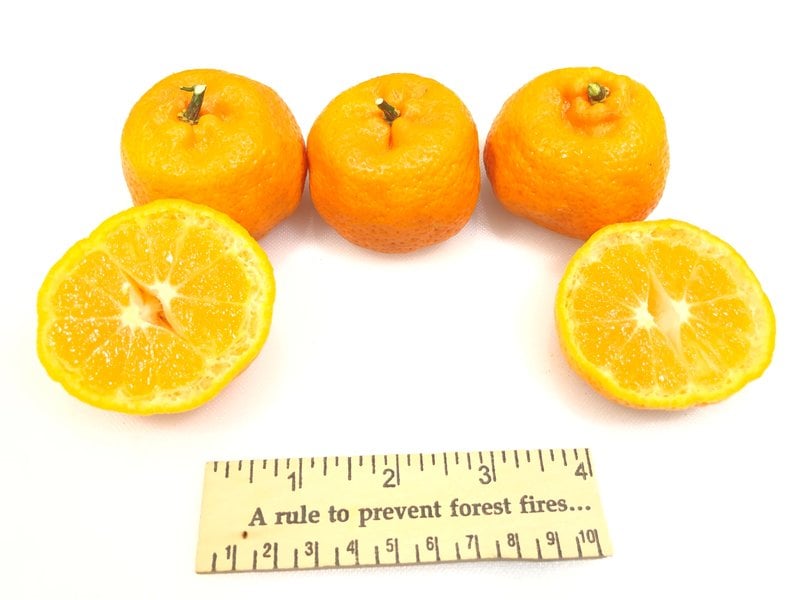
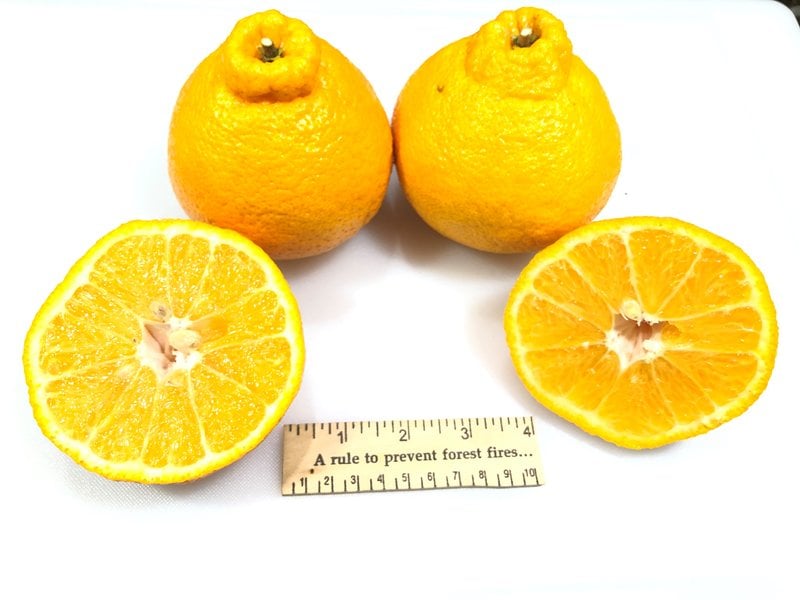
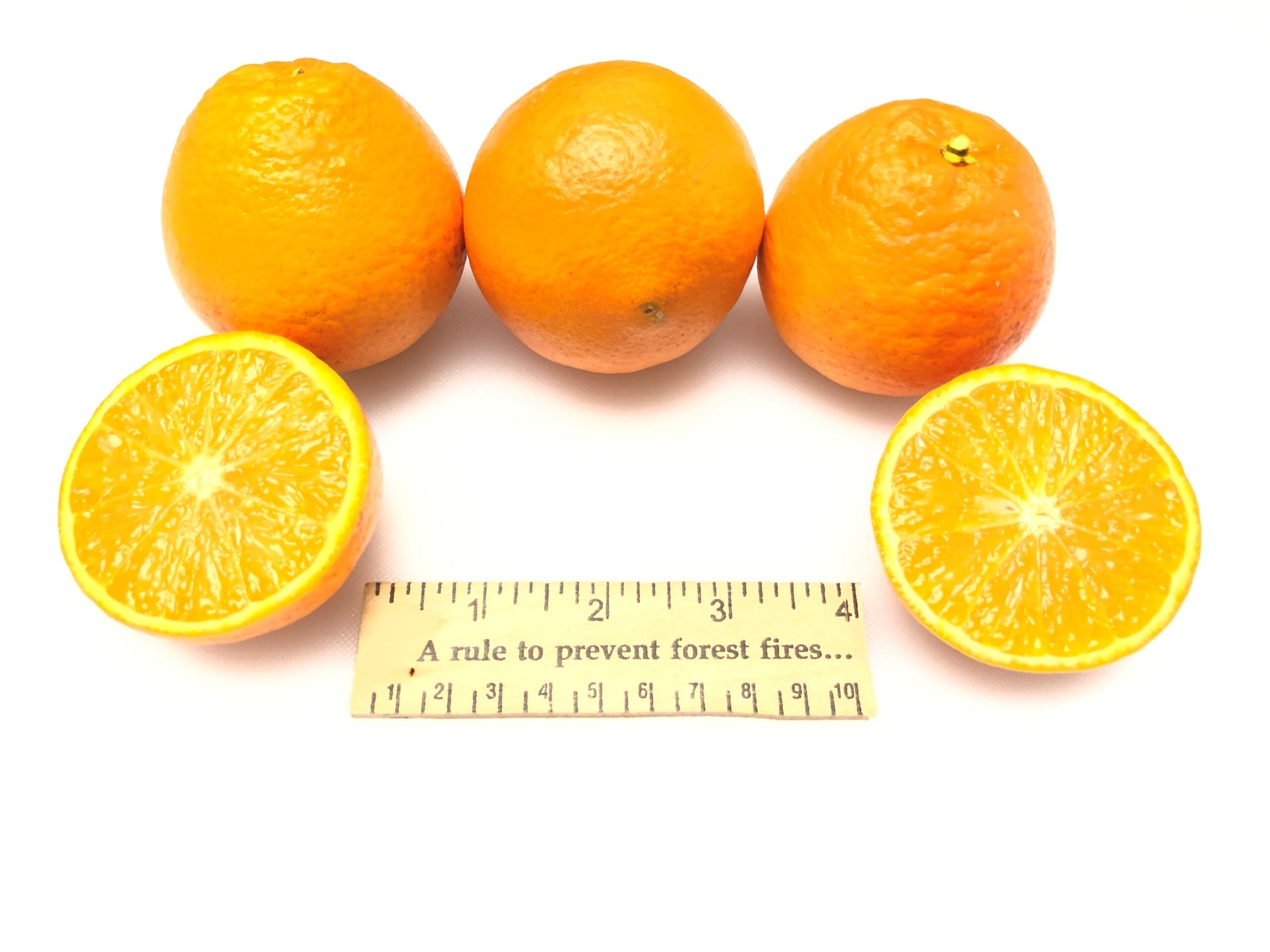
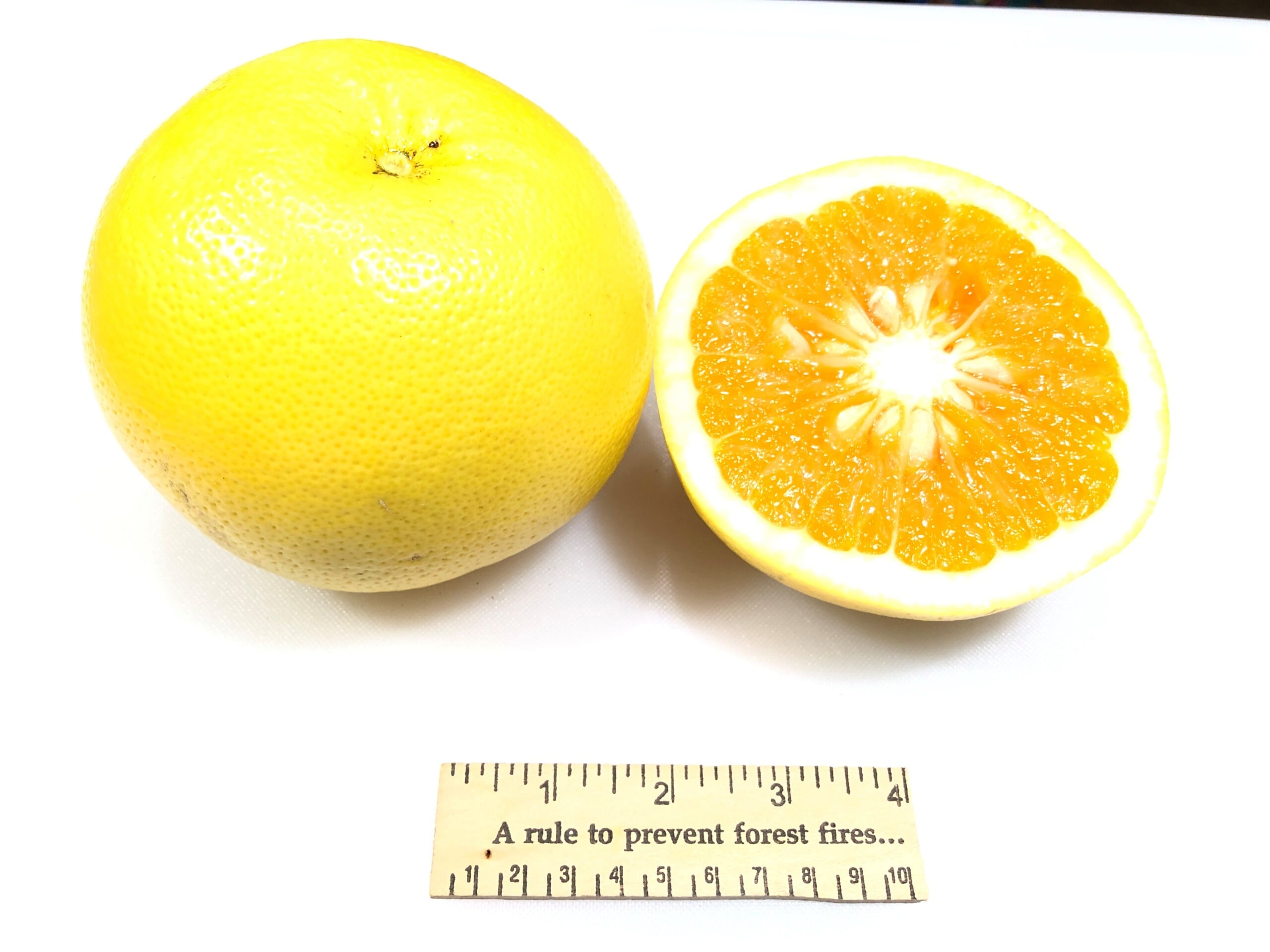
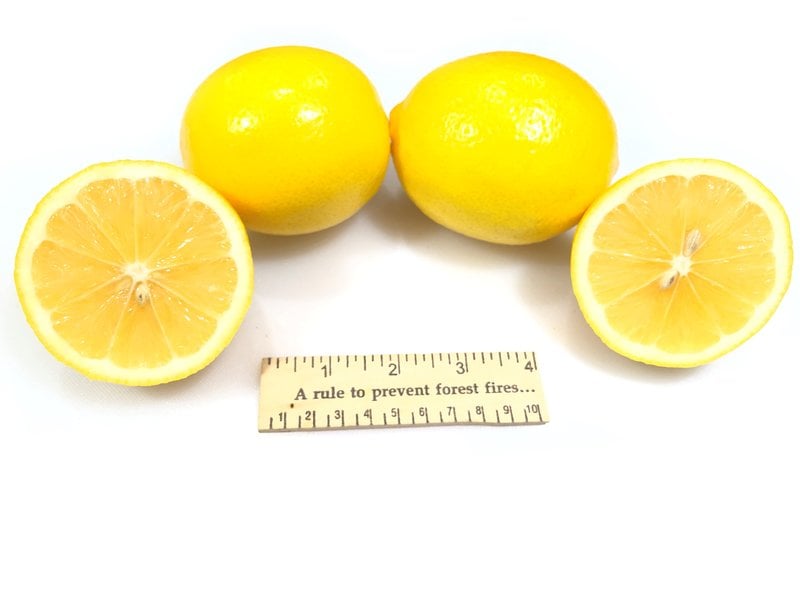
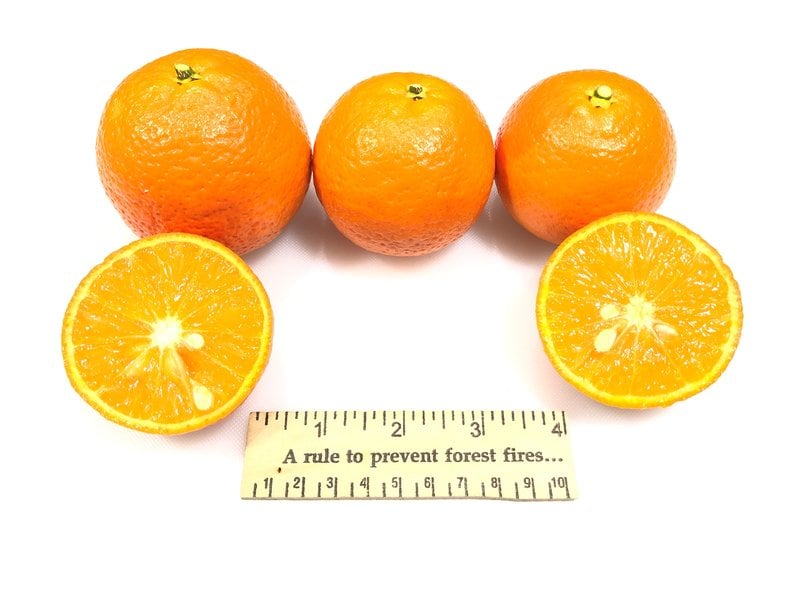
The evaluation table provides information on varieties currently being grown in Georgia, when they were planted, the rootstocks on which they were grafted, measured total soluble solids levels, measured titratable acidity, and total-soluble-solids-to-titratable-acidity ratios. These values provide information that may assist growers in choosing which varieties to plant and when they may mature.
| Variety | Rootstock | Date planted | TSS* (Brix) | Titratable acidity (TA) | TSS/TA ratio | |
|---|---|---|---|---|---|---|
| Sweet Oranges | ||||||
| Southern Frost Navel (UGA) | Flying Dragon | 2017 | 11.7 | 0.64 | 18.3 | |
| Glen Navel | Sour Orange | 2014 | 9.4 | 0.84 | 11.2 | |
| Glen Navel | US-852 | 2017 | 10.2 | 0.75 | 13.6 | |
| Cara Navel | US-897 | 2018 | 9.5 | 0.73 | 13.0 | |
| Washington Navel | US-852 | 2017 | 10 | 0.65 | 15.4 | |
| Marr’s Orange | Poncirus trifoliata | 2009 | 10.7 | 0.84 | 12.7 | |
| Ambersweet Orange | US-852 | 2009 | 8.1 | 0.52 | 15.6 | |
| Sweet Bessie Orange | US-852 | 2017 | 6.7 | 0.66 | 10.2 | |
| Early Gold Orange | 16-6 | 2008 | 8.1 | 0.63 | 12.8 | |
| Moro Blood Orange | US-942 | 2019 | 9.7 | 1.07 | 9.1 | |
| Hamlin Orange | US-812 | 2016 | 9.4 | 0.69 | 13.6 | |
| Mandarins | ||||||
| Sugar Belle Mandarin | US-942 | 2018 | 13.1 | 1.62 | 8.1 | |
| Sugar Belle Mandarin | US-897 | 2018 | 13.3 | 1.78 | 7.5 | |
| Sugar Belle Mandarin | US-852 | 2018 | 12.7 | 1.48 | 8.6 | |
| Sugar Belle Mandarin | Rubidoux | 2018 | 13.7 | 1.65 | 8.3 | |
| Sugar Belle Mandarin | X-639 | 2015 | 12.1 | 1.53 | 7.9 | |
| Sugar Belle Mandarin | Goutou | 2017 | 12 | 1.11 | 10.8 | |
| Tango Mandarin | US-852 | 2020 | 9.6 | 0.88 | 10.9 | |
| Tango Mandarin | X-639 | 2018 | 10.9 | 0.92 | 11.8 | |
| Kishu Mandarin | US-852 | 2017 | 8.7 | 0.51 | 17.1 | |
| Kishu Mandarin | Rubidoux | 2019 | 10 | 0.64 | 15.7 | |
| Shiranui Mandarin | US-942 | 2019 | 11.0 | 1.01 | 10.9 | |
| Shiranui Mandarin | US-852 | 2018 | 11.7 | 1.30 | 9.0 | |
| Shiranui Mandarin | US-897 | 2016 | 13.5 | 1.38 | 9.8 | |
| Shiranui Mandarin | Swingle | 2015 | 11.8 | 1.57 | 7.5 | |
| Early Pride Mandarin | X-639 | 2017 | 11.1 | 0.88 | 12.6 | |
| Orange Frost Mandarin | Own roots | 2017 | 10.6 | 0.97 | 10.9 | |
| Artic Frost Mandarin | Own roots | 2015 | 12.2 | 0.97 | 12.6 | |
| Keraji Mandarin | US-942 | 2018 | 10.7 | 0.48 | 22.3 | |
| US Superna (88-2) | US-852 | 2019 | 14.4 | 0.82 | 17.6 | |
| Sweet Frost Changsha (UGA) | Rubidoux | 2016 | 12.9 | 0.91 | 14.2 | |
| Poncan Mandarin | Rubidoux | 2010 | 12.2 | 0.64 | 19.1 | |
| Owari Satsuma Mandarin | Kuharski Carrizo | 2014 | 11.4 | 0.78 | 14.6 | |
| Fairchild Mandarin | Flying Dragon | 2009 | 16.1 | 0.93 | 17.3 | |
| Grapefruit | ||||||
| ***Golden Grapefruit | Flying Dragon | 2009 | 9.0 | 1.01 | 8.9 | |
| **Pink Frost Grapefruit (UGA) | Poncirus trifoliata | 2009 | 7.6 | 1.38 | 5.5 | |
| Lemons | ||||||
| **Grand Frost Lemon (UGA) | Poncirus trifoliata | 2010 | 6.3 | 3.46 | 1.8 | |
| Meyer Lemon | Own roots | 2009 | 7.1 | 4.94 | 1.4 | |
| Tangelos | ||||||
| Page Tangelo | US-852 | 2018 | 12.6 | 0.96 | 13.1 | |
| Minneola Tangelo | US-897 | 2018 | 10.9 | 1.18 | 9.2 | |
| * TSS = Total soluble solids. ** Sample collected on January 9, 2022; each sample included three fruits. *** Two fruits sampled for this variety. | ||||||














References
Davies, F. S., & Jackson, L. K. (2022). Harvesting, maturity, and grade standards and marketing. In Citrus Growing in Florida (5th ed.). University Press of Florida. https://upf.com/book.asp?id=9780813068855
Tucker, D. P. H., Roger, S., Stover, E. W., & Ziegler, M. R. (2006). Fruit quality. In Florida Citrus: A Comprehensive Guide. University of Florida IFAS Communication Services. https://ifasbooks.ifas.ufl.edu/p-206-florida-citrus-a-comprehensive-guide.aspx