
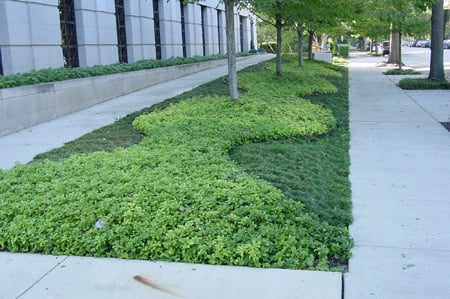
Ground covers are spreading, low-growing plants used in landscapes to cover an area of ground. They may be woody plants, like junipers, or herbaceous perennial plants, like sedum or daylilies.
Generally, ground cover plants are evergreen and spread by horizontal stems, stolons (aboveground stems that root along their nodes) or rhizomes (belowground creeping stems that spread outward). For the purposes of this publication, plants that spread by seed or are taller than 3 ft in height are not considered ground covers.
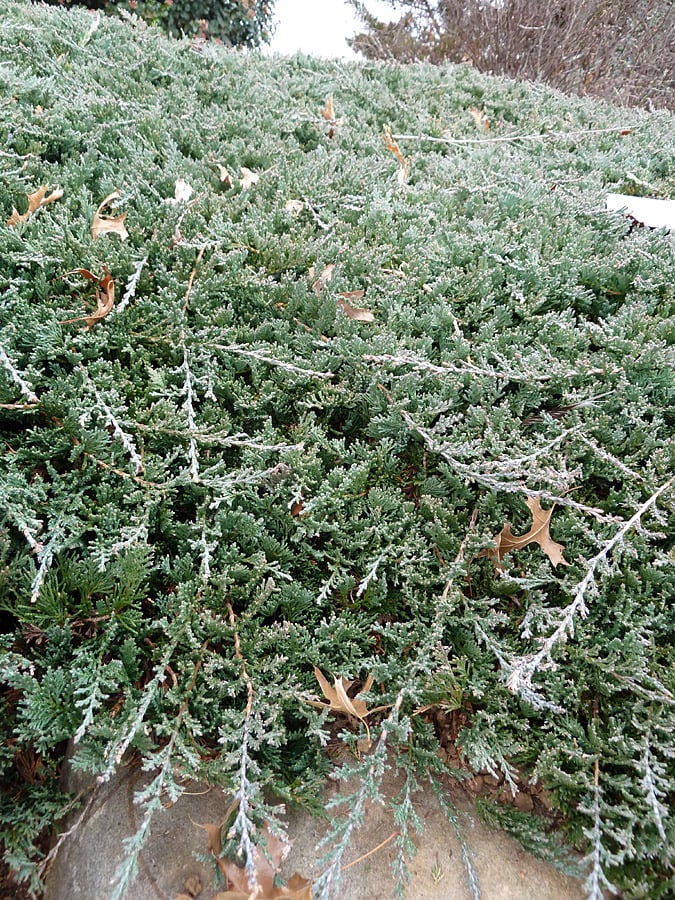
Ground covers have many practical uses. Some can be used to control erosion when planted on slopes or banks. Others are effective lawn substitutes in areas that are too shady to support the growth of grasses or areas that are difficult to mow. Densely growing ground covers also effectively control weeds by blocking light from reaching the ground.
Some ground covers can be used as attractive accents in areas too narrow to accommodate shrubs. One of the most common reasons for using ground covers is to reduce costly and time-consuming maintenance, such as mowing, edging, trimming, and mulching.
Ground covers are also valued for aesthetic reasons. They soften harsh architectural lines of buildings and paved areas. When skillfully interplanted with trees and shrubs, ground covers impart a textural balance and unity to the landscape by bridging the gaps between trees and shrubs.
Selecting Ground Covers
One of the first considerations when selecting a ground cover is whether it is cold hardy for the area in which it is to be grown. Georgia has six cold-hardiness zones, according the 2023 USDA cold-hardiness zone map. The zones are based on the average minimum temperatures of each region of the state.
| Zone | Range of average annual minimum temperatures (°F) |
|---|---|
| 7a | 0 to 5 |
| 7b | 5 to 10 |
| 8a | 10 to 15 |
| 8b | 15 to 20 |
| 9a | 20 to 25 |
| 9b | 25 to 30 |
A second consideration is whether the ground cover prefers sun or shade. Some ground covers, like the horizontal junipers, must have sun. When planted in shade, they will grow poorly and become more susceptible to insects and diseases. Other ground covers, like cast iron plant, prefer shade and will often show foliar scorching when planted in full sun.
Another consideration is the mature height and spread of the plant. Desired height depends on the location of the ground cover in the landscape and the size of adjacent plants. How wide you can expect the plant to grow will determine how far apart plants are planted initially. Planting ground covers closer together than their recommended spacing is sometimes done to achieve a quicker cover, but it requires more plants per unit area and increases plant costs. Furthermore, when ground covers are planted too closely together they soon become crowded, compete for water and nutrients, and become more susceptible to insect and disease problems.
Planting Time
Container-grown ground covers with well-developed root systems can be planted most any time of year, provided the plants can be irrigated during establishment. Bare-rooted plants are best transplanted during the fall and winter months when temperatures are cooler, soil moisture is usually more plentiful, and plants are not actively growing.

Planting
Proper planting is important for ground covers to grow and spread rapidly. A soil test done 1 month prior to planting will determine whether lime is needed and what type of fertilizer is best. Information on soil testing is available online and from your local county Extension office.
If a soil test is not done, a general recommendation is to apply 3 lb of a complete fertilizer, such as 10-10-10 or 5-10-15, to the planting area prior to planting. Use a rake to incorporate the fertilizer lightly into the soil. Most Georgia soils will benefit from the addition of organic matter, like compost or composted animal manure. Organic matter helps sandy soils hold water and nutrients, and it improves the porosity and water movement in clay soils. It also provides slow-release nutrients to plants. For best results, spread organic matter 4 in. thick over the area to be planted and incorporate it to a 12-in. depth.
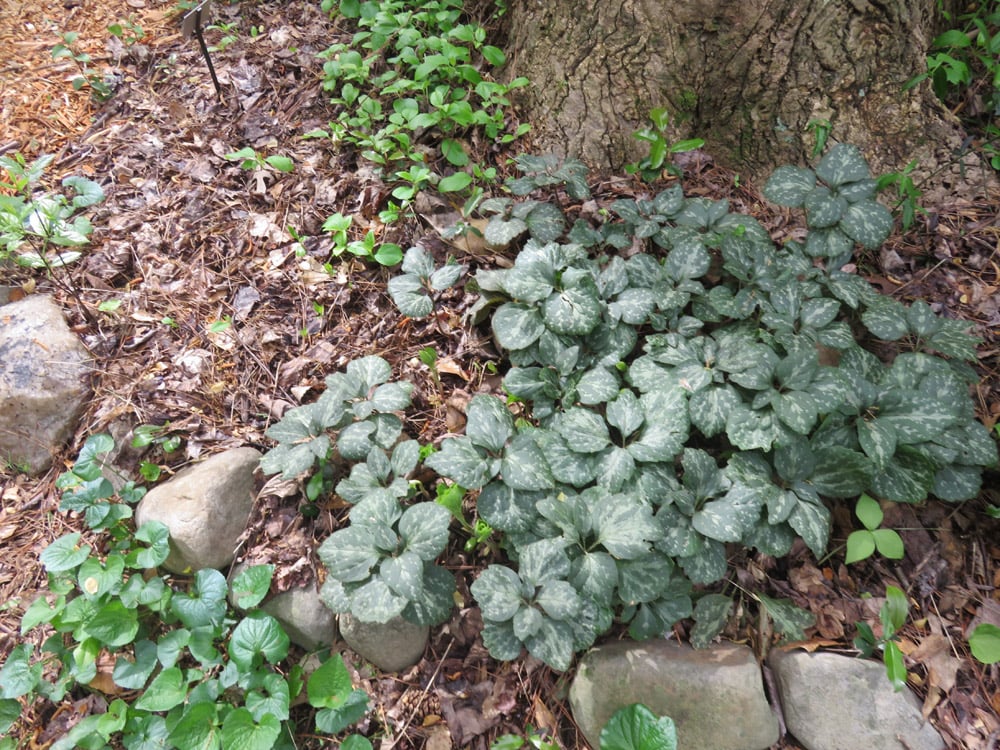
Competition from weeds following planting can be expected, so be prepared to hand-weed as needed while the ground cover is getting established. A mulch like pine straw, pine bark, or shredded hardwood applied 3 to 5 in. deep immediately after planting will help prevent weeds. A third option is to apply a preemergent herbicide after planting to prevent weed seeds from sprouting. Your local county Extension office can recommend a preemergent herbicide, if there is one labeled for use on the ground cover being planted.
Sometimes a combination of hand-weeding, mulching, and chemical application are necessary to keep weeds from competing with the ground cover while it is getting established. Once the ground cover spreads and shades the soil surface, weed problems should be significantly reduced.

Maintenance
Proper maintenance of ground cover plantings ensures good growth, rapid coverage, and helps prevent weed competition.
Mulch any exposed areas between the plants. Mulches conserve moisture, reduce weed competition, and help insulate plants from summer heat and winter cold. Pine straw, pinebark mini-nuggets, and shredded hardwood mulch is commonly used.
Irrigate newly planted ground covers during establishment to maintain a uniform moisture level. Once established, irrigate them on an “as needed” basis. Some ground covers, like junipers, are extremely drought tolerant once they are established and require little supplemental irrigation. It is best to base irrigation needs on plant type, appearance, growth rate, and rainfall pattern.
Newly planted ground covers are generally fertilized more frequently than well-established ground covers to encourage rapid plant establishment and spread. Apply fertilizers during the growing season (March to October) when plants are actively growing. A general-purpose fertilizer, such as 16-4-8, 10-6-4 (N-P-K), applied at 4- to 6-week intervals at a rate of 0.5 lb (16-4-8) or 1 lb (10-6-4) per 100 square feet during the growing season will encourage rapid plant establishment.
Broadcast fertilizer over the top of plants when the foliage is dry, then use a rake or broom the brush excess fertilizer off the foliage. Irrigate soon after application to dissolve the fertilizer and help it penetrate the soil. Base fertilizer applications for established plants on plant appearance and desired growth rate. Keep in mind that fertilizer stimulates new growth and may increase maintenance requirements of established plants.
Suggested Ground Covers for Georgia Landscapes
The following table shows some suggested ground covers for Georgia landscapes. It is not intended to be a comprehensive list, but includes a variety of ground covers for different landscape situations. Most of the plants listed are readily available in the nursery trade.
The table shows each plant’s cold-hardiness zone, light requirement, mature height, mature width, and growth rate under ideal cultural conditions. Additional comments that may help when selecting plants are also provided.
| Common name | Botanical name | Light level | Hardi-ness zones | Mature height | Mature spread | Growth rate | Comments |
| Allegheny spurge,* mountain spurge | Pachysandra procumbens | Partial shade to shade | 6, 7, 8 | 6–10 in. | 2–3 ft | Slow | Pink flowers in spring |
| Algerian ivy | Hedera canariensis | Partial shade to shade | 8 | 8–10 in. | 5 ft | Med. | Not as aggressive as English ivy |
| Asiatic jasmine | Trachelospermum asiaticum | Partial shade to shade | 7, 8 | 3–6 in. | 6 ft | Fast | Can be aggressive next to other plants |
| Autumn fern | Dryopteris erythrosora | Partial shade to shade | 6, 7, 8 | 18–24 in. | 18–24 in. | Med. | Turns bronze in winter |
| Bishop’s hat, perennial barrenwort | Epimedium x versicolor ‘Sulphureum’ | Partial shade to shade | 6, 7, 8 | 12 in. | 18 in. | Med. | Creamy yellow flowers in spring; likes uniform moisture |
| Blue lyme grass | Leymus arenarius ‘Glaucus’ | Sun to partial shade | 6, 7, 8 | 24–36 in. | 3 ft | Med. | Drought tolerant |
| Bugleweed | Ajuga repens | Partial shade to shade | 6, 7, 8 | 3–6 in. | 2 ft | Med. | Blue flower spikes in spring |
| Cast iron plant | Aspidistra elatior | Partial shade to shade | 7, 8 | 12–24 in. | 12–24 in. | Med. | A tough plant for shade |
| Carolina yellow jessamine** | Gelsemium sempervirens | Sun to partial shade | 6, 7, 8 | 12–24 in. | 10 ft | Fast | Yellow flowers in spring |
| Christmas fern | Polystichum acrostichoides | Shade | 6, 7, 8 | 12–24 in. | 18 in. | Med. | Likes moist soil with organic matter |
| Comfrey | Symphytum grandiflorum | Sun to partial shade | 6, 7, 8 | 12–18 in. | 3 ft | Med. | Creamy white flowers in spring |
| Common rock rose | Helianthemum nummularium | Sun | 6, 7, 8 | 12–18 in. | 3 ft | Med. | Likes dry soil; yellow cup-shaped flowers in spring |
| Creeping barberry* | Mahonia repens | Sun to partial shade | 6, 7, 8 | 12–36 in. | 1–2 ft | Med. | A tough plant |
| Creeping raspberry | Rubus calycinoides | Sun | 7, 8 | 6–12 in. | 2–3 ft | Med. | Turns bronze in winter |
| Creeping thyme | Thymus serphyllum | Sun to partial shade | 6, 7, 8 | 4–6 in. | 1–2 ft | Med. | Often used between stepping stones |
| Daylily | Hemerocallis sp. | Sun | 6, 7, 8 | 18–24 in. | 12–18 in. | Med. | Many colors |
| Dianthus | Dianthus gratianopolitanus | Sun to partial shade | 6, 7, 8 | 10–15 in. | 12–18 in. | Med. | Pink spring flowers |
| Dwarf Japanese garden juniper | Juniperus procumbens ‘Nana’ | Sun | 6, 7, 8 | 6–12 in. | 2–3 ft | Med. | Great for rock gardens |
| Dwarf Japanese plum yew | Cephalotaxus harringtonia ‘Prostrata’ | Partial shade to shade | 6, 7, 8 | 12–24 in. | 3 ft | Med. | Deer-tolerant plant |
| Evergreen candytuft* | Iberis sempervirens | Sun | 6, 7 | 6–8 in. | 12–18 in. | Med. | White flowers in spring |
| Foamflower* | Tiarella cordifolia | Shade | 6, 7, 8 | 6–12 in. | 18–24 in. | Med. | Needs moist soil high in organic matter; white flowers in spring |
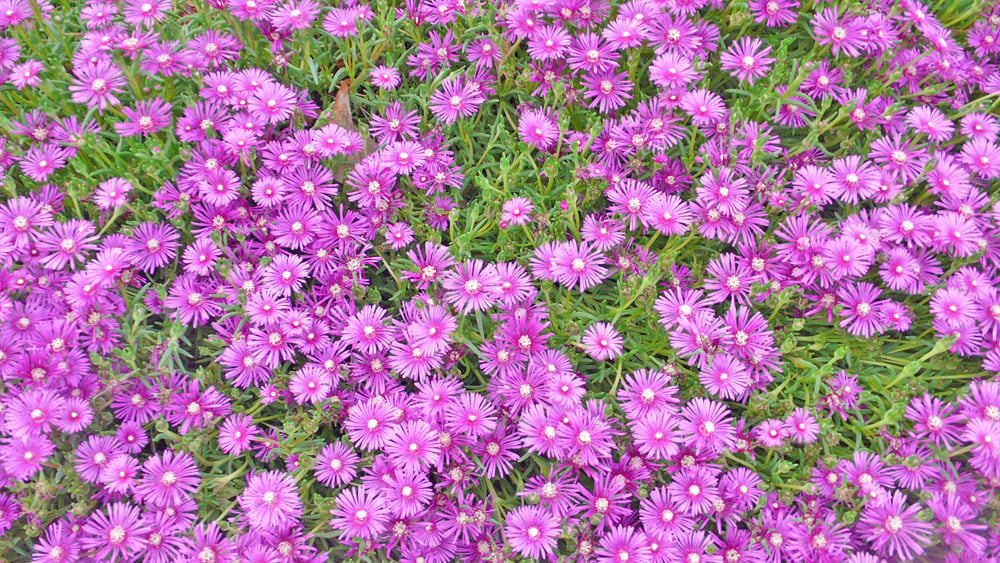
| Hardy ice plant | Delosperma cooperi | Sun | 7, 8 | 12–18 in. | 12–18 in. | Med. | Pink flowers in spring |
| Horizontal junipers (Blue Rug, Blue Chip, Bar Harbour, etc) | Juniperus horizontalis | Sun | 6, 7, 8 | 6–12 in. | 2–3 ft | Med. | Good cover for banks |
| Japanese spurge | Pachysandra terminalis | Partial shade to shade | 6, 7 | 8–10 in. | 2 ft | Slow | May take 3+ years to cover an area |
| Japanese rooftop iris | Iris tectorum | Sun to partial shade | 6, 7, 8 | 12 in. | 2 ft | Med. | White or blue flowers in spring; likes moisture |
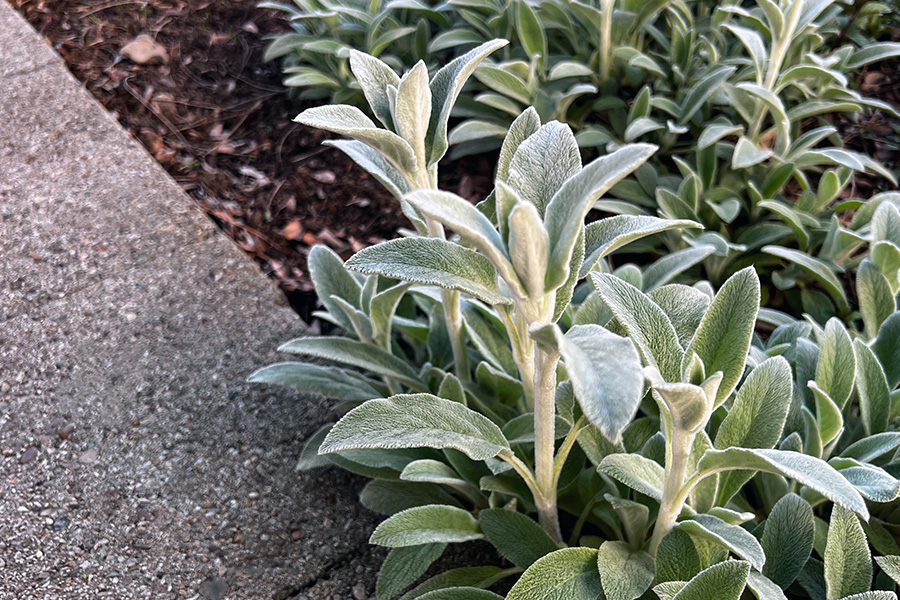
| Lamb’s ear | Stachys byzantine | Sun to partial shade | 6, 7, 8 | 6–12 in. | 12–18 in. | Med. | Prefers well-drained soil |
| Lenten rose | Helleborus orientalis | Partial shade to shade | 6, 7, 8 | 12–18 in. | 2 ft | Med. | Many flower colors; deer tolerant |
| Lily of the valley** | Convallaria majalis | Partial shade to shade | 6, 7 | 12 in. | 1 ft | Med. | White, fragrant bell-shaped flowers in spring |
| Liriope, clumping | Liriope muscari | Partial shade to shade | 6, 7, 8 | 6–12 in. | 1 ft | Med. | Many cultivars; variegated forms are more sun-tolerant |
| Mondograss | Ophiopogon japonicus | Partial shade to shade | 6, 7, 8 | 6–10 in. | 1 ft | Med. | A dwarf form grows about 3 in. tall |
| New York fern** | Thelypteris noveboracensis | Partial shade to shade | 6, 7, 8 | 12–24 in. | 2–3 ft | Med. | Thrives in moist, shaded areas |
| Orange coneflower* | Rudbeckia fulgida | Sun | 6, 7, 8 | 16–24 in. | 18–24 in. | Med. | Yellow flowers in spring |
| Plaintain lily, hosta | Hosta sp. | Partial shade to shade | 6, 7, 8 | 6 in.–3 ft | 2–3 ft | Med. | Summer flowers; many cultivars |
| Plantain pussytoes** | Antennaria plantaginifolia | Sun to partial shade | 6, 7, 8 | 6–18 in. | 6–12 in. | Slow | White fuzzy flowers in spring; thrives in poor soil |
| Prostrate germander | Teucrium chamaedrys var. prostratum | Sun to partial shade | 6, 7, 8 | 4–8 in. | 2–3 ft | Med. | Pink spring flowers; drought and deer tolerant |
| Prostrate rosemary | Rosmarinus officinalis ‘Prostratus’ | Sun to partial shade | 6, 7, 8 | 1–2 ft | 2–3 ft | Fast | Pale blue flowers in early summer; often used in rock gardens and for trailing over walls |
| Shore juniper | Juniperus conferta | Sun | 6, 7, 8 | 18–24 in. | 3–5 ft | Fast | Often used on banks |
| Silver brochade | Artemesia stelleriana | Sun to partial shade | 6, 7, 8 | 12–18 in. | 12–18 in. | Med. | Yellow summer flowers; deer tolerant |
| Southern lady fern** | Athyrium asplenioides | Shade | 6, 7, 8 | 20–30 in. | 2 ft | Med. | Plant in moist, shady woodlands |
| Southern maindenhair fern* | Adiantum capillus-veneris | Shade | 6, 7, 8 | 10–20 in. | 1 ft | Med. | Needs moist, organic soils |
| St. John’s wort* | Hypericum calycinum | Sun to partial shade | 6, 7, 8 | 12–18 in. | 2 ft | Med. | Bright yellow flower in summer; cut back plants in late winter |
| Strawberry geranium | Saxifraga stolonifera | Partial shade to shade | 6, 7, 8 | 6–12 in. | 2 ft | Fast | Likes moist, organic soil |
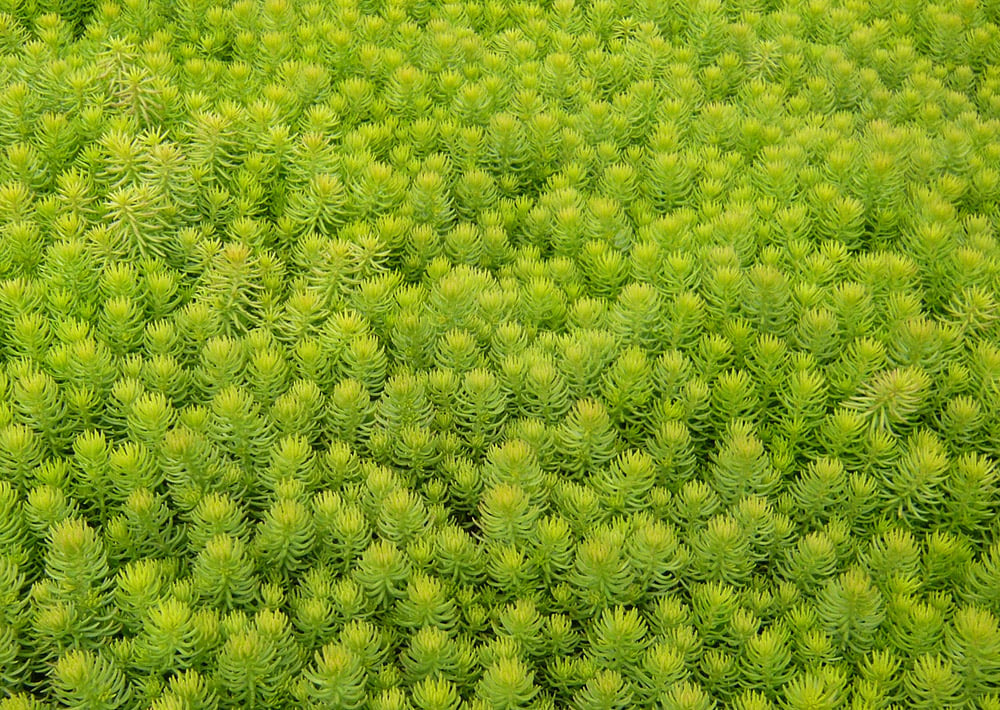
| Stonecrop | Sedum sp. | Sun to partial shade | 6, 7, 8 | 2–12 in. | 1–2 ft | Med. | Many selections; drought tolerant |
| Sweet woodruff | Gallium odoratum | Partial shade to shade | 6, 7, 8 | 6–12 in. | 2–3 ft | Med. | White flowers in spring; likes consistent moisture |
| Thrift, moss phlox** | Phlox subulata | Sun to partial shade | 6, 7, 8 | 3–6 in. | 1–2 ft | Med. | Pink, white, or lavender flowers; often used on banks |
| Virginia chain fern | Woodwardia virginica | Shade | 6, 7, 8 | 2–3 ft | 3–4 ft | Med. | Plant in wet, shady areas |
| * = native to North America ** = native to Georgia | |||||||
The original manuscript was prepared by James T. Midcap, Gary L. Wade, and Melvin P. Garber, Extension horticulturists. Revised by Gary Wade, with later revisions by Bodie Pennisi.