Feed Corn
-

SB 28-15
Corn and Field Corn
Commercial insect and weed control in corn and field corn. Updated annually.
|
-

AP 130-3-09
2025 Corn, Soybean, and Wheat Outlook
1. Tight margins are expected to continue in 2025 for corn, soybeans, and wheat with commodity prices likely near or below the breakeven cost of production.
2. Bountiful grain and oilseed production, combined with a strong U.S. dollar and uncertain trade policy, leads to expectations for lower prices in 2025.
3. Expect more acres planted to corn, fewer acres planted to soybeans, and wheat plantings comparable to last year.|
-
AP 132-01
2024 Georgia Corn Production Guide
This is the Extension Corn Team’s full production guide for recommended practices to plant and maintain a corn crop in Georgia. Topics include agronomic practices, growth and development, fertilization, irrigation, weed, insect and disease management, harvesting and drying, protecting stored corn, soil health, and economics/budgets.
|
-
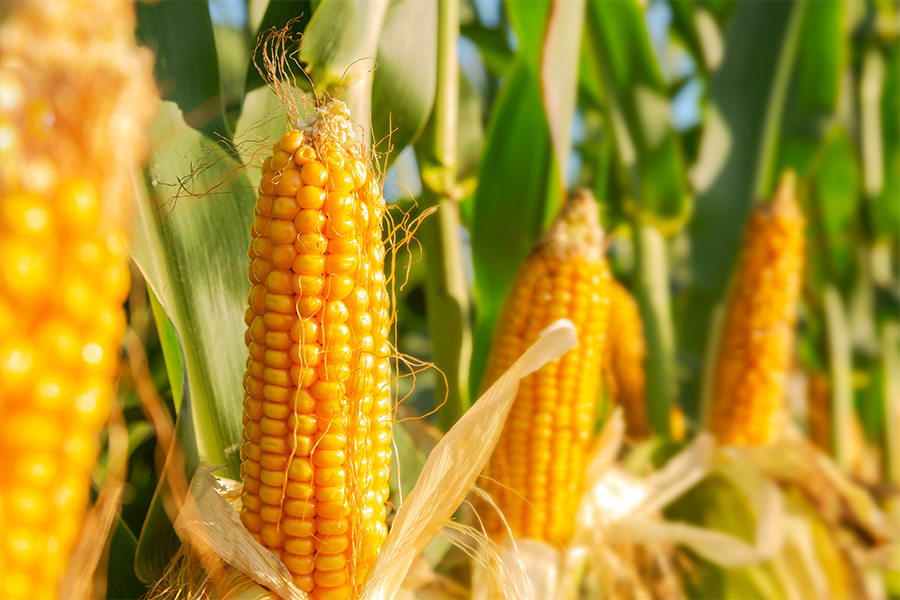
Aflatoxin is a naturally occurring toxin produced by the fungus Aspergillus flavus. The fungus can be recognized by a gray-green or yellow-green mold growing on corn kernels in the field or in storage. Plant stress due to drought, heat or insect damage during fungus growth usually increases aflatoxin levels. Aflatoxin contamination will reduce feeding value and hinder sales. Because it is extremely poisonous to warm-blooded animals even at relatively low levels, grain handling facilities often check for the presence of the toxin before purchasing corn.
|
-

AP 101-9
Georgia 2017 Corn Performance Tests
In this research report, the results of the 2017 corn performance trials are presented. Short-season and mid-season hybrids were planted at Tifton, Plains, and Midville in the Coastal Plain region, at Griffin in the Piedmont region, at Calhoun in the Limestone Valley region, and at Blairsville in the Mountain region. Hybrids used for silage were evaluated at Tifton, Griffin, Calhoun, and Blairsville.
|
-

AP 101-8
2016 Georgia Corn Performance Tests
In this research report, the results of the 2016 corn performance trials are presented. Short-season and mid-season hybrids were planted at Tifton, Plains, and Midville in the Coastal Plain region, at Griffin in the Piedmont region, at Calhoun in the Limestone Valley region, and at Blairsville in the Mountain region. Hybrids used for silage were evaluated at Tifton, Griffin, Calhoun, and Blairsville.
|
-

AP 101-7
2015 Georgia Corn Performance Tests
In this research report, the results of the 2015 corn performance trials are presented. Short-season and mid-season hybrids were planted at Tifton, Plains, and Midville in the Coastal Plain region, at Griffin in the Piedmont region, at Calhoun in the Limestone Valley region, and at Blairsville in the Mountain region. Hybrids used for silage were evaluated at Tifton, Griffin, Calhoun, and Blairsville.
|
-

AP 101-6
2014 Georgia Corn Performance Tests
In this research report, the results of the 2014 corn performance trials are presented. Short-season and mid-season hybrids were planted at Tifton, Plains, and Midville in the Coastal Plain region; at Griffin in the Piedmont region; at Calhoun in the Limestone Valley region; and at Blairsville in the Mountain region. Hybrids used for silage were evaluated at Tifton, Griffin, Calhoun, and Blairsville.
|
-

AP 101-5
2013 Georgia Corn Performance Tests
In this research report, the results of the 2013 corn performance trials are presented. Short-season and mid-season hybrids were planted at Tifton, Plains, and Midville in the Coastal Plain region; at Griffin in the Piedmont region; at Calhoun in the Limestone Valley region; and at Blairsville in the Mountain region. Hybrids used for silage were evaluated at Tifton, Griffin, Calhoun, and Blairsville.
|