Perennials
-
C 1260
Azalea Bark Scale
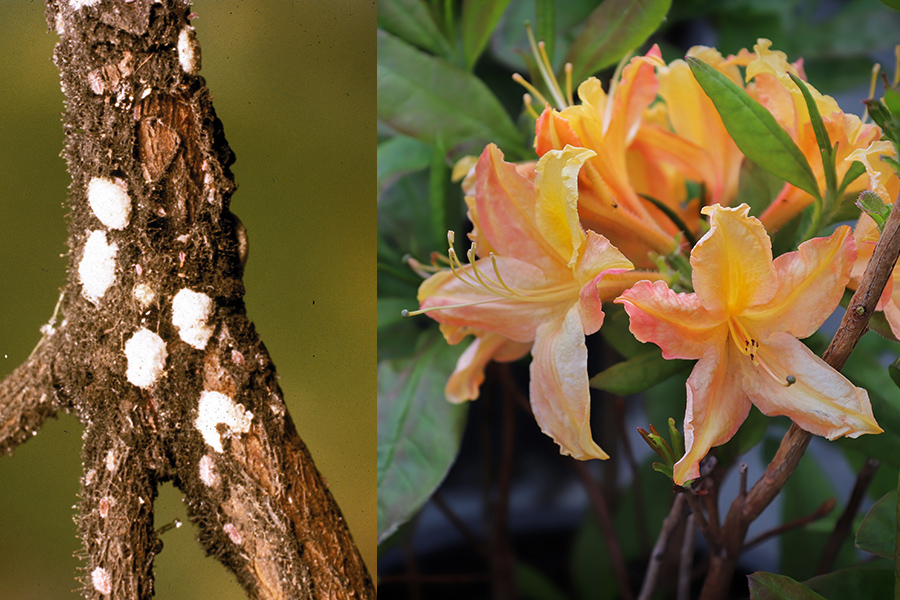
Azalea bark scale (ABS) poses a serious threat to azaleas, rhododendron, and Pieris (Andromedas) in Georgia. ABS is a soft scale insect; the nymph and female soft scales secrete a protective coating of waxy crust on their body that cannot be separated from the scale insect. ABS also is found on blueberry, hawthorn, huckleberry, poplar, and
willow. ABS is found in cracks or crevices in the surface of the bark, and also in areas where azalea branches fork. ABS can undergo two generations per year in Georgia.
Symptoms of ABS infestation include dropping yellow leaves and dying branches. Developing nymphs and females excrete a sugary syruplike liquid called honeydew on to the bark and leaves. As time passes, the surface of the bark, and sometimes the leaves, turns black because it gets infested with a sooty mold fungus that
feeds on the sugary secretions. The white crusts of scale insects are easily visible when the azalea bark turns completely black. An ABS infestation rarely kills the plant unless it is extremely severe and uncontrolled.|