
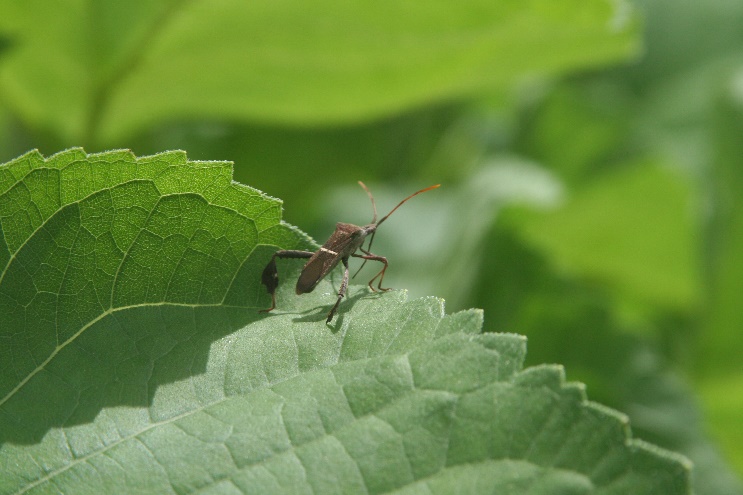
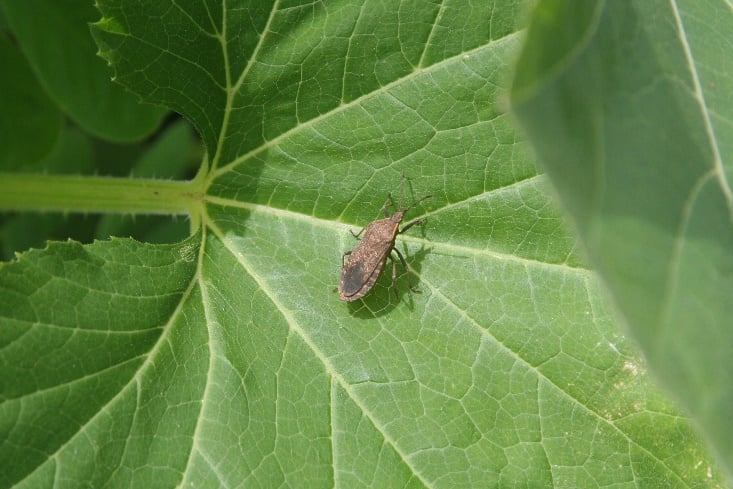
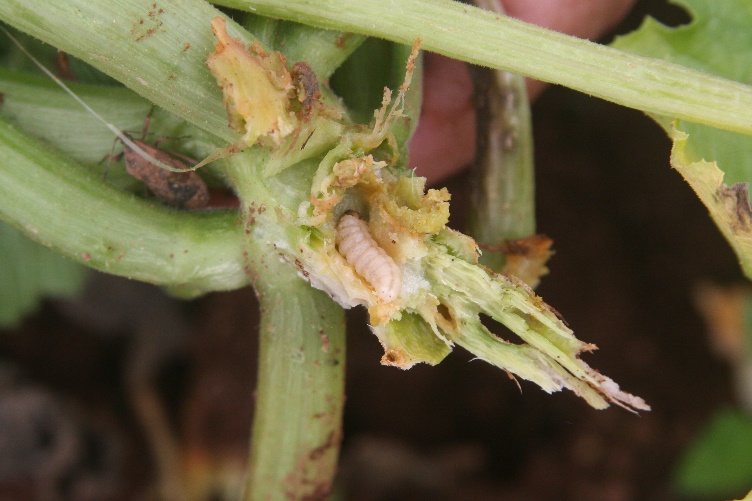
Summer squash is one of the most popular vegetables found in warm season gardens across Georgia. Fresh yellow squash and zucchini are prepared many differed ways, raw or cooked, by gardeners across the state. Unfortunately, any home gardener that has grown summer squash over the last several years has most likely seen the increase in damaging insects that attack the plant. Insects such as leaf footed bugs (Figure 1), squash bugs (Figure 2), pickleworms, and the most destructive, squash vine borers (Figures 3 and 4), can make growing this crop extremely frustrating and difficult for the consumer. While there is no magic potion to completely control these pests, the home gardener can use a number of practices to help ensure an extended harvest of this delicious vegetable.

Selected varieties
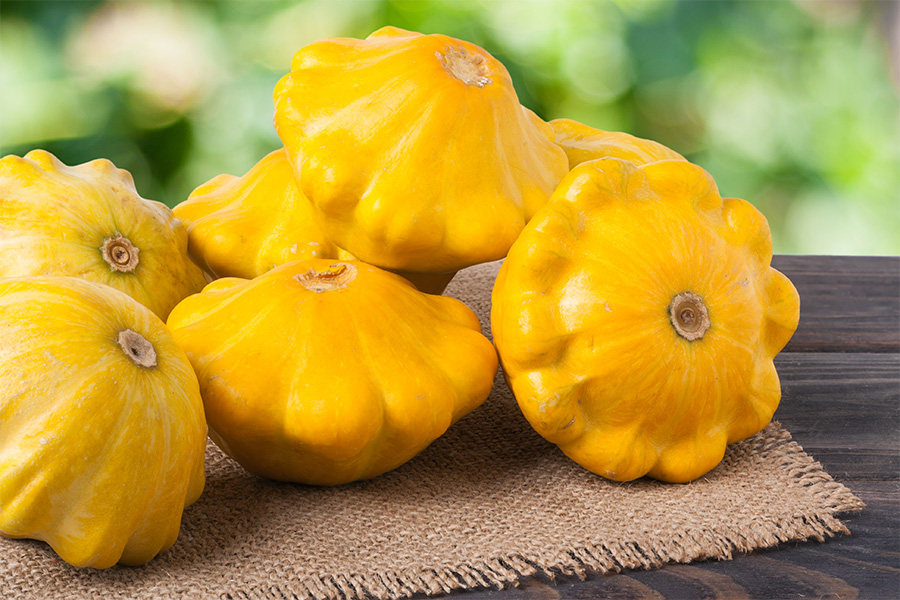
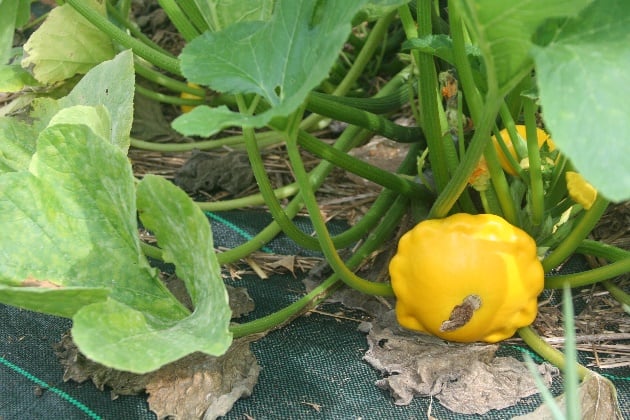
Several years of trials have shown that some varieties of summer squash have more resistance to insect attacks than others. While no summer squash is immune to attacks, the patty pan type (Figure 5) seems to be more resistant to squash vine borers. Round zucchini types like the ‘Eight Ball’ variety also seem to show some resistance to squash vine borers and squash bugs. Standard yellow squash and traditional zucchini both seem to have equal susceptibility to attacks from a multitude of insect invaders. While there may be slight differences in the vulnerability of some squash varieties, it is clear that variety selection is not enough to completely stop damage.
Control methods
Research has shown that using a combination of cultural methods and chemical controls is the best approach to protecting squash from insect attacks.

Succession planting:
Perhaps one of the simplest and most effective ways to harvest summer squash all season long is through successive plantings. Instead of planting all of your squash seed at one time, plant a few new hills every two weeks to allow a new crop to continually develop. Most damaging squash insects prefer to attack a more mature plant and will usually leave younger plants alone. By planting a succession of squash every few weeks throughout the growing season, you have a greater chance of having a good crop throughout the summer. As older vines become inundated by borers or pests, they should be eliminated from the garden and placed in a compost pile. Gardeners with a limited area, or perhaps a few raised beds, might find this method of control more difficult due to lack of space.
Mechanical barriers:
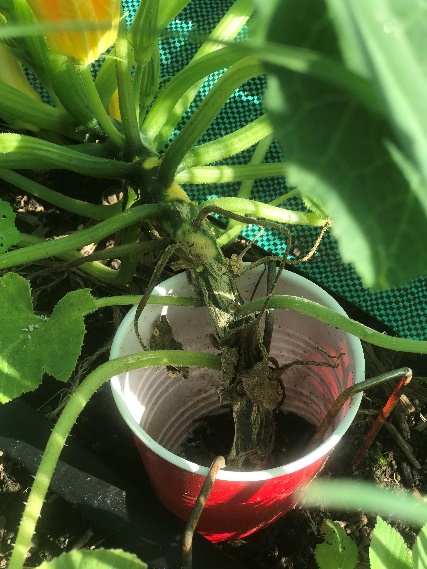
Mechanical barriers may also help to prevent damaging insects. These barriers act as a shield to prevent invading insects from getting to the crop. While not foolproof, they can extend the life of the squash plant, allowing it to produce more fruit. Mechanical barriers can include the practice of wrapping the young stem of the developing squash plant loosely with aluminum foil (Figure 6). Since squash vine borer females like to lay their eggs at the base of the plant, this does provide a level of control. Other methods include planting the squash plant in a plastic drink cup with the bottom removed. This tends to be less effective, as the stem is still left vulnerable (Figure 7). It is important to note that using the aluminum foil or other type of wrap needs to be maintained as the plant gets bigger. As the stem increases in both length and diameter, the barrier material should be applied further up the vine. Sometimes it is necessary to remove a few lower branches in order to properly wrap the barrier material around the stem.
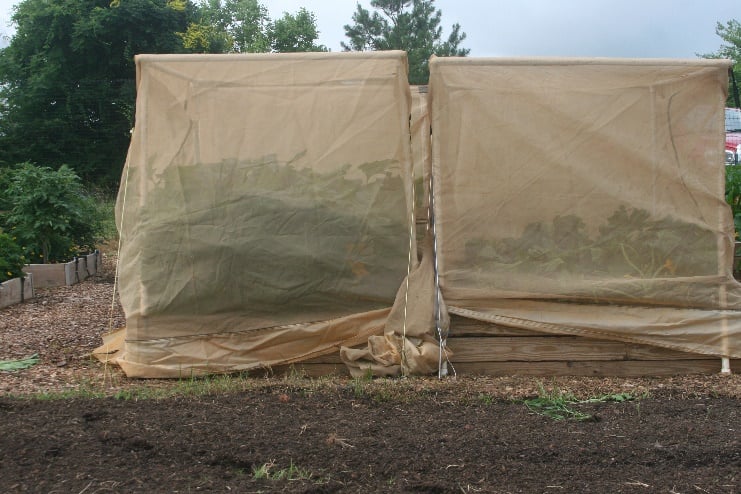
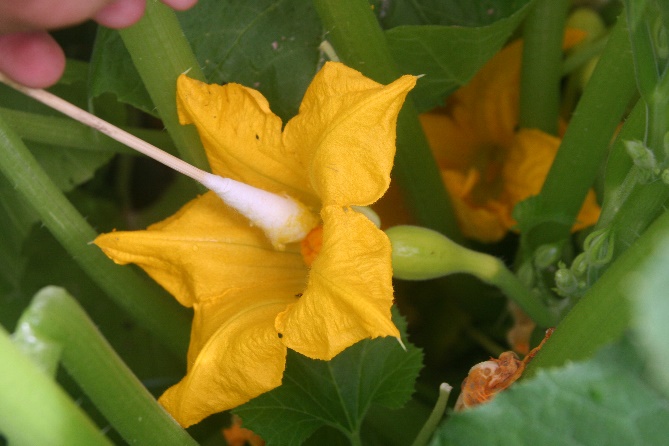
Protecting plants with total exclusion chambers is another effective method. This method involves building a tent using some type of insect netting over a frame of PVC or wood (Figure 8). Individual plants or a portion of the row is covered with these exclusion barriers, virtually eliminating insects from flying onto the plant. The downside of this method is that squash is insect pollinated and no pollinators would be able to get to the blooms. To effectively grow a successful harvest using this method, gardeners must manually pollinate the plants once every day or so. After lifting the cage, the gardener can either remove a male bloom and swirl it inside a female bloom, or use a cotton swab to accomplish the same goal. By taking the pollen off the male bloom and introducing it to the female bloom, the plant can be artificially pollinated. Female blooms are easy to identify, as they have miniature fruit growing directly behind the flower (Figure 9). Male blooms, on the other hand, are connected directly to the stem. To successfully pollinate squash, each female bloom should be pollinated multiple times. It is not uncommon to need around six or seven pollination encounters to develop a full vegetable. On a small scale basis, and for those who have the patience and time to self-pollinate, this method can be highly effective.
Trap crops:
A trap crop works as an alternative host that draws away invading insects, giving the main vegetable crop an added layer of protection. In some cases, insects have a preference for these alternative hosts, and when given the choice, they will go to the trap crop first. Insects are highly attracted to plants that are in the reproductive stage of growth. Trap crops that mature quickly and produce some type of seed, fruit, or flower are particularly attractive to many damaging insects. After trap crops are infested with target insects, they can be controlled with timely insecticidal applications or mechanical removal. The primary benefits of trap cropping are the reduced use of pesticides on valuable crops and low-cost control of insects for the gardener.
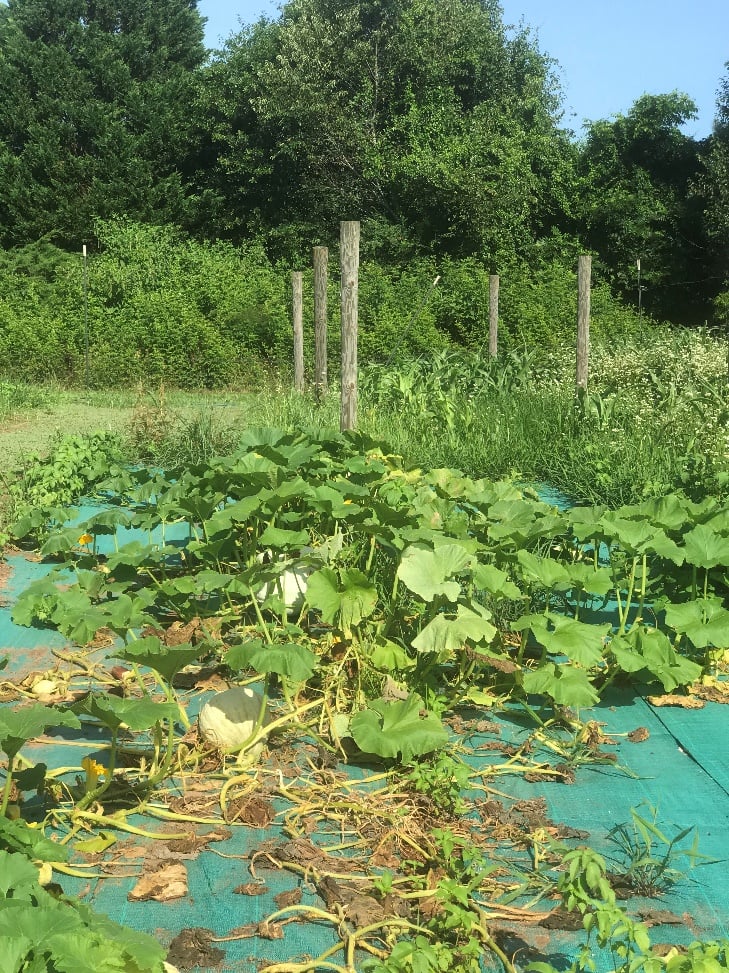
Hubbard squash is an example of a desirable plant used as an effective trap crop. A variety such as ‘Blue Hubbard’ squash (Figure 10) can be grown for its edible large fruit. In addition, these varieties are very attractive as trap crops, luring in cucumber beetles, squash vine borers, and squash bugs. These large, vining type plants need a lot of room to grow.
Chemical control:
Chemical control is another option available to the home gardener. Both synthetic and organic options of treatment are available on the market. Organic products such as Pyrethrin, Neem Oil, and Bt often provide an adequate level of control on insects such as pickleworms and squash bugs. Unfortunately, these products provide little relief for the squash vine borer unless contact is made with the adult female prior to laying eggs. These products have a very low residual and need to be applied at weekly intervals or after every rainfall.
Synthetic chemicals tend to have a broader range of control and a longer residual effect. While these chemicals give a longer term of control, research has shown that organic options can be just as effective when applied correctly. Synthetic chemical selections should always be based on the specific type of insect that is being controlled. It is important to always read chemical labels, whether organic or synthetic, to apply them safely and follow days-to-harvest guidelines. For specific organic and non-organic chemical recommendations, contact your local University of Georgia Cooperative Extension agent.
Summary
While extremely popular, growing summer squash continues to be a challenge for both commercial producers and home gardeners. Although research has shown that no single method of control is completely successful, combining several cultural practices to help protect squash from damaging insects appears to be key. Over time, selecting and crossing plants with desirable traits with the use of modern plant breeding techniques will likely result in the development of more tolerant cultivars.