
Disasters and unforeseen emergencies can strike without warning, leaving individuals and communities grappling with the sudden disruption of essential services, including access to food. While many emergencies such as power outages or temporary disruptions in supply chains may lead only to short-term food shortages, you can improve resilience by maintaining a well-prepared food supply for extended periods.
When circumstances result in a prolonged interruption of regular food access, having an emergency food supply that can last weeks or even months can be a lifeline, helping ensure that you and your loved ones remain well nourished during challenging times.
In a Disaster
In the event of a disaster, it is essential to follow a specific sequence for using your available food resources. Start by prioritizing perishable foods and items from the refrigerator. Following that, turn your attention to the freezer. Consider posting a list of your freezer’s contents on the door to maintain its efficiency and minimize the need to open it repeatedly.
In a well-stocked and well-insulated freezer, food items often will retain ice crystals in their centers. You should consume these foods only if the ice crystals are still present, or if the freezer has consistently maintained a temperature of 40 °F or lower.
If available, use blankets to insulate the freezer, but ensure that the air vent remains unobstructed. Lastly, once you have exhausted your perishables and frozen items, begin using nonperishable foods and essential staples.
Consider These Factors When Planning to Store Food
Maintain Strength
It is crucial to plan your food storage strategy with an emphasis on maintaining physical and mental strength during a crisis. Proper nutrition plays a significant role in keeping you resilient.
Menu Variety
When creating your food storage plan, strive for menu variety. Diversifying the types of foods you store helps ensure a balanced intake of essential nutrients. A range of options also helps prevent flavor fatigue and keeps meals interesting.
Well-Balanced Meals
Aim to incorporate at least one well-balanced meal into your daily consumption. Such a meal should provide a mix of carbohydrates, proteins, healthy fats, and a variety of vitamins and minerals.
Hydration
Staying well hydrated is crucial for your body to function optimally. Plan to consume a minimum of 2 quarts, or 8 cups, of liquids per day. Water, juice, and beverages with electrolytes can help maintain your body’s hydration balance.
Family Preferences
While planning what foods to stock, consider your family’s dietary preferences, allergies, and specific needs. Ensuring that your stored foods align with these preferences will make mealtimes during a crisis less stressful.
Preparation
Think about how you will prepare the items in your food storage. Avoid stocking foods that are difficult to prepare, require excessive resources, or are unlikely to be eaten. In a crisis, practicality and ease of preparation are crucial factors.
Sufficient Calories
Your stored food supply should provide adequate calories to support your daily energy needs, especially if you will be engaging in physical activities or emergency tasks.
You can calculate calorie needs based on age, sex, height, weight, and physical activity level, and explore daily allowance recommendations for each food group at https://www.myplate.gov/resources.
Storage Area and Maintaining Your Stores
The location of your storage area significantly influences the shelf life and quality of your stored food. Ideally, choose a dry, cool location with temperatures not exceeding 70 F. Heat can drastically reduce shelf life and degrade food quality. Moisture not only affects quality but also can create a hospitable environment for foodborne pathogens. Avoid direct exposure to sunlight to prevent further quality deterioration.
Elevate Storage
Keep your stored food off the floor by using shelves or racks. This helps protect your supplies from potential moisture or pest issues.
Choose Sustainable Containers
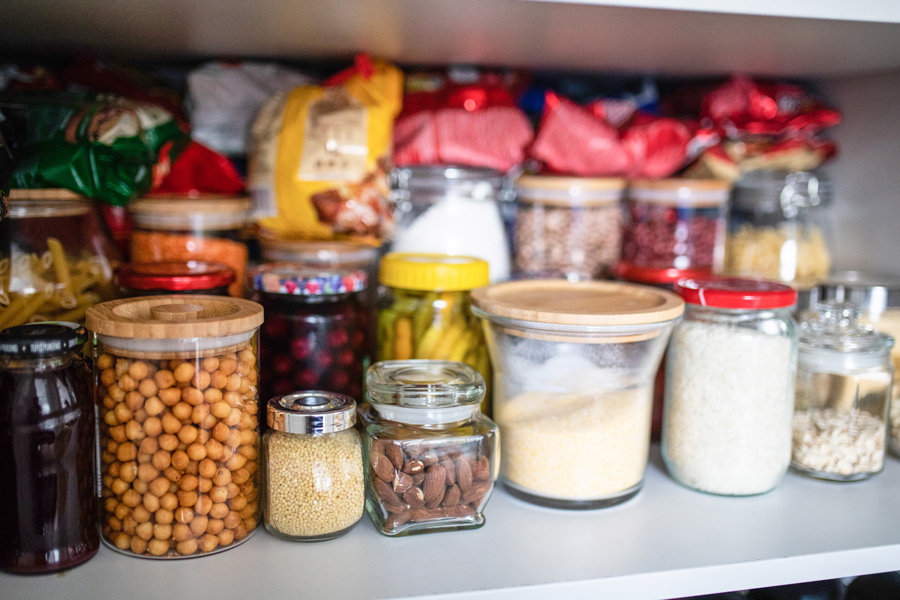
Food should be stored in containers made of food-grade plastic, food-grade foil pouches, glass, or metal cans. Proper containers maintain the quality of stored items and prevent contamination.
Label and Date
Clearly label and date all food containers. Labeling simplifies the process of finding specific items, and dating allows you to keep track of storage duration.
Regular Inspection
Regularly inspect stored foods for signs of unwanted moisture or pest infestations. This proactive approach helps maintain food quality and safety.
Stock Rotation
Implement a first-in, first-out (FIFO) stock rotation system. Use items while they are still in good quality and replenish them, placing the new stock behind or beneath older items of the same type.
Additional Storage Tips
| Item | Shelf Life |
|---|---|
| Unmilled wheat, corn, white rice | 25–30 years |
| Dried beans, peas, and lentils | 25–30 years |
| Iodized salt | 25–30 years |
| Commercially processed foods in cans/pouches | Follow manufacturer’s recommendations |
| Dry pasta | 2 years |
| Home-canned fruits and vegetables | 1–2 years |
| Dry milk | 1–2 years |
| Dried eggs | 1–2 years |
| Vitamin C supplements | 1–2 years (depending on manufacturer’s recommendations) |
| Jelly | 18 months |
| Flour (white, enriched) | 1 year |
| Cornmeal | 1 year |
| Nuts | 1 year |
| Canned evaporated milk | 1 year |
| Peanut butter | 9 months |
| Vegetable oils | Up to 9 months |
| Brown rice and whole wheat flour | 6 months |
| Vitamin, mineral, and protein supplements | Follow manufacturer’s recommendations |
Do not store home-canned foods that have not been properly processed following validated recipes, vacuum-sealed moist or wet foods, raw eggs coated with mineral oil or petroleum jelly, or water-glassed eggs.
Nonfood Supplies
You may want to keep a kit stored near your food supply that is stocked with items that will help you prepare food during a disaster. This is not an exhaustive list, and you should tailor the items in your kit to the types of food you are storing and how your family would prefer to prepare those foods.
- lanterns with batteries stored outside of the lantern
- camping cookstove and fuel
- matches in a waterproof container
- fire extinguisher
- manual can opener, scissors, jar opener, and bucket wrench
- cookware and utensils
- aluminum foil, paper plates, and other disposable wares
- food thermometer and appliance thermometers for your freezer and refrigerator
- hand-cranked grain mill
- items for family members with special dietary needs
- pet food, if applicable
- soap and hand sanitizer
Remember to regularly inspect items with expiration dates, such as batteries and fire extinguishers, when you check your food stores so that all emergency supplies remain in functional condition.
Stocking Food
For Infants
When stocking supplies for infants, pay special attention. Powdered formula, commercially canned liquid formula concentrate, and ready-to-feed formula are all good options for storage. The quantity required will depend on the infant’s age.
Infant formula includes expiration dates on the packaging, and it is crucial not to use it beyond that date because essential nutrients may start to degrade afterward. Parents or caregivers should also ensure they have a selection of infant cereals and baby foods on hand, with the amount needed varying depending on the infant’s age.
Grains
If you purchase bulk wheat, dark hard winter or dark hard spring wheat are good selections. Wheat should be No. 2 grade or better with a protein content of 11% to 15% and moisture content of less than 10%.
Wheat can be stored in sturdy 5-gallon food-grade plastic buckets, long-term food storage bags, No. 10 cans, or containers with tight-fitting lids. If the wheat has not already been treated to prevent insects from hatching, it may be treated at the time of storage by placing 2 to 3 oz of crushed dry ice per 5-gallon container in the bottom and then filling it with wheat. Cover the wheat with the lid, but not tightly, for 30 minutes before tightening the lid to be airtight.
Many grains may require grinding before use. Some health food stores sell hand-cranked grain mills or can tell you where to get one. Make sure you buy one that can grind corn.
If you are caught without a mill, you can grind grain by filling a large can with whole grain 1 inch deep, then holding the can on the ground between your feet and pounding the grain with a hard metal object such as a pipe. Do not store milled grains, as they become rancid more quickly and will no longer be palatable. Also avoid storing oily grains, such as pearled barley or brown rice, and seeds, as those will also go rancid quickly.
Nonfat Dry Milk and Dairy Products
Store dry milk in No. 10 cans or vacuum-sealed long-term food storage bags. Dry milk maintains its quality when stored at 70 °F for 12 to 24 months, but its shelf life can diminish to as little as 3 months at elevated temperatures.
In addition to dry milk, other dairy products suitable for long-term storage may include canned evaporated milk, pasteurized cheese spreads, and powdered cheese.
Using Stored Food
When using stored foods, practice these guidelines:
- Open food boxes or cans carefully and reseal them tightly after each use.
- Preserve the freshness of cookies and crackers by storing them in plastic bags and placing them in airtight containers.
- Transfer opened packages of sugar, dried fruits, and nuts into screw-top jars or airtight food storage containers to safeguard them from pests.
- Before use, thoroughly inspect all food containers for any signs of spoilage or pest activity.
Commercially canned foods are generally safe to eat even after extended storage, provided they are not bulging, leaking, or severely rusted. However, their quality will gradually decline over time, with changes in flavor, color, texture, and reduced nutritional value. For optimal quality, consume foods within the expiration date. Consume properly home-canned foods within 1 year. If no refrigeration is available, plan to eat the contents of an open can quickly.
Being prepared with a long-term food stock may make you feel more confident when looking toward an unknown future, during which a disaster could happen without emergency assistance available. For a comprehensive look at long-term food storage, see A Guide to Food Storage for Emergencies, compiled by Utah State University Extension.
References
Brennand, C. P., & Deloy, G. H. (n.d.). Food storage in the home. Utah State University Extension. https://extension.usu.edu/preserve-the-harvest/research/food-storage-in-home
Centers for Disease Control and Prevention. (2024). Communication resources: Food and water safety. https://www.cdc.gov/natural-disasters/communication-resources/index.html
Nummer, B., Washburn, C., & Hunsaker, T. (2013). A guide to food storage for emergencies. Utah State University Extension. https://extension.usu.edu/preserve-the-harvest/files/Food-Storage-Booklet.pdf
U.S. Department of Health & Human Services. (2023, September 20). Food safety in a disaster or emergency. https://www.foodsafety.gov/keep-food-safe/food-safety-in-disaster-or-emergency
U.S. Department of Homeland Security. (2022, March 30). Food. https://www.ready.gov/food