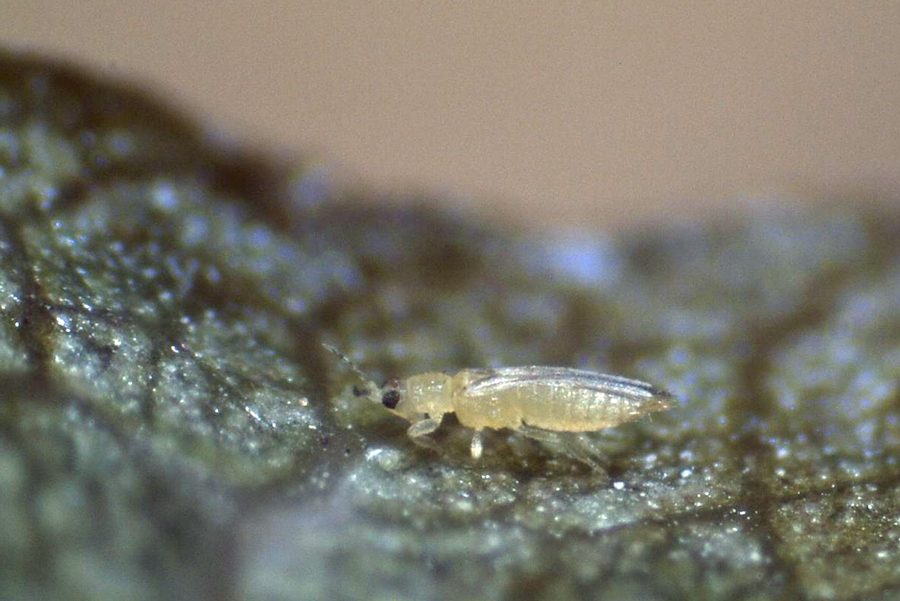

Chilli thrips, Scirtothrips dorsalis (Figure 1), is an invasive thrips species in the U.S. Currently, chilli thrips infest more than 150 crops worldwide, including strawberries, cotton, tea, citrus, and peppers, as well as many ornamental plants. The pest has become increasingly problematic in nurseries because of its wide host range, small size, and rapid reproduction and development. Chilli thrips quickly adapt to a new region. They were first detected in the U.S. in Florida in 1991 but did not immediately establish, and in 2005 they were observed on roses in Florida. The pest is also established in Hawaii and throughout the Caribbean Islands. In Georgia, chilli thrips were first reported in 2007.

Photo: Andrew Derksen, USDA-APHIS, Bugwood.org
Identification and biology
Chilli thrips are small, about 2 millimeters long, pale-yellow, with a pair of dark wings. The antennae have eight segments with a pattern of alternating dark yellow and pale yellow colors. Chilli thrips lay eggs inside of plant tissue that is above the soil, and the eggs hatch in about six to eight days in summer months. Newly hatched larvae go through two larval stages within a week. Chilli thrips larvae colonize and feed on newly developing shoots. After the larval stages, they molt into a prepupal stage for about a day, followed by a pupal stage that lasts about three days. The prepupal and pupal stages are inactive and do not feed. Pupae are found in cracks and crevices on the plant or leaf litter, and they are rarely found on potting soil media. A female chilli thrips may produce 60 to 200 eggs in her lifetime. The lifecycle can last from 14 to 20 days from egg to adult.
Host plants
Chilli thrips are serious plant pests worldwide. In Georgia nurseries, they infest cleyeras, camellias, distyliums, and roses among other hosts. In its native region, many species from the bean family serve as hosts. In the Southeastern U.S., invasive species such as mimosa, Albizzia julibrissin, could be the host. In Asia, chili pepper crops on the Indian subcontinent, tea and citrus in Japan, and the sacred lotus in Thailand are consistently attacked by chilli thrips. Other major economic hosts include banana, cocoa, corn, cotton, grapes, kiwi, melon, peanut, pepper, strawberry, and roses. More recent hosts are from tropical and subtropical regions and include avocado, cashew nuts, canistel, dragon fruit, miracle fruit, sapodilla, guava, litchi, and mango, indicative of its expanding host range.
Monitoring and management
Monitoring for the early incidence of chilli thrips on the plants is key. Chilli thrips are attracted to yellow sticky traps (Figure 2).

Photo: Shimat Joseph
The sticky traps should be monitored and replaced every seven to 10 days. Tapping the plant flowers, young shoots, and stems over white paper or fabric may also help to determine if there is an active population of chilli thrips (Figure 3).
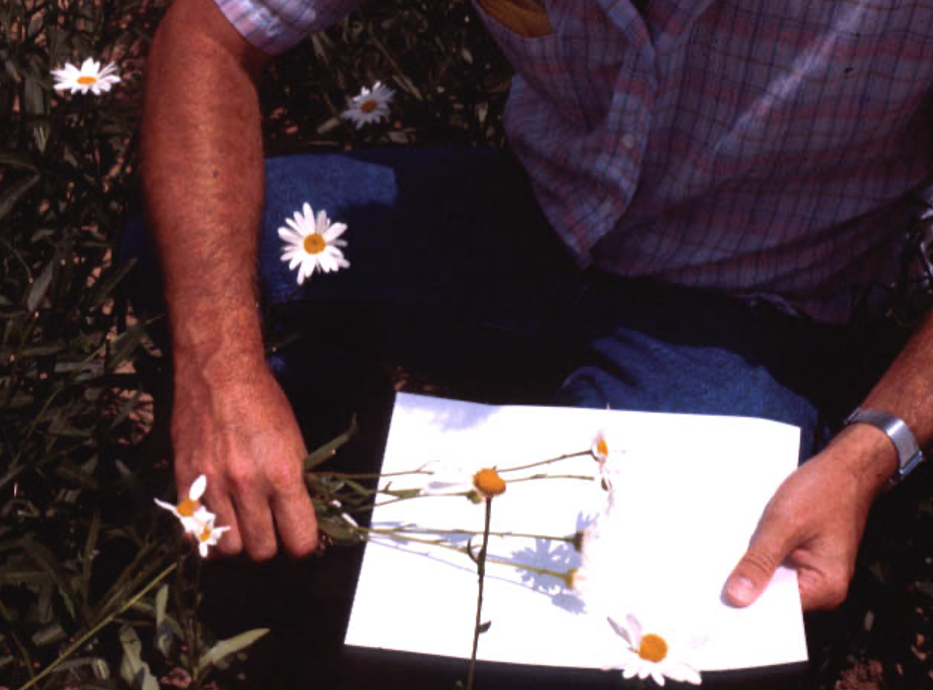
Photo: https://bughunter.tamu.edu/collection/collectionequipment/beating-sheets-and-cards/
Once thrips are found, it is critical to identify them because there are other species found on the same types of plants. Removing weeds around infested plants can help reduce the pest population.
Biological control can be an effective means of keeping chilli thrips populations at low levels. Effective natural enemies include the minute pirate bug, Orius laevigatus (Figure 4), as well as ladybird beetles (Coccinellidae).

Photo: Whitney Cranshaw, Colorado State University, Bugwood.org
There are also several commercially available mite species such as Amblyseius degenerans, Amblyseius cucumeris, and Amblyseius swirskii, as well as a nematode, Steinernema feltiae, that have been shown to reduce chilli thrips population on plants. Insecticides are also available and effective for control. Please contact your local UGA Extension agent for the latest insecticide recommendations.