Takeaways
- True gnats vs. lookalikes: While the public uses “gnat” for any small flying insect, true gnats belong to specific fly groups in the order Diptera. Fruit flies, humpback flies and black flies are distinct species, not true gnats.
- Ecological importance: Despite being a nuisance, gnat larvae are vital for the ecosystem. They live in moist soils and consume decaying organic matter, which recycles essential nutrients used as crop fertilizer.
- Eye gnats in Georgia: Eye gnats (Liohippelates) are tiny, non-biting pests common in south Georgia. They swarm faces to consume protein from natural body fluids (eyes, nose, ears) and open wounds for egg production.
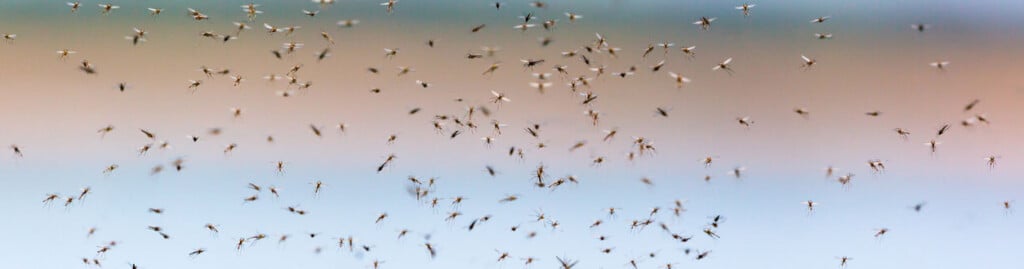
Among the general public, the term “gnat” is often used to describe any small, flying insect that “bugs” us (pun intended). In entomology circles, however, the term gnat refers to specific groups of flies in the order Diptera.
There are many different types of gnats, from fungus gnats that may be in your home because of overwatered potted plants to the ubiquitous eye gnats that thrive in south Georgia.
As irritating as they are, these insects are vital to the ecosystem, said Dan Suiter, Orkin Distinguished Professor in Urban Entomology at the University of Georgia’s College of Agricultural and Environmental Sciences.
Why “true” gnats are good for the environment
“Gnats are needed to help recycle nutrients so next year’s crops can use those as fertilizer,” Suiter added. “The larvae live in the top layer of moist, organic soils, where they consume decaying plant material, manure and rotting organic matter. This activity contributes to nutrient cycling.”
The term “gnat” is used to describe many different species of small flies, but similarly sized fruit flies, humpback flies and moth flies are not true gnats.
Identifying eye gnats and other small fly species
The pests commonly known as eye gnats in south Georgia are part of the genus Liohippelates, tiny flies (1.5 to 2 millimeters) in the family Chloropidae. These non-biting pests are infamous for swarming around human and animal faces, attracted to the fluids secreted by the eyes, nose, ears, other natural orifices and open wounds. Eye gnats can consume protein from these sources that they need for egg production.
Unfortunately, there aren’t many control options for eye gnats.
“There is no guaranteed way to keep them away from you, besides strong breezes,” Suiter added.
Entomology Professor Nancy Hinkle explained that while some people use the term “biting gnats” for biting midges, also known as “no-see-ums,” there are no biting midges or biting gnats that enter homes.
“People claiming they are being bitten indoors are not being attacked by gnats. In fact, about the only flying insects that bite indoors are mosquitoes,” Hinkle said.
Gnat or not
Here’s a list of other flying pests that aren’t gnats, but may be annoying you:
Fungus gnats

Fungus gnats (several families represented, mostly Sciaridae) are small to medium sized flies that often have smoky black wings with Y-shaped veining.
- Habits: Fungus gnats often found in overwatered plants indoors or in otherwise wet conditions.
- Interventions: Find larval fly feeding sites and clean or otherwise dry out. If desired, apply a soil drench with an appropriately labeled liquid insecticide.
- May be confused with: mosquitoes, fruit flies, humpbacked flies.
Fruit flies
Fruit flies (Drosophilidae) are the most common species have red or orange eyes. Approximately 1/8 inch long, fruit flies often hover around and just above food (most often decomposing vegetable matter) prior to landing.
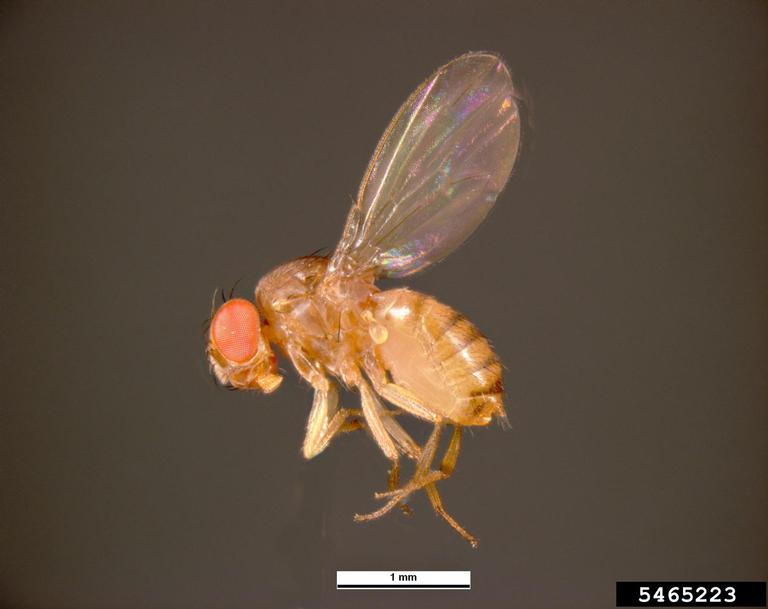
- Habits: Fruit flies feed mainly on decaying vegetable matter, compost, rotting fruit, etc. Often found around salad bars and restaurants where vegetable matter and juices collect. Also called vinegar flies, since vinegar (acetic acid) is a decomposition product of some rotting vegetable matter.
- Interventions: Find larval fly feeding sites and clean or otherwise throw away rotting fruit or vegetable matter. Remove garbage, including the plastic liner, and other refuse at least twice per week. Thoroughly clean all garbage receptacles at least twice per month.
- Might be confused with: humpbacked flies, fungus gnats.
Humpbacked flies
Humpbacked flies (Phoridae) are also referred to as scuttle flies. Often scuttle about on the surface around and on infested materials. Humpbacked flies are about 1/8 in.

- Habits: Often associated with dead and decaying animal or plant matter (e.g., dead insects, rotting potatoes), bacterial buildup in drains (drain and sewer scum) in bathrooms and kitchens and in/around garbage cans.
- Interventions: Find and clean fly breeding sites and/or clean out drains. Make certain that the water trap in the drain line (especially common in less frequently used sinks) is filled. If the water trap dries out, flies and other pests that live in the drain lines will be able to enter the building. Remove garbage and other refuse at least twice per week.
- Might be confused with: fruit flies, fungus gnats.
Black flies
Black flies (Simuliidae) are closely related to mosquitoes except the larvae require flowing water, often the faster the better. According to Elmer Gray, a research entomologist with CAES and specialist for UGA Cooperative Extension, there are 47 known species of black flies in Georgia and they all require flowing water to develop. Different species use different types of waterways, so black flies can be found from the mountains to the coastal plain.
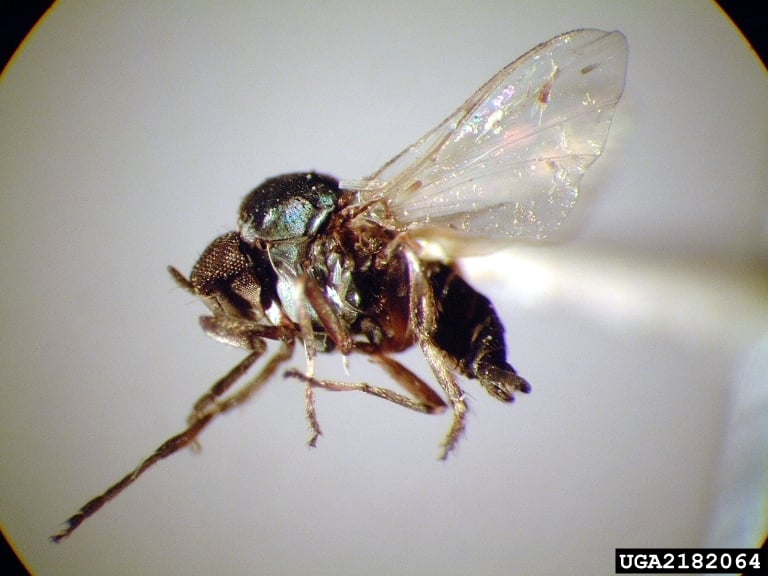
- Habitats: The nuisance adult populations of black flies are usually associated with larger creeks to rivers. Human biting species are more common around smaller streams in the mountains.
- Interventions: Black flies do not typically come indoors. Use EPA-registered insect repellents to prevent getting bitten.
- Might be confused with: eye gnats or fruit flies.
For a primer on biting and stinging pests, read “Ouch! What just bit me?” on CAES Field Report.
For more information on other common pests, see “Insect and Arthropod Pests of Southeastern Neighborhoods” an expert resource from UGA Extension.