
Charting the Milky Way
Georgia dairy industry looks to UGA for growth, innovation and sustainability
Written by Anna Bentley
Photos by Caroline Newbern
In 2023 alone, Georgia’s dairy industry contributed nearly $4 billion to the state economy, fueled by 85,000 dairy cows spread across the state’s more than 70 dairy farms. And while other states in the Southeast have seen attrition in dairy production, Georgia’s dairy production continues to grow.
“We’re kind of like the shining star, if you will, of the Southeast,” said Jillian Bohlen, associate professor in the University of Georgia’s College of Agricultural and Environmental Sciences.
Still, the state’s tight-knit dairy industry envisions even more growth, from a proposed revamp of the UGA Teaching Dairy to innovative products and technology to monitor and support cow health and production.
They’re all initiatives to answer ambitious questions: “How can we grow dairy in the state of Georgia to an extent where we’re known nationally as a preeminent dairy state?” Bohlen asked. “How can we become a state that is known for dairy, from the university to processors and farmers?”
A dairy dream
Central to these goals is investment. A coalition of industry partners, producers and university researchers envisions a state-of-the-art milk processing, research and training facility that would support sustainable dairy growth, spur further investment in the state and teach the next generation of dairy farmers.
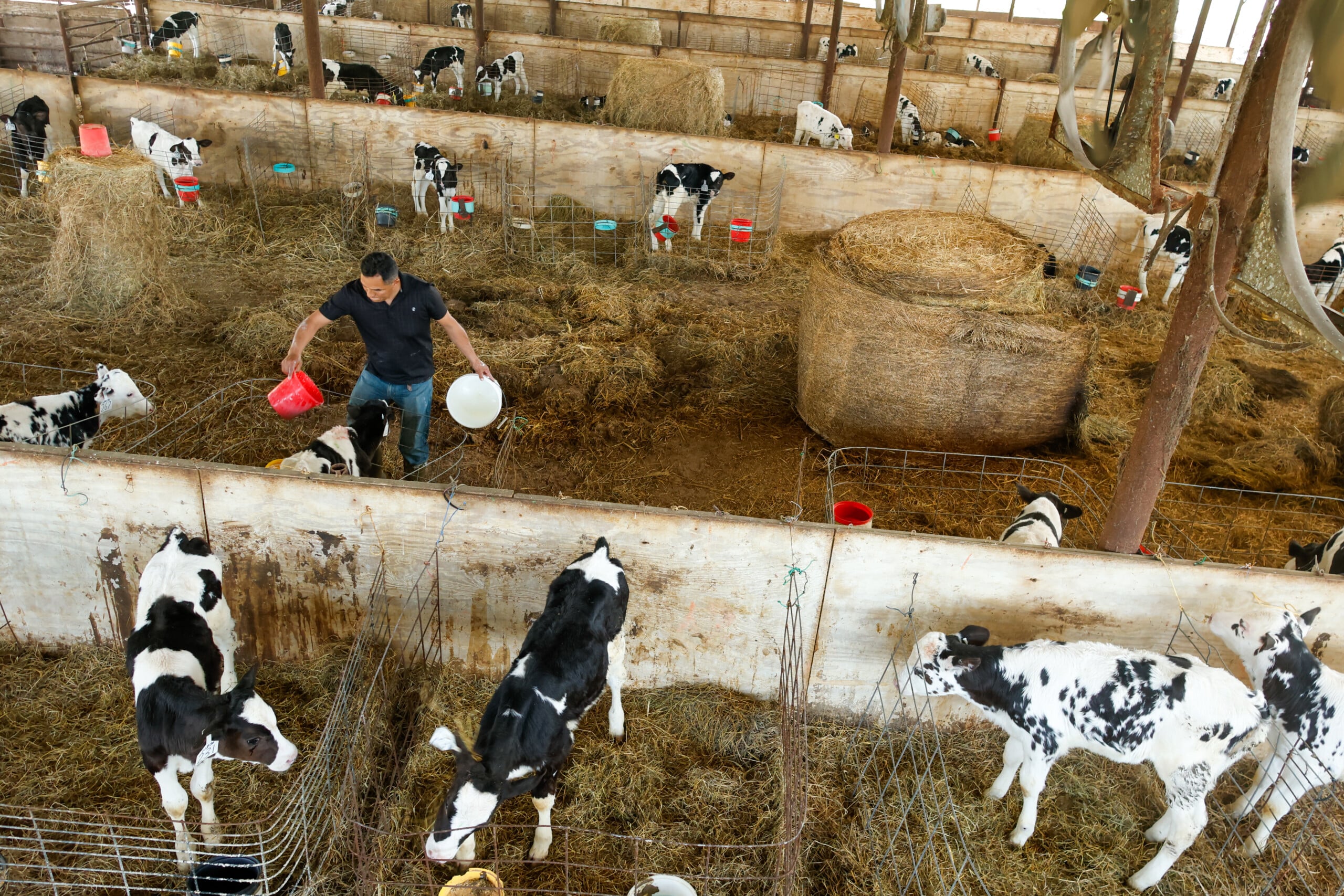
The proposed facility would involve a $15 million, multiyear transformation of the UGA Teaching Dairy. Plans for the modernized space include robotic milking parlors with integrated milk-handling systems, dry cow barns, calf barns with automated feeders, feed mills and bunker silos. The facility would also support cutting-edge research and experiential learning for future dairy farmers and large-animal veterinarians alike, helping to develop the workforce and advance research in animal health, nutrition and precision agriculture.
Related Content
Defining and designing the facility has required close collaboration among Georgia Milk Producers Inc., the Dairy Alliance and UGA faculty. It’s also brought together nearly every department in CAES, said Regina Fitzpatrick, an alum and the college’s director of government relations and external affairs.
“It’s not just the animal and dairy science department doing this. Obviously, crop and soil sciences is going to play a role in the nutrient management plans associated with this, and food science with further processing of value-added products. We rely on the team in agricultural and applied economics to come up with some of the data behind this — projections of milk prices, projections of input costs, of feed costs. Almost every department in our college is working on this project,” she said.
“It’s a good hub for experts from different areas to come together for the one common goal: to advance agriculture,” added Bohlen, who earned bachelor’s and master’s degrees in dairy science and animal science from CAES in 2003 and 2005.

Keeping it local
Industry and academia have partnered to bring a new processing plant to Georgia because so few currently exist in the state. This means producers can end up shipping their milk long distances for processing — and incurring the associated costs.
At the beginning of 2025, Georgia had only two processing facilities — one in Atlanta and another in Lawrenceville. By the end of the year, Walmart opened a new 300,000-square-foot milk processing facility in Valdosta, which processes and bottles milk for distribution across more than 650 Walmart and Sam’s Club stores in the Southeast. The $350 million investment sources its milk from local dairy farmers, giving the large farms across the southern half of the state a closer option for processing.
“We need to make milk local, and we need to process it locally,” said Bohlen. “That is our big goal.”
A fluid market
Georgia is a fluid milk region, which means most of the milk produced in the state ends up in gallon and half-gallon jugs in grocery stores. However, milk also has a lower price point than other dairy products, and year-over-year consumer trends show that fluid milk consumption is decreasing.
“Hopefully some recent things might change some of that. We’re always hopeful,” Bohlen said, “but it’s been declining.”
Whole milk consumption, though, is on the rise, as well as other higher protein milk and dairy options. In a fluid milk region like Georgia, both are opportunities to innovate into new product categories and create new inroads for customers and sales.
“We need to really make products that people want,” said Adam Graft, owner of Leatherbrook Holsteins near Americus, who earned his bachelor’s degree in animal health from CAES in 1997, followed by a doctor of veterinary medicine from UGA in 2000. “A lot of milk gets sold in the gallon jug, but there are a lot of people who like sports shakes and ultra-filtered products. We need to be conscientious of consumer demand.”
A Coca-Cola Co.-owned product, fairlife® unlocked a new product category by developing a higher protein, lower sugar, lower lactose milk that appeals to people trying to avoid lactose or boost protein in their diet, said UGA Food Product Innovation and Commercialization Center (FoodPIC) Director James Gratzek.

At FoodPIC, Gratzek, who earned a doctorate in food science from CAES in 1994, helps food companies develop and launch new products. One of his recent projects is “milk fizzies,” a concept that combines lactose-reduced milk with carbonated fruit juice to capitalize on the popularity of high-protein, low-lactose milk products, but it also benefits Georgia’s fruit farmers: The milk fizzies use juice from wasted blueberries, peaches and citrus from Georgia farms, creating new opportunities for both industries.
Dairy farmers themselves are also coming up with inventive ways to market and sell their products — and make stronger connections with their local communities. In northeast Georgia, the Russell family is renovating an old Piggly Wiggly into a creamery that will process and bottle milk from the family’s nearby 250-cow farm. The Northeast Georgia Creamery in Dillard will process 2% and whole milk, as well as buttermilk, cream and flavored milks like banana and orange creamsicle.
The small-scale, value-added concept is the brainchild of Colin Russell, who saw the farm and creamery as a way to better control quality from end to end and support the farm’s future growth. “It was really discouraging to be a price-taker, so I was more interested in being able to maybe set a price for our milk based on what we think the value of it is and what the customers say the value is, versus selling it to a larger co-op that tells you what your price is.”
The creamery is set to open this summer, coinciding with farm tours to draw agritourism visitors, promote the health benefits and versatility of milk, and bridge the gap between consumers and producers, said Colin’s father, C.A. Russell, a 1985 CAES graduate in dairy science.
“I don’t know if we’ll change anybody’s mind, but hopefully they’ll have a better understanding and appreciation for what it takes to do all of this,” he said. “We’re going to try to be as transparent as we can about what we do and how we do it. We care for our cows, and we care for our land, and we want to care for our community.

The sustainable way
Caring for cows and the land is a priority for many progressive farmers in the state. It’s also just good business, said Leatherbrook Holsteins’ Graft.
To be successful in the dairy business, you have to take really, really good care of your cows,” he said. “That’s the bottom line.”
At Graft’s farm outside of Americus, his 8,000 cows meander through sand-bedded, free-stall barns equipped with misters, fans and soaker lines for hot, steamy days. The farm uses robotic milkers so cows can milk on their own schedule, and a third-party digester system recycles methane into renewable natural gas. A manure separator system separates water from waste, with the solids serving as fertilizer for the farm’s wheat, corn and Bermuda grass crops.
“You try to integrate things. You try to be as efficient as possible, and that helps profitability, but really it helps your sustainability too,” he said. “You’re trying to utilize the resources you’ve got.”
Many of those resources include precision agriculture tools like real-time health and activity sensors worn as collars around a cow’s neck. These sensors and the data they unlock can lead to better animal welfare, health and, ultimately, production. At UGA’s Institute for Integrative Precision Agriculture, researchers including Associate Professor Sha Tao and Assistant Professor Anderson Alves investigate ways to use advanced technology to address common farm issues.
“The main goal is to create practical tools that help producers make better daily management decisions,” Alves said.
One area of particular interest for Tao and Alves is heat stress, a significant issue in the Southeast that can lead to lower productivity, lower milk quality and higher risk for mastitis, an infection of the mammary gland. Their research aims to better understand how heat stress affects both calf and cow health and productivity, as well as how it can be monitored at the individual level, Alves said.
Eventually, Alves hopes these tools can help producers predict and even prevent problems.
“When that happens, data will not only inform what producers do today,” he said, “but also help shape the cows of tomorrow.”