
Overview
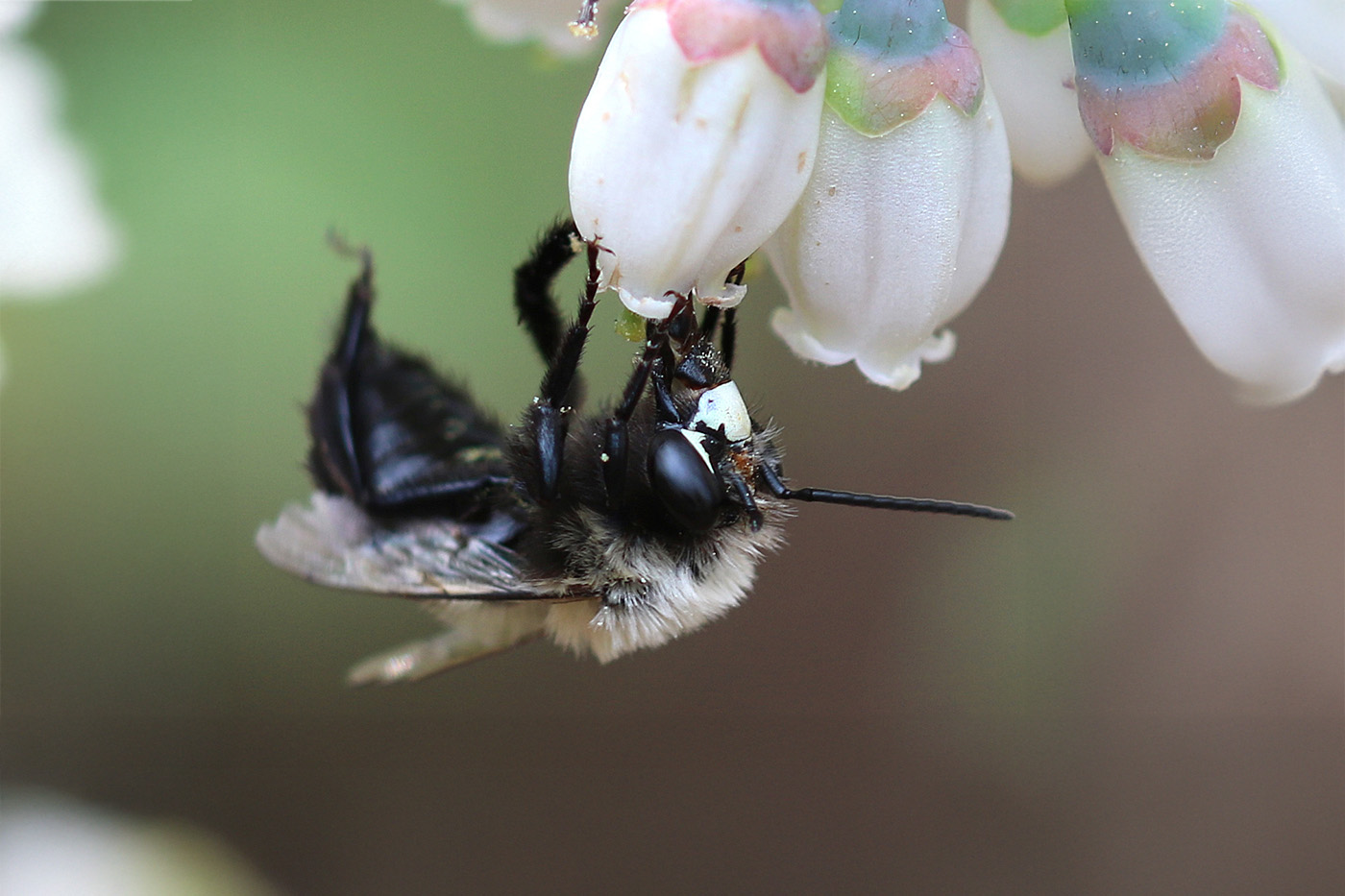
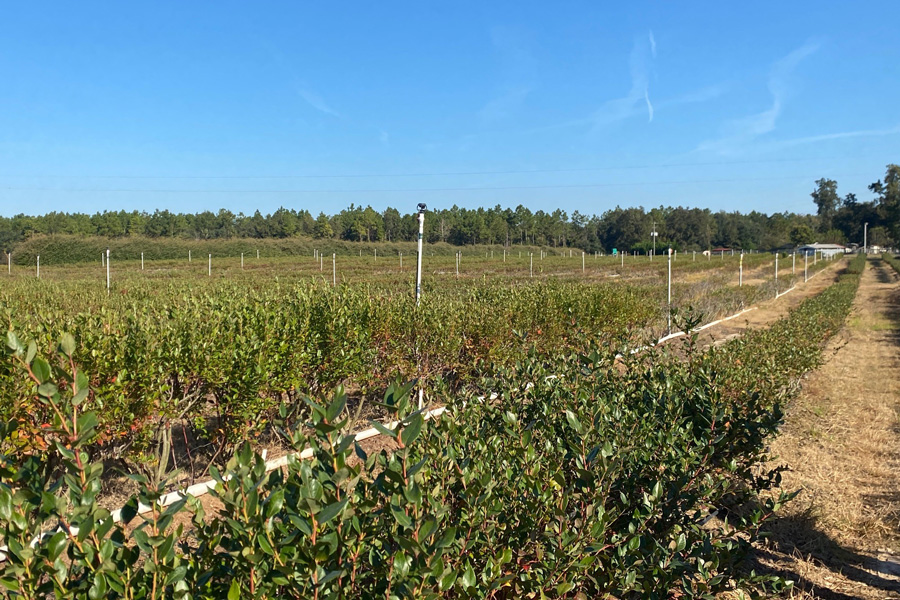
Blueberry is a native species in North America that was domesticated in the early 1900s through the collaboration of Elizabeth White and Frederick Coville. The first commercial blueberry varieties were marketed in 1916; since then, blueberry production has expanded worldwide. In the state of Georgia, blueberry production generates more than $300 million per year. The most popular varieties grown in the United States are Southern Highbush, Northern Highbush, and Rabbiteye. Planting blueberries for commercial production is a significant investment. Choosing the right site with the ideal environment and soil characteristics will allow growers to increase the sustainability of the production system and protect them from monetary losses.

Photo: Zilfina Rubio Ames.
Climate
Learn about the climate in your region and gather data on the temperature patterns—the typical and historic summer highs and winter lows. Compare the average temperatures of the region with the temperature patterns of your site. Climate data will help you choose the most well-suited varieties for your area and the precautions you should take to avoid major losses.
In Georgia, freezes are very common from January to March. To protect your crop from frost, consider investing in options like overhead irrigation (see Figure 1) and wind machines. Flat areas are ideal for planting blueberries. If the site has a slope, cold air will deposit in the lower portion (see Figure 2); the slope should be free from things that cause air dams such as trees and bushes. Frequent rain events, which are common in Georgia, can damage the blooms.

Note. Adapted from “Spring cold injury to winegrapes and protection strategies and methods,” by E. B. Poling, 2008, Hortscience, 43(6), p. 1653 (https://doi.org/10.21273/HORTSCI.43.6.1652). Copyright 2008 by the American Society for Horticultural Science.
Adequate Soil
Blueberry has a very distinct growth habit; it grows well in acid soils with a pH of 4.5 to 5.5. Blueberry plants are susceptible to excess water and grow best in well-drained, sandy loam soil that is rich in organic matter.
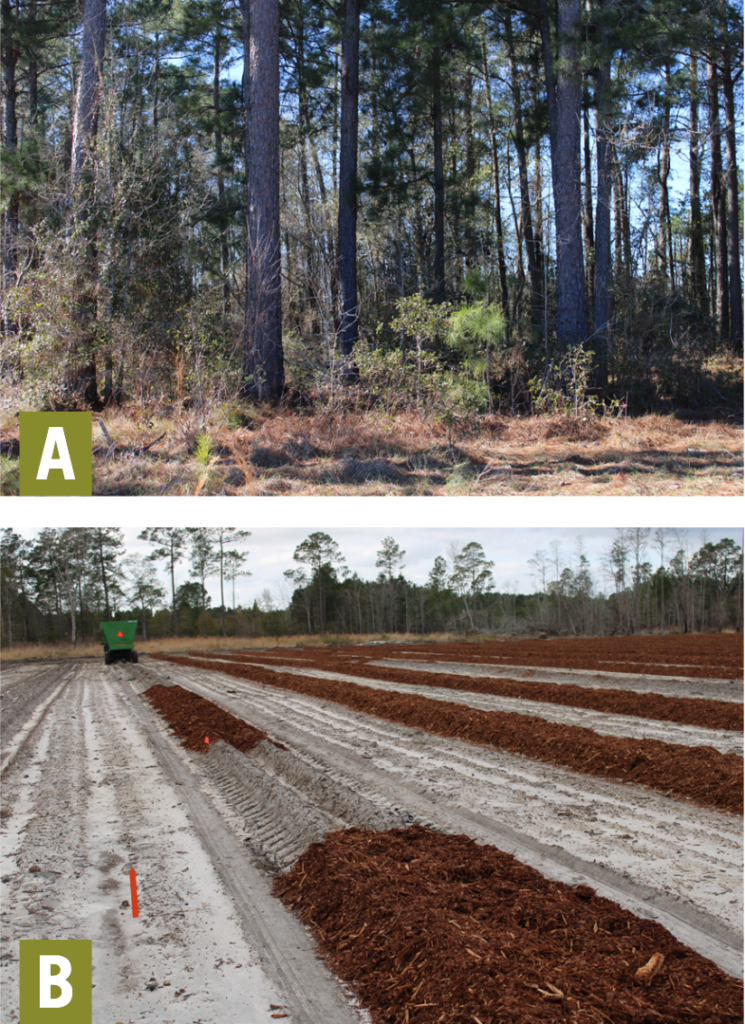
Blueberries prefer the higher organic soils of forest or woodland sites in South Georgia. Removing wild vegetation, pine trees, and native Vaccinium species like deerberry (Vaccinium stamineum; Figure 3) to establish a new planting is common in Georgia (see Figure 4A).

Photo: James H. Miller, USDA Forest Service, Bugwood.org.
After clearing, a good practice is the incorporation of organic matter to help bring the soil’s organic matter content to approximately 3% of volume. In Georgia, soils are amended with pine bark (see Figure 4B).
Photos: Zilfina Rubio Ames.
Pine bark can be used as a soil amendment on both preforest and cultivated sites to increase the soil’s organic properties and ensure plant productivity. In some cases, pH must be adjusted, and the soil must be amended to fulfill the crop’s requirements.
Knowing the properties and characteristics of your soil is indispensable—you should take soil samples to identify the soil’s characteristics and requirements before venturing into planting.
Prior Crops
If the land previously was planted with row crop, it is important to wait at least 6 to 12 months before planting blueberries. Even with the incorporation of elemental sulfur into the soil before planting, it takes about 6 months for pH to decrease. Previously incorporated lime, which is needed for row crop production in the acidic soils of Georgia, affects soil chemical properties. Additionally, lime mobility in the soil is low and can increase pH even when sulfur is applied. A good practice is to plant a cover crop a year before planting blueberries. Fertilize the cover crop with urea or ammonium nitrate and check the pH periodically.
Herbicide carryover
If your blueberry planting will use acreage previously planted in row crops, consult with previous growers (if necessary) to determine if any herbicides used previously could cause carryover issues and damage your blueberry plants. Herbicides like Cadre (imazapic) can cause damage for several months after application, especially in soils with a pH above 5.5. If you must use herbicides to remove brush from the planting area, consider using glyphosate. If products like triclopyr are used, a 3 to 6 month plant-back period might be required before planting blueberries.
Water
Before planting it is important to know if water is going to be available at the site. Access to water is very important for blueberry production—not only during the growing season, but also in winter for overhead frost protection. Be sure to have testing done to determine the quality of water at the site. In Georgia, water pH is alkaline, so it might be necessary to reduce pH to 5.5 using sulfuric acid.

Photo: Zilfina Rubio Ames.
Drainage
Blueberry plants are susceptible to waterlogging, and roots will suffocate in soils that are waterlogged for more than a few days in a row. The likelihood of hypoxia—or lack of oxygen in the soil—will increase as soil remains waterlogged. Drains can be used to control the water table or to facilitate the removal of excess water in areas with high rainfall. Planting on raised beds (Figure 6) also can protect plants from accumulating excess water.

Photo: Zilfina Rubio Ames.
Most of the soils that blueberries are grown on are Tifton series. Tifton soils have a sand or loamy-sand surface horizon texture, and a sandy-loam and sandy-clay-loam subsoil texture, which in some areas could lead to a perched (high) water table and poor drainage. Before planting, assess the soil site and identify areas with poor drainage. Managing areas with poor drainage is very complicated and expensive, and it is best to avoid these areas for blueberry planting.
Determining good drainage
Evidence of poor drainage may be obvious if saturated topsoil is found after a rain event. However, underlying waterlogging may not be obvious. In that case, poor drainage could be identified by the presence of wet-loving vegetation, limited percolation after raining, high runoff, soil erosion, and poor root development. Dig a soil pit to examine the area for compacted layers that may lead to poor drainage. If compacted layers are identified, loosen the topsoil or install a drain as needed.
References
Hill, K., Hodgkinson, R., Harris, D., & Price, P. N. (2018). Field drainage guide: Principles, installations and maintenance. Agriculture and Horticulture Development Board (UK). https://ahdb.org.uk/drainage
Krewer, G., Cline, B., & NeSmith, D. S. (2007). Southeast regional blueberry horticulture and growth regulator guide. Southern Region Small Fruit Consortium. https://smallfruits.orgfiles/2019/06/3_21_07SR_BlueberryHortGuide.pdf
Pederson, D. C., & Lathem, J. R. (2017). Tifton Georgia state soil. Soil Science Society of America. https://www.soils4teachers.org/files/s4t/k12outreach/ga-state-soil-booklet.pdf
Poling, E. B. (2008). Spring cold injury to winegrapes and protection strategies and methods. Hortscience, 43(6), 1652–1662. https://doi.org/10.21273HORTSCI.43.6.1652