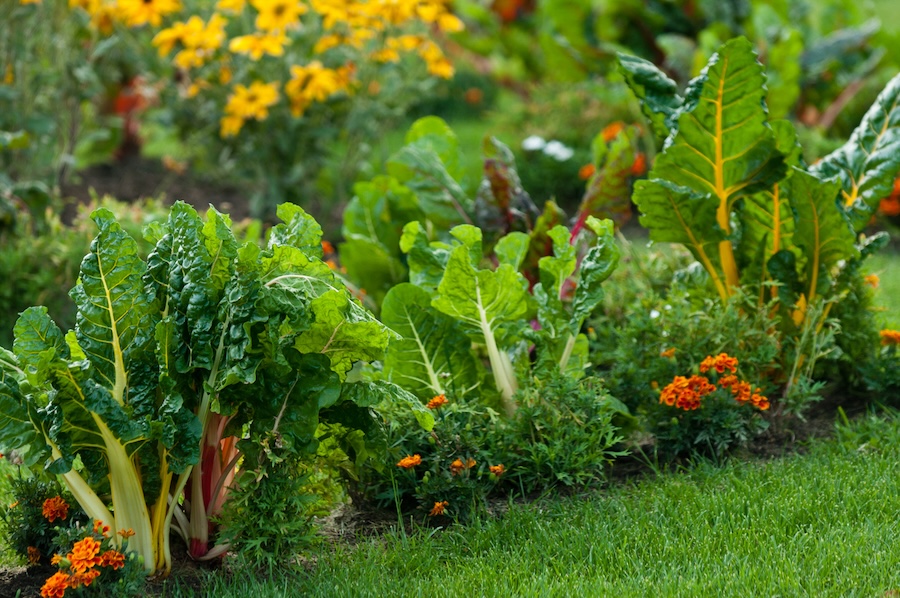


Pollinator gardens of any size can have a positive environmental impact, whether on a farm, in a suburban backyard garden, or even on a small porch or patio space. By thoughtfully planning and planting, a vibrant container garden will provide resources for bees, butterflies, flies, and other pollinators. As a bonus, these small gardens can allow families to observe and appreciate these insects up close.

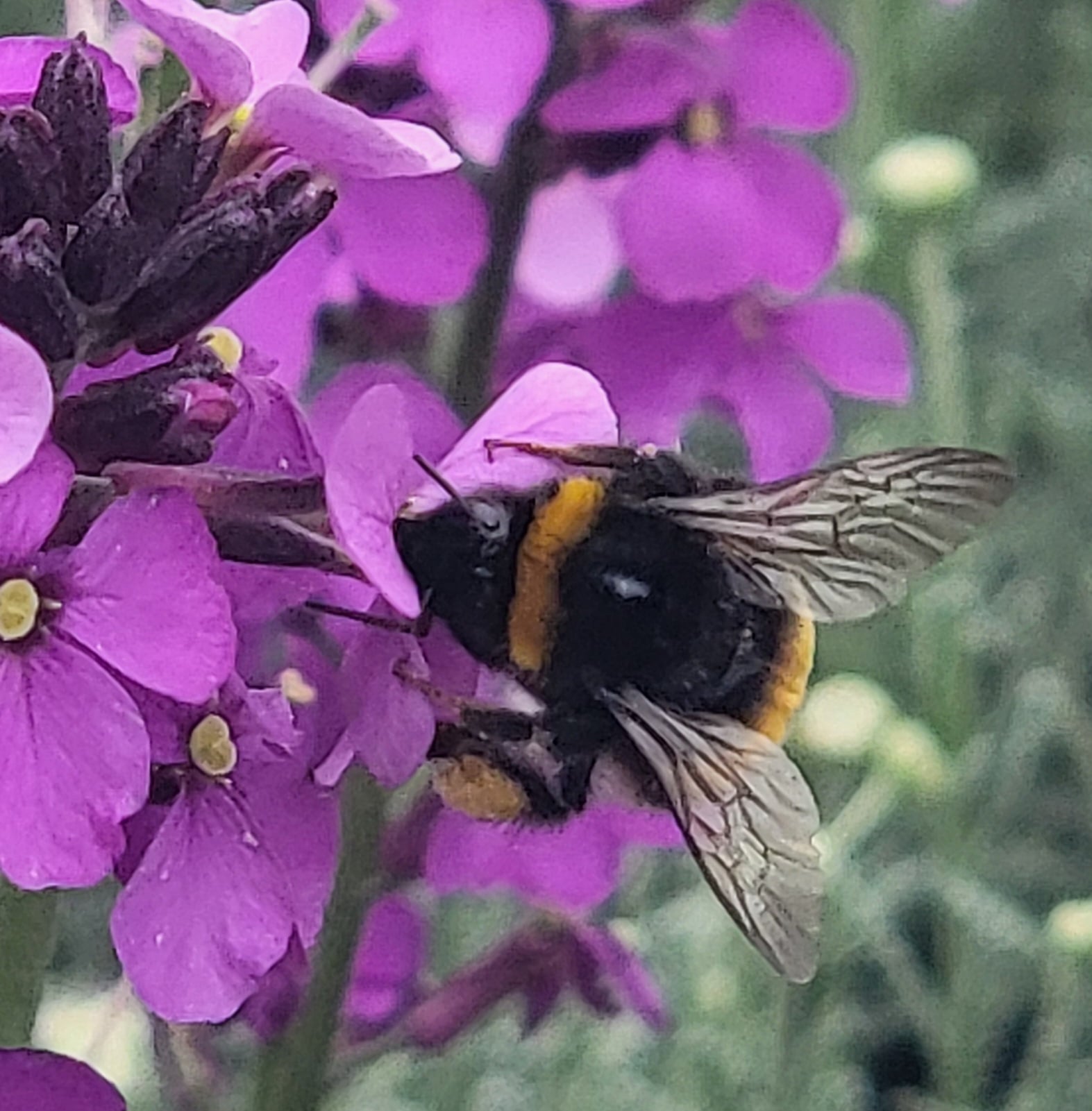
When creating a potted pollinator garden, there are two goals. First, the potted garden needs to be attractive and fit into the desired space. Equally as important is that the garden must provide resources for the insects. Consider:
- Do the plants provide nectar or pollen?
- Is it possible to add a butterfly larval host plant to the container?
Some plants can provide a respite for insects that need a place to rest or hide from predators. A grass could hold a chrysalis, meaning the entire lifecycle of butterflies could be observed up close in a container garden.
Here are some steps to help you plan and plant your garden.
Selecting the Perfect Plants
What Plants Do You Like?
Make notes on which plants you find attractive and how they are being grown as you visit public gardens or the porch gardens of friends or even businesses. Which ones show insect activity and are being visited by pollinators? Taking photos of plants or container designs you find attractive can help you with ideas.
Research Pollinator Plant Lists
Browse plant lists, such as those from Pollinator Partnership and the Xerces Society, which are centered on various ecosystems. Great Southeast Pollinator Census data help show which container-friendly plants tend to attract pollinators. These include:
- zinnia (Zinnia spp.)
- dwarf sunflowers (Helianthus spp.)
- lavender (Lavandula spp.)
- blazing star (Liatris spicata)
- wild bergamot (Monarda fistulosa)
- prairie onions (Allium stellatum)
- sweet alyssum (Lobularia maritima)
Ensure Variety
Consider plants of different flower shapes and colors to attract and nourish a diversity of pollinators. Bees are attracted to white, yellow, and blue flowers. Bumblebees prefer flowers they can crawl into to access nectar, such as beardtongues (Penstemon spp.). Flies are attracted to white and yellow flowers. The small white flowers of sweet alyssum (Lobularia maritima) attract beneficial syrphid flies as well as small bees. Butterflies are attracted to red and purple flowers, and they prefer flowers they can land on, like coneflowers (Echinacea spp.) and small sunflowers (Helianthus spp.).
Annuals or Perennials?
Remember the difference between perennial and annual plants. Annual flowers provide pollen and nectar for a limited time, and the plant will not come back next year. They should be replaced in the container once they have finished flowering. Perennial plants should come back every year. This means that when their flowering period is over, they will need to stay in the pot.
If several potted pollinator plants bloom in the same season, this could mean that those pots won’t provide much to look at during other times of the year. Therefore, you should mix bloom times in your container gardens as this provides food sources—floral nectar and pollen—for beneficial insects and pollinators throughout each season. This also provides resources for pollinators over a longer period.
Consider Butterfly Larval Host Plants
Adding host plants preferred by butterfly larvae can help you see butterfly caterpillars up close. The herbs parsley (Petroselinum crispum), dill (Anethum graveolens), fennel (Foeniculum vulgare), and rue (Ruta graveolens) are larval plants for black swallowtails, and those plants grow well in containers.
Hollyhocks (Alcea spp.) and mallow (Malva spp.) are tall plants but can be successfully grown in containers and are host plants for painted lady butterflies. Violets (Viola spp.), which are the host plants for several fritillary butterfly species, work well in a cool-season potted garden.
Grasses in a container can also benefit pollinators while adding another texture and plant form to the garden. Grasses like little bluestem (Schizachyrium scoparium) and ornamental oats (Chasmanthium latifolium) act as host plants for some skipper butterfly species, can also provide coverage for insects, and may be able to support butterfly chrysalises.
Consider Growing Your Plants From Seed
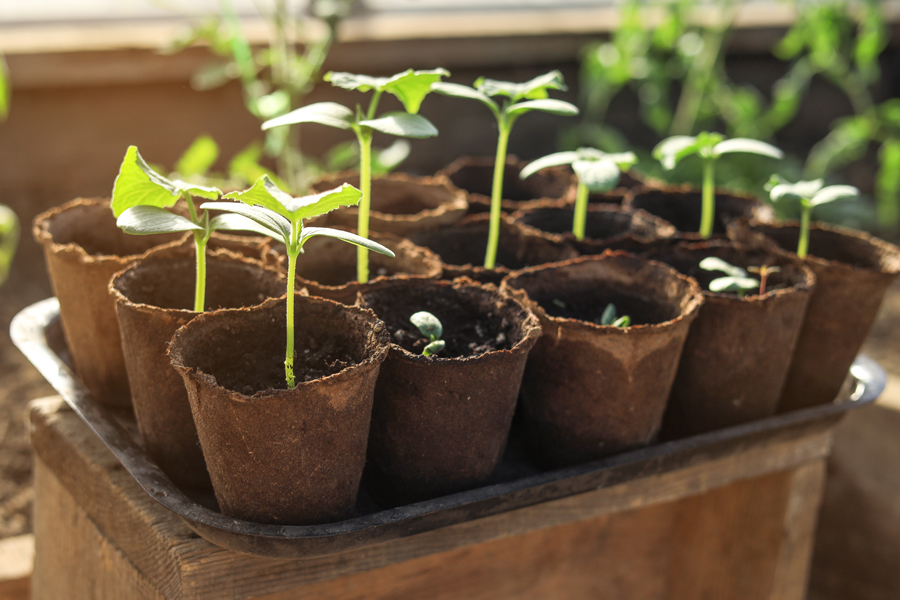
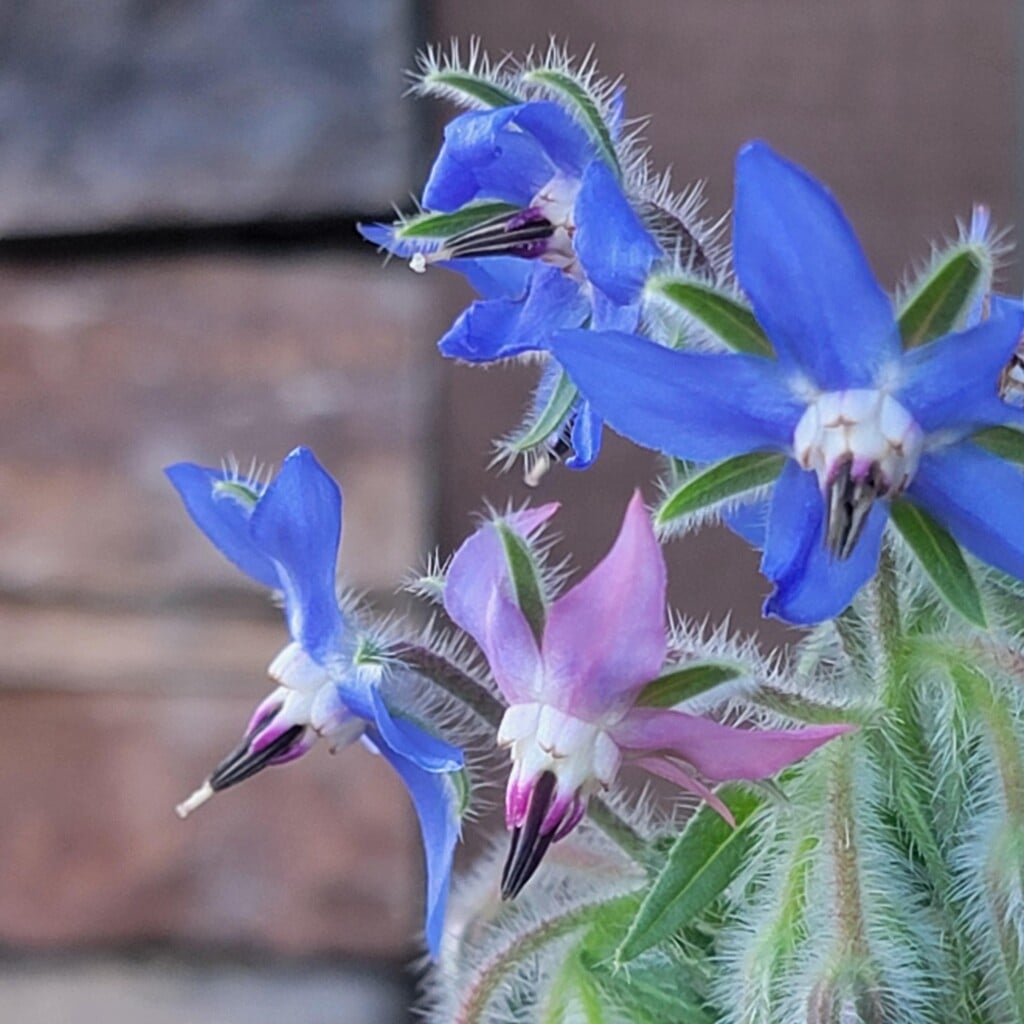
Many desirable pollinator-friendly plants can be grown from seed, such as borage (Borago officinalis), zinnia (Zinnia spp.), and marigold (Tagetes spp.). Read the seed packets carefully and note any requirements to prepare the seeds for germination. For example, milkweed (Asclepias spp.) seeds require a period of cold, wet conditions before germinating. Nature does that for seeds spread in the fall, but those conditions need to be replicated at home for seeds purchased in early spring.
Selecting Containers and Grouping Your Plants
Be Creative
Combining different plant species in one large pot is part art and part science. Do the plants have the same soil requirements? As they grow to fill in the pot, will one plant outcompete another? A thoughtfully designed large pollinator plant pot or container will be an attractive addition to a porch and a useful resource for our pollinators.

Consider grouping plants with different heights, flower forms, and growth habits. An example would be a pot with anise hyssop (Agastache foeniculum), coreopsis (Coreopsis spp.), and trailing verbena (Glandularia canadensis). The tall purple anise hyssop adds height to the design, while the coreopsis flowers have a different form and color. The trailing verbena would hang over the edge of the pot for more design interest.

Small fruit trees and shrubs can also grow successfully in containers. Citrus trees such as Meyer lemon (Citrus x meyeri) and a cultivar of the ornamental southern highbush blueberry (Vaccinium spp.), ‘Blue Suede’, are good container choices.
Container Selection Matters
Mixing pot colors, sizes, and shapes adds another design element to your garden. Container material and drainage holes affect how moisture is retained. Containers with drainage holes reduce waterlogged soil and root rot. Plastic containers tend to hold on to water slightly longer than other options. Coco fiber-lined baskets drain water extremely fast and will need to be monitored daily. Avoid terra-cotta as a pot material for most plants because it tends to absorb water, wicking it away from plants. Terra-cotta pots might be more appropriate containers for succulents or orchids.
Large containers filled with soil can become very heavy. Consider planting in an appropriately sized plastic container or liner, then placing that container in a decorative container. This allows for easier movement of the plant and container. Another suggestion is to use a rolling dolly to move large containers.
Watch Sun Exposure and Choose Plants Accordingly
If the porch gets full afternoon sun, choose plants that handle that amount of intense sun, such as trailing lantana (Lantana camara) or beebalm (Monarda spp.). If the porch gets a short amount of morning sun, you have the option of picking plants that can handle partial shade, such as salvia species (Salvia spp.) and creeping phlox (Phlox spp.). There are rooftop gardens that are exposed to so much sun throughout the day that the plant selection tends to be better suited to a desert climate, with cacti and succulents.

Advantages of Porch and Patio Gardens
Potted gardens have several advantages over in-ground gardens. They can be moved, changing the plants’ microclimate. Plants can be protected from storm damage by bringing the pots indoors or covering them before a cold snap. When the plants fade for the season, containers can be rotated to a less prominent place. Annual plant selections can be refreshed throughout the growing season.
Pests are easier to manage when plants are in pots on the porch or patio, where they can also be protected from wildlife. Soil conditions can be matched to specific plant needs, and ideal soil conditions are easier to provide in a potted garden than in an in-ground garden.
Drawbacks of Porch and Patio Gardens
One downside to container gardening is managing the plants’ water needs. Plants in pots dry out much quicker than in-ground plants. Consider using the largest pots possible and selecting a potting soil or soilless media mix with adequate water retention to help address this issue.
Another consideration is that perennial plants may outgrow their pots. This means they’re likely to need to be moved to larger pots or relocated to an in-ground garden over time.
Plants in containers will need to be fertilized and repotted over time. When establishing a new container garden, choose a potting soil that contains time-released or slow-release fertilizer. As the plants grow and the fertilizer is depleted, supplement or amend with additional slow-release or water-soluble fertilizers during the growing season.
Summary
Creating a potted pollinator porch garden can be enjoyable and rewarding. Many desirable pollinator-friendly plants can be grown from seed. The compact nature of a potted garden allows gardeners to try one or two plant species that are new to them. Remember, if a specific plant isn’t working, simply replace it.
This type of garden can be a fun experiment of trial and error. It can also create a wonderful environment for watching pollinators!
For more information about setting up an impactful potted garden, please contact your local UGA Extension office (https://extension.uga.edu/county-offices.html; or call 1-800-ASK-UGA1).
For Additional Information
UGA Extension Expert Resources
The eco-friendly garden: Attracting pollinators, beneficial insects, and other natural predators, by Bethany Harris, S. Kris Braman, Bodie V. Pennisi, and Maria Putzke (https://fieldreport.caes.uga.edu/publications/B1456/).
Common hover flies of Georgia: An introductory guide, by Scott Clem and William E. Snyder (https://fieldreport.caes.uga.edu/publications/B1565/).
Other Resources
Georgia butterflies by the North American Butterfly Association, Georgia-Piedmont Chapter (https://georgiawildlife.com/sites/default/files/wrd/pdf/Georgia%20Butterflies%20Brochure.pdf)
Chart of plant traits that are attractive to different types of pollinators (Pollinator syndromes) by Pollinator.org (https://www.pollinator.org/pollinator.org/assets/generalFiles/Pollinator_Syndromes.pdf)