UGA College of Agricultural & Environmental Sciences Field Report
  • Stories
    Almanac

    Science in service of humanity and the environment

    Read our annual magazine here

    READ


    Dive into engaging stories that showcase our statewide, national and global impact.

    Check out our written stories here

    LOOK


    Browse curated photo galleries capturing the people, places and programs that bring CAES to life.

    Check out our photo galleries here

    WATCH


    Experience our stories through videos that highlight our people, projects and passions in action.

    Check out our video library here

    LISTEN


    Tune in to “Cultivating Curiosity,” our podcast featuring in-depth conversations with CAES experts.

    Check out our podcast here
  • Expert Resources

    Expert Resources


    From farms and gardens to families and finances, our expert resources empower Georgians with trustworthy, practical science.

    Gardening
    Invasive species
    Food and food safety
    Ants, termites and other pests
    Pollinators
    Livestock
    Emergency preparedness
    Home safety and maintenance
    Health, family and finances
    Nutrition
    Water quality
    Lawn maintenance and landscaping
    Turfgrass
    View all topics

    What is an Expert Resource?


    We publish unbiased, research-backed expert advice to empower Georgians with practical, trustworthy information they can trust.

    These resources are written and reviewed by experts in the UGA College of Agricultural and Environmental Sciences and the UGA College of Family and Consumer Sciences.

    Learn how we produce science you can trust
  • Events
  • Contact
  • Read
  • Look
  • Watch
  • Listen
Subscribe
  • LinkedIn
  • Facebook
  • Instagram
  • Stories
    Almanac

    Science in service of humanity and the environment

    Read our annual magazine here

    READ


    Dive into engaging stories that showcase our statewide, national and global impact.

    Check out our written stories here

    LOOK


    Browse curated photo galleries capturing the people, places and programs that bring CAES to life.

    Check out our photo galleries here

    WATCH


    Experience our stories through videos that highlight our people, projects and passions in action.

    Check out our video library here

    LISTEN


    Tune in to “Cultivating Curiosity,” our podcast featuring in-depth conversations with CAES experts.

    Check out our podcast here
  • Expert Resources

    Expert Resources


    From farms and gardens to families and finances, our expert resources empower Georgians with trustworthy, practical science.

    Gardening
    Invasive species
    Food and food safety
    Ants, termites and other pests
    Pollinators
    Livestock
    Emergency preparedness
    Home safety and maintenance
    Health, family and finances
    Nutrition
    Water quality
    Lawn maintenance and landscaping
    Turfgrass
    View all topics

    What is an Expert Resource?


    We publish unbiased, research-backed expert advice to empower Georgians with practical, trustworthy information they can trust.

    These resources are written and reviewed by experts in the UGA College of Agricultural and Environmental Sciences and the UGA College of Family and Consumer Sciences.

    Learn how we produce science you can trust
  • Events
  • Contact
  • Read
  • Look
  • Watch
  • Listen
Subscribe
  • LinkedIn
  • Facebook
  • Instagram
Subscribe
  • LinkedIn
  • Facebook
  • Instagram
  1. Home
  2. Expert Resources
  3. Topics
  4. Animal Production
  5. Bees

Bees Resources

Use the Advanced Search
  • C 1290

    The Buzz About Bees: Bumblebees Have a Lot to Offer

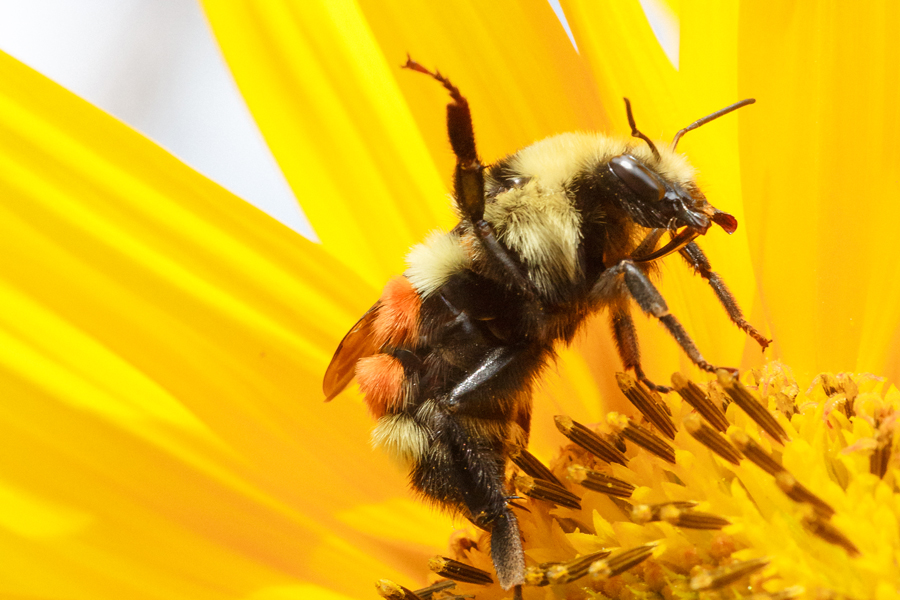
    Bumblebees are prone to catch your attention with their sonicating buzz or conspicuous and colorful appearance. They are robust, fuzzy-looking insects, with varying bands of coloration and a hairy abdomen. This characteristic differentiates them from the look-alike carpenter bees, which have bald abdomens. Bumblebees usually are active from early spring through fall, visiting and collecting pollen and nectar from flowers, and are distributed worldwide, with up to 260 species all over the globe. Most species are encountered in the Northern Hemisphere, while others are located in Central and South America and northern Africa. Forty-nine bumblebee species in the United States are known, and 17 of them are found in Georgia.

    Oluwatomi Daniel Ibiyemi, Shimat V. Joseph, and William G. Hudson

    |

    Aug. 17, 2023
  • C 1185

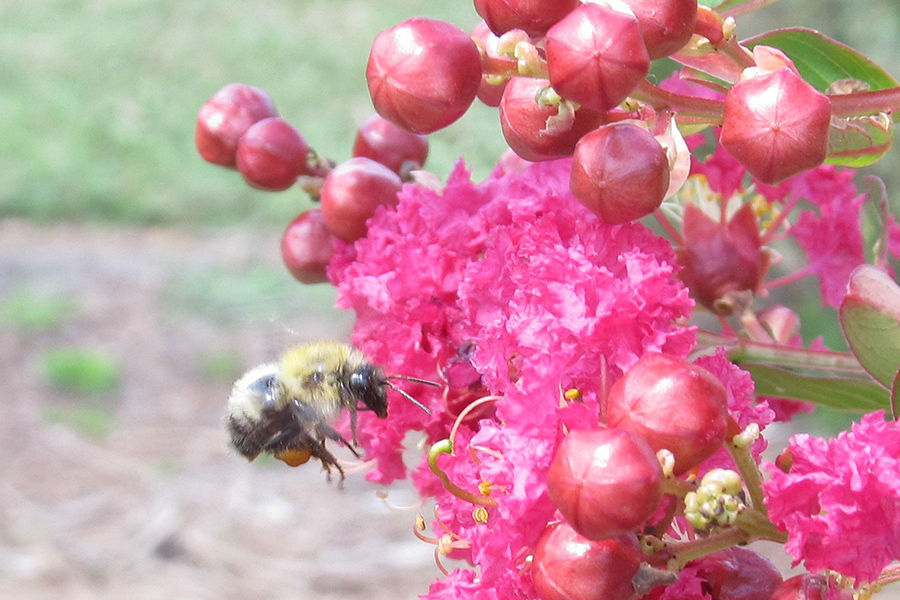
    What’s Your Flavor? Bee Preferences for Crape Myrtle Cultivars

    Crape myrtles are popular landscape shrubs and small trees. Native to China, Japan, and Korea southward to Oceania, crape myrtles have been cultivated in the U.S. for more than 175 years. Cultivars range from 3-ft shrubs to 30-ft-tall trees, and they are graced with large panicles of white, pink, lavender, purple, red, and many colors in between. Among cultivars, crape myrtles have a wide range of tolerance to key pests and diseases, such as powdery mildew, flea beetles, crape myrtle aphids, and Japanese beetles. The plant’s flowers are widely admired by humans and can serve as nectar and pollen sources for pollinators. With the recent decline in pollinator health and diversity, pollinator visitation, pest susceptibility, and horticultural attributes should all be considered when choosing crape myrtle cultivars for home and commercial landscapes.

    Bodie V. Pennisi, S. Kris Braman, James C. Quick, and Maria Putzke

    |

    April 26, 2023
  • a bee pollinates a flower on a tomato plant

    C 934

    Pollination of Vegetable Crops

    Plants develop seeds through a process called pollination. Pollination is the transfer of pollen from the stamen (male flower part) to the pistil (female flower part).

    Bob Westerfield

    |

    July 31, 2022
  • Creating Pollinator Nesting Boxes to Help Native Bees

    C 1125

    Creating Pollinator Nesting Boxes to Help Native Bees

    Planting pollinator-friendly flowers in your yard is a great first step for improving the quality of pollinator habitats. Adding nesting sites and nesting materials is another important measure in creating sustainable habitats, especially for native bees. When bees have access to a diversity of nesting materials, their numbers are positively affected, so providing nesting resources in your landscape is very beneficial to bees.

    Published with the UGA Warnell School of Forestry and Natural Resources as WSFNR-17-48.

    Becky Griffin and Elizabeth McCarty

    |

    July 13, 2022
  • B 1045

    Honey Bees and Beekeeping

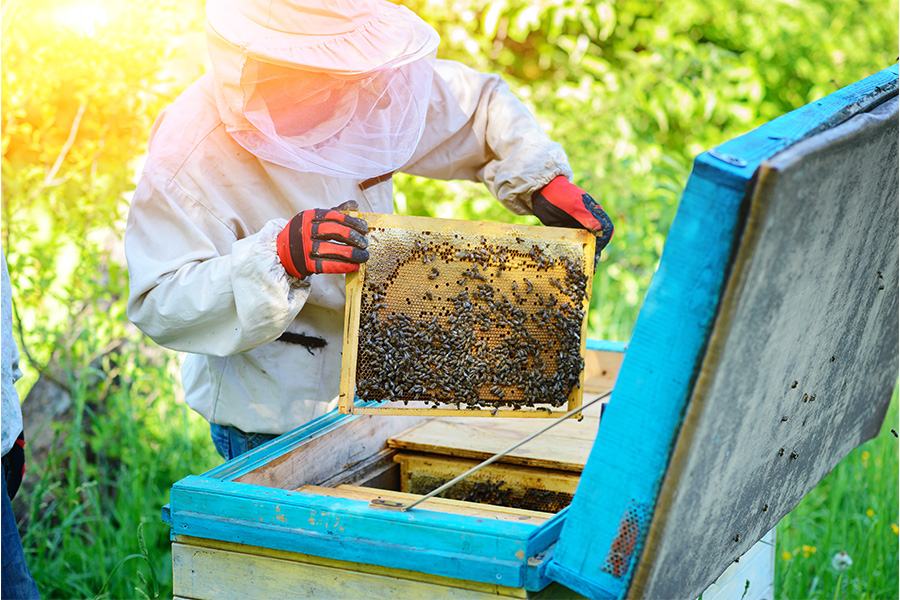
    Honey bees are commonly kept in artificial hives throughout the United States, and a large and sophisticated beekeeping industry provides valuable honey, beeswax and pollination services. A large section of the industry, well represented in Georgia, is devoted to mass-producing queens and bees for sale to other beekeepers.

    Keith S Delaplane

    |

    April 11, 2017
  • Africanized Honey Bees

    B 1290

    Africanized Honey Bees

    Honey bees are among the most well-known and economically important insects. They produce honey and beeswax, and pollinate many crops. In spite of the alarm surrounding Africanization, these bees have not caused widespread or permanent chaos. Dramatic stinging incidents do occur, but the quality of life for most people is unaffected. Typically, the commercial beekeeping industries of Africanized areas suffer temporary decline and then eventually recover.

    Keith S Delaplane

    |

    March 7, 2017
Previous Page
1 2

About CAES

CAES Home

Overview

History

Administration

Jobs

Personnel Directory

Privacy Policy

Accessibility Policy

AI Guidelines

Affiliations

UGA Cooperative Extension

Tifton Campus

Griffin Campus

University of Georgia
  • Schools and Colleges
  • Directory
  • MyUGA
  • Employment Opportunities
  • Copyright and Trademarks
  • UGA Privacy Policy
  • Report an Accessibility Barrier
  • Submit a Student Complaint
#UGA on
© University of Georgia, Athens, GA 30602
706‑542‑3000