UGA College of Agricultural & Environmental Sciences Field Report
  • Stories
    Almanac

    Science in service of humanity and the environment

    Read our annual magazine here

    READ


    Dive into engaging stories that showcase our statewide, national and global impact.

    Check out our written stories here

    LOOK


    Browse curated photo galleries capturing the people, places and programs that bring CAES to life.

    Check out our photo galleries here

    WATCH


    Experience our stories through videos that highlight our people, projects and passions in action.

    Check out our video library here

    LISTEN


    Tune in to “Cultivating Curiosity,” our podcast featuring in-depth conversations with CAES experts.

    Check out our podcast here
  • Expert Resources

    Expert Resources


    From farms and gardens to families and finances, our expert resources empower Georgians with trustworthy, practical science.

    Gardening
    Invasive species
    Food and food safety
    Ants, termites and other pests
    Pollinators
    Livestock
    Emergency preparedness
    Home safety and maintenance
    Health, family and finances
    Nutrition
    Water quality
    Lawn maintenance and landscaping
    Turfgrass
    View all topics

    What is an Expert Resource?


    We publish unbiased, research-backed expert advice to empower Georgians with practical, trustworthy information they can trust.

    These resources are written and reviewed by experts in the UGA College of Agricultural and Environmental Sciences and the UGA College of Family and Consumer Sciences.

    Learn how we produce science you can trust
  • Events
  • Contact
  • Read
  • Look
  • Watch
  • Listen
Subscribe
  • LinkedIn
  • Facebook
  • Instagram
  • Stories
    Almanac

    Science in service of humanity and the environment

    Read our annual magazine here

    READ


    Dive into engaging stories that showcase our statewide, national and global impact.

    Check out our written stories here

    LOOK


    Browse curated photo galleries capturing the people, places and programs that bring CAES to life.

    Check out our photo galleries here

    WATCH


    Experience our stories through videos that highlight our people, projects and passions in action.

    Check out our video library here

    LISTEN


    Tune in to “Cultivating Curiosity,” our podcast featuring in-depth conversations with CAES experts.

    Check out our podcast here
  • Expert Resources

    Expert Resources


    From farms and gardens to families and finances, our expert resources empower Georgians with trustworthy, practical science.

    Gardening
    Invasive species
    Food and food safety
    Ants, termites and other pests
    Pollinators
    Livestock
    Emergency preparedness
    Home safety and maintenance
    Health, family and finances
    Nutrition
    Water quality
    Lawn maintenance and landscaping
    Turfgrass
    View all topics

    What is an Expert Resource?


    We publish unbiased, research-backed expert advice to empower Georgians with practical, trustworthy information they can trust.

    These resources are written and reviewed by experts in the UGA College of Agricultural and Environmental Sciences and the UGA College of Family and Consumer Sciences.

    Learn how we produce science you can trust
  • Events
  • Contact
  • Read
  • Look
  • Watch
  • Listen
Subscribe
  • LinkedIn
  • Facebook
  • Instagram
Subscribe
  • LinkedIn
  • Facebook
  • Instagram
  1. Home
  2. Expert Resources
  3. Topics
  4. Animal Production
  5. Dairy

Dairy Resources

Use the Advanced Search
  • B 1500

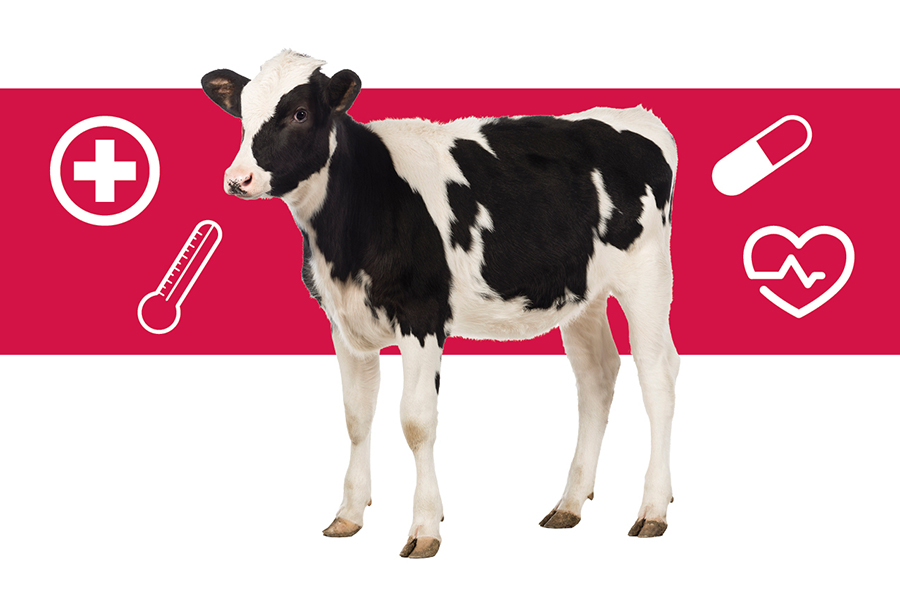
    Calf Health Basics

    Calf health is a key variable for calf growth and performance. Producers should not expect to know all calf health issues, causes, and the most successful treatments. Instead, a producer’s main goal should be to accurately identify and differentiate normal from abnormal in a calf’s physical state and behavior. The topics discussed in this publications are intended to help producers notice key areas of observation while also helping to identify normal and abnormal health parameters in calves. This information can also be used to develop calf management protocols and treatment strategies.

    Jillian Bohlen

    |

    April 18, 2024
  • C 553

    Bull Buyer’s Guide

    Bull procurement decisions can greatly impact your future calf crops and herd genetics for many years. Selecting and buying a herd bull is the quickest way to make genetic improvement in your herd. The selection process must include looking for those traits that are economically important and highly heritable. Demand and buy bulls with total performance that will improve your herd. This publication discusses factors to consider when purchasing a new bull.

    Lawton Stewart, Ted G. Dyer, and Ronald E. Silcox

    |

    April 9, 2024
  • B 1442

    Cow Behavior: A Critical Factor to Consider Under Heat Stress

    Cow behavior is critical for animal well-being and performance and influenced by many factors, such as heat stress. Under thermo-neutral conditions, cows spend half a day lying down and the rest of the time is distributed into standing, feeding and milking. However, when cows are exposed to heat stress, they spend less time lying down but more time standing up. The altered cattle behavior by heat stress may be associated with impaired productive and reproductive performance and an increase in disease incidence.

    This publication focuses on the impacts of environmental heat stress on cattle behavior and the possibly related consequences.

    John K. Bernard, Sha Tao, and Ana Paula Alves Monteiro

    |

    April 4, 2024
  • B 1512

    Feeding for Improved Yield of Milk Components

    This bulletin provides information for producers, nutritionists, and feed industry personnel on formulating diets to maintain or improve milk composition. The value of milk components is increasing more than skim milk, so this topic impacts all dairy farmers. The publication provides information on feeding dairy cows for improved yield of milk components, providing background on how the cow synthesizes milk components and the dietary factors that affect milk component yield.

    John K. Bernard and Sha Tao

    |

    April 4, 2024
  • AP 130-2-09

    2024 Dairy Outlook

    1. The outlook for 2024 is an improvement over 2023 as feed costs should decline and milk prices remain at similar levels in 2024.
    2. Risks remain as improved margins may spur a strong production response and demand growth is uncertain both domestically and overseas.

    Ben Campbell and William Secor

    |

    Jan. 22, 2024
  • Management Strategies to Reduce Heat Stress, Prevent Mastitis and Improve Milk Quality in Dairy Cows and Heifers

    B 1426

    Management Strategies to Reduce Heat Stress, Prevent Mastitis and Improve Milk Quality in Dairy Cows and Heifers

    This publication describes management strategies to reduce heat stress, prevent mastitis and improve milk quality in dairy cows and heifers.

    Steve Nickerson, Sha Tao, and Valerie E Ryman

    |

    Dec. 8, 2023
  • C 904

    Freeze Branding Cattle

    To improve efficiency, cattle producers should place a high priority on identifying individual cattle and maintaining accurate records. One type of permanent identification is branding.

    Lawton Stewart

    |

    Nov. 2, 2023
  • Feeder Calf Grading Fundamentals

    B 1481

    Feeder Calf Grading Fundamentals

    Feeder cattle buyers, marketers, and producers are able to communicate the potential growth and carcass merit potential of individual and grouped calves using the USDA Feeder Cattle Grading Standards. Producers that are aware of these standards and their use in predicting carcass value are better suited to making breeding and management decisions to improve the value of future calf crops.

    Lawton Stewart and Jason Duggin

    |

    June 8, 2023
  • B 1516

    Antibiotic Therapy in Mastitis Control for Lactating and Dry Cows

    Antibiotic therapy continues to play an important role in the control of mastitis in dairy cows. Lactational therapy is effective against Streptococcus agalactiae but less successful against infections caused by Staphylococcus aureus and other causes of mastitis. As a result, alternative treatment strategies have been developed, including a combination of both intramammary infusion and the parenteral administration (injection) of antibiotics to successfully cure quarters infected with S. aureus. Likewise, extended therapy, which involves prolonged drug administration, has improved cure rates against this organism. Nonantibiotic approaches to treatment have included oxytocin injections, but relapse rates after this form of therapy can be unacceptably high. Dry or nonlactating cow therapy is almost always more successful than lactational therapy because cure rates are higher and new cases of mastitis are prevented. To reduce antibiotic usage, selective dry cow therapy is becoming popular, and teat seals are appealing because they prevent new infections without having to rely on antibiotics.

    Steve Nickerson and Valerie E Ryman

    |

    June 6, 2023
Previous Page
1 2 3 4 … 7
Next Page

About CAES

CAES Home

Overview

History

Administration

Jobs

Personnel Directory

Privacy Policy

Accessibility Policy

AI Guidelines

Affiliations

UGA Cooperative Extension

Tifton Campus

Griffin Campus

University of Georgia
  • Schools and Colleges
  • Directory
  • MyUGA
  • Employment Opportunities
  • Copyright and Trademarks
  • UGA Privacy Policy
  • Report an Accessibility Barrier
  • Submit a Student Complaint
#UGA on
© University of Georgia, Athens, GA 30602
706‑542‑3000