Dairy Resources
-
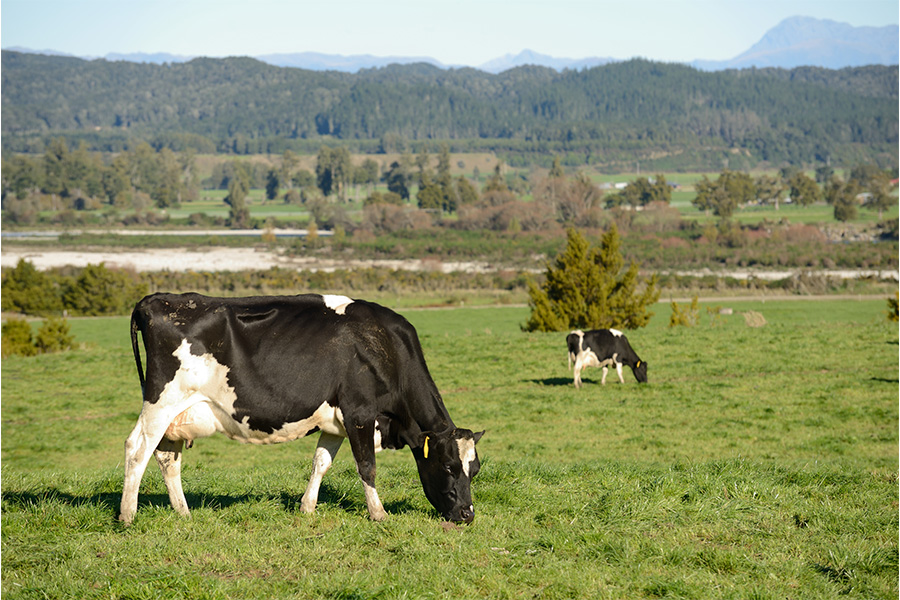
Antibiotic therapy continues to play an important role in the control of mastitis in dairy cows. Lactational therapy is effective against Streptococcus agalactiae but less successful against infections caused by Staphylococcus aureus and other causes of mastitis. As a result, alternative treatment strategies have been developed, including a combination of both intramammary infusion and the parenteral administration (injection) of antibiotics to successfully cure quarters infected with S. aureus. Likewise, extended therapy, which involves prolonged drug administration, has improved cure rates against this organism. Nonantibiotic approaches to treatment have included oxytocin injections, but relapse rates after this form of therapy can be unacceptably high. Dry or nonlactating cow therapy is almost always more successful than lactational therapy because cure rates are higher and new cases of mastitis are prevented. To reduce antibiotic usage, selective dry cow therapy is becoming popular, and teat seals are appealing because they prevent new infections without having to rely on antibiotics.
|
-
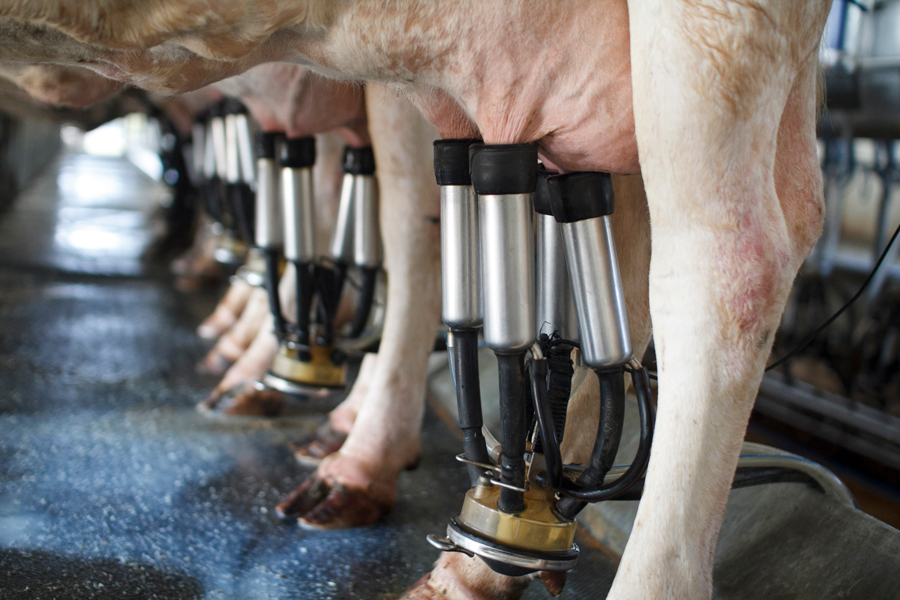
According to the National Mastitis Council, the recommended milking procedure for dairy animals is 1) provide low-stress environment, 2) check foremilk and udder for mastitis, 3) wash or predip teats with an effective disinfectant, 4) completely dry teats with a single-use towel, 5) attach milking unit within 120 sec of teat stimulation, 6) adjust milking units as necessary, 7) shut off vacuum for removing the unit, and 8) dip teats with a postdip disinfectant. One of the most critical steps in this recommended routine is checking foremilk to not only ensure there are no signs of mastitis and to maintain milk quality, but also to effectively stimulate the teats in preparation for milk collection. Thus, stripping the first three to five streams of milk (foremilk), during the premilking routine serves three important purposes including: teat stimulation which can result in optimal milk release, enhanced milk quality by removing the highest bacterial and somatic cell count milk, and identification of mastitis to allow rapid, well-informed decisions regarding further evaluation, milk culturing, and/or antibiotic therapy. This publication will discuss the purposes of forestripping for dairy animals to serve as an educational resource when creating and evaluating best milking practices.
|
-
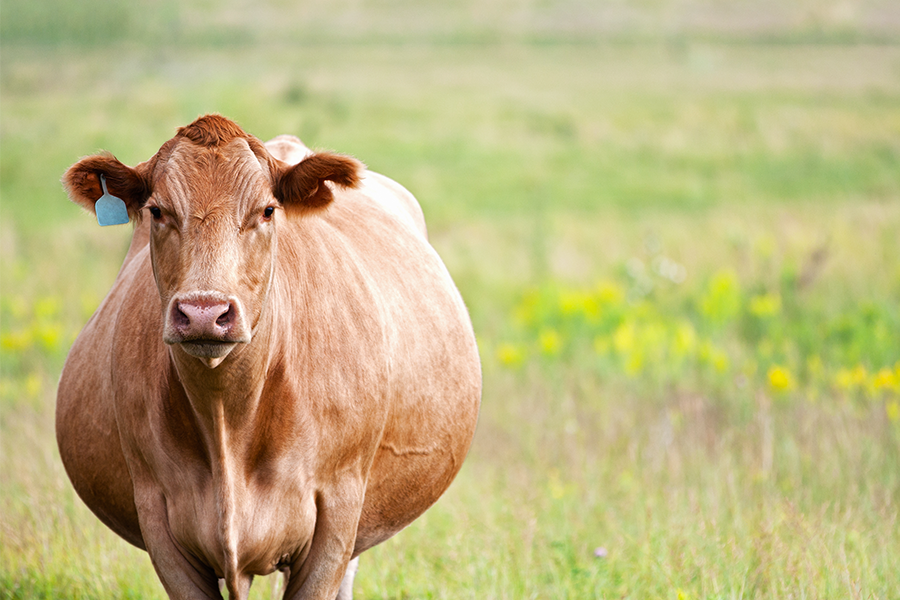
Cattle producers commonly evaluate reproductive performance by determining how many cows became pregnant during the breeding season. Although pregnancy rates are important, when the females become pregnant within the breeding season is a major component of cow-calf profitability. Cows that become pregnant early in the breeding season calve earlier in the calving season. Consequently, they have more time to recover before the next breeding season, which increases their chances of becoming pregnant and staying longer in the herd. Estrus synchronization programs have the ability of inducing estrus and can be combined with natural service to increase the percentage of cows and heifers that become pregnant early in the season. This publication describe different synchronization protocols that can be incorporated by cow-calf producers utilizing only natural service.
|
-

Determining an equitable price for purchased forages is a necessary but often uncomfortable topic of discussion for feed growers and purchasers. Usually this discussion is in the context of corn silage; however, the same principles can be used in any discussion involving hay, baleage or grains. In order for an input market to be efficient, the price agreed upon by both buyers and sellers should adequately compensate the producer while still allowing the purchaser the opportunity to economically use the input.
|
-

Sprouted grains are usually considered unsuitable for milling or distilling; however, they can serve as an excellent source of nutrients for cattle.
Wheat, which is commonly used for human consumption, is usually priced higher than other feedstuffs and is typically not utilized for livestock consumption. Sprouted wheat, however, is discounted heavily at the mill and may be economically feasible to incorporate into beef cattle rations.|
-

Due to cows’ universal exposure to manure, which contains E. coli and other gram-negative bacteria, as well as the requirement to maintain sec as low as possible, all cows should be vaccinated with one of the coliform vaccines available on the market. These vaccines have been proven to significantly reduce clinical coliform mastitis and have been shown to be profitable when incidence of clinical coliform mastitis exceeds 1% of milking cows.
|
-

Clean water for cattle is important for animal health and production and water delivery systems require routine maintenance and monitoring.
|
-

When it comes to managing a dairy herd, infections and inflammation of the cow’s uterus can have negative implications for animal welfare, milk production, and rebreeding capacity. Maintaining uterine health is essential for proper ovarian function and the creation of a uterine environment that is favorable for successful pregnancy. Although all production species can suffer from disruptions to uterine health after parturition, the prevalence of endometritis is notably greater in dairy breeds when compared to other breeds of cattle. Producers should be willing and able to assess uterine health through reproductive records and visual observations (with or without additional tools), and work with their veterinarian for identification and treatment of subclinical cases of endometritis if an issue is apparent. This bulletin provides information on how to minimize the risk of endometritis.
|
-

The Southeast U.S. is susceptible to hurricanes and tropical storms every year. Hurricane season occurs from June 1 through November 30, and these storms are normally forecast several days in advance. Tornadoes, ice storms, thunderstorms, or straight-line winds—potentially damaging winds produced by thunderstorms—are rarely forecast with enough notice to prepare other than to hopefully warn employees. Storms disrupt operations and have the potential to cause injury to people and livestock and devastate facilities and the landscape. Producers should have an emergency plan that safeguards family, employees, livestock, and equipment. The emergency plan should also address how to safely manage the damage after a storm. This resource provides information producers can use to develop an emergency preparedness plan in advance of a storm and suggestions for their potential responses following a storm. No plan will be 100% effective in all situations, but preparing will hopefully minimize damage and help speed the recovery.
|