UGA College of Agricultural & Environmental Sciences Field Report
  • Stories
    Almanac

    Science in service of humanity and the environment

    Read our annual magazine here

    READ


    Dive into engaging stories that showcase our statewide, national and global impact.

    Check out our written stories here

    LOOK


    Browse curated photo galleries capturing the people, places and programs that bring CAES to life.

    Check out our photo galleries here

    WATCH


    Experience our stories through videos that highlight our people, projects and passions in action.

    Check out our video library here

    LISTEN


    Tune in to “Cultivating Curiosity,” our podcast featuring in-depth conversations with CAES experts.

    Check out our podcast here
  • Expert Resources

    Expert Resources


    From farms and gardens to families and finances, our expert resources empower Georgians with trustworthy, practical science.

    Gardening
    Invasive species
    Food and food safety
    Ants, termites and other pests
    Pollinators
    Livestock
    Emergency preparedness
    Home safety and maintenance
    Health, family and finances
    Nutrition
    Water quality
    Lawn maintenance and landscaping
    Turfgrass
    View all topics

    What is an Expert Resource?


    We publish unbiased, research-backed expert advice to empower Georgians with practical, trustworthy information they can trust.

    These resources are written and reviewed by experts in the UGA College of Agricultural and Environmental Sciences and the UGA College of Family and Consumer Sciences.

    Learn how we produce science you can trust
  • Events
  • Contact
  • Read
  • Look
  • Watch
  • Listen
Subscribe
  • LinkedIn
  • Facebook
  • Instagram
  • Stories
    Almanac

    Science in service of humanity and the environment

    Read our annual magazine here

    READ


    Dive into engaging stories that showcase our statewide, national and global impact.

    Check out our written stories here

    LOOK


    Browse curated photo galleries capturing the people, places and programs that bring CAES to life.

    Check out our photo galleries here

    WATCH


    Experience our stories through videos that highlight our people, projects and passions in action.

    Check out our video library here

    LISTEN


    Tune in to “Cultivating Curiosity,” our podcast featuring in-depth conversations with CAES experts.

    Check out our podcast here
  • Expert Resources

    Expert Resources


    From farms and gardens to families and finances, our expert resources empower Georgians with trustworthy, practical science.

    Gardening
    Invasive species
    Food and food safety
    Ants, termites and other pests
    Pollinators
    Livestock
    Emergency preparedness
    Home safety and maintenance
    Health, family and finances
    Nutrition
    Water quality
    Lawn maintenance and landscaping
    Turfgrass
    View all topics

    What is an Expert Resource?


    We publish unbiased, research-backed expert advice to empower Georgians with practical, trustworthy information they can trust.

    These resources are written and reviewed by experts in the UGA College of Agricultural and Environmental Sciences and the UGA College of Family and Consumer Sciences.

    Learn how we produce science you can trust
  • Events
  • Contact
  • Read
  • Look
  • Watch
  • Listen
Subscribe
  • LinkedIn
  • Facebook
  • Instagram
Subscribe
  • LinkedIn
  • Facebook
  • Instagram
  1. Home
  2. Expert Resources
  3. Topics
  4. Lawn and Garden
  5. Flowers

Flowers Resources

Use the Advanced Search
  • Landscape Basics: Crop Rotation and Cultural Practices Help Reduce Diseases in Seasonal Color Beds

    B 1423

    Landscape Basics: Crop Rotation and Cultural Practices Help Reduce Diseases in Seasonal Color Beds

    Landscape professionals must consider many factors when choosing the right flowering annuals to plant for a particular location. Primary considerations include high visual impact, consistent bloom for color, foliage for texture and color, sun exposure, growth habit and low-water tolerance. Cost plays an important role as well. Many landscapers typically choose common annual ornamentals and tropical perennials marketed as annuals. Particular species and cultivars tend to be favored over others for a variety of reasons; these are the bread-and-butter plants, such as cool-season pansies and warm-season petunias. Because of this, staple plants tend to be planted year after year, often in the same bed – a recipe for disease build-up, pesticide applications, loss of plants, plant replacement, dissatisfied customers, and ultimately, lower profit margins. This publication explains how to effectively use crop rotation and cultural practices to reduce disease incidence in seasonal color beds.

    Jean Williams-Woodward and Bodie V. Pennisi

    |

    April 12, 2022
  • C 1233

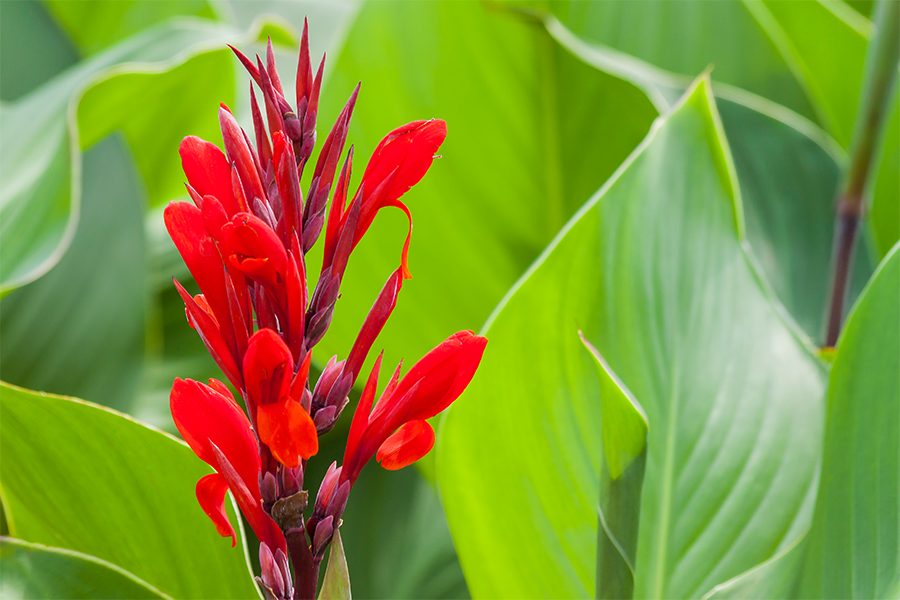
    Larger Canna Leafroller: A Major Insect Pest of Canna Lily

    An introduction to the larger canna leafroller, plus information on biology and management.

    William G. Hudson and Shimat V. Joseph

    |

    Jan. 21, 2022
  • C 872

    Winter Protection of Ornamental Plants

    Cold damage to ornamental plants can be a problem during the winter in the Georgia landscape. Regardless of where you live, recommended practices can maximize the chances that your prized landscape plants will survive the winter.

    Bob Westerfield

    |

    May 29, 2020
  • 2018’s Best New Plants from the Trial Gardens at the University of Georgia

    AP 116-6

    2018’s Best New Plants from the Trial Gardens at the University of Georgia

    New ornamentals have long been considered the lifeblood of the green industry. This publication contains recommendations for best-performing new annuals based on research conducted at the Trial Gardens at the University of Georgia, showcasing the plants that were awarded Classic City Awards in 2018.

    John M. Ruter, Bodie V. Pennisi, and Brandon C Coker

    |

    Dec. 12, 2018
  • C 974

    Growing Southern Magnolia

    Southern magnolia is an aristocratic tree. It grows well throughout Georgia, is widely adaptable to a variety of soils and has few pest problems. With glossy evergreen foliage and large white fragrant blossoms, it truly is one of the most handsome and durable native trees for our Southern landscapes.

    Sheri Dorn

    |

    Aug. 7, 2017
  • C 973

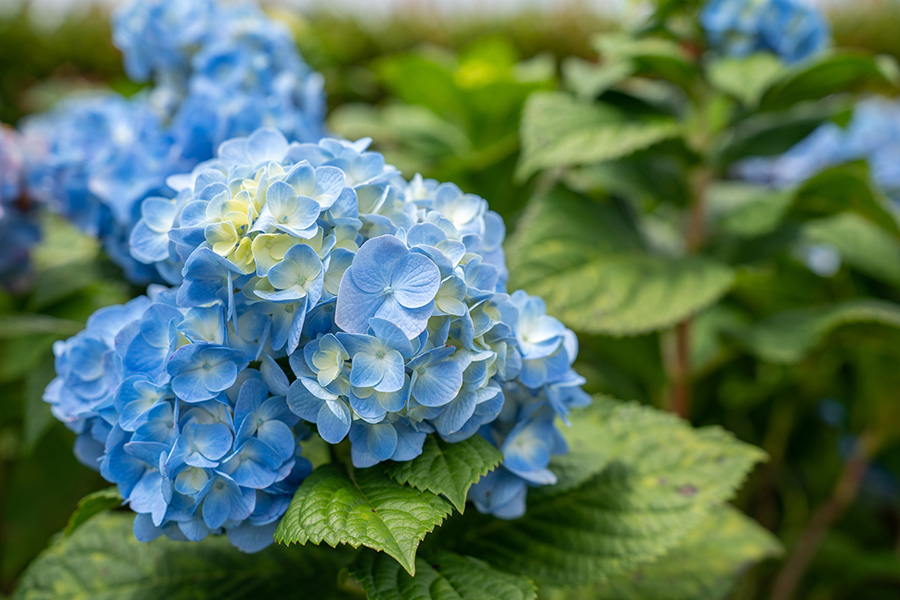
    Growing Bigleaf Hydrangea

    Bigleaf hydrangea, also called French, Japanese, or snowball hydrangea, is a landscape plant. Bigleaf hydrangea can be transplanted to the landscape for repeat blooms each year.

    Sheri Dorn

    |

    Aug. 7, 2017
  • 2015’s Best New Plants from the Trial Gardens at the University of Georgia

    AP 116-3

    2015’s Best New Plants from the Trial Gardens at the University of Georgia

    This publication showcases the plants that were awarded the “Classic City Award” in 2015.

    John M. Ruter, Meg E. Green, and Bodie V. Pennisi

    |

    Nov. 20, 2015
  • 2013’s Best New Plants from the Trial Gardens at the University of Georgia

    AP 116-1

    2013’s Best New Plants from the Trial Gardens at the University of Georgia

    This publication showcases the plants that were awarded the “Classic City Award” in 2013.

    John M. Ruter, Meg E. Green, and Matthew Chappell

    |

    Oct. 13, 2015
  • 2014’s Best New Plants from the Trial Gardens at the University of Georgia

    AP 116-2

    2014’s Best New Plants from the Trial Gardens at the University of Georgia

    This publication showcases the plants that were awarded the “Classic City Award” in 2014.

    John M. Ruter, Meg E. Green, and Matthew Chappell

    |

    Oct. 13, 2015
Previous Page
1 … 3 4 5 6
Next Page

About CAES

CAES Home

Overview

History

Administration

Jobs

Personnel Directory

Privacy Policy

Accessibility Policy

AI Guidelines

Affiliations

UGA Cooperative Extension

Tifton Campus

Griffin Campus

University of Georgia
  • Schools and Colleges
  • Directory
  • MyUGA
  • Employment Opportunities
  • Copyright and Trademarks
  • UGA Privacy Policy
  • Submit a Student Complaint
#UGA on
© University of Georgia, Athens, GA 30602
706‑542‑3000