UGA College of Agricultural & Environmental Sciences Field Report
  • Stories
    Almanac

    Science in service of humanity and the environment

    Read our annual magazine here

    READ


    Dive into engaging stories that showcase our statewide, national and global impact.

    Check out our written stories here

    LOOK


    Browse curated photo galleries capturing the people, places and programs that bring CAES to life.

    Check out our photo galleries here

    WATCH


    Experience our stories through videos that highlight our people, projects and passions in action.

    Check out our video library here

    LISTEN


    Tune in to “Cultivating Curiosity,” our podcast featuring in-depth conversations with CAES experts.

    Check out our podcast here
  • Expert Resources

    Expert Resources


    From farms and gardens to families and finances, our expert resources empower Georgians with trustworthy, practical science.

    Gardening
    Invasive species
    Food and food safety
    Ants, termites and other pests
    Pollinators
    Livestock
    Emergency preparedness
    Home safety and maintenance
    Health, family and finances
    Nutrition
    Water quality
    Lawn maintenance and landscaping
    Turfgrass
    View all topics

    What is an Expert Resource?


    We publish unbiased, research-backed expert advice to empower Georgians with practical, trustworthy information they can trust.

    These resources are written and reviewed by experts in the UGA College of Agricultural and Environmental Sciences and the UGA College of Family and Consumer Sciences.

    Learn how we produce science you can trust
  • Events
  • Contact
  • Read
  • Look
  • Watch
  • Listen
Subscribe
  • LinkedIn
  • Facebook
  • Instagram
  • Stories
    Almanac

    Science in service of humanity and the environment

    Read our annual magazine here

    READ


    Dive into engaging stories that showcase our statewide, national and global impact.

    Check out our written stories here

    LOOK


    Browse curated photo galleries capturing the people, places and programs that bring CAES to life.

    Check out our photo galleries here

    WATCH


    Experience our stories through videos that highlight our people, projects and passions in action.

    Check out our video library here

    LISTEN


    Tune in to “Cultivating Curiosity,” our podcast featuring in-depth conversations with CAES experts.

    Check out our podcast here
  • Expert Resources

    Expert Resources


    From farms and gardens to families and finances, our expert resources empower Georgians with trustworthy, practical science.

    Gardening
    Invasive species
    Food and food safety
    Ants, termites and other pests
    Pollinators
    Livestock
    Emergency preparedness
    Home safety and maintenance
    Health, family and finances
    Nutrition
    Water quality
    Lawn maintenance and landscaping
    Turfgrass
    View all topics

    What is an Expert Resource?


    We publish unbiased, research-backed expert advice to empower Georgians with practical, trustworthy information they can trust.

    These resources are written and reviewed by experts in the UGA College of Agricultural and Environmental Sciences and the UGA College of Family and Consumer Sciences.

    Learn how we produce science you can trust
  • Events
  • Contact
  • Read
  • Look
  • Watch
  • Listen
Subscribe
  • LinkedIn
  • Facebook
  • Instagram
Subscribe
  • LinkedIn
  • Facebook
  • Instagram
  1. Home
  2. Expert Resources
  3. Topics
  4. Field Crops, Forage and Turfgrass Production
  5. Forages and Baleage

Forages and Baleage Resources

Use the Advanced Search
  • Production Costs vs. Feeding Value of Forages

    C 1020

    Production Costs vs. Feeding Value of Forages

    Determining an equitable price for purchased forages is a necessary but often uncomfortable topic of discussion for feed growers and purchasers. Usually this discussion is in the context of corn silage; however, the same principles can be used in any discussion involving hay, baleage or grains. In order for an input market to be efficient, the price agreed upon by both buyers and sellers should adequately compensate the producer while still allowing the purchaser the opportunity to economically use the input.

    Jeremy Kichler and R. Curt Lacy

    |

    Jan. 5, 2026
  • GPS Guidance Options for Forage Systems

    B 1546

    GPS Guidance Options for Forage Systems

    Some of the most widely adopted precision agriculture technologies include guidance systems that utilize a Global Positioning System (GPS). Although these technologies are most commonly utilized in row-crop agricultural systems, they also have many potential benefits in forage-based production systems. With so many different options to choose from, it can be a daunting task to determine which technologies are the best fit for a specific farming application and budget. When coupled with a differential GPS system (which are available in various levels of correction accuracy), the accuracy of these guidance systems can be greatly improved. The main goal of this bulletin is to cover the currently available GPS guidance options for forage production systems.

    Wesley Porter, Jennifer J. Tucker, Simerjeet Virk, and Lisa Baxter

    |

    Jan. 5, 2026
  • crimson clover grows as an annual forage in a field

    B 1584

    ​​Planting and Growing Annual Forages in Georgia​

    This resource will help county agents, producers, and industry professionals learn about planting and growing annual forages in Georgia. These annual species fill critical gaps in both forage and crop production seasons.

    Lisa Baxter and Taylor Randell Singleton

    |

    Sept. 12, 2025
  • B 1583

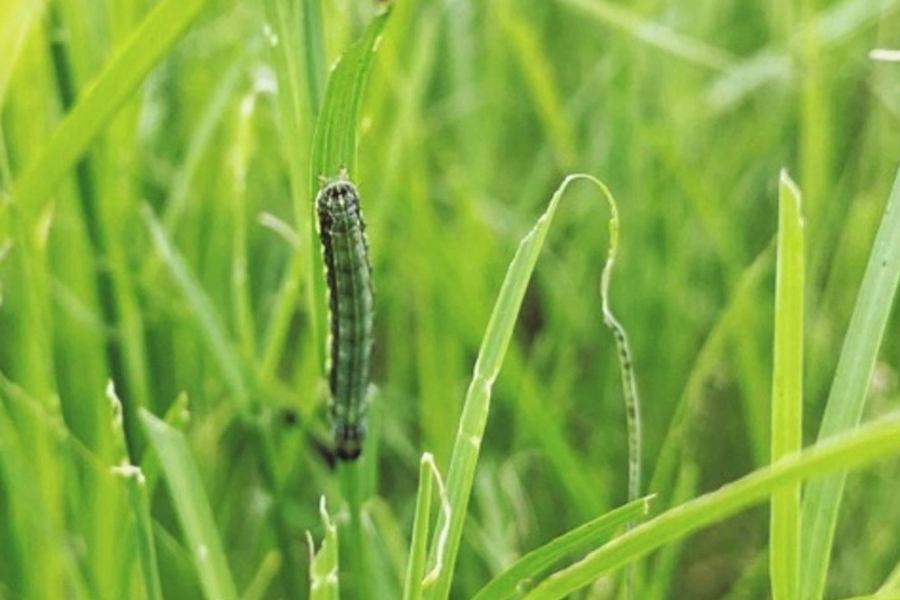
    Fall Armyworm Management in Pastures and Hayfields

    Fall armyworms can quickly decimate a field of any forage crop or pasture, often eating higher quality forage first. Growers and farmers can face severe economic damage and total forage loss. Anyone growing forage or pasture used to feed livestock can use this publication to find answers to the most common questions about fall armyworm in Georgia pastures and hayfields.

    Savannah Tanner, Lisa Baxter, and Shanna Reynolds

    |

    July 1, 2025
  • C 1330

    Vaseygrass Control in Pastures and Hayfields

    Vaseygrass is a warm-season perennial grass weed commonly found in pastures and hayfields in the southern half of Georgia. Recently, vaseygrass has begun to spread north in Georgia and can now be found sporadically throughout the Piedmont region of the state.

    Lisa Baxter

    |

    May 16, 2025
  • B 1571

    Toxic Weeds and Trees in Horse Pastures

    A handy reference for horse owners and land managers to help identify weeds that are toxic to horses, with pictures to aid identification, a brief description of the plants, and the specific toxicity symptoms associated with common weeds and trees that are poisonous to horses. It also gives tips on how to better manage pastures to prevent pasture-related plant toxicities. This publication is suitable for a general audience concerned with equine health and pasture safety.

    Kylee Jo Duberstein

    |

    March 13, 2025
  • C 1165

    Dealing with Pasture, Hay, Feed, and Livestock Losses After Significant Weather Events

    As a result of significant weather events, many producers in Georgia may experience losses of pasture growth, hay stocks, feed supplies, and livestock. After such events occur, farmers will be assessing damage to fields, stock, and property for many days, weeks, months. This publication is intended to provide recommendations to farmers that have experienced adverse affects due to significant weather in their forage and livestock production systems.

    Jennifer J. Tucker, Dennis Hancock, and Lawton Stewart

    |

    Oct. 4, 2024
  • B 1532

    Baleage Production and Use

    Implementing a baleage system takes consideration and planning. Producers need to weigh the benefits, challenges, and costs to optimize their forage production and livestock feeding operations. Baleage does have additional costs associate with it—including a wrapper, plastic, and plastic disposal. It also takes different management strategies to store and feed baleage to prevent spoilage when compared with traditional dry hay. Despite some additional management challenges, baleage can be very beneficial for many producers. It has higher forage quality when compared to dry hay harvested under the same conditions and is highly palatable to livestock. Finally, using baleage as a forage harvesting tool can reduce risks of forage loss due to weather and promote forage harvest on a timely harvest interval.

    Lawton Stewart, Jennifer J. Tucker, and Lisa Baxter

    |

    Aug. 29, 2024
  • B 1567

    How to Use a Grazing Stick

    Grazing management requires accurate estimates of forage availability to adjust forage supply to meet animal needs. However, incorrect forage availability estimates can negatively impact important grazing-management decisions such as stocking rate and grazing time. Visually estimating pasture yield is inexpensive and fast, but untrained persons can give biased and unreliable estimates. One of the easiest, most affordable, and most reliable estimation options is using a grazing stick or pasture ruler. This publication outlines the procedures used for collecting data in field and calculating available forage for your farm. An additional author is Justin Burt, a postdoctoral research associate in the Department of Crop and Soil Sciences, University of Georgia Tifton Campus.

    Lisa Baxter

    |

    Aug. 20, 2024
Previous Page
1 2 3 4 … 7
Next Page

About CAES

CAES Home

Overview

History

Administration

Jobs

Personnel Directory

Privacy Policy

Accessibility Policy

AI Guidelines

Affiliations

UGA Cooperative Extension

Tifton Campus

Griffin Campus

University of Georgia
  • Schools and Colleges
  • Directory
  • MyUGA
  • Employment Opportunities
  • Copyright and Trademarks
  • UGA Privacy Policy
  • Submit a Student Complaint
#UGA on
© University of Georgia, Athens, GA 30602
706‑542‑3000