
Pesticides
Modern pesticides include a diverse number of compounds, grouped according to the pest they control (such as their names imply): insecticides, miticides, nematicides, herbicides, fungicides, bactericides, to name a few. The first pesticides contained toxic metals such as arsenic, mercury, copper, and lead, but these were seldom used after World War II and rarely appear in groundwater today. There are various classes/groups of pesticides depending on the type of chemicals used for killing/controlling the pests as discussed below:
Chlorinated hydrocarbons are the first group of organic pesticides that came to the market for agricultural use. They have low solubility in water and a strong tendency to attach to soil particles, rarely contaminating groundwater. Originally thought to be safe for the environment, they were later discovered to accumulate and build up to toxic concentrations in the food chain. The use of many of these pesticides has been restricted, suspended, or cancelled. This group includes:
- DDT
- aldrin
- dieldrin
- chlordane
- heptachlor
- lindane
- endrin
- toxaphene
Organophosphorus compounds such as malathion, diazinon, and parathion are one group of pesticides that replaced chlorinated hydrocarbons. Although some are highly toxic to humans, they generally break down rapidly in the environment and are rarely found in groundwater.
Carbamates are another group of pesticides that include aldicarb, carbofuran, and oxamyl. These compounds tend to be soluble in water and weakly attached to soil. Thus, if they are not degraded in the upper soil layer, they can migrate to groundwater. The most significant occurrences of groundwater contamination are from carbamate pesticides.
There are many other groups of pesticides too numerous to describe in detail. These include:
- synthetic pyrethrins (Pydrin)
- benzoic acids (dicamba)
- thiocarbamates (Eptam)
- phenoxies (2, 4-D, Silvex, MCPP)
- dinitroanalines (Balan)
- subtituted aromatics (Daconil)
- triazoles (Bayleton)
- organotins (Super-Tins)
- triazianes (atrazine)
- pathalic acid (Dacthal)
The potential for any of these or other groups of pesticides to contaminate ground water is dependent on the chemical properties of the compound and its movement through soil and/or water.
Solvents
Solvents include a number of organic liquids that are used in a variety of household products such as paint, household cleaners, dry- cleaners, degreasers, and other applications. The most dangerous solvents often contain a chlorine atom and are usually referred to as chlorinated hydrocarbons. This class of solvents includes compounds such as carbon tetrachloride and methylene chloride. Some members of this group are volatile organic chemicals (VOCs), which are substances that evaporate or “off-gas” at room temperature. Two examples of VOCs include:
Tetrachloroethylene or Perchloroethylene (PCE), a solvent used for or found in:
- dry cleaning/dry cleaned clothes
- degreasing activities/industrial sites
- consumer products (e.g., shoe polish, typewriter correction fluid)
- manufacturing and auto repair shops
- manufacturing of chlorofluorocarbons
- auto paint
- electroplating
Trichloroethylene (TCE), a solvent that is primarily used to remove grease from fabricated metal parts, particularly in the automotive and other metal machining industries. It is also used in adhesives, lubricants, paints, varnishes and household products like paint removers, spot removers, rug-cleaning fluids, and in various chemical manufacturing processes. Historically, it was also used in foods, beverages (decaffeination of coffee), pet foods, medicines, pharmaceuticals, and cosmetics.
Petroleum products
Petroleum products include the various compounds that are refined from crude oil, coal, and natural gas. The most common petroleum products are gasoline, kerosene, diesel, fuel oil (also known as heavy oil, heating oil, marine fuel or furnace oil), and road oil. Generally, the lighter petroleum products, such as gasoline, move faster through soil and sediment and thus are more prone to contaminate groundwater. Gasoline is especially hazardous because it contains benzene, a cancer-causing compound.
How do organic chemicals get into well water?
Generally, pesticides, solvents, or petroleum products are NOT naturally occurring contaminants in groundwater. These organic chemicals used as intended, according to directions on the label, rarely contaminate well water. However, improper human activities may result in well water contamination with these chemicals. Here are some examples of such activities:
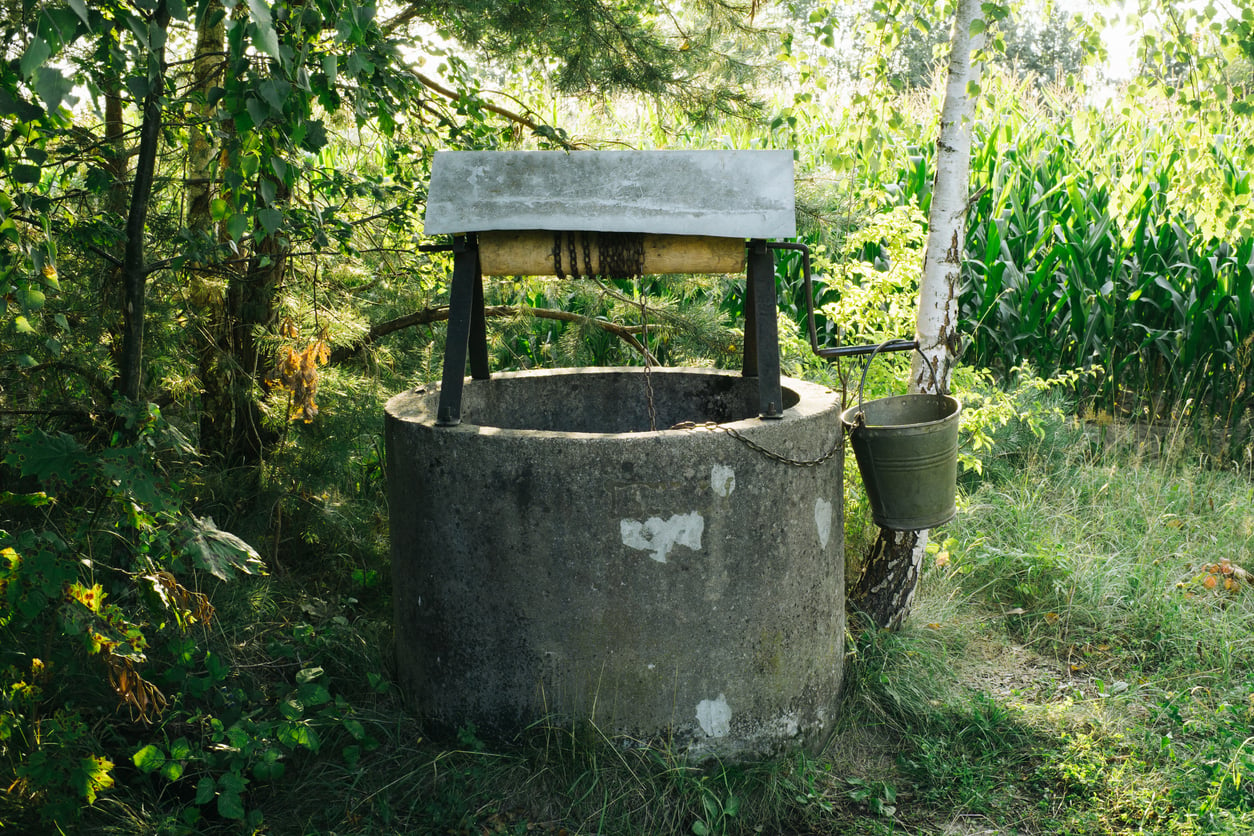
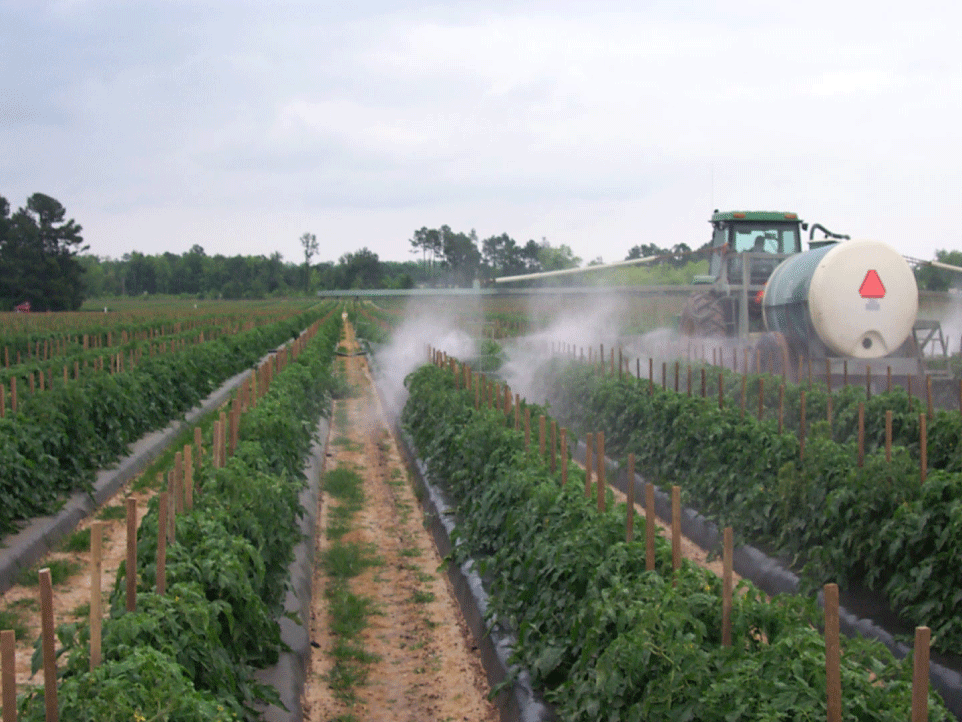
- Chemicals stored and mixed or pesticides sprayed too close to a well or other water supply.
- Pouring gasoline on fire ant mounds.
- Accidental chemical spill.
- Improper disposal of chemicals down storm drains, household drains, or down the toilet.
- From old manufacturing sites where chemicals were improperly disposed of.
- Transport of petroleum products from leaking underground storage tanks, leaking pipes, and other types of spills.
There are certain factors that could make your water contaminated with organic chemicals:
- Proximity to the contamination source – wells located near industrial or commercial areas, gas stations, landfills, railroad
tracks or farm fields often get contaminated with organic chemicals. - Well depth – shallow wells are generally more easily affected than deep wells from spills or surface applied organic chemicals.
- Geology of the area – aquifers under thin, porous soil or sand layers are more vulnerable than ones under dense, thickly layered
clay soils which acts as a barrier to slow down the movement of contaminants as well as may adsorb/bind them up before
reaching groundwater. - Improper well construction and inadequate wellhead protection status – improperly constructed wells along with inadequate
wellhead protection measures make the wells especially vulnerable to contamination because of the potential for surface run-off
and spills to make their way into your water supply. For more information about how to safeguard your well, see University of
Georgia Cooperative Extension Circular 858-1 Protecting Your Well and Wellhead, also available at aesl.ces.uga.edu.
Who is responsible for testing my water supply?
Municipal water systems are required by law to be monitored for many contaminants found in pesticides, solvents, and petroleum products. However, if your water comes from a private well or from a system that serves fewer than 25 people or has fewer than 15 connections, it is not regulated under these laws. The safety of water from these sources is the responsibility of the owners.
What can be done to reduce the risk of groundwater contamination by these chemicals?
You can protect your water supply by:
- Making sure your well is properly constructed, sited, maintained, and protected.
- Preventing backflow that could contaminate your well.
- Using pesticides according to the directions found on the product label.
- Storing and mixing chemicals away from your well to prevent contamination from accidental leakage.
How can I protect myself from exposure to these chemicals in my water supply?
If you suspect that your water supply may be contaminated, be sure to have your water tested. Contact your county Extension agent for more information. A home water treatment system can help to protect you from certain contaminants in your water supply. For more information, see UGA Extension Circular 858-3 Home Water Quality and Treatment, also available at aesl.ces.uga.edu, or contact your county Extension agent. The best means of protection, however, is to find and eliminate the source of contamination.
Activated carbon filtration will absorb and remove most of these chemicals. Special attention should be paid to the lifetime and capacity of these filters. As they become exhausted, they can release the chemicals that were previously removed.
The original manuscript was prepared by Paul F. Vendrell, Parshall B. Bush, and Jorge H. Atiles. Revised by Uttam Saha, Gary Hawkins, and Pamela Turner.