
Introduction to baleage
Baled silage or baleage is a technique used for conserving and storing forage. Baleage is forage that has been baled at high moisture levels (40-60%), wrapped in plastic, and allowed to ensile. The process of ensiling involves storing the forage under anaerobic conditions (without oxygen) and allowing microorganisms (mainly bacteria such as Lactobacillus spp.) to ferment the feed. The forage is stabilized by the lactic acid and other mild organic acids formed during fermentation. These acids give the bales the sweet smell of silage and, more importantly, inhibit the growth of other microorganisms (mainly yeasts, mold, and undesirable bacteria) that cause aerobic deterioration and spoiled silage. Fermentation has been used for millennia as a natural method for preserving food and forage. Similar bacterial fermentation occurs when one makes yogurt, sour cream, or pickles.
Baleage is usually of high nutritional value, highly palatable as a livestock feed, and an economical way of conserving forage, but baleage production and use is not without risks and complications. Steps must be taken to ensure a high quality, safe, and inexpensive product that can be sustainably used. The goal of this publication is to provide management recommendations that will help producers make, wrap, store, and feed high quality baleage economically and sustainably.
Advantages of baleage
Potential to harvest more high quality forage
Compared to conserving forage as dry hay, one of the most important advantages of baleage production is that the crop does not have to be completely dried down. Because baleage is prepared from high-moisture forage, it is often cut in an afternoon and then baled and wrapped the next day. This greatly reduces the exposure to rain damage. It also has lower risk from leaf shatter losses. This reduced risk from weather damage between cutting and baling allows the producer to harvest the crop in a timelier fashion. In the late spring or in years when rainfall occurs frequently, drying conditions and weather forecasts may be so poor that hay production is challenging, if not impossible. Harvest delays may result in lower quality and less overall forage production. In a study in Florida, researchers found that a 25-acre field of ‘Tifton-85’ bermudagrass harvested as hay when conditions allowed and another 25-acre field of ‘Tifton-85’ harvested as baleage when conditions were not conducive to making hay resulted in bales that were 28% higher in crude protein (CP) and 6% higher in total digestible nutrients (TDN; Table 1). Additionally, the hay plus baleage system resulted in over 50% more yield than the hay-only systems.
| Measure | Hay | Hay and Baleage |
|---|---|---|
| Number of cuttings | 3 | 5 |
| Number of bales | 259 | 479 |
| Average yield, lb DM/acre | 8,110 | 12,509 |
| Average Bale Characteristics | ||
| Wet weight, lb | 847 | 1,470 |
| Dry weight, lb | 783 | 645 |
| Moisture, % | 8% | 53% |
| CP, % | 10 | 13 |
| TDN % | 54 | 57 |
| *Hersom, Thrift, and Yelich. (2017) Comparison of Hay or Round Bale Silage as a Means to Conserve Forage. AN266, Department of Animal Sciences, UF/IFAS Extension. | ||
*Hersom, Thrift, and Yelich. (2017) Comparison of Hay or Round Bale Silage as a Means to Conserve Forage. AN266, Department of Animal Sciences, UF/IFAS Extension.
Losses are lower with baleage compared to hay
Losses during the curing, baling, storage, and feeding phases are each substantially lower when forage is conserved as baleage rather than under typical hay production (Table 2). The ensiling process uses up some of the carbohydrates in the forage. However, this loss is inconsequential relative to the substantial reductions in losses associated with making, storing, and feeding hay.
| Harvesting and Baling | Storage | Feeding | Total Losses | |
|---|---|---|---|---|
| Hay, no cover/on ground | 7-15% | 20-40% | 5-25% | 30-60% |
| Hay, barn stored | 7-15% | 2-10% | 5-15% | 15-35% |
| Baleage | 3-10% | 3-10% | 4-10% | 10-25% |
| *Adapted from data from eight distinct studies performed in the U.S. | ||||
The estimates of total dry matter loss in Table 2 enable one to compare the costs associated with these losses in each of the systems. This table reinforces the concept that no hay storage or baleage system is cheap. But, the savings compared to dry hay adds to the economic sustainability of using baleage. Still, savings in forage loss may not be enough to make baleage economical. For more details on baleage economics, see the “Economics of Baleage” section.
Forage quality advantages of baleage
Another major advantage to baleage is that it allows timely harvests. A good example of this, particularly in relation to season, is the harvest of excess annual ryegrass in the spring. It is often difficult for producers in Georgia to cut annual ryegrass at the proper maturity (early boot stage) because hay drying conditions are very poor at that time of year. Research at the Northwest Georgia Research and Education Center evaluated the potential of feeding ryegrass baleage to replacement heifers. Extra ryegrass acreage was cut, and a portion was harvested as baleage, while the remainder was dried and harvested as hay. The ryegrass baleage, ryegrass hay, and a good crop of ‘Russell’ bermudagrass harvested later in the year were compared for forage quality and weaning replacement heifers on each forage were evaluated for average daily gain (ADG). The results are summarized in Table 3.
| Treatment | CP | TDN | RFQ | ADG | Cost of Gain |
|---|---|---|---|---|---|
| % | % | (lb/hd/d) | ($/lb) | ||
| Bermuda hay | 16.1 a* | 62.9 b | 116 c | 1.56 b | $2.09 a |
| Ryegrass baleage | 16.3 a | 65.9 a | 174 a | 1.94 a | $2.43 a |
| Ryegrass hay | 14.7 b | 62.4 c | 133 b | 1.26 b | $3.44 a |
| *Averages within a column with a different letter are different (P < 0.10). The heifers were provided no additional supplementation. | |||||
Forages for baleage
Any forage crop can be ensiled, but not all forage crops ensile easily, nor do many of them warrant the added cost of ensiling. Choosing the correct forage species is key to profitably incorporating baleage into a livestock feeding system. There are three main considerations when deciding whether to ensile a forage: sugar content, forage quality, and buffering capacity.
Generally, the easiest crops to produce as baleage are those with high sugar contents. The greater the concentrations of plant available sugars, the more fermentation and less spoilage will occur. This is why corn is a popular choice in traditional chopped silage. Annual forages—whether warm or cool season—tend to make good baleage forages because their carbohydrate production goes toward vegetative growth rather than root stores. Popular cool season species include annual ryegrass and small grains such as oats and wheat. Popular warm season annual forages include crabgrass, sudangrass, forage sorghum, sorghum x sudangrass, and millet species. Additionally, legume and legume-grass mixtures, such as alfalfa-bermudagrass, work very well in baleage systems. Making hay out of alfalfa can be challenging, but making baleage reduces the risks, lowers losses during curing, and reduces leaf shatter.
The nutritive value of a forage is also key to the success of a baleage system. Because baleage production involves higher production costs and labor needs, it is important to make sure it is profitable. One should remember that ensiling a forage will not improve its quality, so it is important to make baleage out of high nutritive value crops only. The crops with high nutritive value are usually those that also have a high sugar content, which are easily fermented. It is important to note that when harvested on time these forages will have the desired sugar content, but if harvested too mature, sugar concentrations may be less than desirable resulting in poor fermentation, poor quality forage, and higher cost leading to disappointing results. Alfalfa is another high quality forage popular for baleage. Although alfalfa has a lower sugar content than some of the annual forage options, it can be successfully used for baleage. In fact, baleage technology has provided a transformational shift, making alfalfa production in the Southern U.S. much less risky by reducing leaf shatter and losses during curing. Again, the ability to bale forage at a higher range of moisture—and more independent of the weather—can also be critical for harvesting at a earlier maturity and higher nutritive value.
Finally, the buffering capacity of a forage should be considered. Buffering capacity is a measure of a material’s resistance to a pH change. So, a high buffering capacity means that the pH changes less and more slowly, which limits how much fermentation will occur. Legume forage systems generally have a high buffering capacity. For example, because alfalfa hay has a higher buffering capacity than grass, a stable pH for alfalfa baleage will be much closer to 5.5 compared with the pH of grass baleage being closer to 4.2-5.2.
Overview of the fermentation process
Whether it is in an upright, bunker, pit, bag silo, or wrapped bale, the fermentation process is very similar. Essentially, lactic acid-forming bacteria that occur naturally on the surface of plant leaves undergo massive population buildups once oxygen is excluded from their environment. They derive energy from the sugars that are inherent in plant cell sap and tissue via a fermentative process. They undergo many cycles of feeding and reproduction until their populations become so high that the end products of their fermentation processes lead to a buildup of acid. This is why baleage has a low pH. The smell of baleage is also a by-product of the fermentation process.
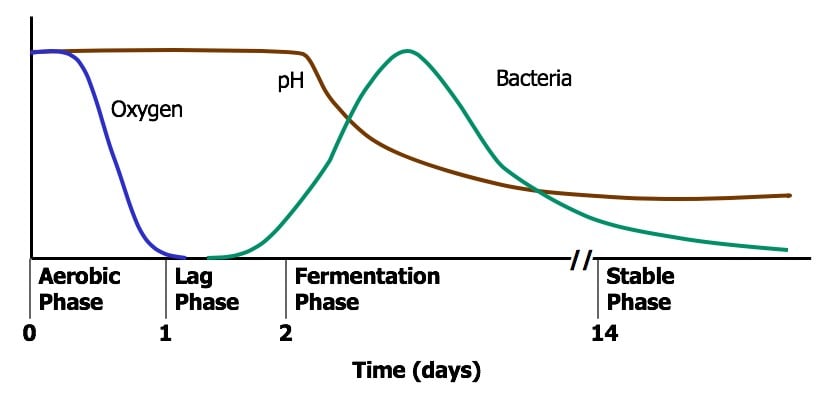
The fermentation process has five main phases that happen over a period up to six weeks postharvest and wrapping. Fermentation cannot begin until oxygen is excluded during wrapping, so it is important to wrap forage as quickly as possible after baling. The stages of fermentation include the aerobic phase, lag phase, fermentation phase, stable phase, and feedout/aerobic phase. The bacterial activity, pH, and fermentation products in each of the stages are unique and contribute to the level of fermentation that occurs in the forage. An overview of each of the stages of fermentation is illustrated in Figure 1.
- Aerobic phase: The aerobic phase lasts from the time forage is wrapped until oxygen is fully excluded from the baleage. This process can take anywhere from 12-24 hours to complete. During the aerobic phase, oxygen that was trapped in the bales is consumed by active plant cells, aerobic bacteria, and yeasts that may be present in the forage. As the oxygen is consumed, carbon dioxide and heat are produced. Because there is little to no organic acid during this stage, the pH remains at ~6, which is similar to the forage when harvested.
- Lag phase: During the lag phase, any remaining aerobic bacteria die off due to lack of oxygen, and anaerobic bacteria begin to break down the sugars and carbohydrates in the plant cells to produce volatile fatty acids (VFAs; e.g., lactic, acetic, and propionic acids). As these organic acids form, the pH of the baleage begins to drop. At the end of the lag phase, the pH will be near 5.5. For chopped forage, this phase lasts for approximately 24-72 hours, but the phase will be longer in baleage as the forage is not cut as finely, reducing the amount of available sugar and readily fermentable carbohydrate available to produce VFA.
- Fermentation phase: After the forage pH drops, the active fermentation phase begins. This phase lasts from the completion of the lag phase at day three or four until the forage reaches its terminal pH, anywhere between 10 and 28 days postharvest. During fermentation, the temperature will drop as aerobic respiration has completely stopped. Additionally, the pH continues to drop as lactic acid is produced by the increased population of lactic-acid forming bacteria (LAB). LAB are extremely tolerant to low pH environments, so as they use the plant sugars to produce more lactic acid, the pH continues to drop, and their populations increase. Throughout this phase, the lactic acid concentration of the baleage may eventually reach 3% dry matter. Heterofermentative bacteria in the forage are also present and produce both lactic and acetic acid. Acetic acid producers also increase in number, but they do so at a more gradual rate and do not usually produce the same size populations as LAB. Acetic acid-dominated fermentation is possible but occurs when forage is ensiled at high moisture, which is much more common in silage than baleage. Too much acetic acid (>3%) will result in a stronger acid smell and reduce palatability of the forage when fed. If a heterofermentative inoculant is added to the forage at harvest, acetic acid concentrations will be slightly higher than normal. These inoculates are used to reduce mold and prevent secondary fermentation during feeding.
- Stable phase: Once the forage reaches its terminal pH, which can range from 4.2-5.2 based on species differences (as discussed in the “Forages for Baleage” section above), the baleage is considered stable. This phase usually begins approximately 21 to 28 days postharvest, although with good fermentation conditions and effective inoculation, it may occur sooner. The high bacterial populations observed in the fermentation phase will cease to actively ferment as the presence of plant sugars for consumption decreases. During this phase, the concentration of organic acids will remain the same as at the end of the fermentation phase. However, some proteolytic bacteria continue to slowly degrade protein, increasing solubility during storage. As long as the plastic is kept free of holes and the baleage remains in an anaerobic environment, the forage should remain stable for the length of storage. Note that the recommended storage length before feeding is nine months, so if longer storage is anticipated, additional layers of plastic will help maintain bale integrity.
- Feedout/aerobic phase: This phase begins when the bales are opened for feeding, or oxygen is otherwise introduced into the system. Oxygen is introduced when the integrity of the plastic is compromised through tearing, punctures, or movement of bales. Once oxygen is introduced, yeasts and molds will begin to reproduce and increase in number. As these microorganisms respire, they produce carbon dioxide, heat, and more yeast and bacteria. Increases in these populations will cause the pH of the baleage to increase, making it a good environment for mold growth and causing the bales to eventually spoil. It is important to frequently check the plastic coverage to ensure baleage does not enter the aerobic phase prior to feeding. In some cases, aerobic stability can be improved with the use of heterofermentative inoculants and high acetic acid concentrations.
Making bales for baleage
Balers for baleage
Producers may be inclined to try harvesting forage for baleage using their traditional baler. This is not advisable. Baleage bales are much denser and heavier than traditional dry hay balers. A typical baleage bale ranges from 1100-1500 pounds. The high moisture content and increased density of forage harvested as baleage necessitates the use of a baler specifically designed to make baleage bales. Silage balers are designed to hold up to greater wear and tear from baleage production better than a traditional hay baler. Such silage balers have heavier bearings, stronger weight-bearing beams/rollers, and scrapers that prevent the waxy and gummy material exuded by the forage from building up on the moving parts of the baler.
Some manufacturers now offer balers that have pre-cutting systems. A pre-cutting system is especially useful in dairy operations or other systems that grind bales for use in mixed rations or feed animals in troughs or bunkers. Pre-cutting forage before baling can lead to increased dry matter intake by the animal because smaller particle sizes do not require as much time for chewing before being swallowed. This ultimately allows for increased dry matter intake and improved animal performance. Decreasing the time animals spend chewing the forage also decreases the amount of forage that is dropped, trampled, and wasted.
Pre-cutting systems can be advantageous even for operations that do not utilize a total mixed ration (TMR). The baler pre-cutting systems are designed with a system of knives within the baling chamber. As the forage is picked up and enters the throat of the baler, it is dragged across the knife system to “shred” the forage and cut it into smaller particle sizes. Utilizing a pre-cutting system creates denser baleage, which reduces oxygen within the bale and may improve fermentation characteristics as the bacteria have access to more of the sugar contained in the plant. However, improved intake and performance may come at a cost, as these systems are costlier, require greater horsepower, and may reduce baling efficiency.
Cut down no more than you can handle
One of the most important management decisions in making baleage is to cut down only what can be baled, hauled, and wrapped in one workday. Frankly, this is the one mistake that is most often made whenever a producer changes from making hay to making baleage. One must realize that the bale wrapping procedure is the rate-limiting step, or “bottleneck”, in the whole process. A key consideration is that bales need to be wrapped as soon as possible after baling. The ideal would be immediately after baling, but in practical terms, the goal should be that all bales are wrapped within 4 hours of baling. Bales that go longer than 12 hours between baling and wrapping suffer significant respiration losses, are often heat damaged, and frequently are so deformed or “squatty” that they cannot be wrapped easily or effectively.
So, one should work backwards from the wrapping step. The amount to be cut must equal that which can be baled, hauled, and wrapped in one afternoon. One must also factor in how much time will be needed to wilt the crop from the moisture it contains standing in the field (~75-90% moisture) to the target moisture at the start of baling (55-65%).
Bale at the right moisture
Moisture is crucial for success with baled silage. The target moisture for baleage should be 45-60% moisture (equal to 40-55% dry matter). Moisture can easily and reliably be determined prior to baling by collecting forage from a subset of the windrows and using the microwave moisture test. When using a moisture probe, it is essential that the probe makes good contact with the forage or the reading will not be accurate. When using a moisture probe, always verify moisture in the first bales to determine if the forage has wilted to the desired moisture. Having the moisture in this 45–60% range will enable fermentation, assuming oxygen is excluded by the plastic. When baled and ensiled at the right moisture, lactic acid forming bacteria drop the pH and stabilize the forage as long as anaerobic (low oxygen) conditions are sustained. If the moisture is below 45% moisture, fermentation will likely be poor and there is a higher risk of spoilage. When too dry, the lactic acid forming bacteria are slow to drop the pH. In those conditions, the bacterium responsible for causing listeriosis, Listeria monocytogenes, can proliferate If the forage is wetter than 60%, there is an increased risk of activity by clostridium bacteria especially if the forage is contaminated with soil during tedding or raking. Clostridial fermentation favors butyric acid production rather than lactic acid, which gives silage a putrid smell. If the forage is contaminated with containing Clostridium botulinum, botulism poisoning in the animals forced to consume the forage. This can occur if the forage is contaminated with soil due when tedding or raking wet forage. Baling at the right moisture, along with inoculating the forage with beneficial lactic acid-forming bacteria, can ensure that the forage becomes properly ensiled and free of toxins.
Make good bales
Dense and uniform bales greatly improve the conditions for proper fermentation. Densely packed bales enable the populations of desirable bacteria to build quickly and drop the pH faster. Dense bales also economize space in the storage area. Bale uniformity is important. When wrapped with the stretch film plastic, bales with a uniformly smooth edge on the face have more consistent plastic coverage and, therefore, minimize oxygen intrusion (Figure 2). Bales with uniformly smooth edges also align well with one another, which is especially important when wrapping with an in-line wrapper. Irregularity between bales can cause oxygen intrusion where the bales adjoin one another. It is also a good idea to use net wrap when baling baleage bales. Net wrap prevents deformation or “squatting” of the bales. This maintains the integrity of the plastic, preventing oxygen influx. Avoid using sisal twine that has been treated with a rodenticide. Oils and pesticides applied during the manufacturing of sisal twine can leach through the plastic and breakdown the UV-inhibitor. This can result in plastic failure and oxygen intrusion into the bale.

Another key consideration is to ensure that the size of the bales is appropriate for the size of the equipment used to transport and wrap the bales. Baleage bales will be roughly twice the weight of a hay bale of the equivalent size. Most producers find that a 4-by-5-foot bale is the most efficient size for their equipment, as these generally will be around 1100-1500 pounds.
Wrapping bales
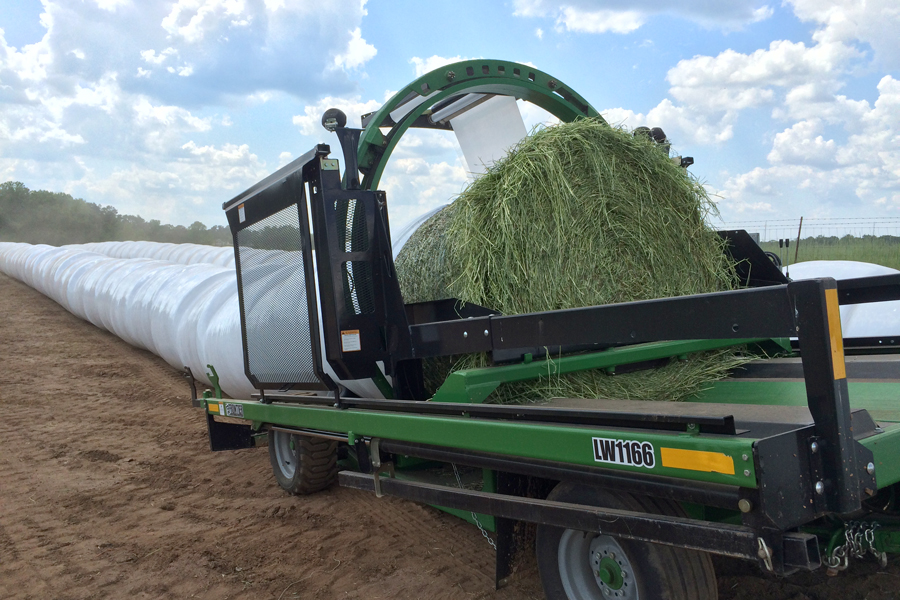
Since bale wrapping is the bottleneck in production efficiency, choosing the right bale wrapper is critical. Of course, the cost of the wrapper is an important consideration. The old axiom of “you get what you pay for” is certainly true when buying bale wrappers. There are two basic styles of bale wrappers: individual and in-line (Figure 3). Individual bale wrappers tend to be less expensive, but a well-trained operator can usually only wrap 20 bales per hour compared to 40+ per hour with an in-line wrapper. Newer combination baler-wrappers can bale and wrap forage in a single pass, alleviating the need for additional labor and equipment. However, this equipment comes with a significantly higher price tag than other wrapping options.
Whether the wrapper is an in-line or individual wrapper also determines how each bale is wrapped. An in-line wrapper system uses two to four rolls of polyethylene plastic simultaneously, while an individual wrapper usually uses a single roll. For an in-line system, the bales are loaded onto the wrapper (Figure 3; right) and a push bar hydraulically feeds the bale through the wrapper. As the bale moves through the chamber, two plastic rolls rotate around the bale, with approximately 10-20% overlap as the next bale is loaded. Wrapped bales will stay in the same location until the tube is opened for feeding. When wrapping bales individually (Figure 3; left), the bales are loaded onto the wrapper one at a time. Typically, the bale rotates in two directions while the plastic stays stationary. Once the bale is individually wrapped, they can be moved into the position where they will be stored by strategically dumping the bale off the platform onto the ground and/or using a bale squeeze attachment on another tractor.
An additional point worth noting is that individual bale wrappers apply 40-60% more plastic to each bale than do the in-line wrappers. This drives up costs and increases the waste associated with the process. Even so, individual bale wrappers are best if there are plans to sell individual bales or if one expects to do custom work for several small farms within several miles of the home location. Individually wrapped bales can also be fed without exposing other bales to oxygen, which minimizes deterioration. So, for producers who plan only to feed one or two bales every few days, an individually wrapped bale may be more appropriate. In general, producers who have the scale of operation to justify producing baleage will likely find that the in-line bale wrappers will be the best choice over the long run.

Plastic coverage
Applying the correct wrap to the bales is important to make sure that the bales exclude oxygen and prevent plastic degradation that leads to spoilage during storage. The plastic used for wrapping baleage bales is a polyethylene plastic film that can withstand UV radiation and changes in ambient temperature. Although the polyethylene plastic is not completely impermeable to air, it is four times more permeable to carbon dioxide than to oxygen, meaning that bales can vent excess carbon dioxide as fermentation occurs.
Stretch-wrap plastic usually comes in 20- or 30-inch rolls which are 5,000 or 6,000 feet in length and one millimeter thick. The tear strength and amount of tack or “stickiness” can vary between brands of wrap. Additionally, it is important to consider the color of the plastic. In the Southeast, white plastic wrap is more common than black wrap to prevent excess heating of the bales. Other areas may have green or even pink silage plastic. Most farm supply stores either stock or can obtain the polyethylene plastic wrap needed for baleage, but it is likely that the most economical approach would be to purchase in bulk (e.g., a pallet load at a time) directly from a dealer.
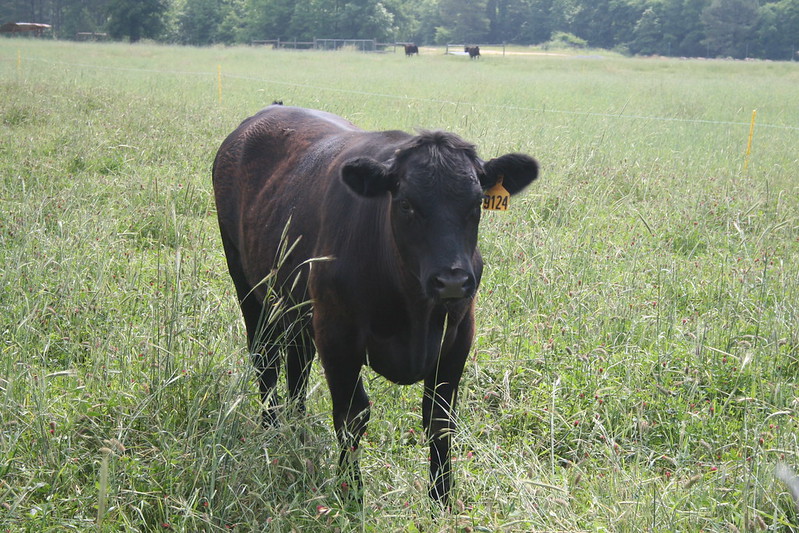
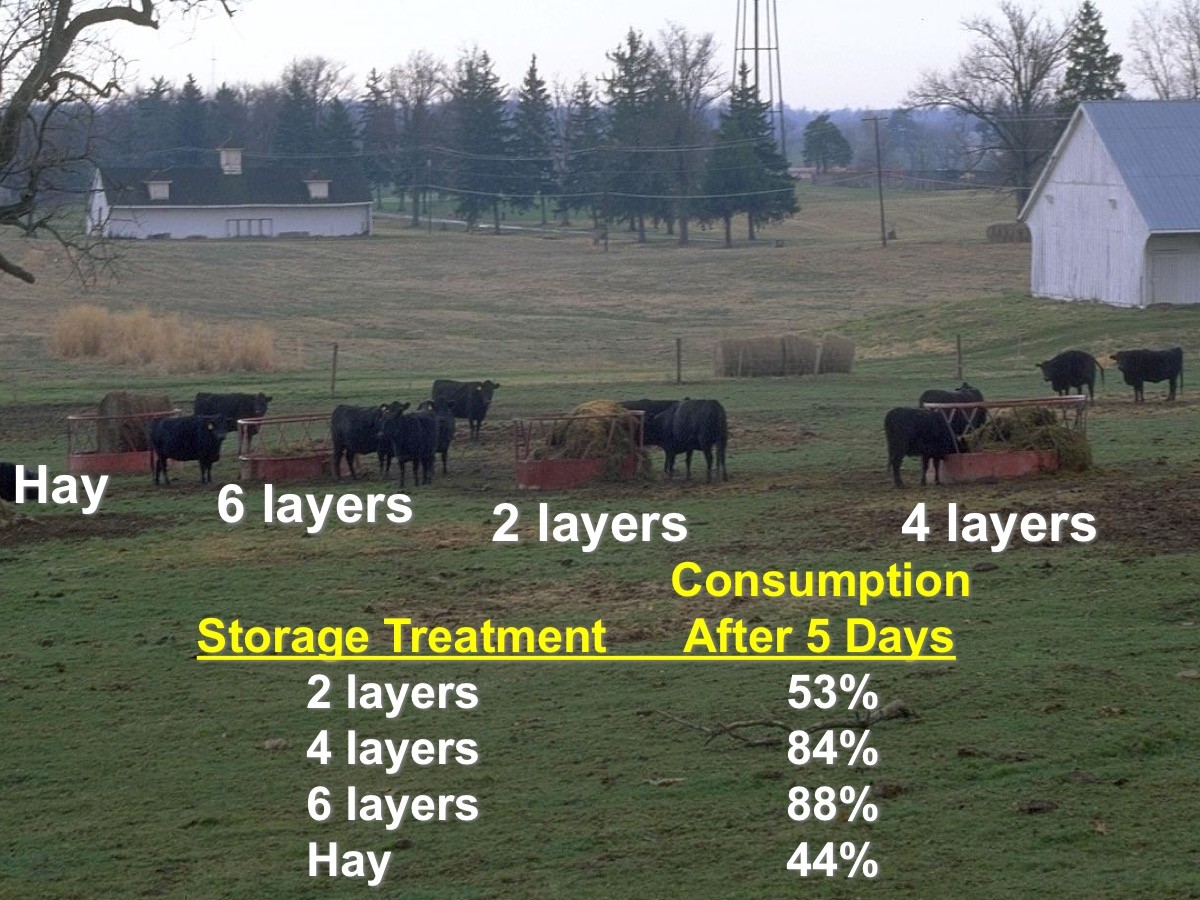
It is important to ensure that enough plastic is placed around the bales to exclude oxygen and allow for fermentation. However, too much plastic will drastically increase the cost of producing baled silage. For in-line bale wrappers, a minimum of six to eight layers of plastic needs to be applied. If the bale wrapper design allows, apply up to 10-12 layers at the joints where two bales abut one another. This provides extra protection against strain on the plastic at these joints resulting from poor bale uniformity or unequal deformation among bales. For individual bales, at least six layers of plastic (two layers made on the first pass, and two additional layers on two additional passes) are necessary. If the bales are expected to be stored for a long period of time (greater than eight months), two more layers of plastic may be desirable. Research has shown that slightly less plastic is needed for shorter term storage but be cautious when applying less than six layers of plastic. Failing to apply enough plastic can cause unstable silage and reduce animal acceptance of the forage. Properly formed baleage can be very palatable and even more acceptable to animals than alfalfa hay of similar quality (Figure 4).
Ensure that the plastic is being prestretched according to the manufacturer’s instructions (usually 50-70% stretch) and that it is being applied with the tacky side toward the bale. The stretching along with the wrap’s adhesive ensures a sufficient seal. Accumulation of adhesive and grime can adversely affect the bale wrapper’s plastic roll applicator and increase the tension and stretch applied to the plastic. Periodically clean the plastic roll applicator following the bale wrapper’s instructions. To test the amount of stretch being applied to the plastic, make two marks on the plastic roll that are exactly 1 inch apart in line with the direction that the stretch is to occur. After the plastic is applied to the bale, measure the distance between the marks again. The distance should be 1.5-1.7 inches.
Storage considerations
Another key consideration is in the selection of an appropriate site for storage. It is best to wrap the bales where they will be stored, even if the bales are individually wrapped. Excessive handling of the bales after wrapping can compromise the integrity of the plastic wrap and introduce oxygen to the forage. It is also critical for the bales to be wrapped as soon as possible, ideally within four hours of being baled. This prevents excessive heating and aerobic deterioration of the material, minimizing bale deformations that can cause wrapping challenges.
When choosing a site, the proximity to the field and to the site where the forage will be fed are equally important to consider. It is best to place the bales on a solid sod or along a firm roadbed so that adverse conditions during feedout will cause minimal damage or soil disturbance (Figure 5). The site should be well drained and not in an area likely to be flooded during a tropical storm or hurricane event. Bales should also be placed in an area so as to protect them from punctures. Avoid areas with stumps, exposed roots, or rocks. Groundhogs, birds, and other vermin will sometimes damage bales. By storing baleage in an open area and at least 10 feet from a fence line, field borders, or other areas of shelter for wildlife, the bales will be less prone to damage from these pests.
Even taking all precautions, tears or punctures in the plastic can occur. Frequently scouting wrapped bales will help producers quickly find any holes or tears, so they can quickly be repaired and exposure to oxygen is minimized. When patching holes, it is important to use silage tape (as compared to duct tape, for example). Silage tape has a UV inhibitor and will not deteriorate in the sun. When patching holes, remember the rule of thumb about baleage coverage: “Two layers is one, and one is none.” To patch the hole, tape should be placed in a cross (+) pattern and the edges should be smoothed so they are flush to the plastic wrap (Figure 5). Minimize areas that water or air could penetrate.
In cases where there is severe damage to plastic, simply taping holes may not be enough. If bales are individually wrapped, it may be advisable to rewrap the bales. However, this becomes more challenging if bales were wrapped using an in-line wrapper. In this case, it may be more practical to feed these bales sooner, rather than rewrapping.

Feeding baleage
Baleage makes an excellent feed for ruminant livestock. However, feeding baleage is much different than feeding hay. Because baleage is much wetter than hay, it is much more susceptible to deterioration. Once the ensiled forage is exposed to air at feeding, it can deteriorate quickly. There are a few management tips and tricks that can help producers feed baleage efficiently and prevent spoilage losses.
The smell test
The fermentation process results in mild organic acids which stabilize the forage but also give off a silage smell. Good silage is characterized by the presence of lactic acid. Lactic acid generally dominates in good silage and smells sweet. Silage will sometimes have a slight sour or vinegary smell. Such silage has more acetic acid, which is the same organic acid found in vinegar, and are more prevalent when forage is ensiled too wet. Though silage that has a slight vinegary smell may be slightly less palatable to the livestock, it generally is safe to feed.
Baleage bales that have a foul, rancid, or putrid smell are indicative of very poor fermentation. Such material may have even undergone a secondary fermentation, where the lactic acid formed early has been decomposed and butyric acid is formed. In extreme cases where the crop was excessively wet or the silage wrap failed to exclude oxygen, this secondary fermentation can result in botulism poisoning if the forage is fed to livestock. This is rare, but it can occur. In this case these bales should not be fed and should be disposed of in a location that is not accessible by cattle. Be sure that the baleage that is fed passes the smell test. If it smells bad, test it for poor fermentation or botulism risk before feeding it.
Mold
It is not unusual to observe some mold growth on baleage bales. Once the plastic has been removed, one may find molds of various colors on the exterior of the bale. One of the most common is white mold (Figure 6). White mold is usually associated with baleage bales that were baled too dry to ferment well, but it can occur even if baled at the proper moisture level. It often grows on the flat sides of the bale or just under small holes in the plastic. White mold is a harmless yeast, usually in the Mucor or Monila genus. The mold spores for these species are too large to cause respiratory issues, and they produce no known mycotoxins. Livestock often will push this moldy material out of the way or consume it.

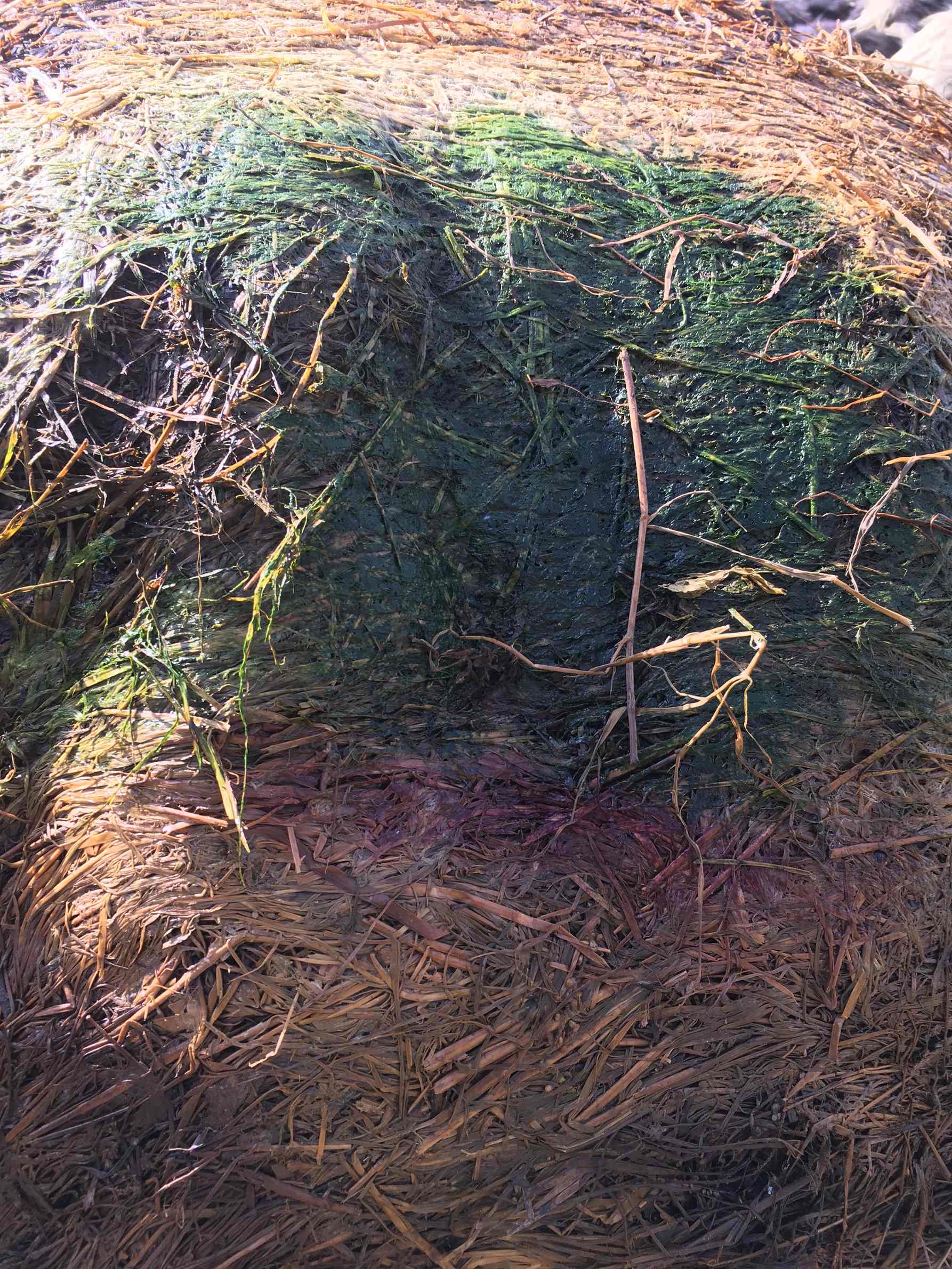
Molds that are green, blue, yellow, or red are indicative of a problem (Figure 7). A moldy patch that is red or red with a white edge is likely to be Monascus ruber, while yellow/green mold is Aspergillus fumigatus, and a patch of blue/green is Penicillium roqueforti. Baleage bales with any of these three mold colors present should not be fed to livestock as there is a risk of mycotoxins that may cause performance issues or, in some cases, animal death. The blue/green P. roqueforti is especially problematic because it produces several harmful mycotoxins.
Feed it fast
Once the plastic has been removed, it is important to minimize the time between when the bale is exposed to oxygen and when the baleage is consumed. The major issue with feeding baleage is that the product is not stable. An analogy using human eating habits would be potato salad. It should not sit out very long before we eat it, otherwise it will spoil. This is especially true at a summer picnics where temperatures can speed the deterioration. This can also occur in the wintertime, even though it may take longer. In either case, it is not worth the chance of eating it if it has been out for very long.
As a good practice, never leave baleage exposed to the air for more than two days during feeding. If the daytime temperature exceeds 60 °F, do not leave it exposed more than one day. This is especially important for producers who use an in-line bale wrapper, since this determines the feedout rate. If one has made baleage using an in-line bale wrapper, they must be feeding enough animals that will consume at least one bale per day in the winter. This is because as a bale is fed, the next bale is being exposed to air. Individually wrapped bales are usually not subject to exposure before they are fed, and thus the feeding schedule is somewhat more flexible.
The following are some recommended practices on how to feed baleage or, in some cases, what not to do:
- Ensure that the storage site doesn’t increase the likelihood of puncture to the plastic wrap and exposure to air. Examples would be areas near trees that have dropped limbs, rodent and other varmint dens, or that are freshly mowed and have coarse weed stubble. Many of these may create punctures that go unnoticed until it is too late. The storage site should be well drained and not located in an area likely to be flooded.
- Wilt forage to between 45-60% moisture before it is wrapped and ensiled. Baling when the crop is too dry is the most common problem because a field may start out at the right moisture and end up being too dry. Dry forage doesn’t provide bacteria enough moisture to allow sufficient fermentation. But, it does allow fungi to grow during storage and feeding that can lead to deterioration. Baling too wet is less common. However, high moisture silage is likely to undergo clostridial fermentation and spoils quickly when exposed to air. Take care to avoid excessive moisture in the forage (e.g., little or no wilt before baling, etc.) as this may lead to clostridial spoilage.
- Don’t spear into bales after they have been wrapped unless the bale will be fed immediately. Bale squeeze carriers or handlers are better but may still stretch, tear, or puncture bales. Any hole in the plastic barrier can lead to small areas or even entire bales that deteriorate.
- To feed a bale that has been wrapped using an in-line wrapper, simply spear into the bale, lift, and pull away. The plastic between it and the next bale will usually tear away (Figure 8). Then cut over the top and peel the plastic off in one large section. To feed an individually wrapped bale, cut a large X in the end to be speared and pull back the flaps. Spear the bale, lift, and cut across the top and down the other flat side to peel the plastic off in one piece. In both cases, the net wrap or twine should then be removed before feeding the bale.
- Wastage and refusal are rarely an issue when feeding baleage, unless a bale is being fed to too few animals. If baleage remains when the time frame for feeding has been exceeded, put out a fresh bale. Forcing animals to eat waste or refused baleage may force them to eat deteriorated material and can lead to poor performance or animal health issues. Bale size, which can usually be adjusted on the baler, should be determined during the growing season by considering the equipment and labor that will be needed during the feeding period.
- The ensiling process is usually complete within three to six weeks, depending on many factors. At essentially any point, the forage can be fed, but this should only be done in an emergency situation. The partially ensiled product will heat excessively and spoil very quickly. Bales wrapped with an in-line bale wrapper should not be fed until at least 4-6 weeks after wrapping, unless the plan is to feed the whole line of bales in just a few days.
Disposing of the plastic
An often-overlooked issue with baleage production is the volume of waste plastic that can be produced. Many folks become frustrated or disgusted with baleage because they end up with waste plastic all over the farm if they didn’t have a plan to dispose of it. Therefore, it is recommended that a producer devise a routine for collecting the plastic as soon as it is removed from the bale. Compressing the material into a barrel, crate, or box will be helpful in reducing the bulk of the plastic. While there are some limited recycling options for this waste plastic, tractor-trailer load quantities of waste plastic are currently required to make collecting and recycling this plastic cost-effective. Thus, most producers will find the most economical option would be taking it to a landfill. Burning the plastic is illegal, unsafe, may have adverse effects on the environment, and leaves a residue that is difficult to clean up. Burning should be avoided.
Economics of baleage
There certainly are a number of benefits to utilizing baleage as a system for conserving forage. However, it is important to recognize that baleage is not appropriate for everyone. The costs associated with baleage can be quite substantial, and a certain amount of scale is necessary for one to make the system cost-effective. Adopting baleage as a production practice should only be done after a thorough economic analysis has shown it to be cost-effective and practical on that specific farm operation.
It is important to consider the major costs. The predominant costs to the system are the bale wrapper (generally $18,000–$40,000), plastic wrap (usually $5–$10 per ton of DM), baleage baler (approximately $5000 more than a conventional baler), and added labor. Furthermore, plastic disposal has an environmental cost. The advantage of timely harvest, higher quality, and more palatable forage makes baleage an important tool for livestock producers, and those who consider baleage must weigh the advantages against the added costs. High quality baleage may be used as an alternative for producers who provide expensive supplementation in addition to low quality hay. Generally speaking, if producers have a herd of at least 50 head of beef cows, for example, and are planning to use baleage to preserve high value forages (e.g., alfalfa, annual ryegrass, or summer annuals) rather than moderate quality perennial species (e.g., bermudagrass) a baleage system should be at least break-even or profitable if existing baling equipment can be used or the work can be custom hired. Purchasing new baling equipment or making baleage solely from moderate to low quality forages (e.g., bermudagrass, bahiagrass, etc.) may necessitate twice as many livestock to make the use of baleage economical.
Some producers will examine the costs and potential savings and find that baleage is unlikely to pay for itself on their farm. Yet, there are many areas where there would be a market for custom hire bale wrapping services. Many producers have found that they could make a return on their investment by hiring out their equipment and/or themselves to wrap bales for their neighbors. For some, this has been a very profitable enterprise for their farm operation. So, one should assess the economic opportunities that are available on the home farm and beyond.
Final thoughts
Implementing a baleage system takes consideration and planning. Producers need to weigh the benefits, challenges, and costs to optimize their forage production and livestock feeding operations. Baleage does have additional costs associated with it including a wrapper, plastic, and plastic disposal. It also takes different management strategies to store and feed baleage to prevent spoilage when compared with traditional dry hay. Despite these challenges, baleage can be very beneficial for many producers. It has higher forage quality when compared to dry hay harvested under the same conditions, as well as greater palatability to livestock. Finally, utilizing baleage as a forage harvesting tool can reduce the risks of forage loss due to weather and promote forage harvest on a timely harvest interval.
Quick rules of thumb
Production
- Only cut what you can handle. Bales should be wrapped as soon as possible (ideally within four hours of baling). Consider how much time it will take to effectively bale and wrap material within a desired window prior to cutting.
- Use the right equipment for your operation. Evaluate your baleage production plan, including the expected volume of production. Having the right baler and wrapper will minimize breakdowns in the production system. Consider volume when choosing a wrapper. Only wrapping a few bales? Choose an individual wrapper (~15-40 bales/hour). Planning to produce and wrap a lot of baleage? Choose an in-line wrapper (60-80 bales/hour). Don’t want the expense of equipment when just getting into feeding baleage? Consider a custom harvester.
- Bale at the correct moisture level. Wilt forage to between 45-60% moisture before it’s wrapped and baled. Baling too wet or too dry will lead to poor fermentation and a greater potential of spoilage.
- Make good bales. Good, dense, uniform bales are crucial to baleage production and effective storage. Density and uniformity are key factors in decreasing oxygen permeability and spoilage potential. Good baleage bales may not maximize on bale size, as smaller bales are easier on equipment to handle. Good baleage bales maximize on density.
Storage
- Store at the right site. Choose a location that decreases puncture potential from wildlife, debris, and tall residual forage/weed growth that might go unnoticed during storage. Choose locations with good drainage that are unlikely to flood during significant weather events.
- Apply enough plastic. The rule of thumb is six to eight layers. Too few layers will not exclude enough oxygen for proper fermentation and too many will become cost prohibitive. Planning for longer-term storage? Add more layers. Store individual bales on flat ends where the plastic is thicker.
- Scout bales regularly to maintain integrity. Look for tears, punctures, or other damage that would allow oxygen exposure and increase spoilage. When damage is found, use a UV-inhibitor silage tape in a cross (x or +) pattern to patch. Remember that two layers is one, and one is none.
- Don’t move the bales until ready to feed. Handling bales, even with a bale squeeze, can cause damage to plastic and increase potential oxygen exposure. It’s best to leave bales untouched until it is time to feed.
Feeding
- It takes a while for bales to ensile. Many factors affect the ensiling and fermentation process, including the time of year, weather, and forage material. Bales that are opened after partial fermentation will spoil very quickly when exposed to oxygen. A good rule of thumb is to wait at least six weeks after wrapping before feeding.
- Feed just enough, not too much. Never leave baleage exposed to the air for more than two days during feeding. With in-line wrapped baleage, be sure you are feeding enough animals to consume at least one bale per day to decrease spoilage from oxygen exposure to the remaining open bales. Animal refusal and waste is minimized with good baleage, however if residual material remains after two days, do not force livestock to clean it up—it is time to put out another bale.
- Match the forage to the animal. When properly produced and maintained, baleage is a highly palatable high quality forage product that should be reserved for animals with the highest production needs. Consider reserving baleage to growing cattle (i.e., stocker cattle) or cattle in peak lactation that need added quality in their diet.