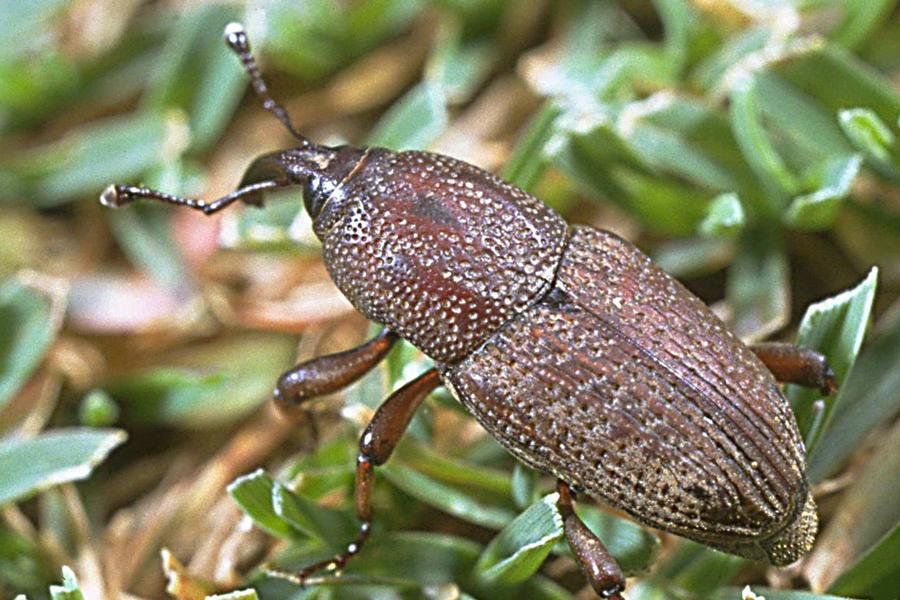

Hunting billbug, Sphenophorous venatus vestitus (Family: Curculionidae) (Figure 1) is an important weevil pest of turfgrass in Georgia. It’s called a “billbug” because of its long snout, or bill, which has small mandibles at the tip.

Photo: David Shetlar, The Ohio State University
Hunting billbug infestations in turfgrass are not easily detected until the first signs of feeding damage, such as discoloration or irregular patches, appear scattered across the turfgrass. Although hunting billbugs attack all major turfgrass genotypes, damage on zoysia grass cultivars can be particularly serious. In addition to hunting billbug, several other species of billbugs are found in warm-season turfgrass including the lesser billbug, S. minimus, and uneven billbug, S. inaequalis.
Damage
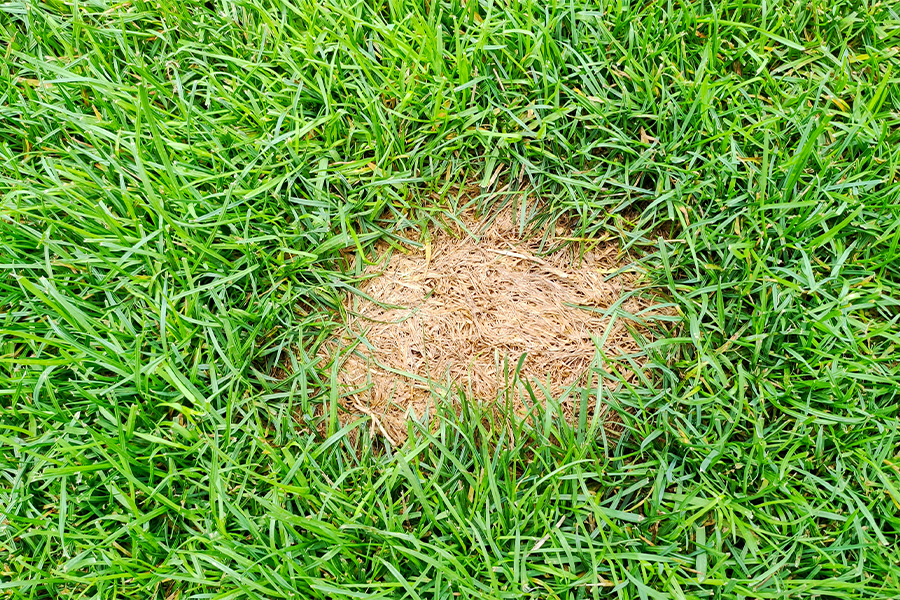
Hunting billbug damage to turfgrass is often misdiagnosed as the effect of white grub infestation, nutritional imbalance, and drought. In certain zoysia cultivars, the impact of the previous year’s billbug feeding damage is noticed in the following spring as the turfgrass struggles to emerge from winter dormancy. On established turfgrass, feeding damage first appears as yellowish-brown or discolored patches (Figure 2), which do not improve with regular irrigation.
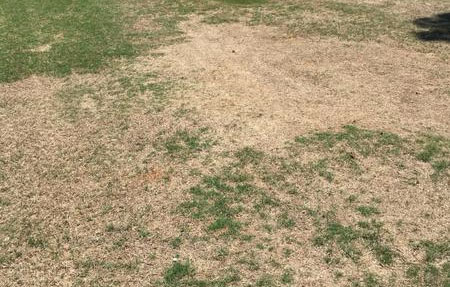
Photo: Terri Billeisen, North Carolina State University
The first instar larvae feed inside the stem, while later stages feed on the outside of the stem or stolon. This early-stage larval damage on sod particularly interrupts machine harvesting, as the affected sod fails to hold together when cut.
Biology
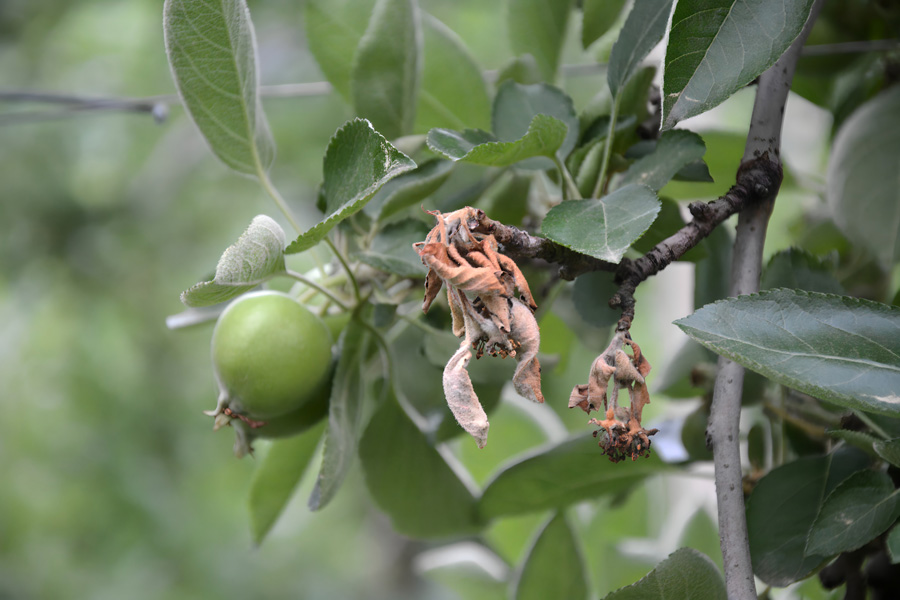
Adult hunting billbugs mostly move around by crawling rather than flying. They are active mostly at night, but can often be found on sidewalks and driveways in the early morning. Hunting billbugs are usually seen on actively growing, thicker turfgrasses. The adult female hunting billbugs will lay creamy-white, bean-shaped eggs. Eggs are singly inserted into feeding holes created by the adults on the turfgrass stems. The eggs hatch within three to 10 days depending on the ambient air temperature. The emerged white, legless larvae feed within the stem. The resulting patches of dead grass consist of hollow stems packed with sawdust-like frass that easily break apart when pulled (Figure 3).

Photo: David Shetlar, The Ohio State University
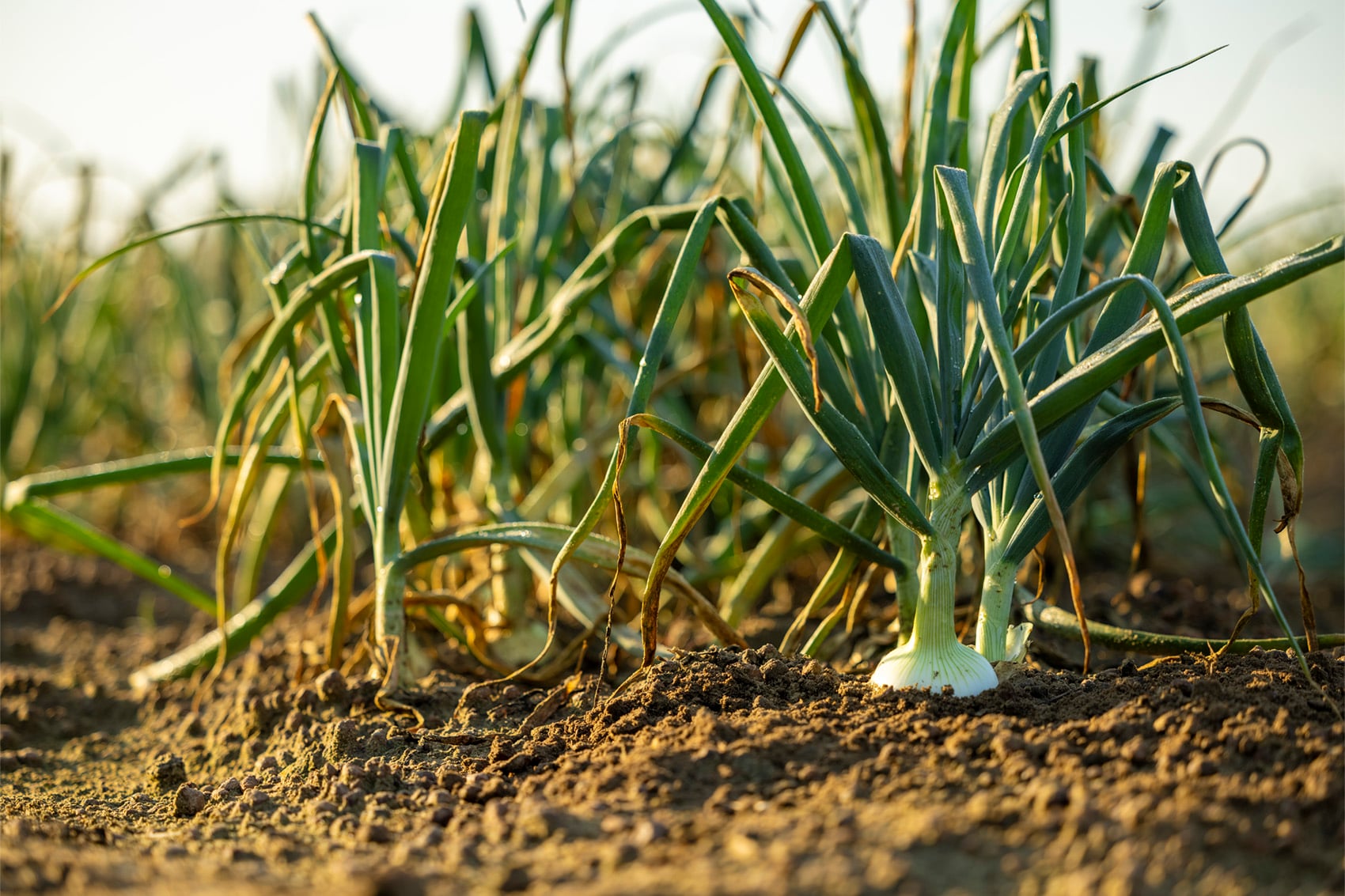
The young larvae develop inside the stem until the fourth larval stage, at which time they emerge from the plant and drop into the soil as their size increases. The final- stage larvae feed on the root system. They undergo five larval stages in all (Figure 4).

Photo: Madeleine Dupuy, Utah State University
The first larval stage is about 1.33 mm in length whereas mature larvae are 6 to 10 mm in length. The hunting billbug larvae generally take 21 to 35 days to become pupae. Pupae are initially cream-colored, but they gradually change to a reddish- brown color. They mostly overwinter as adults in protected areas, although larvae stages are also found in the winter months. In southern Georgia, all stages can be found at all times of the year. Larval feeding causes most of the economic damage, although adult feeding can cause damage to grass blades. The adults emerge from overwintering sites on warmer days in spring. Two overlapping hunting billbug generations have been reported from North Carolina within a year, whereas six generations have been reported from Florida.
Monitoring
A simple way to monitor billbugs is by keeping a record of any previous damage. The activity of adult hunting billbug can be monitored by regularly searching mowed lawns and fairways at night using a flashlight. The larval activity can be monitored using the “tug test,” during which the stems that have been under heavy infestation will break away easily when pulled. Pitfall traps can be used to monitor adults. A simple pitfall trap can be constructed using a plastic cup or container buried in the soil with the lip even with the soil surface. Crawling adults fall into the container and get trapped. A linear pitfall trap (Figure 5) can trap relatively more adults than a simple pitfall trap.
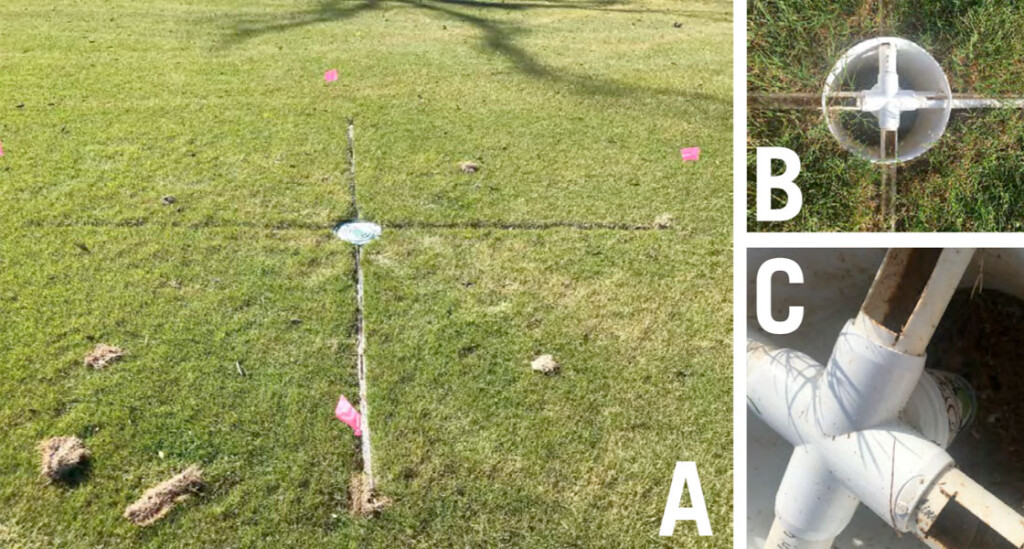
Photo: Shimat Joseph and Caleb Julian, University of Georgia
This pitfall trap is constructed using PVC pipes by cutting a 1-ft slit the length of the pipe and burying the pipe with the slit even with the soil surface. A cap is attached at one end and the other end leads into a plastic collection cup with a lid. The collection cup of this pitfall trap can be placed in a 2-gal plastic pail or pot buried in the soil. Tiny holes can be created on the bottom of the 2-gal plastic pail to drain rain water. One-third of the collection container can be filled with ethylene glycol (antifreeze solution) as a killing and preservative agent. Similar to the simple pitfall trap, linear pitfall traps should be checked weekly to determine adult activity.
Management strategies
As part of cultural control, some turfgrass types have a degree of resistance to billbug, although complete control is rarely possible. As part of an integrated pest management strategy, other turfgrass types and certain cultivars can be used to reduce billbug problems. ‘Zeon’ is a zoysia cultivar that has been reported to provide some level of resistance to hunting billbug. Endophyte-infected ryegrass and fescues also show resistance to feeding billbugs. Nematodes that attack billbug larvae can be used as biological control. The commercially available nematodes, Steinernema carpocapsae, S. feltiae, and Heterorhabditis bacteriophora have all been reported to control billbug larvae. These nematodes are suited for use in organically managed areas and are available for residential, golf course, and sod farm use for billbug control. The reliability of nematodes for billbug control is questionable. Factors such as the number of live nematodes at the time of release and the environmental conditions of the soil, including moisture levels and temperature, can affect effectiveness. Read the label instructions to determine how to use and store the product. The hymenopteran parasitoid Zavipio belfragei has been reared from billbug larvae, but the level of parasitism and its potential impact as a control strategy remains unknown. Another hymenopteran parasitoid reported to parasitize the eggs of billbug species is Anaphes calendrae. This parasitoid is found throughout the Eastern U.S. and has been reported to have high parasitism rates. Predatory arthropods such as spiders, ground beetles, rove beetles, and ants have been shown to feed on billbugs. The American toad and several species of birds are also known to be prey on billbugs.
To some extent, the adequate irrigation and fertilization of turfgrass can help turfgrass tolerate billbug damage. The transportation of bermudagrass and zoysia sod infested with billbug larvae often spreads the billbug to new locations.
The use of insecticides still remains the most effective control option for billbugs. Consult your local Extension agent for specific insecticide recommendations. Insecticides such as neonicotinoids (imidacloprid or clothianidin) as well as diamides (chlorantraniliprole or cyantraniliprole) are effective against larval stages. The pyrethroid bifenthrin is effective against adult billbugs. The timing of insecticide application is critical to target specific stages, although their activity can vary across Georgia (northern to southern regions). Because young instar larvae are active during late spring or early summer (up to June), insecticide application targeting larvae will be effective during this window. Adults can be targeted during late winter and early spring, as adults emerge from the infested turfgrass during warmer days. There are several overlapping generations present in the southern regions of the state where billbugs are active throughout the year.
References
Chong, J.-H. (2015). Species richness and seasonal abundance of billbugs, Sphenophorus spp., from South Carolina golf courses. Journal of Agricultural and Urban Entomology, 31(1), 20–28. https://doi.org/10.3954/1523-5475-31.00.20
Doskocil, J. P., & Brandenburg, R. L. (2012). Hunting billbug (Coleoptera: Curculionidae) life cycle and damaging life stage in North Carolina, with notes on other billbug species abundance. Journal of Economic Entomology, 105(6), 2045–2051. https://doi.org/10.1603/ec12110
Flint, M. L., Harivandi, M. A., & Kaya, H. K. (2009). Agriculture: turfgrass pest management guidelines — Billbugs (Publication No. 3365-T). University of California Agriculture and Natural Resources. https://www2.ipm.ucanr.edu/agriculture/turfgrass/billbugs/
Huang, T.-I., & Buss, E. A. (2009). Billbug (Coleoptera: Curculionidae) species composition, abundance, seasonal activity, and developmental time in Florida. Journal of Economic Entomology, 102(1), 309–314. https://doi.org/10.1603/029.102.0141
Dupuy, M. M., & Ramirez, R. A. (2016). Biology and management of billbugs (Coleoptera: Curculionidae) in turfgrass. Journal of Integrated Pest Management, 7(1), 6. https://doi.org/10.1093/jipm/pmw004
Reinert, J. A., Engelke, M. C., & Heitholt, J. J. (2011). Hunting billbug (Coleoptera: Curculionidae) resistance among zoysiagrass (Zoysia spp.) cultivars. Florida Entomologist, 94(3), 613–621. https://doi.org/10.1653/024.094.0328