
These checklists can be used to introduce new landscape workers to safe work practices. They ensure that job training includes safety instruction. Before new employees start their first assignment, supervisors should discuss the items covered in the following checklists. Safe use of equipment and personal protective equipment (PPE) should be demonstrated as the supervisor reviews the checklists. Pictures associated with each item reinforce the safety message for employees.
After each topic is discussed, the supervisor, and employee or employees sign the sheet and it can be filed, documenting the training.
These checklists are based on the book Safety for Hispanic Landscape Workers (UGA Extension expert resource B 1334) which has been approved by OSHA for use in safety training. They are designed to help companies reduce incidents, stay in compliance and create a culture of safety.
Guidance for Supervisors
General Safety Precautions Checklist
- Familiarize yourself with the checklist prior to use.
- Write down any health concerns the workers have and file them where they can be easily located in an emergency.
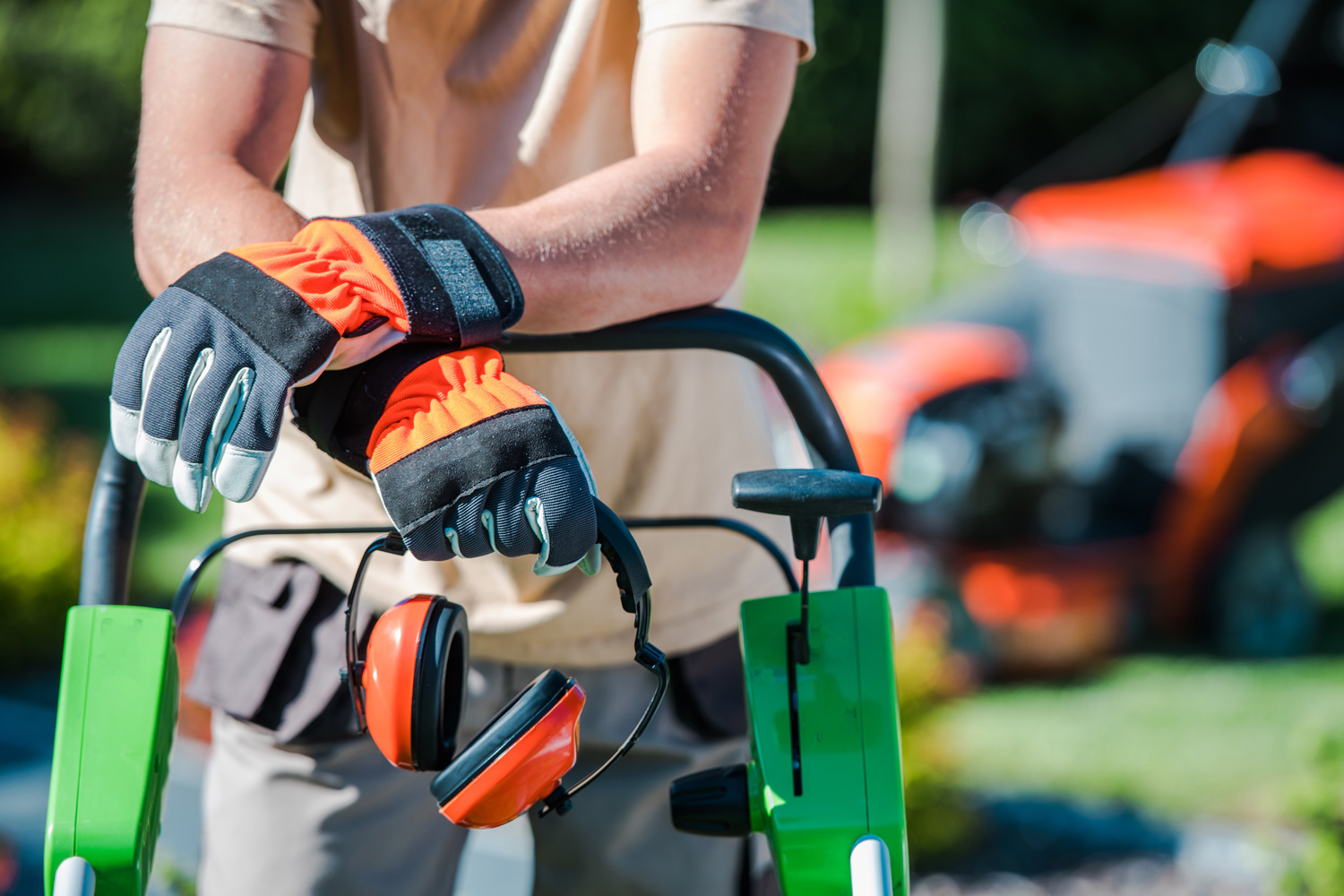
- Demonstrate personal protective equipment (PPE). Show workers steel-toed boots, leather gloves, goggles or safety glasses, hearing protection, safety vests, hat and hardhat.
- Make sure workers understand which PPE they are responsible for and how, when and where PPE is provided by the company.
- Show workers where drinking water is stored.
- Demonstrate lifting technique.
- Have workers practice stop, drop and roll.
Equipment Safety Checklist
- Familiarize yourself with the checklist prior to use.
- Move through the shop, selecting equipment and review appropriate PPE. At a minimum, workers should use hat, boots, gloves, ear protection and eye protection. When they work near the road, they need the safety vest and the hardhat is appropriate when they are on a ladder or cutting branches.
- Show workers where operator’s manuals are kept.
- Demonstrate fueling, starting equipment and changing blades and strings.
Lawn Mower Safety Checklist
- Familiarize yourself with the checklist prior to use.
- Demonstrate starting the mower.
- Most mower injuries occur as debris is shot out the discharge chute. Discuss the importance of picking up object, maintaining at least 45 ft from people, pets or property and keeping hands way from the chute.
- Have at least one tape measure (10 ft or longer) and one yard stick. Take workers outside on a hill and ask them to determine if the slope is greater than 27%. This will provide an opportunity to demonstrate a drop in excess of 30%.
- Demonstrate mowing a slope with a push and a riding mower.
- Make sure workers know where the spark plug is on mowers.
Pesticide Safety
- Familiarize yourself with the checklist prior to use.
- Hand out pesticide labels (they can be found online) and ask the workers to find the signal words.
- Have the workers find the PPE required by the label for both application and mixing.
- Identify the first aid information on the label.
- Find container disposal information on the label.
- Show the workers where the absorbent material and other supplies are located for cleaning up spills.
- Show workers where Material Safety Data Sheets (MSDS) are located in the shop and in vehicles.
General Safety Precautions
- Tell your supervisor about any health conditions you may have (diabetes, allergies, heart problems, asthma, etc.). This may save your life if you are unable to speak.
- Do not smoke while on the job and never work under the influence of alcohol or drugs.
- Wear appropriate personal protective equipment (PPE) for every job performed.
- Protect yourself from harmful effects of the sun and heat. Wear a hat and use sunscreen. Drink plenty of water and take a break as needed.
- Use proper lifting techniques. Bend at the knees, place your hands under the object and straighten your knees to lift. Get help from co-workers with heavy objects.
- Learn to identify dangerous plants and animals.
- Be aware of your surroundings and always look where you put your hands.
- Do not attempt to kill dangerous animals.
- Stop, drop and roll if your clothes catch on fire.
Equipment Safety
- Never work under the influence of alcohol or drugs and do not smoke while on the job.
- Wear appropriate PPE.
- Review the operator’s manual before using the equipment.
- Be aware of standing water which can cause a slip or fall.
- Pickup objects such as stones, bottles, pinecones, and sticks, which can be thrown by the blowers, weed eaters or edgers.
- Use two hands to hold all equipment and wrap thumbs and index fingers around the grip.
- Fuel and start equipment on level ground. Use your arm, not your back, to pull the starter cord. When fueling equipment, never smoke, let equipment cool down before refueling, remove the fuel cap slowly and never overfill the tank.
- Turn off the motor and disconnect the spark plug wire before changing blades or doing any types of repairs or services. Rest equipment on ground when repairing or changing blades.
- Wear a fluorescent safety vest and work facing traffic.
- Keep hands and feet away from motorized blades or strings.
- Operate weed eaters close to the ground.
- Maintain a safe working distance of at least 45 ft (15 m) from people, animals, or property.
Lawn Mower Safety
- Do not smoke while on the job and never work under the influence of alcohol or drugs.
- Wear appropriate PPE.
- Review the operator’s manual before using the mower.
- Fuel and start mowers on level ground. Use your arm, not your back, to pull the starter cord. When fueling or refueling equipment, never smoke, let equipment cool down before refueling, remove the fuel cap slowly and never over-fill the tank.
- If using a trailer, always haul riding mowers with the exhaust system facing out, to avoid smoke inside the trailer.
- Do not operate lawn mowers if there are strong winds, thunderstorms or fog in the area.
- Pickup objects such as stones, bottles, pinecones and sticks, which can be thrown by the mower.
- Maintain a safe working distance of at least 45 ft (15 m) from people, animals, or property (this includes vehicles driving on roads).
- Keep your hands and feet away from the blades and the discharge chute of mowers.
- Do not pull a push mower backward or operate riding mowers in reverse.
- Never use a riding mower on slopes greater than 15° or 27% slope. This is the almost the same as a drop of 3 ft (1 m) over a distance of 10 ft (3 m).
- When mowing a slope with a push mower, start at the bottom of the hill and mow across the hill, from the bottom up to the top.
- When mowing a slope with a riding mower, mow up and down the slope. Turn around on level ground at the top or bottom of the hill.
- Turn off the motor and disconnect the spark plug wire before changing blades or doing any types of repairs or services.
Pesticide Safety
- Pesticides can poison people. They can enter the body through the eyes, nose, mouth or skin.
- Never smoke, drink or eat while working with pesticides. After finishing work with pesticides, wash hands thoroughly before going to the bathroom, eating or drinking.
- Always read the pesticide label and follow all label instructions. The label is the law. Keep all pesticides in fully labeled containers. Note the signal word.
Signal words:
Danger = high toxicity
Warning = moderate toxicity
Caution = low toxicity
- Always use all personal protective equipment (PPE) required on the pesticide label.
- Measure pesticide precisely with specially marked utensils, so that you mix only the amount required for the job.
- Be aware, PPE used during pesticide application may increase heat stress.
- Put all pesticides in the rear section of the truck, never in the cabin. Make sure containers are in good condition before loading and well secured in the vehicle.
- Accidental spills must be cleaned up. Remember: control, contain and clean.
- Control: Wear PPE required by pesticide label, remain at site and keep people and animals away, and inform the supervisor.
- Contain: Prevent the spread and cover spill with an absorbent material such as kitty litter.
- Clean: Collect all the absorbent material and put it in a heavy-duty, leak free bag to be discarded correctly.
- Any clothing worn while working with pesticides should be washed separately from all other clothing.
Review of the Worker Protection Standards
- Show workers where information about pesticide safety and emergency procedures is displayed at the workplace. This includes the location of Material Safety Data Sheets (MSDS).
- Describe the medical assistance that will be provided in case of a work-related pesticide emergency.
- Show workers decontamination sites for washing pesticide residues off hands and body.
- Describe process for enforcing compliance with restricted entry intervals.
- Describe how workers will be notified about areas where pesticide application is taking place.
- Identify the trained and equipped pesticide handlers who will be present during pesticide application
- Demonstrate and provide all PPE for handlers and workers who need to enter pesticide treated areas.
- Provide training for pesticide handlers on the safety and correct use of PPE during mixing, loading and application of all pesticides used.
Ellen Bauske, former program coordinator in the UGA Center for Urban Agriculture, was an original author on this manuscript.