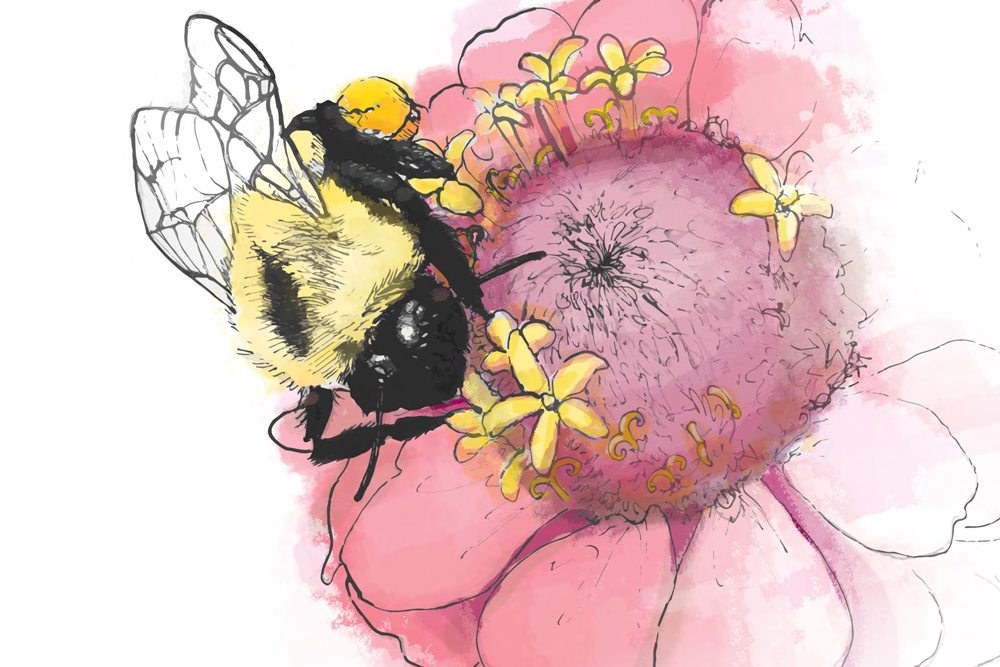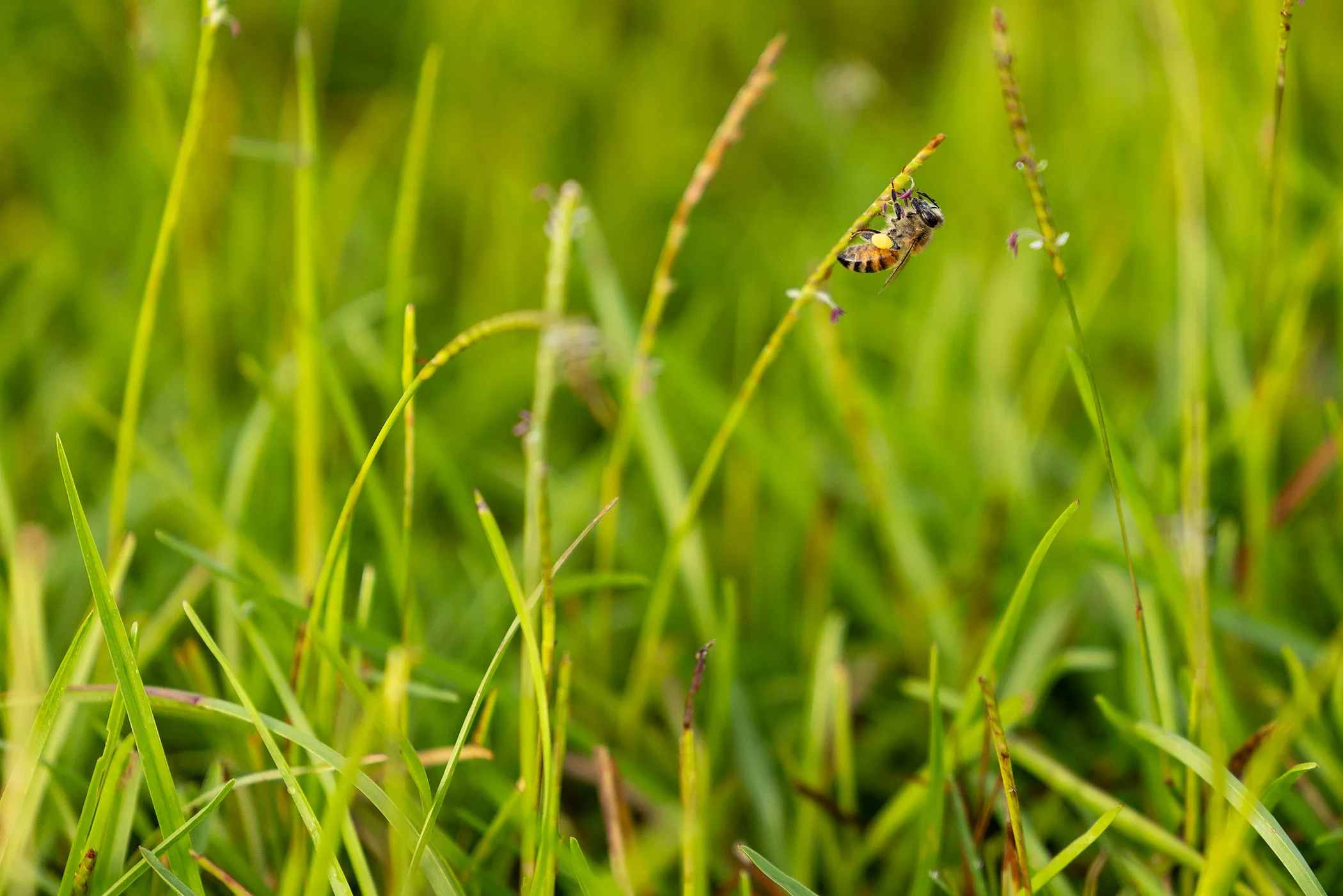


We can positively affect pollinator populations in our region by providing plants that help sustain them. Pollinators face the increasing challenges of habitat loss, parasite and disease pressure, and the unintended consequences of pesticide misuse. Bee forage plants can bloom season-long with careful plant selection appropriate to the region. A combination of herbaceous perennial and annual plants, trees, and shrubs can provide valuable resources to bees and other pollinators. Even grasses can be used by bees as a pollen source, while crape myrtles can provide a later season resource for pollinators. Anyone—from individual home gardeners to commercial and agricultural property managers—can promote pollinator health by selecting and planting appropriate plants. This guide provides options for selecting flowering woody plants that are attractive to bees and butterflies and sometimes have additional wildlife benefits. For recommendations of additional plants for pollinator friendly landscapes, refer to University of Georgia Extension Bulletin 1456, Eco-Friendly Garden: Attracting Pollinators, Beneficial Insects, and Other Natural Predators.
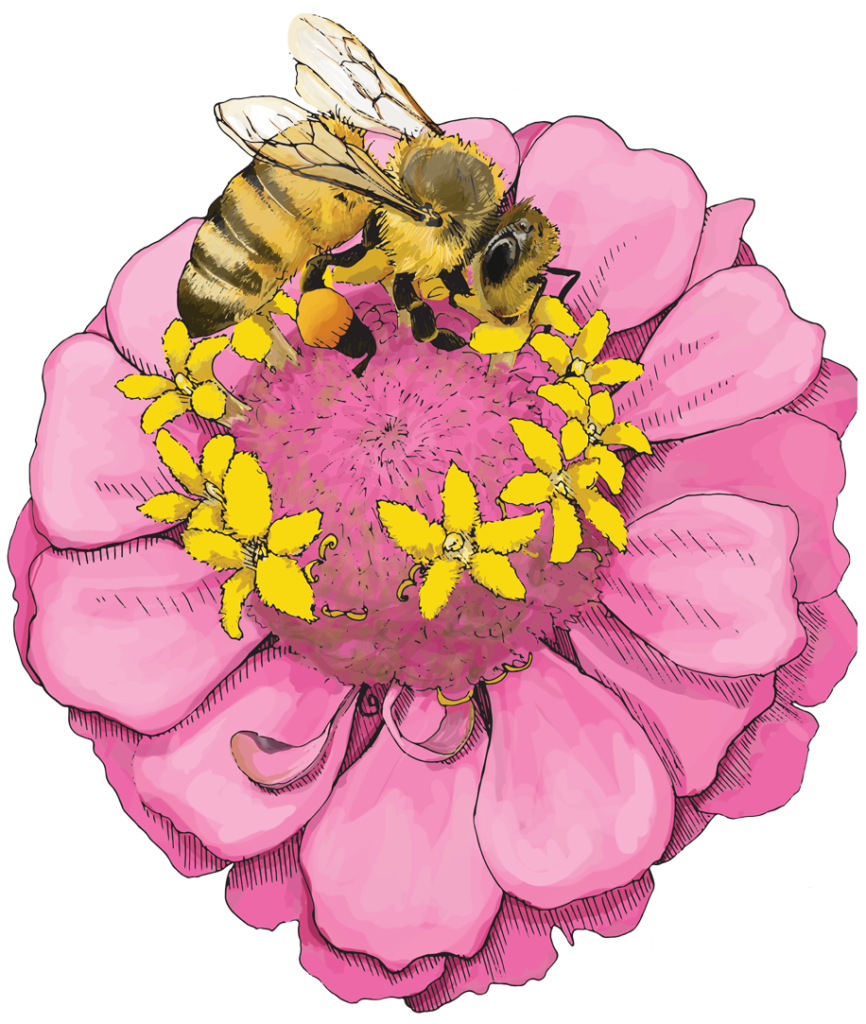
Pollination, or the transfer of pollen from male to female parts of the same or a different flower, is necessary to produce fruit and seed in many horticultural crops, such as tomatoes, squash, watermelon, apples, and peaches. Pollinators include honey bees and many native bees, such as sweat bees, mason bees, digger bees, leaf cutter bees, carpenter bees, and bumble bees. Certain flies, butterflies, moths, beetles, wasps, and even hummingbirds also serve as pollinators.
We can support pollinator populations by providing floral resources, nesting areas, moisture sources, and open areas where butterflies can bask in the sun and ground-dwelling bees can nest. Refer to UGA Extension Circular 1125 (WSFNR-17-48), Creating Pollinator Nesting Boxes to Help Native Bees, for information about creating native bee habitats.
Georgia’s Pollinators
Bees
Colletidae (cellophane, masked, plasterer or polyester bees)
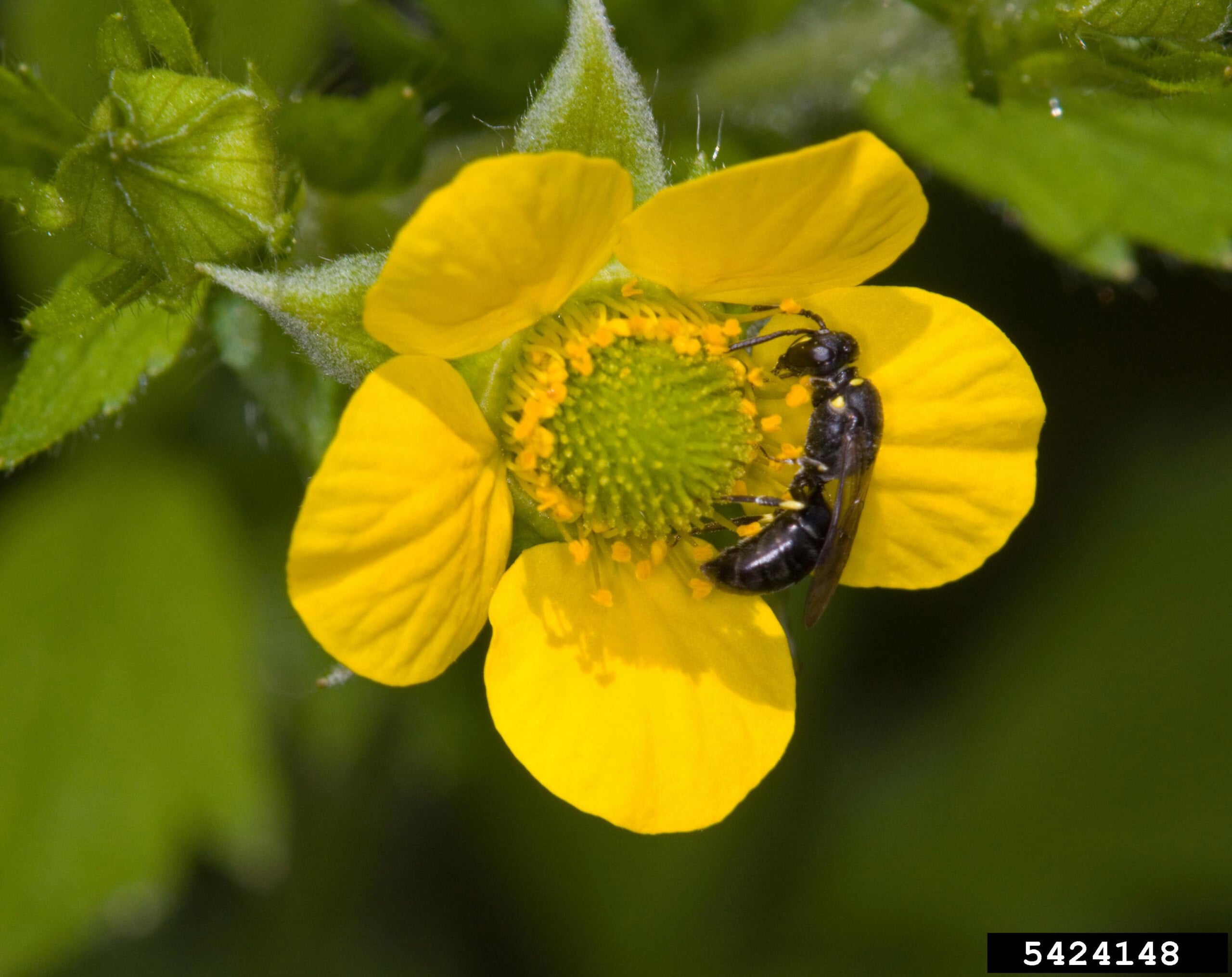
Plasterer bees are solitary and nest in the ground. They line their subterranean burrows with a thin, shiny material that they produce. Other members of the family (yellow-faced or masked bees) nest in hollow plant stems or the old burrows of other bees. Bees in this family are small to medium in size, between 6 and 15 millimeters. They have heart-shaped faces, a moderately hairy head and thorax, and banded abdomen. Although solitary, these bees can be highly aggregated and are often seen nesting on bare ground slopes. Spring forage includes red maple, willow, and American plum. Bees in this family are among the native bees that collect pollen from blueberries.
Common genera:
- Colletes (cellophane, plasterer, or polyester bees)
- Hylaeus (masked or yellow-faced bees)
Andrenidae (mining bees)
Mining bees are solitary bees that nest in the ground in a wide variety of settings. They range in size from small to large, 5 to 18 millimeters. The mining bee’s head and thorax are covered with yellow, white, or gray hairs. Spring forage includes American plum, dogwood, hawthorn, red maple and willow. Bees in this family can be important pollinators of fruit trees and berries.
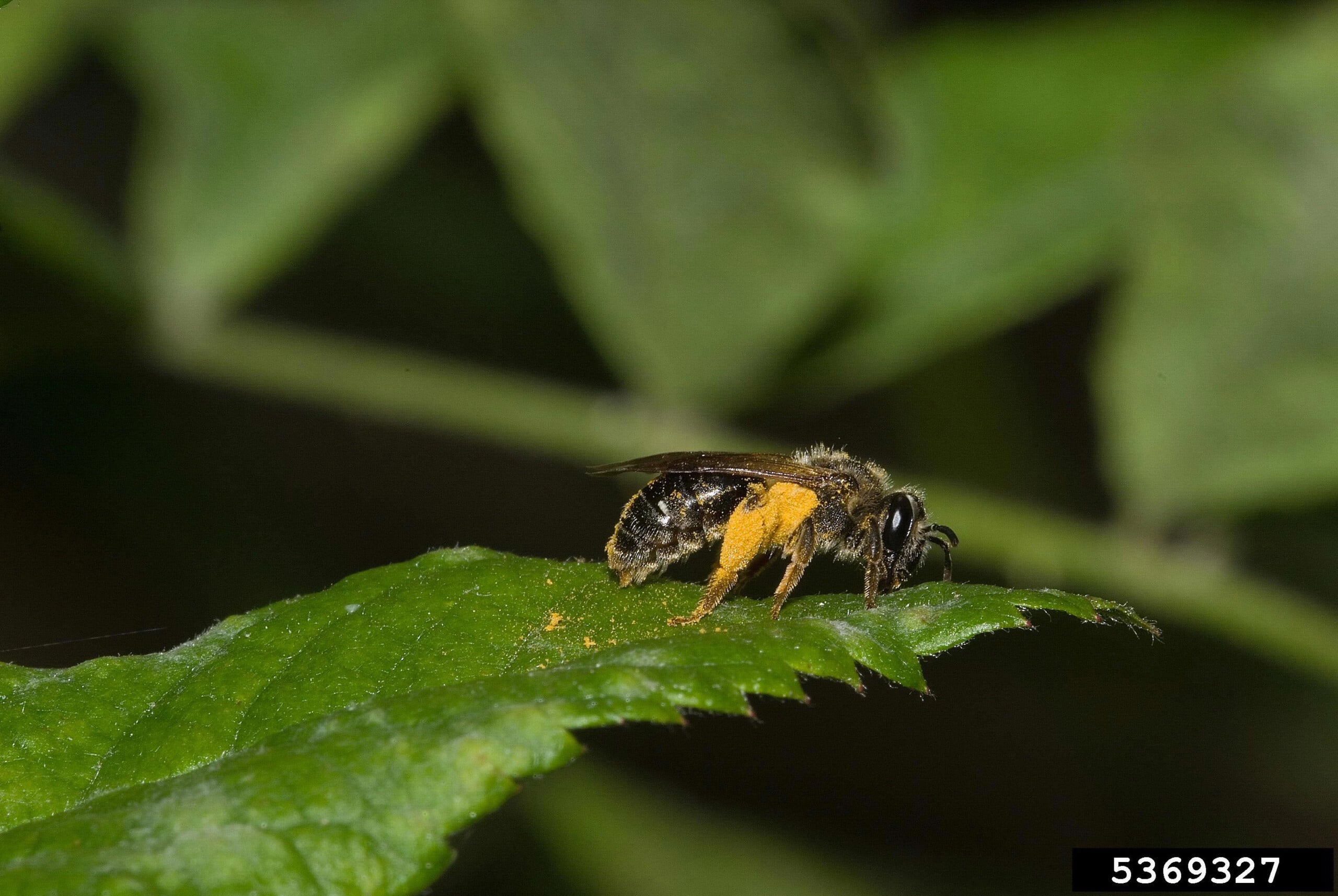
Common genera:
- Andrena (mining bees)
- Calliopsis (mining bees)
Halictidae (sweat bees)
Bees in the family Halictidae are generalist foragers that include the metallic green sweat bees that are often seen on plants in the aster family. These bees visit a wide variety of herbaceous annual and perennial flowers, as well as serviceberry, dogwood, and American plum. They include solitary, communal and primitively social species. Many bees in this family are ground-nesting, and some nest in rotting wood.
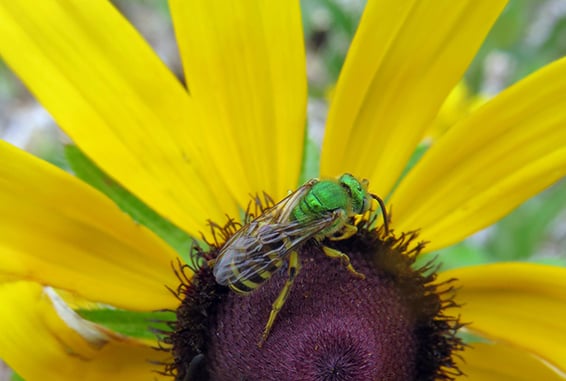
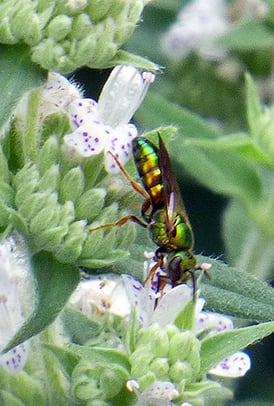


Common genera:
- Agapostemon (metallic green sweat bees)
- Augochlora (metallic green sweat bees)
- Halictus (sweat bees)
- Lasioglossum (small sweat bees)
Megachilidae (leafcutter and mason bees)
Megachilidae are small to large (5 to 21 mm) robust bees that carry pollen on the underside of the abdomen rather than on their legs. This is a diverse bee family with over 600 species in the United States and Canada. They have diverse nesting habits, making homes in cavities above or below ground, holes in dead trees, cavities in rocks, and in plant stems. Leafcutter bees use pieces of leaves or petals to construct divisions or chambers within nests.

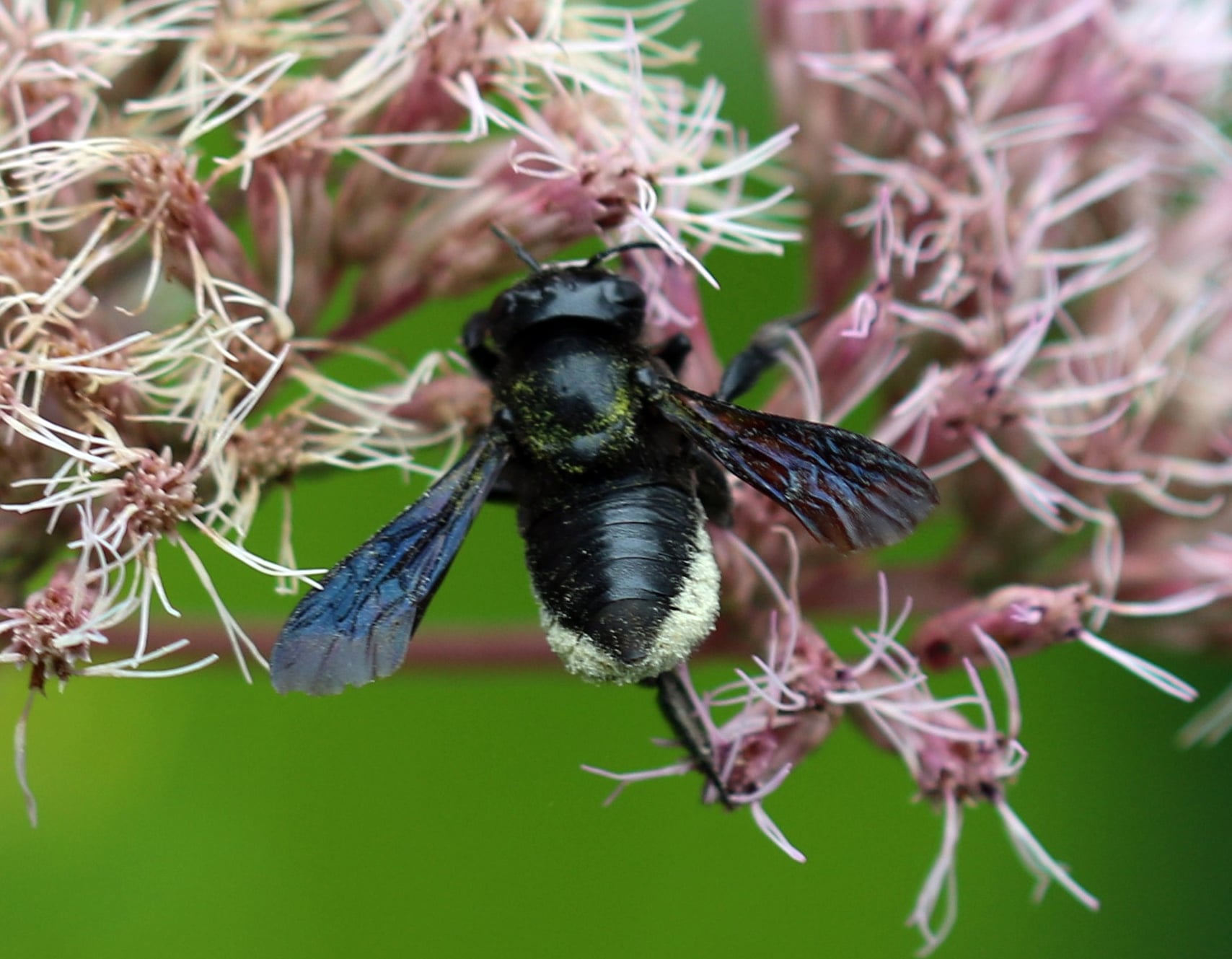
Common genera:
- Osmia (mason bees)
- Megachile (leafcutter bees)
- Hoplitis (mason bees)
Apidae (cuckoo, carpenter, digger, bumble, and honey bees)
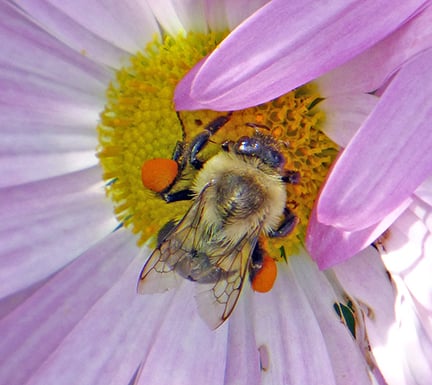
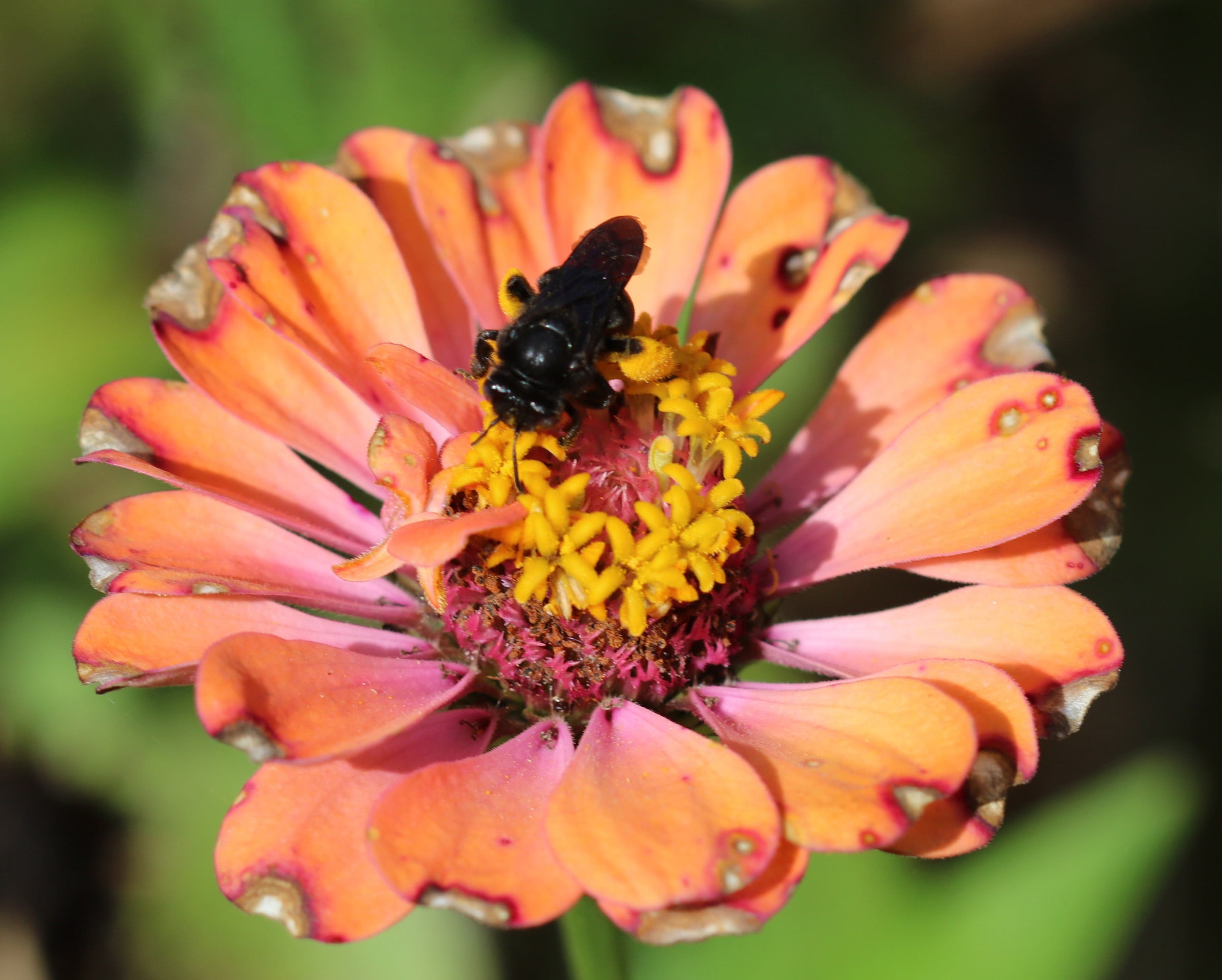
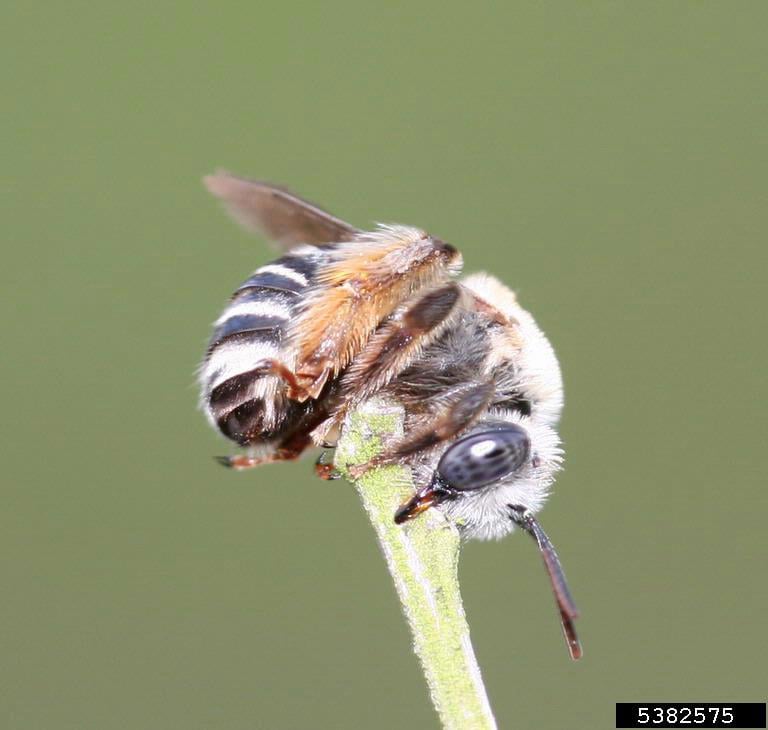
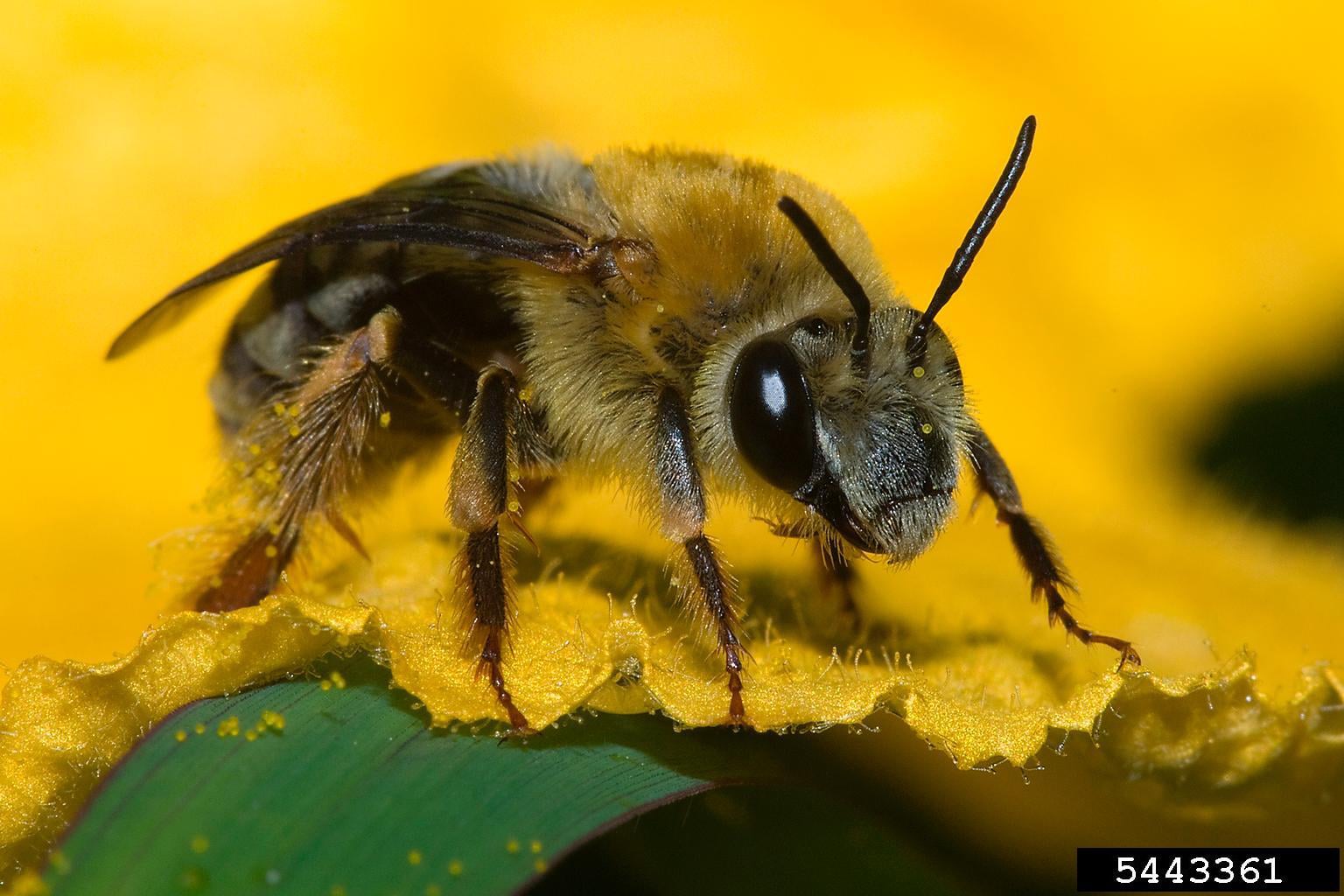
Bees in the Apidae family are large and of diverse shapes, sizes, and colors. This family is likely the most well-recognized bee group. As the honey bee is in the Apidae family, it is the most economically important bee family. These are generally bigger bees, although the largest bee in the world belongs to the Megachilidae family. While the majority of Apidae nest in the ground, some are twig and cavity nesters. Many genera are very hairy and all are long-tongued bees.



Common genera:
- Apis mellifera (honey bees)
- Anthophora (digger bees)
- Xylocopa (carpenter bees)
- Bombus (bumble bees)
- Melissodes (long-horned bees)
- Ceratina (small carpenter bees)
- Peponapis (squash bees)
- Nomada (cuckoo bees)
Other Pollinators
Butterflies
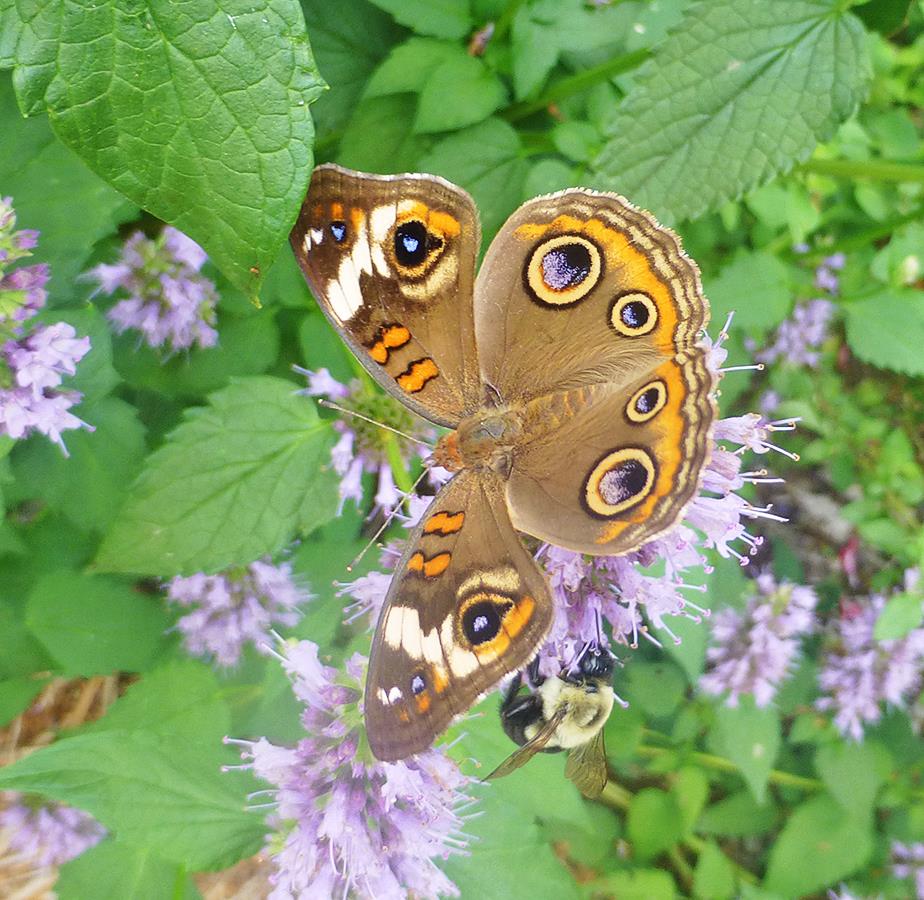
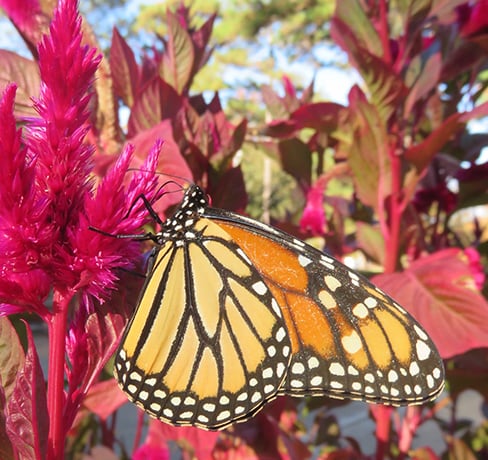
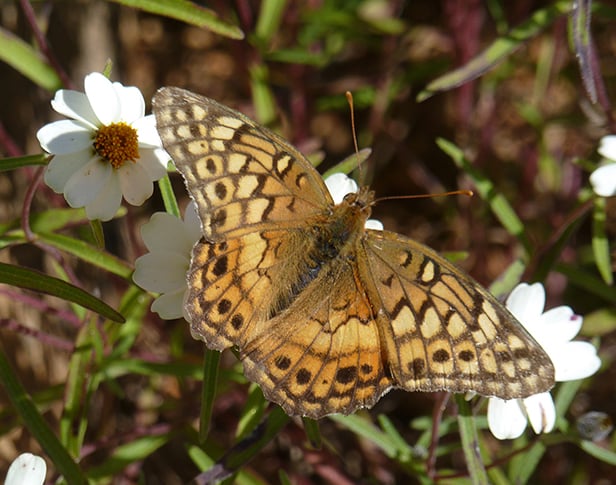
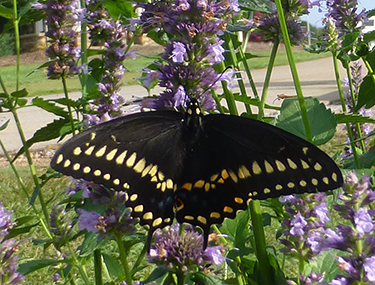
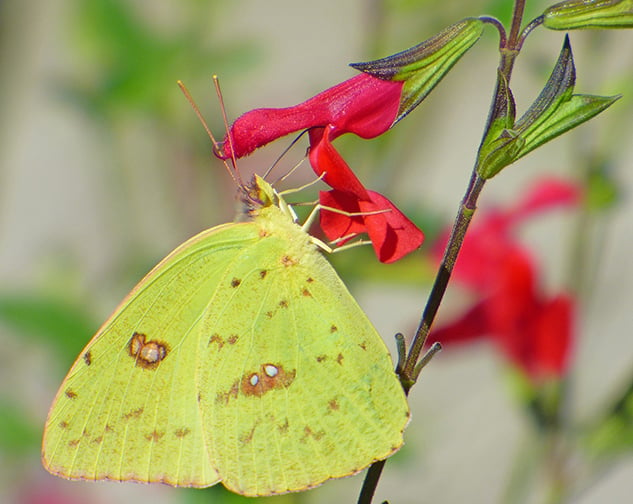
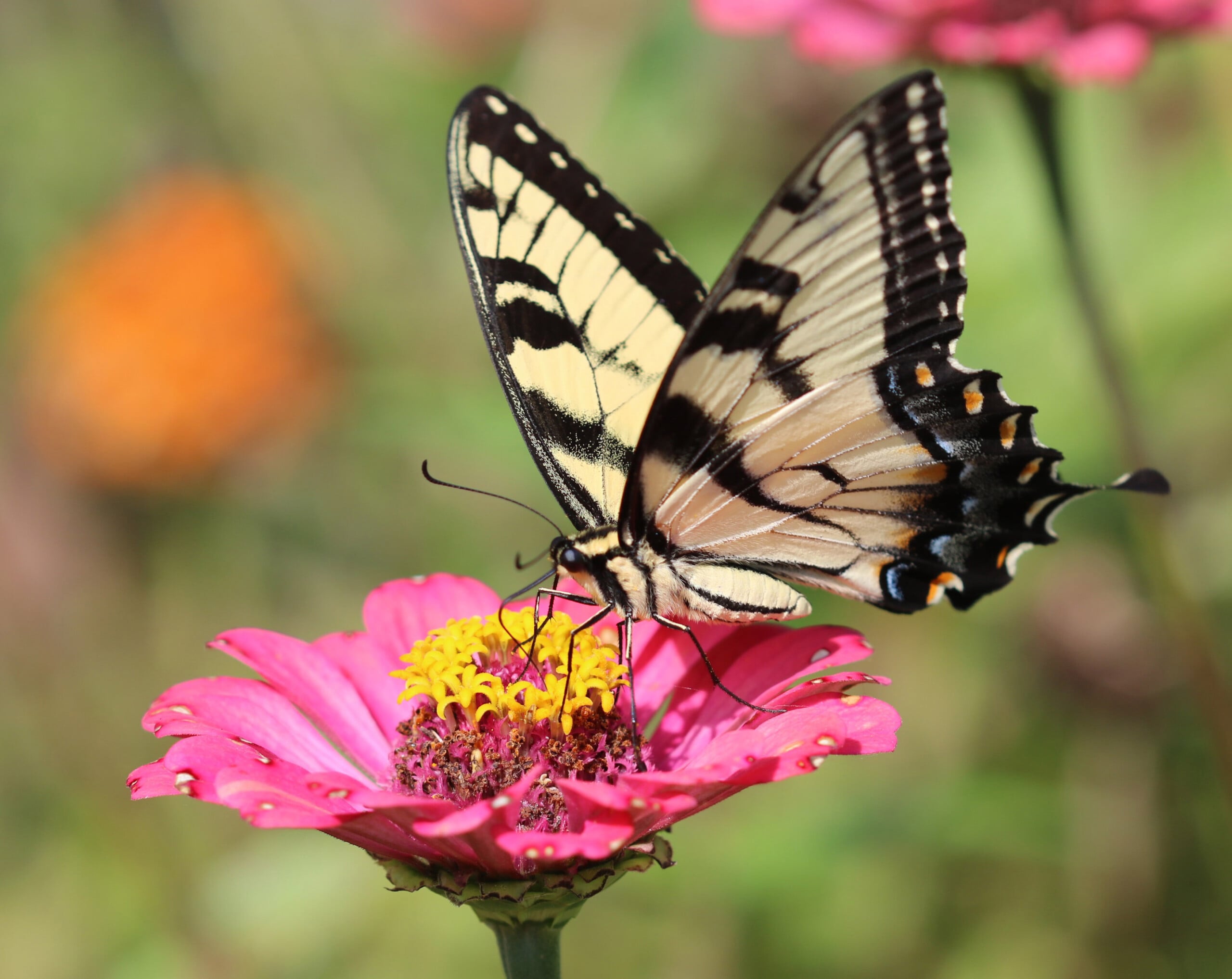
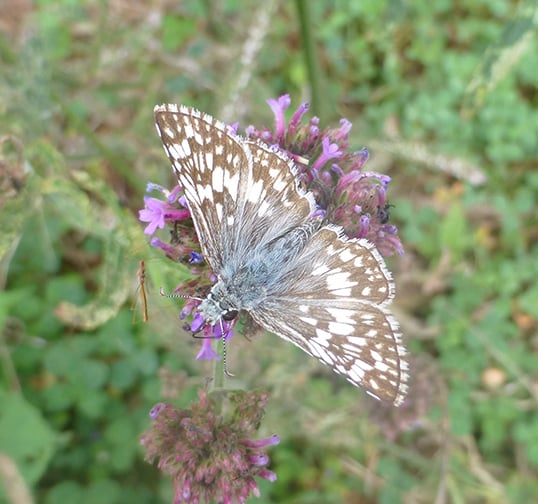
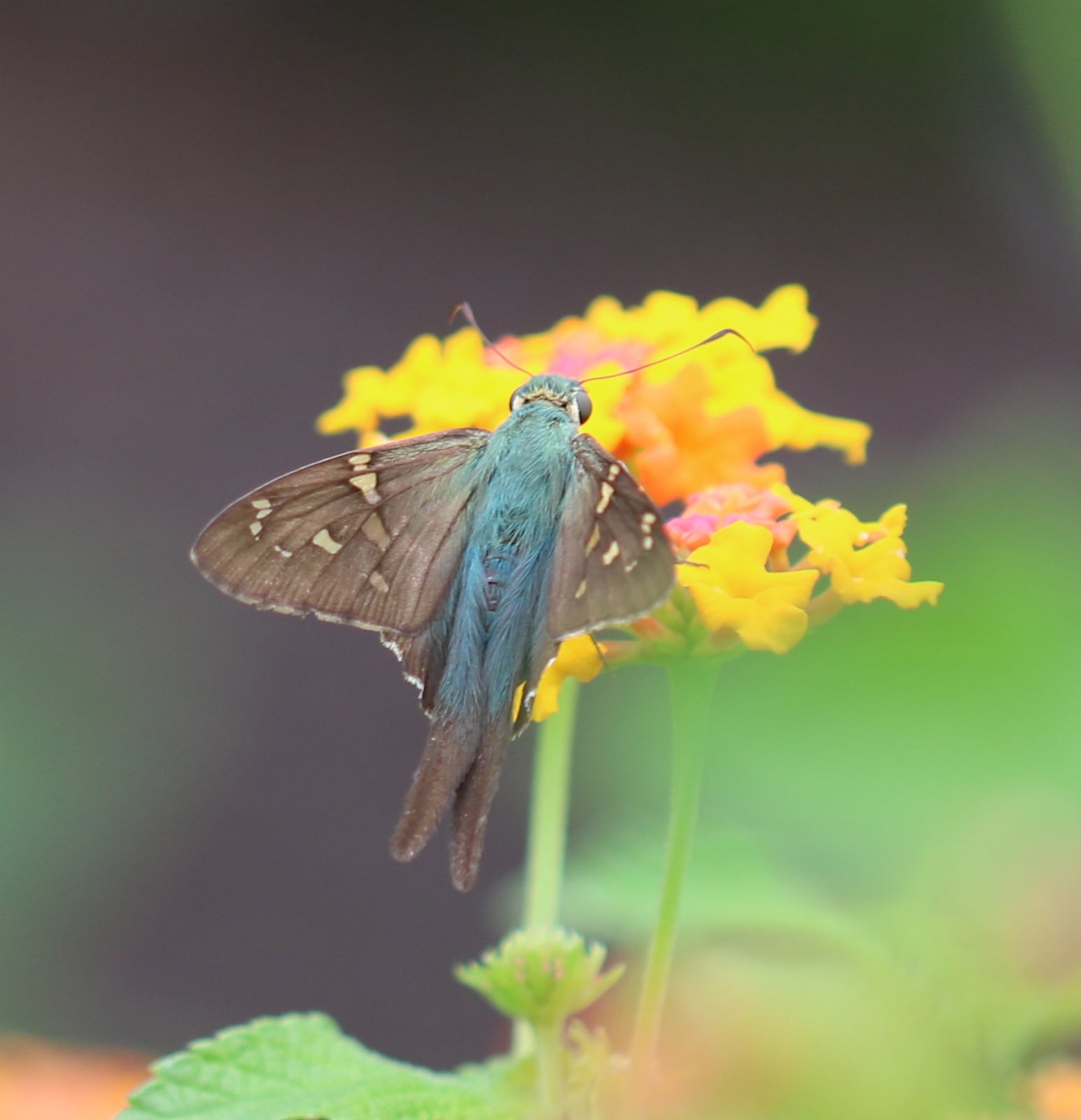
A diverse group of butterflies can serve as pollinators and are often present at the edges of woods, where a variety of trees, shrubs, and herbaceous flowering plants support their activity. Common members of the order Lepidoptera that might be encountered include brush-footed, swallowtail, skipper, white, sulphur, and milkweed butterflies. Butterfly antennae are simple (straight) with a swelling or club at the end. Adding moisture sources, basking areas like flat rocks, and larval host plants can help provide resources that butterflies require. Butterflies are typically day-flying.

Moths
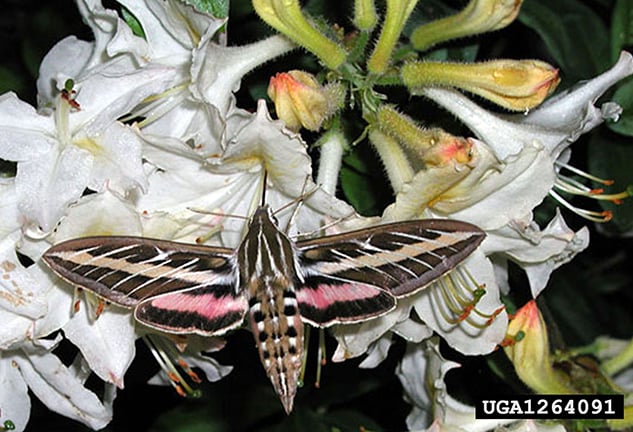
Moths can be distinguished from butterflies by their antennae, which may be simple or feathered but do not have a swelling or club at the end. Moths can be day-active but are often active at night when they are attracted to flowers that open in the evening.


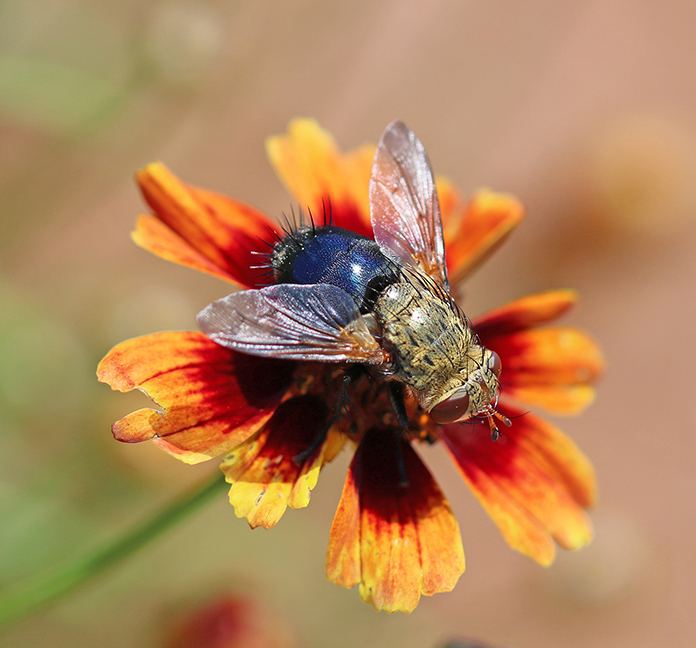
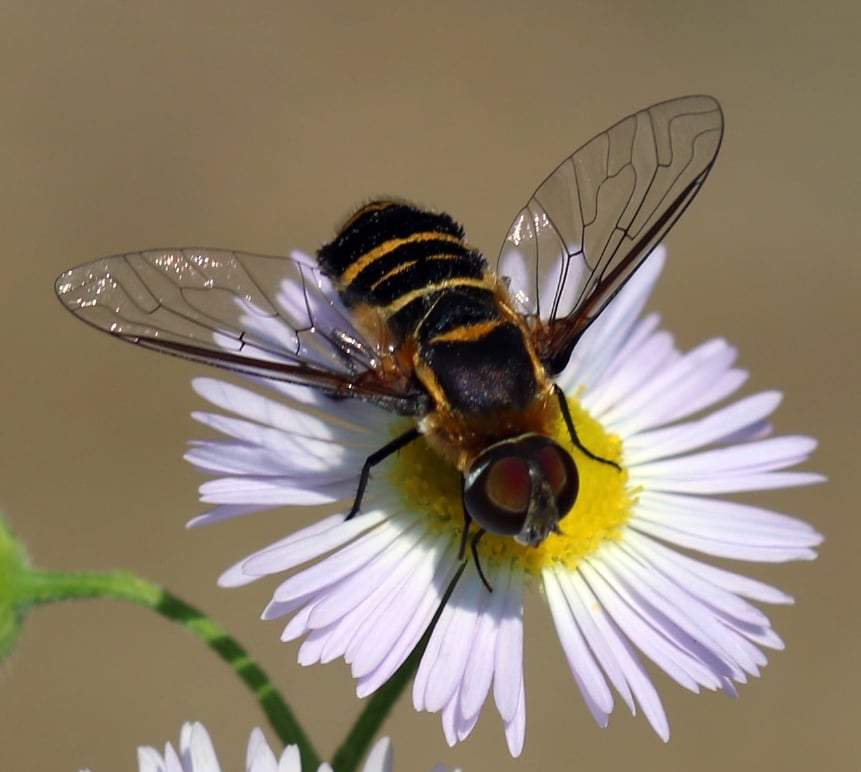
Flies
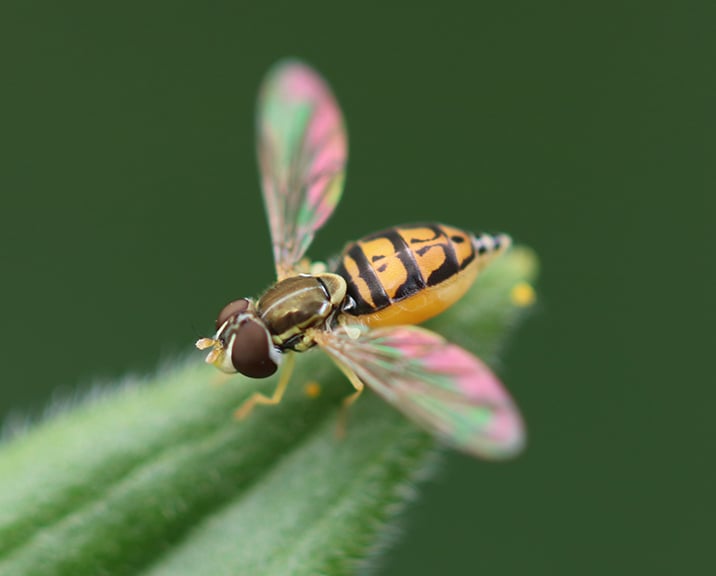
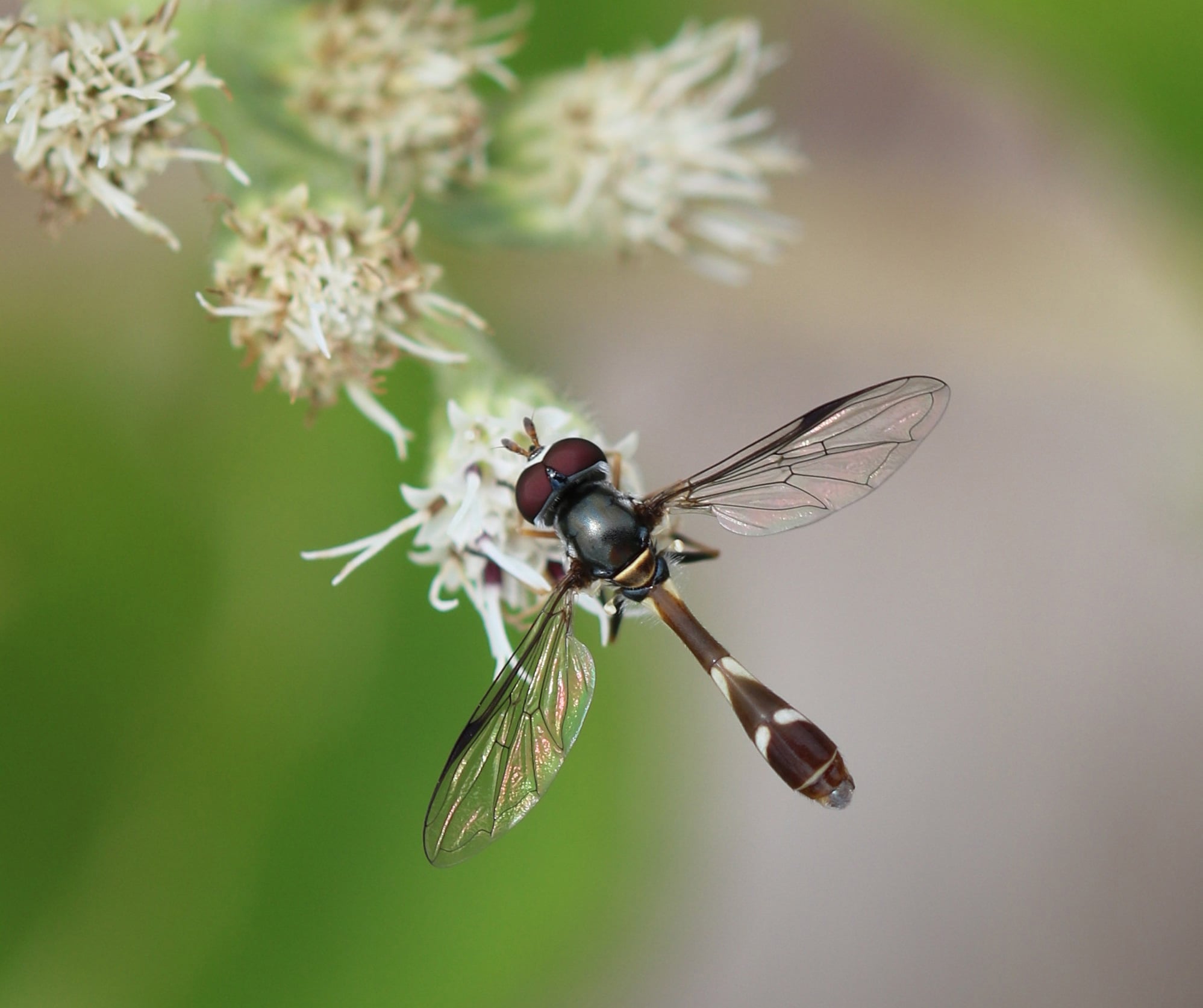
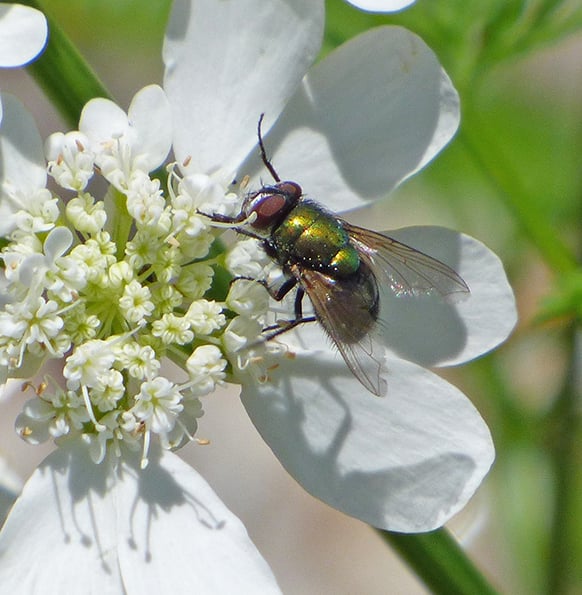
Flies are generalists, visiting many types of flowers. Flies can be economically important as pollinators of ornamental flowers. They often pollinate small flowers in shaded areas and moist habitats.

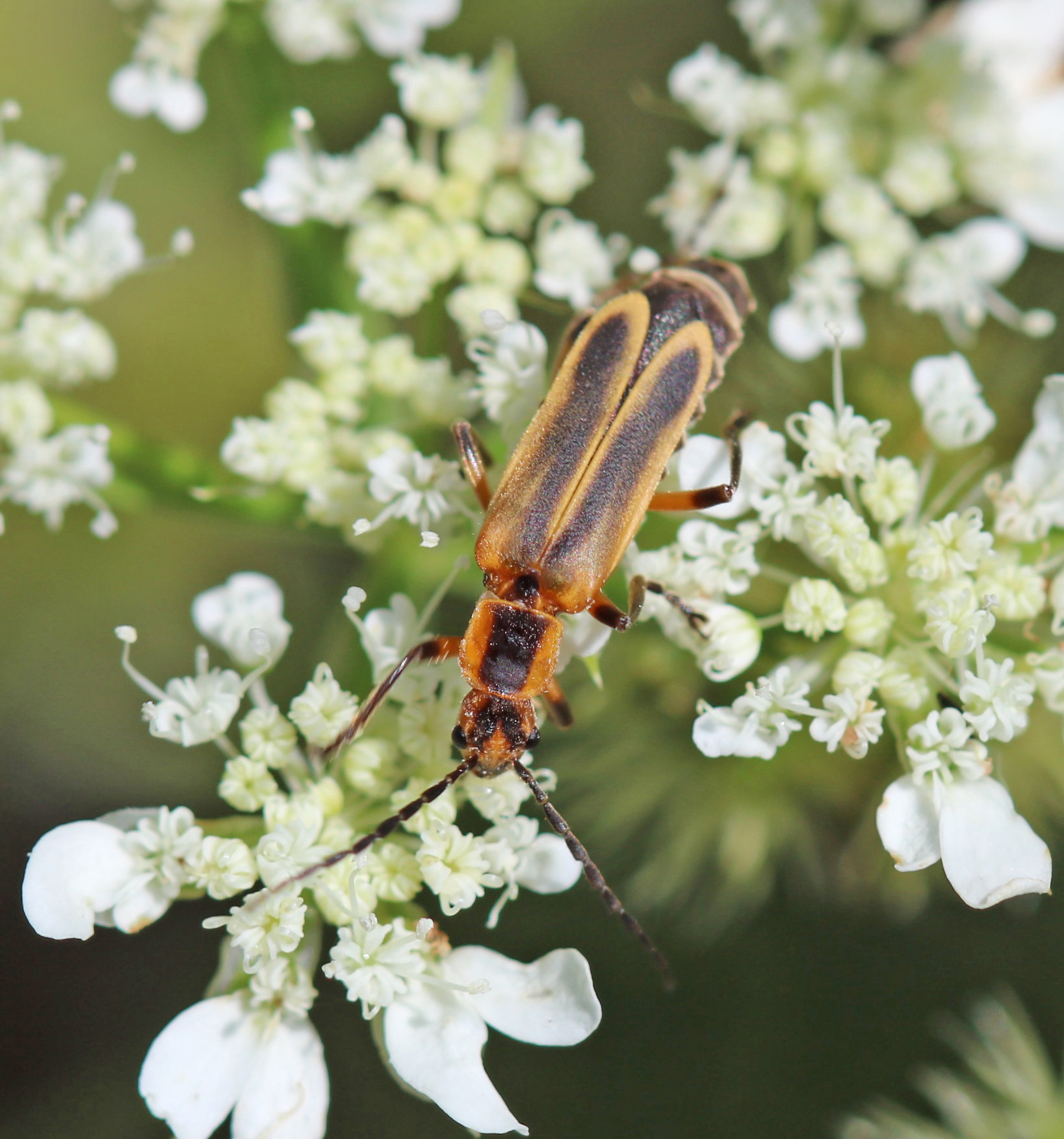
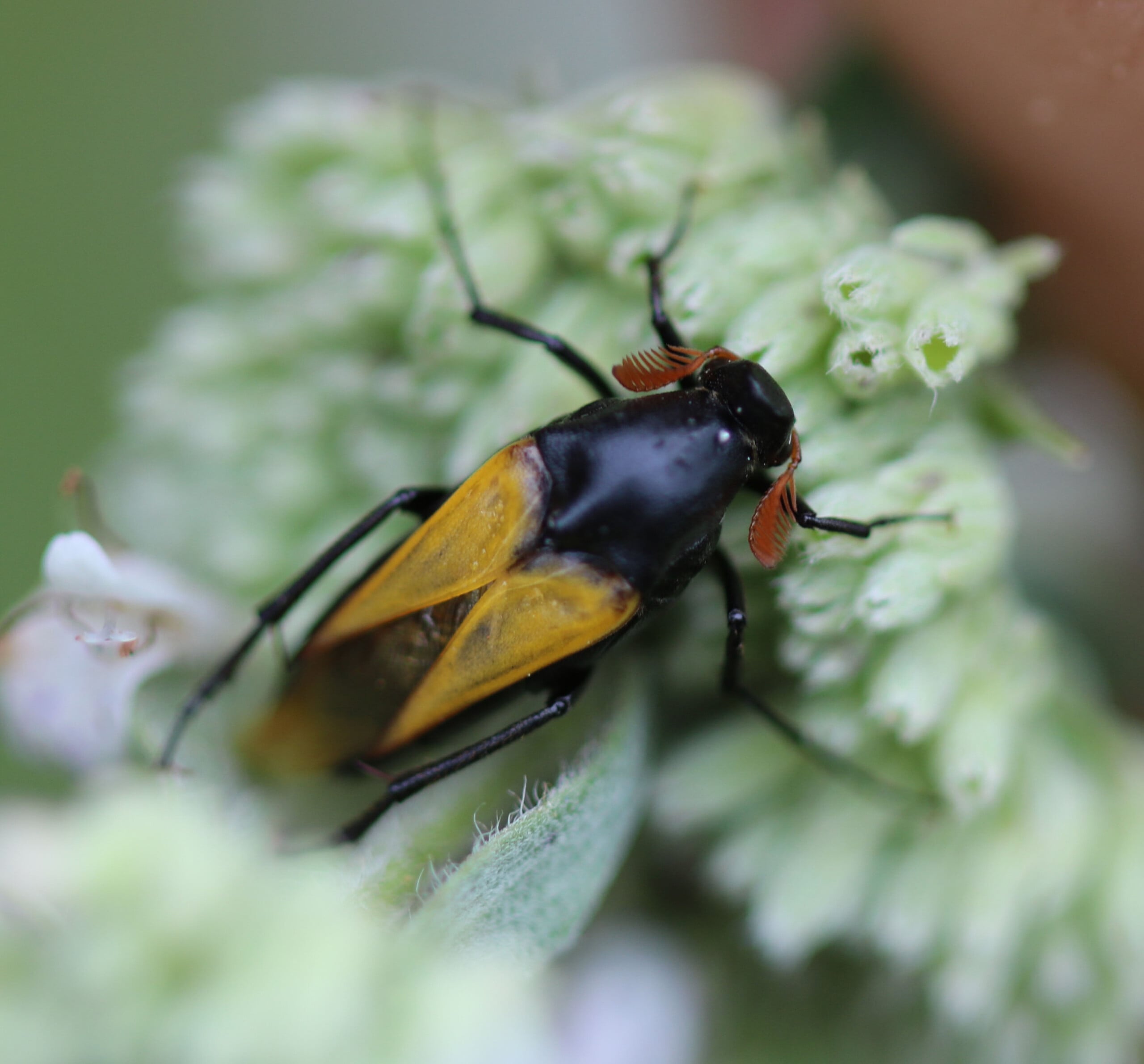
Beetles
Numerous beetles are associated with flowers and can serve a role as incidental pollinators. Plants that are known to be beetle pollinated include sweetshrub, pawpaw, and magnolia.

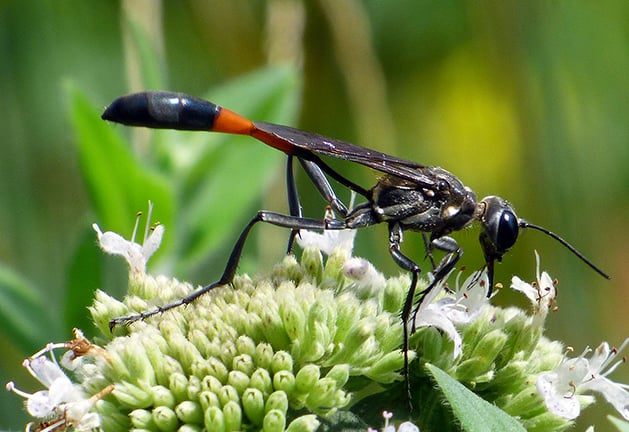
Wasps
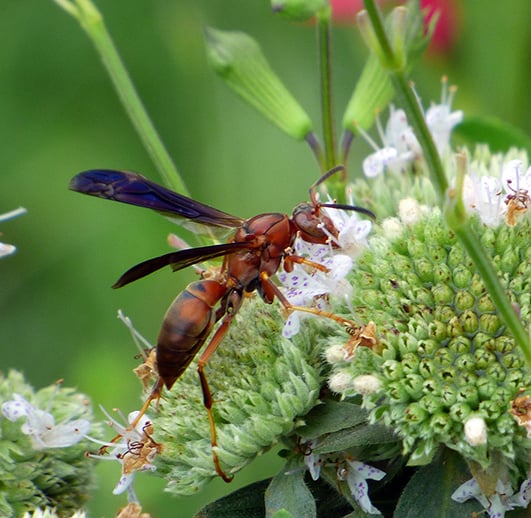
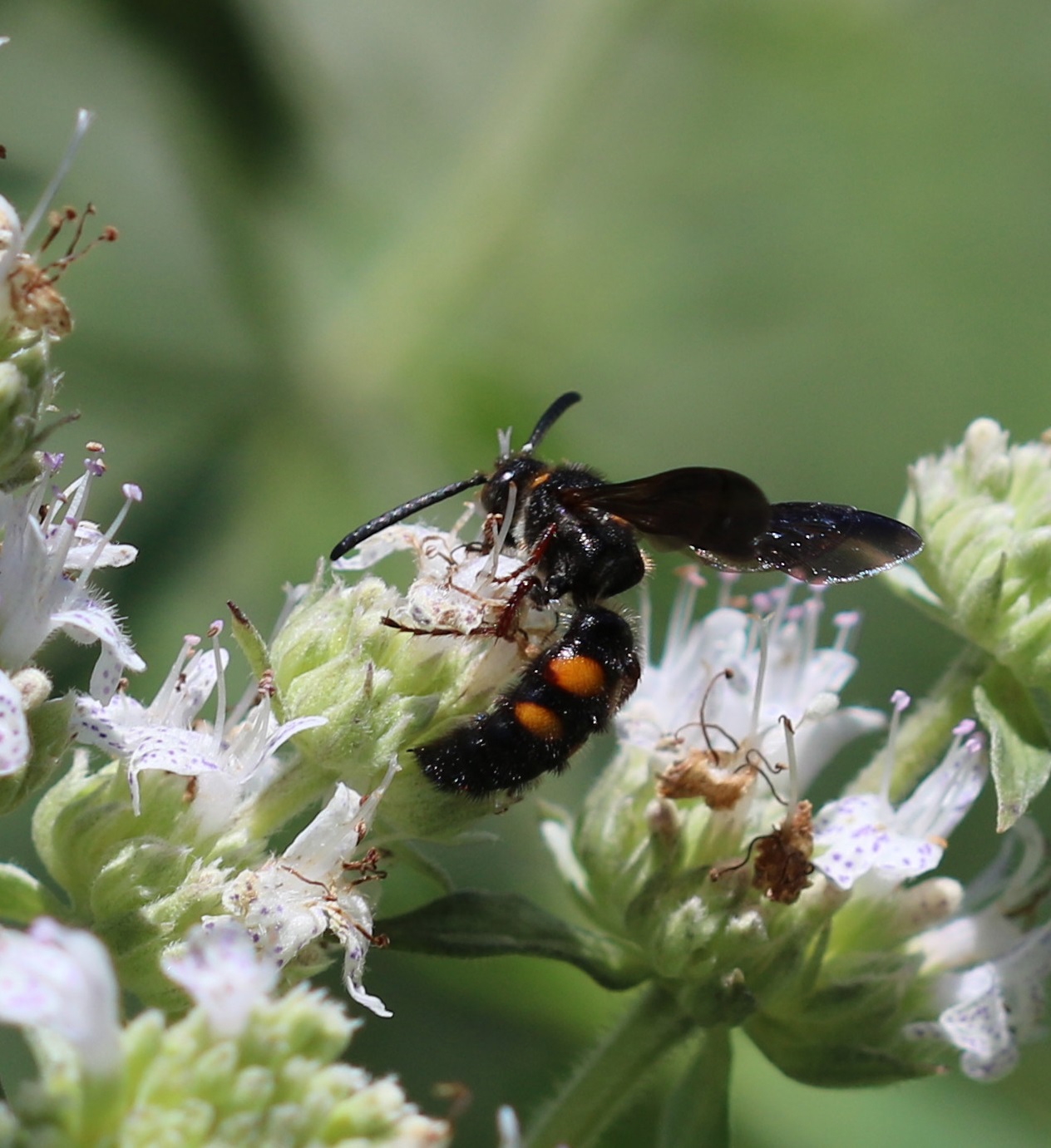
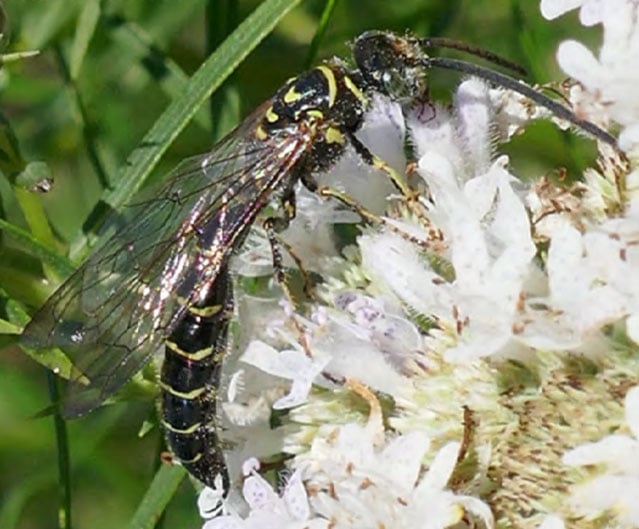
Paper wasps, potter wasps, scoliid, and thynnid wasps, and other parasitoids of insect pests visit flowers regularly. Besides pollination, many wasps provide ecosystem services as predators or parasitoids of plant-eating insect pests.
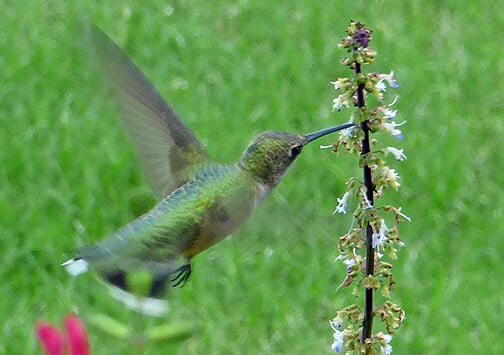
Hummingbirds
Hummingbirds are our key bird pollinators. They transfer pollen when they seek nectar, insects, and spiders on flowers that they visit. Pollen is transferred by hummingbirds on their beaks and feathers. They can access nectar from tubular flowers with their long beaks and tongues. Hummingbirds can see the color red, where bees cannot.
Pollinator-Friendly Trees and Shrubs
Abelia x grandiflora | glossy abelia
- Grows from 3 to 12 feet
- Variable leaf and flower color, some with attractive fall coloration
- Highly attractive to bees and butterflies
- Relatively pest-free and tolerant of soil conditions
- Requires full sun
Acer barbatum | southern sugar maple
- Grows from 50 to 75 feet
- Brilliant fall foliage
- Requires sun or partial shade with moist, well-drained soils
- Valuable for bees and birds
Acer rubrum | red maple
- Grows from 50 to 100 feet
- Colorful fall foliage and red flowers in early spring
- Growing conditions include full sun or partial shade and moist soils
- Larval food plant for caterpillars of many showy moths, for example rosy maple moth, and cecropia moth
- Good resource for bees and birds.
- Common bees attracted: Andrena, Lasioglossum, Osmia, and Colletes
Aesculus parviflora | bottlebrush buckeye
- Grows from 6 to 12 feet
- Mound-shaped with striking white flower spires and attractive gold fall foliage
- Growing conditions include partial shade and moist, well-drained soils
- Attractive to hummingbirds, butterflies, and bees
- Seeds and foliage are poisonous to humans
- Common bees attracted: Bombus, Anthophora, Osmia
Aesculus pavia | red buckeye
- Grows from 10 to 40 feet
- Very showy red (or red and yellow) flower clusters can be nearly a foot long
- This spring bloomer can shed its shiny, bright green leaves by summer’s end
- Grows well in part shade and moist, but not soggy, soils
- Attracts hummingbirds and bees
- Seeds and shoots are poisonous to humans
Amelanchier sp. | serviceberry
- Grows from 15 to 20 feet
- Drooping clusters of white flowers and red/purple berries
- Sun or part shade
- Does well on moist, well-drained, acidic soils
- Beneficial to bees and birds
- Common bees attracted: Andrena and Lasioglossum
Aronia arbutifolia | red chokecherry
- Grows from 6 to 10 feet
- Best in full sun to part shade and tolerates many soil types
- White flowers, dark red fall foliage, and dark fruit
- Common bees attracted: Andrena, Lasioglossum and Bombus
Baccharis halimifolia | groundsel bush
- Grows from 8 to 12 feet
- Evergreen to semi-evergreen with irregular form
- Flowers are not distinct, but the seeds look like tiny, white paintbrushes and are showy
- It is adaptable to wide range of conditions, from full sun to partial shade
- Spreads easily via seeds and suckers
- Provides late season nectar and pollen
Bignonia capreolata | crossvine
- Woody evergreen to semi-evergreen vine with showy, orange-red flowers
- Adaptable to many conditions provided in full sun to partial shade
- Good hummingbird plant
Callicarpa americana | American beautyberry
- Grows from 6 to 8 feet
- White and lavender flowers attract bees and butterflies while clusters of shiny purple (or white) berries attract birds
- Partial shade and moist soils are most suitable growing conditions
Callistemon citrinus | red bottlebrush
- Grows from 10 to 15 feet
- Showy red flowers are attractive to hummingbirds
- Requires full sun and tolerates variable soil conditions
- Drought-tolerant
- Cold hardy in zones 10 and 9
Calycanthus floridus | sweetshrub
- Grows from 6 to 12 feet
- Glossy dark green, fragrant leaves
- Part shade and moist soils most favorable
- Dark red flowers are pollinated by beetles
Catalpa bignonioides | catalpa
- Grows from 25 to 40 feet
- Large heart-shaped leaves, clusters of ruffled flowers, brown seed pods
- Wet to moist soils are most suitable
- Often host to the catalpa sphynx caterpillar
- Common bees attracted: Bombus and Xylocopa
Cephalanthus occidentalis | buttonbush
- Grows from 6 to 12 feet
- Glossy dark green leaves and no particular fall color
- Dense, spherical clusters of flowers visited by bees, hummingbirds, hummingbird moths and butterflies
- Suited to wet soils with seeds utilized by water birds
- Common bees attracted: Bombus, Ceratina, Hylaeus, Agapostemon, Melissodes and Xylocopa
Cercis canadensis | eastern redbud
- Grows from 15 to 30 feet
- Tree with heart-shaped shiny leaves and showy, pink flowers
- Does well in moist, well drained soils and partial shade
- Leaf cutting bees, Megachile spp., utilize the leaves in nest construction, taking circular bites out of leaf margins
- Common bees attracted: Andrena, Lasioglossum, Osmia, Xylocopa, Bombus and Colletes
Chaenomeles speciosa | flowering quince
- Grows from 4 to 6 feet
- Early blooming and attractive to bees
- Average to moist, well-drained soil
- Full sun to partial shade
Chionanthus virginicus | fringe tree
- Grows from 15 to 30 feet
- Showy pendulous clusters of white flowers are pollinated by bees
- Dark, grape-like fruit attractive to wildlife
- Partial shade and moist soils for optimal growth
Cladrastis kentukea | American yellowwood
- Grows from 36 to 72 feet
- Pinnately compound leaves, showy flower spikes, smooth bark, and yellow fall foliage
- Deep-rooted and drought-tolerant, requiring partial shade
- Attractive to bees
Clethra alnifolia | cethra
- Grows from 6 to 12 feet
- Mounding shrub with dull, gold fall foliage
- White to pink 3- to 8-inch flower spikes used by bees, butterflies and hummingbirds
- Moist soils with variable light requirements
- Attracts birds and mammals as well
Cornus florida | dogwood
- Grows from 20 to 40 feet
- Showy native tree with white or pink “flowers,” red berries, and often scarlet fall foliage
- Does best in well-drained, acidic soil in partial to deep shade
- Attractive to birds, bees, and butterflies
- Serves as larval host to the spring azure butterfly
Diospyros virginiana | persimmon
- Grows from 15 to 20 feet
- Dark green foliage and orange fruit
- Tolerates variable soil and moisture conditions and partial shade
- Valuable for birds, bees and mammals
Edgeworthia chrysantha | paperbush
- Grows from 4 to 6 feet
- Late-winter to early-spring bloomer requires full sun to partial shade and has medium water use requirements
- Very showy deciduous shrub can be a good winter forage plant for bees
Euonymus americanus | strawberry bush
- Beautiful purple seed capsules that split open to reveal fleshy, red or orange arils
- Attractive to birds
- Shade to partial shade and moist soil
- Attractive to deer
Halesia tetraptera | silverbell
- Grows from 20 to 35 feet
- Showy white flowers before the tree leafs out
- Pale fall foliage and interesting seed pods in winter
- Tolerates and blooms in sun or part shade
- The nectar and pollen of the flowers attract primarily butterflies, honey bees, bumble bees, and probably other long-tongued bees
Hamamelis virginiana | witch hazel
- Grows from 10 to 15 feet
- Unusual, conspicuously fragrant, late-season flowers
- Prefers moist soils in sun to shade
- Attractive to birds
Hydrangea macrophylla | lacecap hydrangea
- Grows from 3 to 12 feet
- Flat heads of fertile flowers fringed with non-fertile flowers are attractive to bees where the mophead hydrangeas are not
- Color varies depending on soil pH and age of flower
- Tolerates sun and partial shade
Hydrangea quercifolia | oakleaf hydrangea
- Grows from 3 to 12 feet
- Whitish-green conspicuous flowers
- Requires shade and moist, well-drained soils
- Foliage can become colorful in the fall
- Good source of pollen and nectar for bees
Ilex decidua | possumhaw
- Grows from 15 to 30 feet
- Inconspicuous flowers and red-orange fruit that attracts birds
- Moist soils with sun or partial shade are suitable
- Attractive to pollinators
Ilex opaca | American holly
- Grows from 25 to 60 feet
- Dark evergreen leaves and red fruit
- Prefers well-drained, acidic soils
- Valuable to honey bees, birds, and butterflies
- A larval host for Henry’s elfin butterfly
Ilex verticillata | winterberry
- Grows from 6 to 12 feet
- Bright red fruit in fall and winter if male and female plants are present
- Tolerates variable soil moisture and light conditions
- Birds and bees use winterberry which also serves as a larval food plant and nectar source for butterflies
Ilex vomitoria | yaupon holly
- Grows from 12 to 45 feet
- Inconspicuous flowers
- Tolerates a variety of soil conditions in sun or partial shade
- Flowers attracts pollinators and fruit attracts birds and small mammals
- A larval host for Henry’s elfin butterfly
Itea virginica | sweetspire
- Grows from 3 to 6 feet
- Conspicuous flower spires and colorful fall foliage
- Tolerates moist soils, full sun to partial shade
- Attracts birds and bees
Lagerstroemia spp. | crape myrtle
- Variable in height, as well as flower and foliage color, depending on species and cultivar
- Full sun, variable soil moisture tolerated
- Popular non-native ornamental that is attractive to bees
Liriodendron tulipifera | tulip tree
- Grows to 50 to 100 feet or taller
- Long, straight trunk with large showy flowers and star shaped leaves that turn bright gold in the fall
- Prefers moist, well-drained soils and tolerates variable light conditions
- Valuable for birds, bees, and butterflies, serving as the larval host to the Eastern tiger swallowtail
- Common bees attracted: Bombus
Lonicera sempervirens | coral honeysuckle
- Grows from 3 to 20 feet
- Glossy semi-evergreen leaves with clusters of red blooms and red berries
- Best in sun, but tolerates part shade and varying soil types
- Needs good air circulation
- Attractive to bees, butterflies, hummingbirds, and the fruit benefits many songbird types
- Larval host for snowberry clearwing and spring azure butterflies
Malus angustifolia | southern crabapple
- Grows from 12 to 36 feet
- Abundant white and pink flowers and non-showy fruit heavily used by wildlife
- Partial shade and moist, well-drained soils
- May be of benefit to native bees
Nyssa sylvatica | tupelo
- Grows to 30 to 60 feet or taller
- Dark green foliage in summer
- Yellow, orange, red, or purple foliage in fall
- Wide range of soil moisture conditions
- Bees, birds, and mammals use blooms and small blue fruit
Osmanthus americanus | wild olive
- Grows from 10 to 20 feet
- Sun to partial shade
- Prefers fertile, moist, well-drained, acidic soil
- Fragrant and deer resistant but may not be cold tolerant
Oxydendrum arboretum | sourwood
- Grows from 30 to 70 feet
- Deep red fall foliage, rows of white flowers, and yellow fruit panicles
- Partial shade and well-drained, non-compacted soils preferred
- Valuable for honey bees and other pollinators
- Common bees attracted: Osmia, Xylocopa, Bombus, and Megachile
Physocarpus opulifolius | ninebark
- Grows from 3 to 10 feet
- Drought tolerant and suitable for sun or part shade
- Tolerates varying soil moistures and textures, including clay soils
- Conspicuous flowers are attractive to bees and birds
Prunus americana | American plum
- Grows from 36 to 72 feet
- White flowers
- Medium water use
- Tolerates a wide range of light conditions
- Best in well-drained loams
- Supports honey bees, bumble bees and other native bee groups
- Common bees attracted: Andrena, Lasioglossum, Osmia, and Colletes
Prunus caroliniana | Carolina cherry laurel
- Grows from 15 to 30 feet
- Shiny, evergreen leaves and showy clusters of white flowers
- Does well in sun or partial shade on moist, well-drained, loose soils
- Attractive to bees and birds
Prunus serotina | black cherry
- Grows to 36 to 72 feet or taller
- Pendulous white flowers and yellow fall foliage
- Depending on variety, tolerates numerous soil moisture and pH conditions
- Valuable for wildlife and bees
- Larval host for numerous butterflies and moths
- Common bees attracted: Andrena, Lasioglossum, Bombus, Osmia, and Nomada
Rhus typhina | sumac
- Grows from 15 to 30 feet
- Bright red berries and colorful fall foliage
- Tolerates dry, even rocky, soils, variable light
- Serves as food for many bird species andju supports bees as a nesting and nectar source for native bees
- Common bees attracted: Andrena, Lasioglossum, Bombus, and Agapostemon
Robinia pseudoacacia | black locust
- Grows from 30 to 50 feet
- Fragrant, white clusters of flowers
- Tolerates variable soil moisture and full sun
- Highly attractive to birds, butterflies, hummingbirds, and bees
- Thorns and sprouting reduce desirability
Salix discolor | pussy willow
- Grows from 12 to 20 feet
- Attractive, fuzzy flower spikes
- Damp soils and full sun
- Larval food source for mourning cloak and viceroy butterflies
- Attractive to bees and butterflies
- Common bees attracted: Andrena, Lasioglossum, Colletes, Bombus, Osmia, Ceratina and Nomada
Vaccinium corymbosum | highbush blueberry
- Grows from 6 to 12 feet
- Colorful in the fall, yellow, red and purplish hues
- Acidic soils of varying moisture levels are tolerated
- High value for bees, birds and other wildlife
- Prune after fruiting to encourage new growth and flowers
- Common bees attracted: Andrena, Colletes, and Osmia
Viburnum spp. | viburnum
- Medium to tall bushes with white flowers
- Some species, such as the arrowwood viburnum, prefer moist, sandy loam soils and full sun to partial shade
- Other species, such as mapleleaf viburnum, prefer dense shade
- Blackhaw Viburnum is adaptable to many conditions with sun to partial shade
- Attractive to bees, butterflies and fruit attractive to birds
- Common bees attracted: Andrena and Lasioglossum
Vitex agnus-castus | chaste tree
- Grows from 8 to 10 feet
- Fragrant showy flower spires
- Adaptable to soil conditions in full sun
- Highly attractive to bees and butterflies
Wisteria frutescens | American wisteria
- Woody vine with clusters of pea-shaped, lavender blooms in early spring
- Prefers moist, fertile soil in full sun
- This native vine is not as aggressive as the invasive Japanese and Chinese wisterias and is a much better choice
| Botanical Name — Common Name | Growth Habit | Native / Non-native | Flower Color | Bloom Period |
|---|---|---|---|---|
| Abelia x grandiflora — glossy abelia | shrub | non-native | white / pink | Apr – Aug |
| Acer barbatum — southern sugar maple | small tree | native | yellow | Feb |
| Acer rubrum — red maple | tall tree | native | yellow | — |
| Aesculus parviflora — bottlebrush buckeye | shrub | native | white | May – Jul |
| Aesculus pavia — red buckeye | shrub | native | red | Mar – May |
| Aesculus sylvatica — painted buckeye | shrub | native | yellow / green / pink | Mar – May |
| Amelanchier spp. — serviceberry | small tree | native | white | Feb – Mar |
| Aronia arbutifolia — red chokecherry | shrub | native | white | May |
| Baccharis halimifolia — groundsel bush | shrub | native | white | Aug – Oct |
| Bignonia capreolata — crossvine | woody vine | native | orange / red | Apr – Jun |
| Callicarpa americana — American beautyberry | shrub | native | lavender | May – Jul |
| Callistemon citrinus — red bottlebrush | small tree | non-native | red | Jun – Jul |
| Calycanthus floridus — sweet shrub | shrub | native | red | May – Jun |
| Catalpa bignonioides — catalpa | medium tree | native | white | May – Jun |
| Cephalanthus occidentalis — buttonbush | shrub | native | white | Jun – Aug |
| Cercis canadensis — eastern redbud | medium tree | native | pink | Feb – Mar |
| Chaenomeles speciosa — flowering quince | small tree | non-native | pink / white / rose red | Mar – May |
| Chionanthus virginicus — fringe tree | medium tree | native | white | Apr – May |
| Clethra alnifolia — clethra | shrub | native | white / pink | Jul – Aug |
| Cladrastis kentuckea — American yellowwood | tall tree | native | white | Apr – May |
| Cornus florida — dogwood | medium tree | native | white | Mar – Apr |
| Crataegus spp. — hawthorn | small tree | native | white | Mar – Apr |
| Diospyros virginiana — persimmon | medium tree | native | white / green / yellow | May – Jun |
| Edgeworthia chrysantha — paperbush | shrub | non-native | white / gold | Feb – Apr |
| Euonymus americanus — strawberry bush | shrub | native | green / white | May – Jun |
| Halesia tetraptera — silverbell | shrub | native | white | Apr – May |
| Hamamelis virginiana — witch hazel | small tree | native | yellow | Sep – Oct |
| Hydrangea macrophylla — lacecap hydrangea | shrub | non-native | white / blue / pink | Jun – Aug |
| Hydrangea quercifolia — oakleaf hydrangea | shrub | native | white | May – Jun |
| Ilex decidua — possumhaw | shrub | native | white | Mar – May |
| Ilex opaca — American holly | small tree | native | white | Mar – Jun |
| Ilex verticillata — winterberry | shrub | native | white | Jun – Jul |
| Ilex vomitoria — yaupon holly | small tree | native | white | Apr – May |
| Itea virginica — sweetspire | shrub | native | white | May – Jun |
| Lagerstroemia spp. — crape myrtle | tree size varies | non-native | white / pink / purple / red | Jun – Jul |
| Liriodendron tulipifera — tulip tree | tall tree | native | white / yellow | Apr – May |
| Lonicera sempervirens — coral honeysuckle | Vine ground cover | native | red / yellow | Mar – Jun |
| Malus angustifolia — southern crabapple | small tree | native | white | Feb – Mar |
| Nyssa sylvatica — tupelo | tall tree | native | white | Apr |
| Prunus americana — American plum | medium tree | native | white | — |
| Osmanthus americanus — wild olive | shrub | native | white / orange | Sep – Oct |
| Oxydendrum arboreum — sourwood | tall tree | native | white | Jun – Jul |
| Physocarpus opulifolius — ninebark | shrub | native | white | May – Jun |
| Prunus serotina — black cherry | medium tree | native | white | Feb – Mar |
| Prunus caroliniana — Carolina cherry laurel | medium tree | native | white / pink | Feb – Mar |
| Rhus typhina — sumac | medium tree | native | yellow | Jun – Jul |
| Robinia pseudoacacia — black locust | tall tree | native | white | Apr |
| Salix discolor — pussy willow | shrub | native | white / yellow | Feb – Mar |
| Vaccinium spp. — highbush blueberry | shrub | native | white / pink | Apr – May |
| Viburnum spp. — viburnums | shrub | native and non-native species | white | May – Jul |
| Vitex agnus-castus — chaste tree | medium tree | non-native | white / pink / purple | Jun – Jul |
| Wisteria frutescens — American wisteria | Woody vine | native | lavender | Mar – Apr |
References
Delaplane, K. (2013). Bee Conservation in the Southeast (Publication No. B 1164). University of Georgia Cooperative Extension.
Holm, H. (2017). Bees: An identification and native plant forage guide. Pollination Press LLC. https://www.pollinationpress.com/store/p7/bees.html
Lee-Mäder, E., Fowler, J., Vento, J., & Hopwood, J. (2016). 100 plants to feed the bees. The Xerces Society; Storey Publishing. https://www.hachettebookgroup.com/titles/the-xerces-society/100-plants-to-feed-the-bees/9781612127019/
Michener, C. D. (2007). The bees of the world (2nd ed.). Johns Hopkins University Press. https://www.press.jhu.edu/books/title/9040/bees-world
U.S. Department of Agriculture. (n.d.). State search. NRCS plants database. https://plants.usda.gov/home/stateSearch
Wade, G., Nash, E., McDowell, E., Beckham, B., Crisafulli, S. (2021). Native plants for Georgia, part I: Trees, shrubs and woody vines (Publication No. B 987). University of Georgia Cooperative Extension. https://extension.uga.edu/publications/detail.html?number=B987
Wilson, J. S., & Carril, O. M. (2016). The bees in your backyard: A guide to North America’s bees. Princeton University Press. https://press.princeton.edu/books/paperback/9780691160771/the-bees-in-your-backyard