

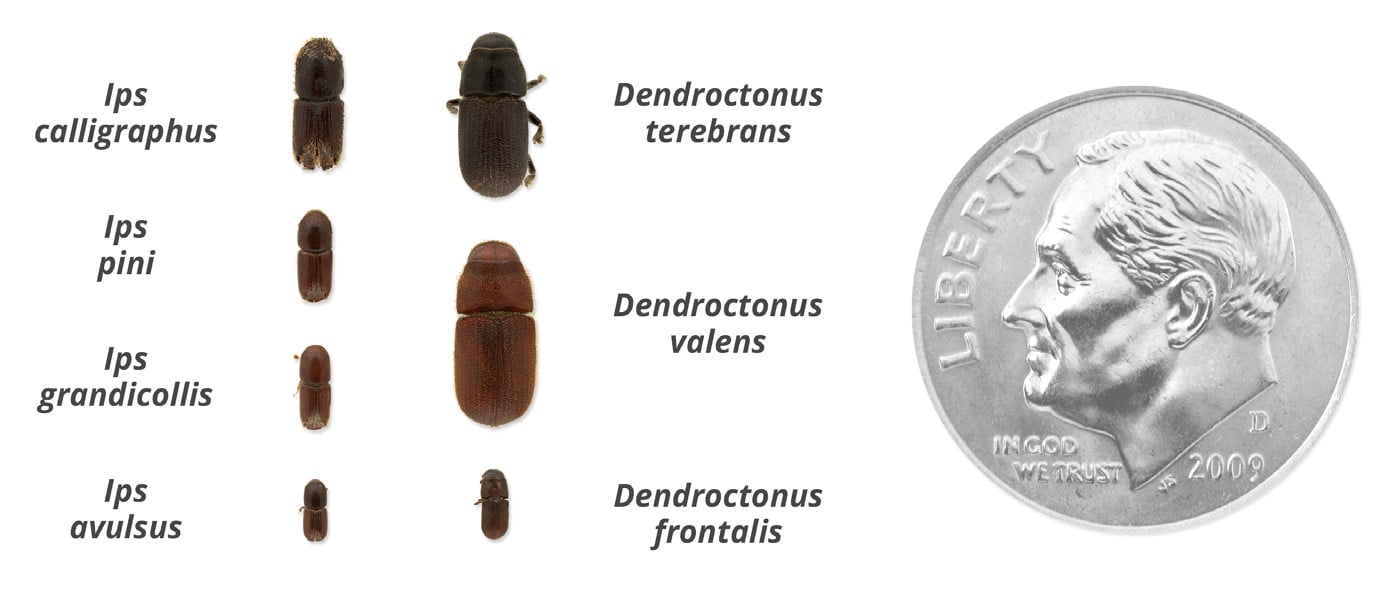
Four species of Ips bark beetles (also commonly known as Ips engraver beetles or Ips beetles) occur throughout pure and mixed pine forests in the southeastern U.S.: the six-spined ips (Ips calligraphus), the pine engraver (Ips pini), the eastern five-spined ips (Ips grandicollis), and the small southern pine engraver (Ips avulsus). Ips beetles appear similar to other bark beetles in this region, including the southern pine beetle (SPB), black turpentine beetle, and red turpentine beetle. These beetles occur throughout the entire southeastern U.S., with the exception of the pine engraver and red turpentine beetle, which are found only in the Appalachian region.
Identification
Ips beetles can be distinguished from other bark beetles by the presence of “spines” along a depression located at the rear of the abdomen (Fig. 2).
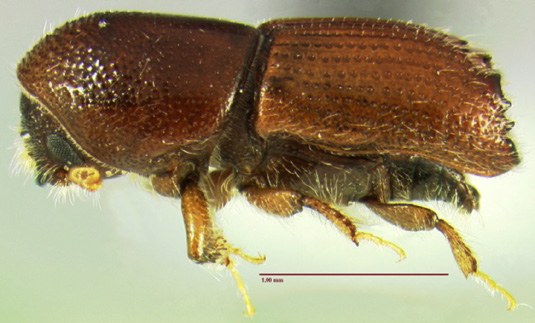
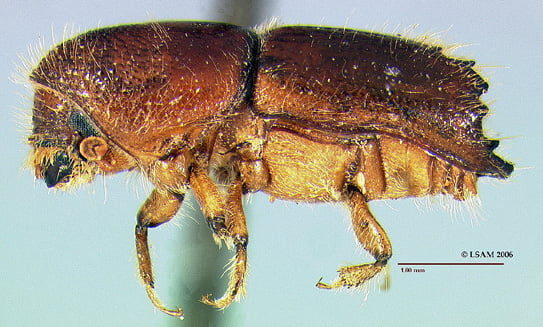
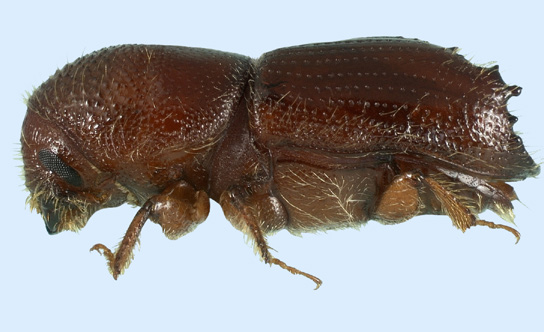
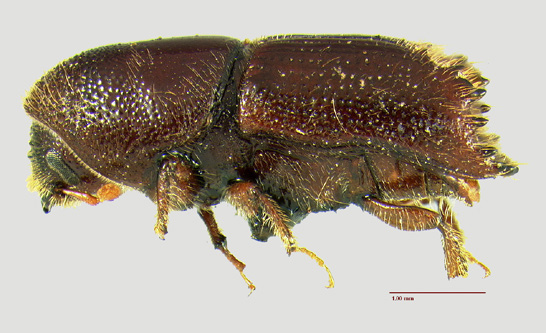
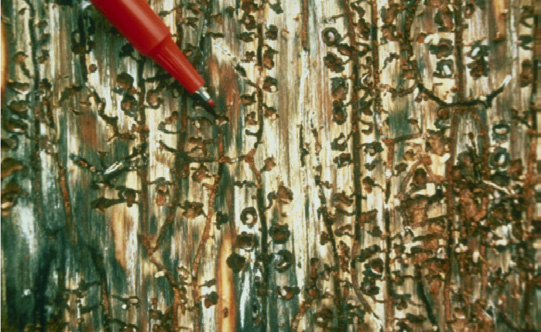
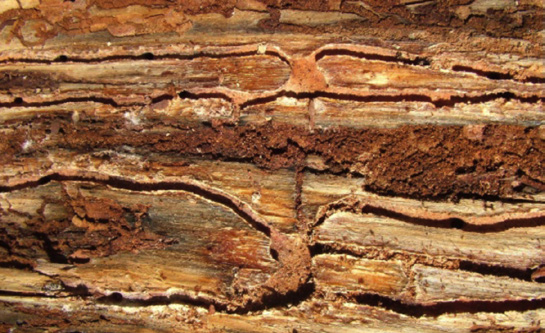
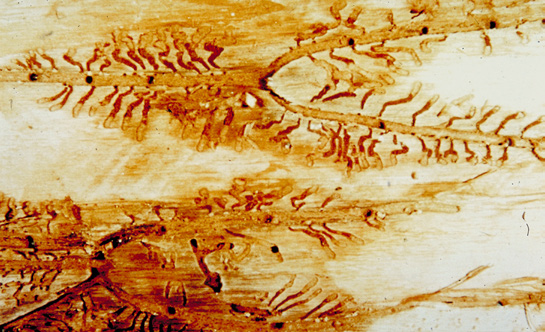
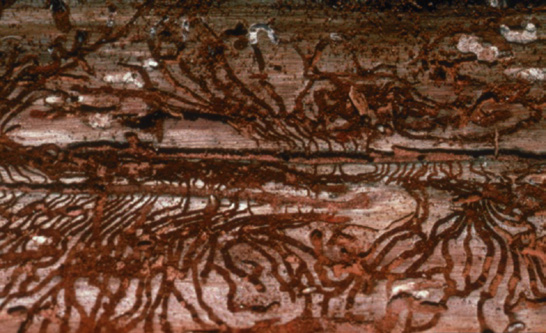
Figure 2. The four species of Ips bark beetles in the southeastern U.S. and their associated gallery patterns: I. avulsus (A), I. grandicollis (B), I. pini (C), and I. calligraphus (D).
The size of the beetle as well as number of spines helps to identify species. Freshly emerged adult Ips bark beetles are light brown and become black as they mature. The beetles are small, ranging between <1/16th inch and nearly 1/4th inch in length (Table 1, Fig. 1).
| Common name | Scientific name | Average size | Host tissue utilized | Distribution |
|---|---|---|---|---|
| Small southern pine engraver | Ips avulsus (Eichhoff) | 2.1-2.8 mm (1/16-1/8”) | Crowns, small/medium branches, small diameter slash, upper bole | Entire southeastern U.S. |
| Eastern five-spined Ips | Ips grandicollis (Eichhoff) | 2.9-4.6 mm (1/8-3/16”) | Middle/upper bole, large limbs, recently-felled trees and slash | Entire southeastern U.S. |
| Six-spined Ips | Ips calligraphus (Germar) | 3.8-5.9 mm (1/8-1/4”) | Lower/middle bole, large limbs, slash | Entire southeastern U.S. |
| Pine engraver | Ips pini (Say) | 3.3-4.3 mm (1/8-3/16”) | Sapling and pole-sized trees, slash, crowns | Appalachian Mountain region, south to the northern part of GA |
| Southern pine beetle | Dendroctonus frontalis (Zimmermann) | 2.0-3.2 mm (1/16-1/8”) | Main bole | Entire southeastern U.S. |
| Black turpentine beetle | Dendroctonus terebrans (Olivier) | 5.0-7.5 mm (3/16-5/16”) | Lower bole, occasionally structural roots | Entire southeastern U.S. |
| Red turpentine beetle | Dendroctonus valens (LeConte) | 5.3-8.3 mm (3/16-5/16”) | Lower bole, occasionally structural roots | Appalachian Mountain region, south to the northern part of GA |
Ips bark beetles can also be distinguished from other bark beetles by the size and pattern of the galleries they leave behind under the bark of colonized trees (Fig. 2). Ips beetles can colonize any pine species within their range (Table 2). Occasionally, they may colonize other conifers such as fir, spruce, and hemlock.
| Pine Species | Ips Species | ||||
|---|---|---|---|---|---|
| Common name | Scientific name | calligraphus | grandicollis | pini | avulsus |
| Eastern white pine | P. strobus L. | X | X | X | X |
| Loblolly pine | P. taeda L. | X | X | X | |
| Longleaf pine | P. palustris Mill. | X | X | X | |
| Pitch pine | P. rigida Mill. | X | X | X | |
| Pond pine | P. serotina Michx. | X | X | X | |
| Sand pine | P. clausa (Chapm. ex Engelm.) Sarg. | X | X | X | |
| Shortleaf pine | P. echinata Mill. | X | X | X | |
| Slash pine | P. elliottii Engelm. | X | X | X | |
| Spruce pine | P. glabra Walt. | X | |||
| Table Mountain pine | P. pungens Lamb. | X | X | ||
| Virginia pine | P. virginiana Mill. | X | X | X | X |
Ips Bark Beetle Biology
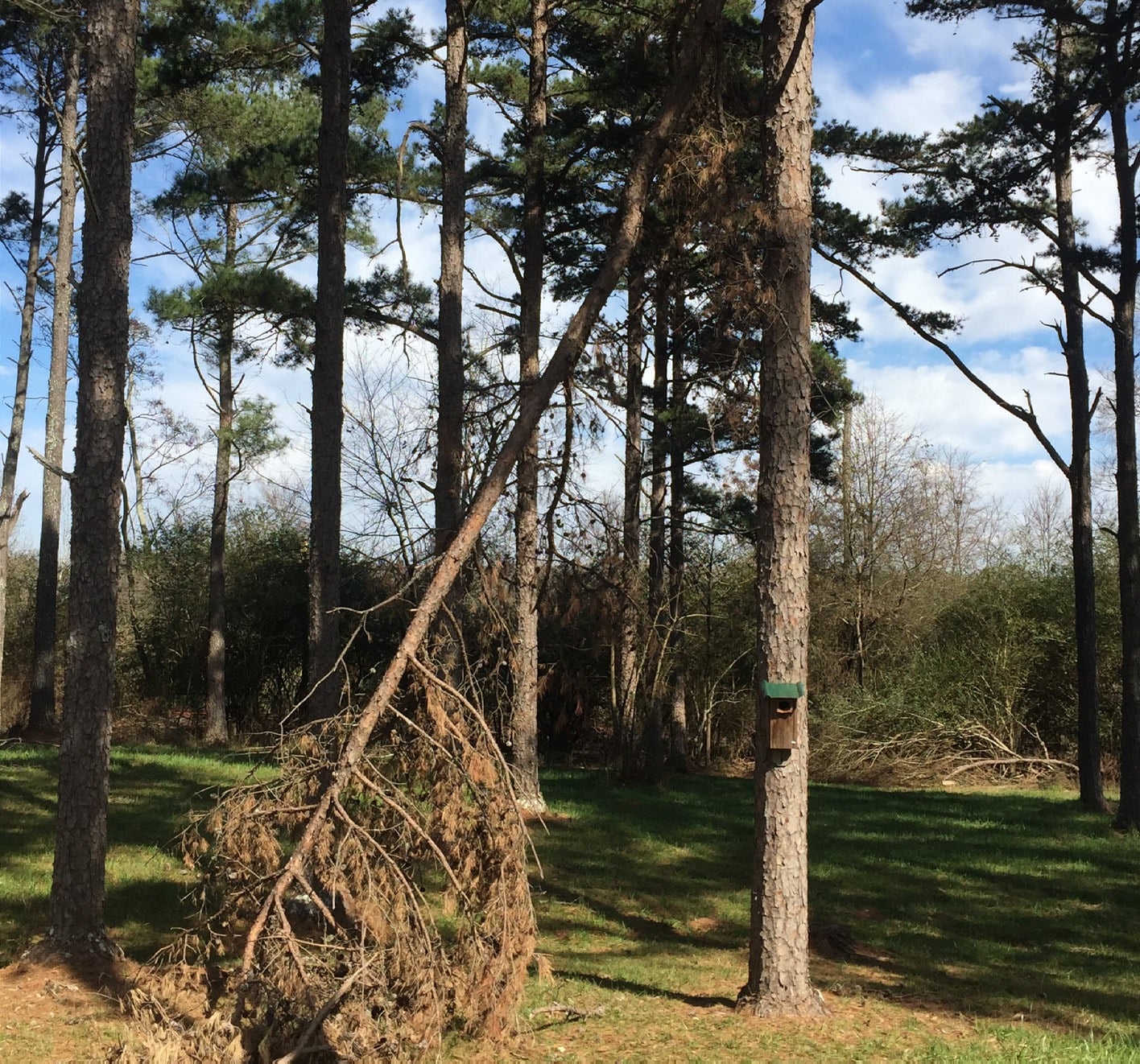
Ips beetles usually colonize stressed trees, logging slash, or injured branches (e.g. Fig. 3). Ips species tend to attack predictable sections of a tree (Table 1), although there is considerable overlap. Male Ips bore entrance tunnels through the outer bark and excavate chambers in the inner bark (cambium and phloem tissue). Males produce chemicals (pheromones) that are released into the air and attract females to the newly-made chamber1. Multiple females (up to 7) enter the chamber, mate, and lay eggs along galleries in the phloem. Female egg galleries are straight and vertically-oriented on the stem, and often form an “I”, “H”, or “Y” shape (Fig. 2).
Individual galleries range from 4 to 7 inches in length with eggs being laid along either side of the gallery. After hatching, the white, legless larvae create their own galleries (perpendicular to the parent galleries) as they feed in the inner bark. Larvae pupate at the end of the feeding galleries, and the new adults mature and bore out through the outer bark to repeat the life cycle. Exit holes are about 1/16 inch in diameter and perfectly round. Ips populations can increase rapidly under warm weather conditions, but develop slowly when temperatures drop below 59° F.2. Depending on weather conditions and host availability, Ips beetles can produce between six and ten generations per year in warm climates and may complete development in less than three weeks4.
Symptoms and Signs of an Ips Bark Beetle Attack
Symptoms of a bark beetle infestation are the tree’s responses to being colonized. Discolored crowns, dying and dead branches, sloughing bark, and dead trees are all symptoms of an Ips infestation. Pitch tubes, galleries, emergence holes, boring dust, frass (beetle excrement and sawdust), and Ips beetles or larvae themselves are all direct signs of bark beetles. Symptoms are easier to recognize than signs and are usually the first thing observed when trees are colonized. But, through closer inspection, the signs allow you to identify the type of bark beetle present.
Ips avulsus often colonize individual small branches on a tree, killing only the infested branches. When individual branches are infested and needles begin to fade, the resulting damage is called branch “flagging” (Fig. 4).
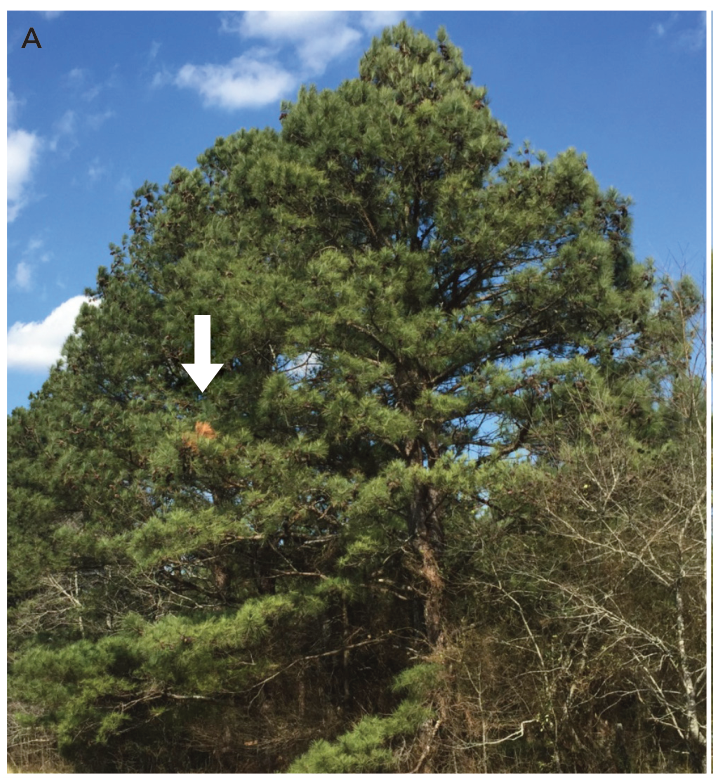
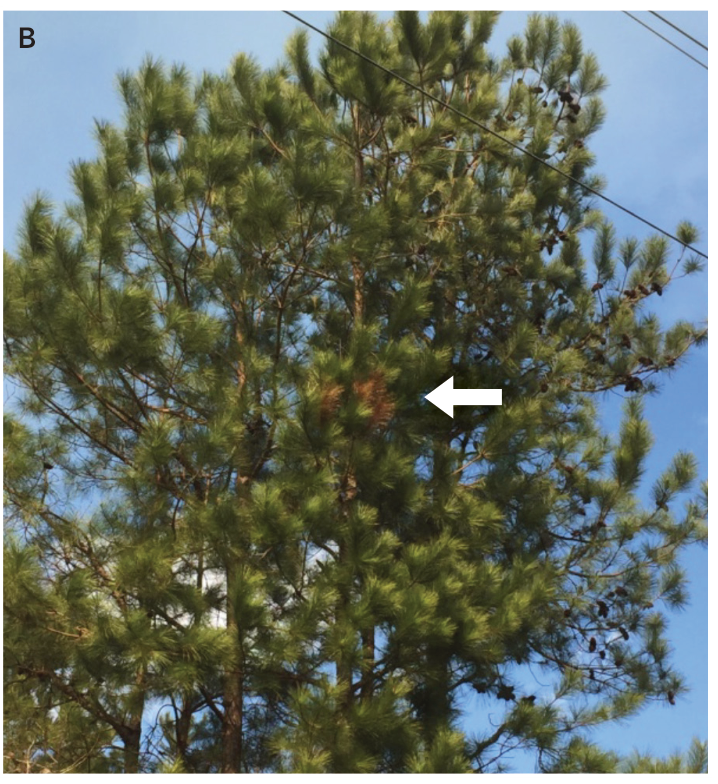
Figure 4. Ips bark beetle colonization on individual tree branches (identified by white arrows) on otherwise healthy loblolly pine trees in Morgan (A) and Putnam (B) Co., GA. This is known as branch “flagging”.
Other Ips species usually infest the bole (or main trunk) and larger branches, resulting in tree mortality. It is not uncommon to see multiple Ips species attacking a tree resulting in individual larger branches turning yellow (called “fading”) first, followed by the remainder of the crown fading, then turning red (recently dead) and finally brown (completely dead). Pitch tubes caused by Ips beetles generally occur on the flat part of bark plates (Fig. 5).
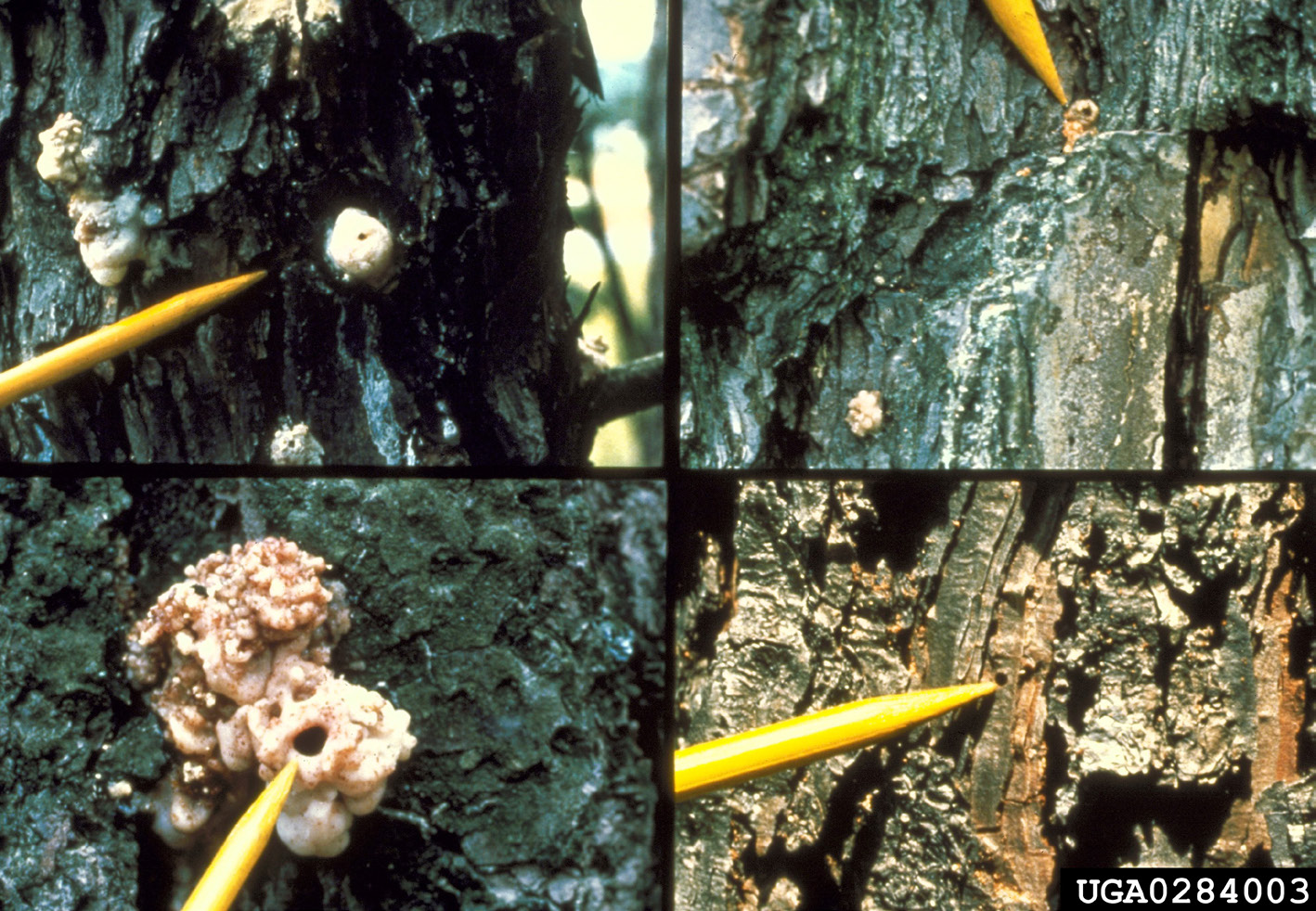
When Ips beetles colonize a drought stressed tree, pitch tubes may be absent and the boring dust and frass may be the only external sign of attack. Additionally, small emergence holes can be observed along the bole of the tree after an entire life cycle is completed. In slash material colonized by Ips, boring dust and frass will still be present, but a pitch tube probably won’t due to the lack of resin.
Infestations in Standing Trees
Ips beetles infest branches that are weakened by certain conditions (e.g., damage by storms or lower crown branches that are being “self-pruned” by the tree) and they can complete their development in this tree tissue. In otherwise healthy trees, Ips rarely move beyond the damaged branches. Ips beetles also help selectively remove stressed, old, or otherwise weakened or injured trees as part of natural succession. Normally referred to as “secondary invaders,” Ips beetles attack trees that are affected by some other condition; a stressed or damaged tree produces chemical signals that indicate to Ips beetles that the tree is vulnerable. A large cluster of tree mortality from an Ips infestation is unusual. Mortality is usually limited to only one or a few trees in a specific location (Fig. 6a), but a checkerboard pattern of fading and healthy trees may evolve as Ips moves throughout the stand infesting the weakest trees9 (Fig. 6b).
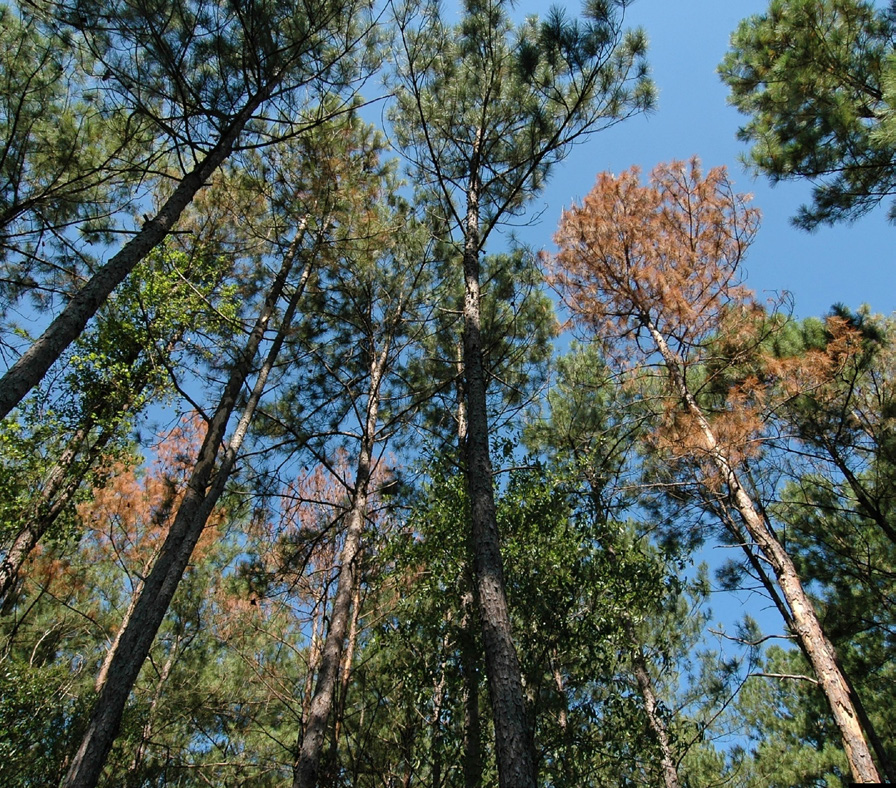

Figure 6. Dead and fading tree killed in an Ips bark beetle infestation (A) and aerial view of Ips-killed trees on the landscape (B).
In general, widespread drought is one of the main factors that can cause high Ips densities and significant mortality that occurs as a “spot” rather than a checkerboard pattern. For example, in northwestern Mississippi during fall 2015, an Ips beetle infestation occurred that covered nearly an acre in size and killed ~60 trees (Fig. 7a).
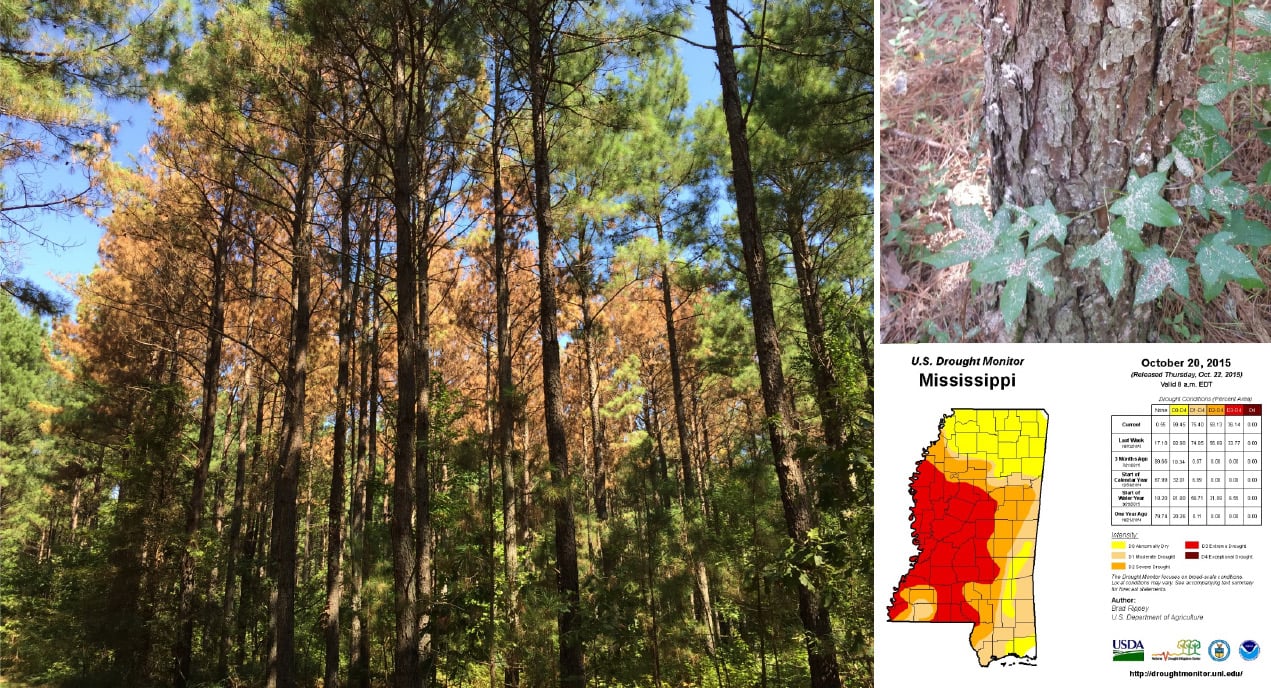
Beetle populations were so high on some trees that frass and sawdust were easily visible on ground vegetation (Fig. 7b). This type of behavior by Ips beetles (i.e. colonizing large areas) is generally associated with big disturbances on the landscape. In this case, the region had been in a very heavy drought all through the summer and fall months (Fig. 7c), which likely contributed to the stand’s increased susceptibility to Ips beetles.
Infestations in Damaged Trees and Slash
Ips beetles are endemic in most pine stands of the Southeast and will take advantage of natural or man-made disturbances. For instance, large numbers of Ips beetles may accumulate in areas where lightning storms, ice storms, tornadoes, wildfires, hurricanes, and droughts result in large numbers of damaged or weakened pines, which are suitable for colonization by bark beetles2,10. For example, hurricanes are known to leave excessive slash and damaged trees in their wake, which are often heavily colonized by Ips beetles within a year5,8,12. Ips populations may also increase following forestry activities such as prescribed burns that are too intense, as well as clearcutting or thinning operations that wound trees and leave large amounts of slash for breeding sites2,6. Activities such as thinning operations can also result in large amounts of slash, and Ips beetles often colonize the logging slash or trees wounded during harvest (though this generally happens only if slash is piled next to a wounded tree, or a wounded tree is otherwise weakened by drought).
Fresh slash material from harvest operations can provide breeding material to sustain all four Ips species in the southeastern U.S.3,7 Minimizing soil compaction and mechanical wounds on residual trees following a harvest can help reduce subsequent Ips beetle problems.
Characteristics of Bark Beetle Infestations in the Southeastern U.S.
Ips bark beetles, SPB, and turpentine beetles create many similar symptoms and signs on colonized trees (Table 3), and damage from these beetles is easily confused.
| Symptom or sign | Ips bark beetles | SPB | Turpentine beetles |
|---|---|---|---|
| Tree damage pattern over time | Ips avulsus attacks appear as fading on individual branches; Ips calligraphus or Ips grandicollis attacks on the main stem lead to crown turning yellow, red, and eventually brown | Entire crown fades uniformly from yellow to red to brown | Most infestations are insignificant—no crown damage pattern. With heavy infestation, entire crown fades uniformly from yellow to red to brown. |
| Gallery shape | I, H, or Y-shaped, usually vertical | S-shaped or winding side to side | ?-shaped, upside-down J-shape, or pie-shaped |
| Pitch tubes | Usually not present. When they are present, located on bark plates – the flat part of the bark, anywhere on tree (but see Table 1), small (<1/2” diameter) | Located in bark crevices, anywhere on tree, small (<1/2” diameter) | Lower 10’ of tree, large (~1” diameter) |
| Adult galleries | Usually not packed with frass | Usually packed with frass | Usually not packed with frass |
| Landscape damage pattern | One or few trees, checkerboard pattern, spots only during droughts or other large-scale tree stress event | Defined spots | One or few trees, checkerboard pattern, rarely see significant mortality. Tree usually has signs of some other physical damage |
Correct identification of the bark beetle species responsible for an attack is critical for prescribing proper management strategies to lessen further damage to remaining trees. Ips and turpentine beetles are usually much less aggressive than SPB, which is a primary killer of healthy pine trees in the southeastern U.S. Ips beetles are commonly found in the same stand and in the same tree as SPB. In these cases, SPB is generally the insect dictating tree mortality, and most of the outward symptoms and signs would point to SPB, but Ips beetles are often using this host material, too.
Once Ips bark beetles are diagnosed, what next?
As stated above, Ips bark beetles are secondary invaders or threats: they only attack trees that have been damaged or weakened by some other causal agent. Therefore, diagnosing Ips beetles in a tree or stand of trees is a good first step toward diagnosing a larger problem. Determining what caused the damage or stress to infested trees in the first place is very important for managing to minimize or eliminate that stressor and ultimately the long-term impacts of Ips.
Causal agents can be biotic (living) or abiotic (non-living). Biotic agents include primary insects (including repeated attacks by defoliators or sapsucking insects) or diseases (like leaf blights and root rots) that attack seemingly healthy trees. Abiotic stresses include soil conditions including compaction, improper use of pesticides, drought or excessive rainfall, weather events, root or trunk damage, poor or excessive drainage, poor nutrient management, grade changes and excessive competition or overstocked stands (too many trees competing for limited resources) to name a few. Tree age may also be a contributing factor.
Management Practices to Minimize Ips Bark Beetle Damage
Several techniques should lessen both frequency and severity of damage from Ips bark beetles. The best way to decrease risk of Ips beetles and mitigate damage if they occur is to promote tree and stand health through good management. Prevention is the best strategy to limit Ips activity. Preventative management strategies include planting tree species appropriate to a particular site, keeping woody and herbaceous competition under control, and implementing prescribed burning when appropriate. Avoiding injuries to residual trees during a harvest (or other management activity) is also important. Ultimately, preventative strategies limit the host suitability in a given area by creating conditions favorable to vigorous tree growth.
Chemical Treatments
Preventative treatments may be suitable for high-value trees, but chemicals are generally not used for Ips bark beetles over large areas. A few topical insecticides are labeled for Ips bark beetles (e.g. carbaryl and permethrin); however, these chemicals must be applied repeatedly, and the entire tree, including the upper portions of the crown, must be sprayed by a certified applicator. Systemic insecticides (e.g. emamectin benzoate, sold as Tree-äge®) have shown effectiveness in controlling bark beetles, but these require injection directly into the trunk of the tree. For high-value trees, insecticide use is recommended only as a preventive measure to control Ips beetle damage before infestation occurs. Once bark beetles have colonized a tree (i.e., crown symptoms are obvious), the tree cannot be saved by insecticides. Stand-level treatments are not cost effective for most nonindustrial private landowners.
There is no way to predict if or when Ips bark beetles will colonize a tree. In general, expect them in times of drought or after a storm has damaged trees. Any prevention treatments should be considered at the first indication of an extended drought or after a particularly damaging storm. Trees and forest may suffer from internal and external damage caused by droughts and storms for several years, so trees should be monitored and possibly treated for extended periods after these events.
Remember – IT’S THE LAW – Pesticides must be applied by licensed pesticide applicators in accordance with label directions. Much more information on pesticide application is available from the USDA Forest Service: www.fs.fed.us/foresthealth/pesticide, or from your state’s cooperative extension service. Please consult a professional prior to any pesticide usage.
Stand Management Practices
Sound management practices are key to the stand-level prevention of Ips bark beetle infestations. Stand thinning should be scheduled and conducted so that trees remain vigorous. Thinning is useful in preventing bark beetle attacks, but doing so too early in the rotation can decrease the value of future sawtimber, while thinning too late decreases tree vigor and can actually increase the stand’s susceptibility to bark beetle infestations11. Pine trees are most susceptible to attack from Ips bark beetles during drought conditions, so thinning during these times should be avoided if possible. Consultation with a professional forester is recommended before making a pine thinning decision (see Resources section at the end of this document).
To help alleviate Ips bark beetle problems after harvest, log deck placement and slash management are important factors to consider. Log decks should be kept away from remaining pine trees. All the machine activity associated with log decks can stress nearby trees by compacting soil and damaging roots. Slash should be redistributed throughout the stand, and this can be accomplished by logging crews. As slash is run over by equipment it gets broken down and exposed to light, wind and extreme temperatures, all of which can lessen slash suitability for Ips bark beetle breeding and reproduction. Slash distribution may also provide some protection against soil compaction and rutting from logging equipment. If slash redistribution is not possible or desired, residual slash piles can be burned or chipped. However, if burning is employed, take care to ensure residual trees are not damaged. At the very least, try to keep slash piles away from remaining trees.
Storm-damaged trees are very susceptible to Ips bark beetle damage. Promptly removing these trees not only reduces the chance of an Ips bark beetle infestation, but it also preserves value by getting the wood to a buyer before other insects or fungi can colonize the damaged trees.
Sometimes, Ips bark beetles may not impact enough trees to warrant mechanical harvesting or salvaging. In these cases, letting Ips bark beetle infestations run their course may be the most economical option. However, if mortality is significant in a stand, removal of affected trees or a partial stand harvest may be the best course of action, taking care not to damage nearby healthy residual trees. When mortality throughout the stand exceeds a critical threshold necessary to maintain full stocking levels, a complete stand harvest may sometimes be the most practical course of action. This can occur, for example, during severe and sustained drought periods even in well-thinned stands. Where sufficient wood markets are not available, infested trees may be cut down and left on-site; however, care must be taken not to damage adjacent healthy trees. Further, these felled trees should be cut into short lengths to encourage quick drying and bark sloughing, reducing their usefulness for bark beetle habitat.
Ips Bark Beetle Management in Urban Areas
Any practice that reduces tree stress will lessen the chance of an Ips bark beetle infestation. In urban areas, this can include avoiding or minimizing soil compaction, especially in construction areas. Replacing turfgrass with mulch within the drip zone or extent of the crown provides a more natural environment for roots to thrive. Supplemental watering of pine trees growing in residential areas during periods of drought may be useful in preventing Ips bark beetle attacks, as this could reduce overall tree stress, but there have been no studies conducted to test its effectiveness. Consult with a local arborist or urban tree health professional if you have questions about protecting a high-value tree from potential Ips bark beetle damage.
Summary
Four species of Ips bark beetles are present in the southeastern U.S. and are commonly found in the same trees as three somewhat similar-looking bark beetle species. Ips bark beetle infestations are often misidentified as SPB infestations, but differ in several important ways. Proper identification of the species of bark beetle and conditions responsible for stand or tree stress will greatly influence the recommended management activity or control method. Unlike SPB, Ips may infest slash left by harvesting activity or natural disturbances; consideration should be given to proper handling of this potential resource for Ips bark beetles during harvesting activities. Ips bark beetle habitat is also created from damaged trees and rutting/compacting soils during harvest or other construction activities. Thinning is a preventive measure that will help reduce future damage by both Ips bark beetles and SPB. Implementing proactive management practices is the best course of action to minimize future damage from both SPB and Ips bark beetles.
This document was modified from Publication 2876, Ips: The Other Pine Bark Beetles, Extension Service of Mississippi State University, cooperating with U.S. Department of Agriculture.
Southern Regional Extension Forestry (SREF) is a diverse team of trained natural resource educators, IT specialists, graphic designers, communi- cations and marketing experts, and media and content producers. SREF works closely with the Southern Land Grant University System, US Forest Service, and state forestry agencies to develop content, tools and support for the forestry and natural resource community. To find out more about SREF programs please visit www.sref.info.
Acknowledgements
We thank S. Clarke, C. Asaro, F. Stephen, C. Barton, and R. Trickel for helpful comments on earlier versions of this document.
References
- Birgersson, G., M.J. Dalusky, K.E. Espelie, and C.W. Berisford. 2012. Pheromone production, attraction, and interspecific inhibition among four species of Ips bark beetles in the southeastern USA. Psyche 2012, Article ID 532652, 14 p.
- Connor, M. D., and R. C. Wilkinson. 1983. Ips bark beetles in the south: Forest Insect and Disease Leaflet 129, U.S. Department of Agriculture Forest Service. Available online at http://www.barkbeetles.org/ips/ipsfidl.htm. Accessed 18 July 2008.
- Drooz, A.T., 1985. Insects of Eastern Forests. Misc. Publication 1426. U.S. Department of Agriculture, Forest Service, Washington, DC, 608 p.
- Eickwort, M. J., E. A. Mayfield III, and L. J. Foltz. 2006. Ips Engraver Beetles (Coleoptera: Curculionidae: Scolytinae). Florida Dept. Agriculture & Con. Serv. Division of Plant Industry, Entomology Circular No. 417.
- Hook, D.D., M.A. Buford, ad T.M. Williams. 1991. Impact of Hurricane Hugo on the South Carolina Coastal Plain forest. J. Coastal Res. 8: 291-300.
- Mayfield, A. E., III, J. Nowak, and G. C. Moses. 2006. Southern Pine Beetle Prevention in Florida: Assessing landowner Awareness, Attitudes, and Actions. J. For. 104: 241-247.
- Nebeker, T. E. 2003. Integrated forest pest management. In: Integrated Pest Management: Current and Future Strategies. Council for Agriculture Science and Technology (CAST). Task Force Report 140. pp. 11-116.
- Nebeker, T. E. 2009. Forest Health. Chapter 13 In: Wallace, M. J. and A. J. Londo (Eds). Managing the Family Forest in Mississippi, Publication 2470. 98 p.
- Stone, D., T. E. Nebeker, and A. J. Londo. 2007. Identifying and Controlling the Southern Pine Bark Beetles. Mississippi Forestry Commission and Mississippi State Extension Service, Publication 2448.
- Thatcher, R. C., J. L. Searcy, J. E. Coster, and G. D. Hertel (eds.). 1980. The southern pine beetle. US Forest Service, Technical Bulletin 1631. 266 p.
- Traugott, T. A., and S. Dicke. 2006. Are My Pine Trees Ready To Thin? Mississippi State Extension Service, Publication 2260.
- Wilkinson, R.C., R.W. Britt, E.A. Spence, and S.M. Seiber. 1978. Hurricane-Tornado Damage, Mortality, and Insect Infestations of Slash Pine. South. J. Appl. For. 2: 132-134.
Resources
For the location and phone numbers of state agencies in the southeastern U.S. providing forestry assistance and information, see the following websites:
- Alabama Forestry Commission: http://www.forestry.alabama.gov/
- Arkansas Forestry Commission: http://forestry.arkansas.gov/Pages/default.aspx
- Florida Forest Service: http://www.floridaforestservice.com/
- Georgia Forestry Commission: http://www.gatrees.org/
- Kentucky Division of Forestry: http://forestry.ky.gov/Pages/default.aspx
- Louisiana Department of Agriculture and Forestry: http://www.ldaf.state.la.us/
- Mississippi Forestry Commission: http://www.mfc.ms.gov/
- North Carolina Forest Service: http://www.ncforestservice.gov/
- Oklahoma Forestry Services: http://www.forestry.ok.gov/
- South Carolina Forestry Commission: http://www.state.sc.us/forest/
- Tennessee Division of Forestry: https://www.tn.gov/agriculture/section/forests
- Texas A&M Forest Service: http://texasforestservice.tamu.edu/
- Virginia Department of Forestry: http://www.dof.virginia.gov/
- Oklahoma Cooperative Extension Service: http://www.oces.okstate.edu/
- Clemson Cooperative Extension (South Carolina): http://www.clemson.edu/extension/
- University of Tennessee Extension: https://extension.tennessee.edu/
- Texas A&M AgriLife Extension: http://agrilifeextension.tamu.edu/
- Virginia Cooperative Extension: http://www.ext.vt.edu/
For the location and phone numbers of University Extension personnel in the southeastern U.S. providing forestry assistance and information, see the following websites:
- Alabama Cooperative Extension System: http://www.aces.edu/main/
- University of Arkansas Cooperative Extension Service: http://www.uaex.edu/
- University of Florida’s Institute of Food and Agricultural Sciences (UF/IFAS): http://solutionsforyourlife.ufl.edu/
- University of Georgia Extension: http://extension.uga.edu/
- Kentucky Cooperative Extension Service: https://extension.ca.uky.edu/
- Louisiana Cooperative Extension Service: http://www.lsuagcenter.com/
- Mississippi State University Extension Service: http://extension.msstate.edu/
- North Carolina Cooperative Extension: https://www.ces.ncsu.edu/
- Oklahoma Cooperative Extension Service: http://www.oces.okstate.edu/
- Clemson Cooperative Extension (South Carolina): http://www.clemson.edu/extension/
- University of Tennessee Extension: https://extension.tennessee.edu/
- Texas A&M AgriLife Extension: http://agrilifeextension.tamu.edu/
- Virginia Cooperative Extension: http://www.ext.vt.edu/
To locate a consulting forester:
Association of Consulting Foresters: http://www.acf-foresters.org/acfweb.
Click on “Find a Forester”, then select your state in the “People Search – Public” search page.
For more information on how to select a consulting forester, go to:
- http://msucares.com/pubs/publications/p2718.pdf
- http://texashelp.tamu.edu/011-disaster-by-stage/pdfs/recovery/ER-038-Selecting-a-Consulting-Forester.pdf
- http://www.uaex.edu/environment-nature/forestry/FSA-5019.pdf
Photo Credits
- Figure 1: David R. Coyle, Southern Regional Extension Forestry and University of Georgia, and Joseph V. McHugh, University of Georgia
- Figure 2: A: insect, Michael Ferro, Louisiana State Arthropod Museum; damage, Ronald Billings, Texas A&M Forest Service, Bugwood.org; B: insect, Michael Ferro, Louisiana State Arthropod Museum; damage, Jeffrey M. Eickwort, Florida DACS, Bugwood.org; C: insect, Natasha Wright, Cook’s Pest Control, Bugwood.org; damage, Texas A&M Forest Service, Bugwood.org; D: insect, Michael Ferro, Louisiana State Arthropod Museum; damage, Tim Tigner, Virginia Department of Forestry, Bugwood.org.
- Figure 3: David R. Coyle, Southern Regional Extension Forestry and University of Georgia
- Figure 4: David R. Coyle, Southern Regional Extension Forestry and University of Georgia
- Figure 5: James McGraw, North Carolina State University, Bugwood.org.
- Figure 6: Ronald F. Billings, Texas A&M Forest Service, Bugwood.org
- Figure 7: A. Brady Self, Mississippi State University; map created by Brad Rippey, USDA, available online at http://droughtmonitor.unl.edu.