

More and more families across the country are beginning to grow chickens for egg production. Some use the eggs to share with family, friends, and neighbors, and some sell freshly laid eggs at farmers markets, small country stores, or even small retailers. Others are growing birds to produce new chicks. Whether a small producer grows birds to produce hatching or table eggs, all should be well informed about how to establish good egg quality.
The quality of an egg involves both the exterior and interior qualities of the egg. Egg quality includes the cleanliness of the shell, soundness of the shell, thickness of the albumen, and color of the yolk. Good egg quality is critical to maintaining the hatching potential of eggs, as improper handling or storage of eggs will reduce the ability of the eggs to hatch and produce good quality chicks. For table eggs, improper handling and storage of eggs will reduce the grade of the eggs and could pose a potential health hazard.
Egg collection
If you intend to allow the hens to hatch their eggs, egg collection is not necessary. However, if you intend to incubate eggs in an artificial incubator, eggs should be frequently collected, at least four times daily, and should not be left overnight in the nests. Leaving hatching eggs in nests for extended periods can result in some pre-incubation that can reduce the rate of hatch and the quality of the chicks. In addition, prolonged stays in the nest can result in eggs being soiled or broken. Egg collection is also important for table eggs, as delaying collection can lead to a downgrade of the eggs. Eggs should be collected more frequently when the temperature is very hot or cold.

Cleaning eggs
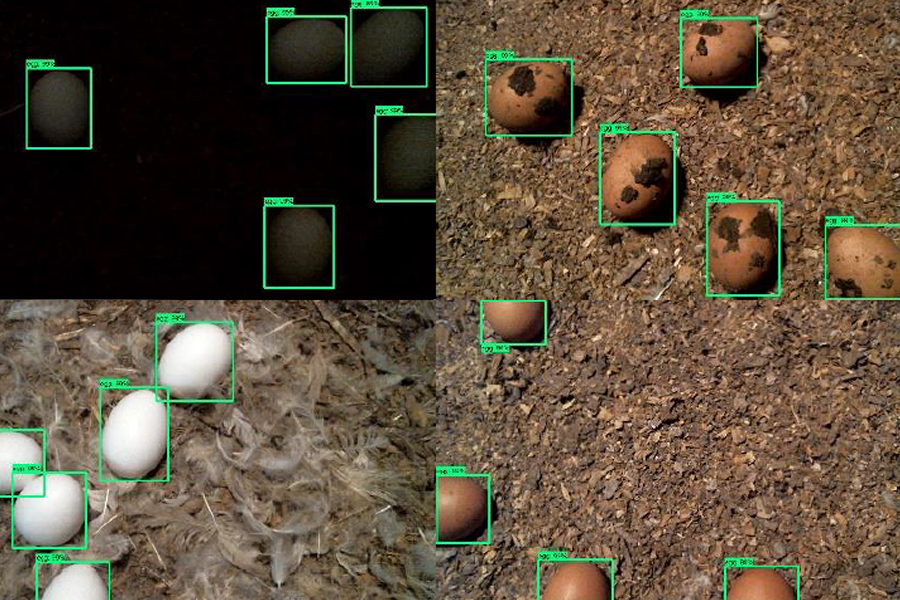
In the small producer setting, eggs can frequently be soiled or damaged, as multiple hens sometimes use the same nest boxes. As a result, it may be necessary to clean the soiled eggs. How you clean the eggs will depend on whether the eggs are for hatching (fertile eggs) or if they are table eggs.
For hatching eggs, remove all adhering debris using a clean, dry cloth. A common practice is to use a fine grade sandpaper to remove debris from hatching eggs, but this practice is not encouraged, as it removes the protective cuticle of the shell, which then allows bacteria to penetrate the eggs and can kill the embryo inside. Using a wet towel to wipe dirty eggs will also remove the cuticle and spread microbial organisms over the shell, resulting in the same impact as the sandpaper. Do not incubate dirty eggs because bacteria will penetrate the egg and eventually kill the growing embryo. This can also result in eggs exploding in the incubator and contaminating other eggs in the incubator.
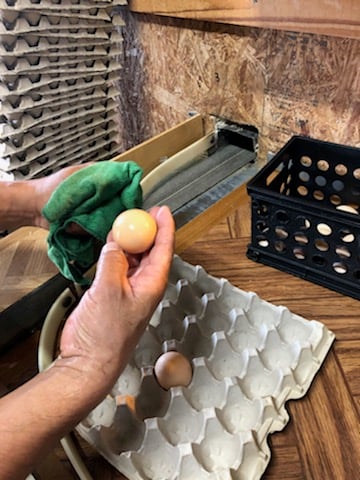
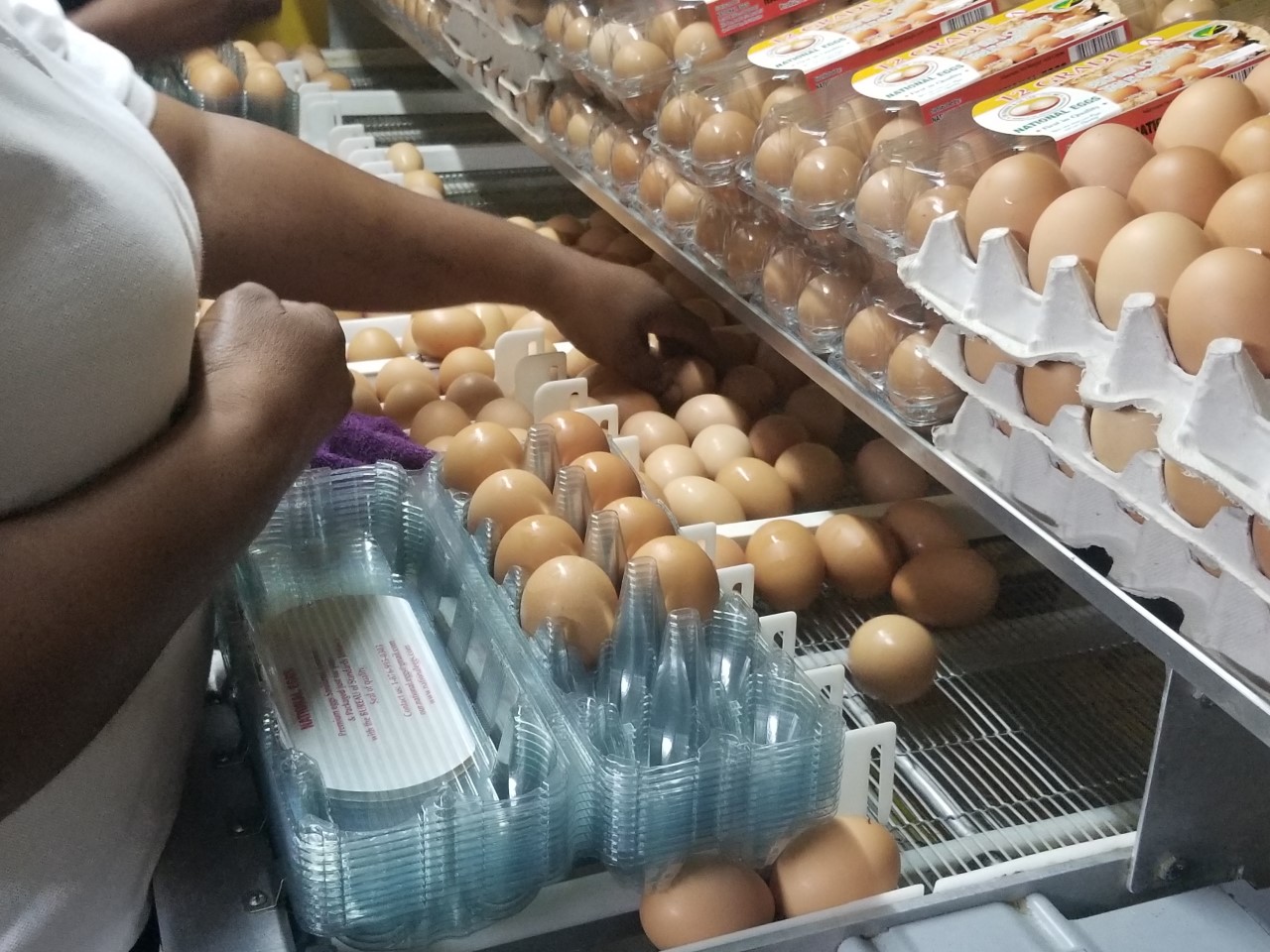
Cleaning table eggs is different from cleaning hatching eggs. Clean table eggs are to be separated from the dirty and cracked eggs. Producers should not sell cracked eggs, and humans should not consume leaking eggs. Adhering debris should be wiped from the eggs using a dry cloth or disposable paper towels. Dirty eggs can also be cleaned using a damp cloth, but the water used to dampen the cloth should be sanitized and frequently changed. Any detergents or sanitizers used must be food grade sanitizers and should be used following the manufacturer’s specifications.
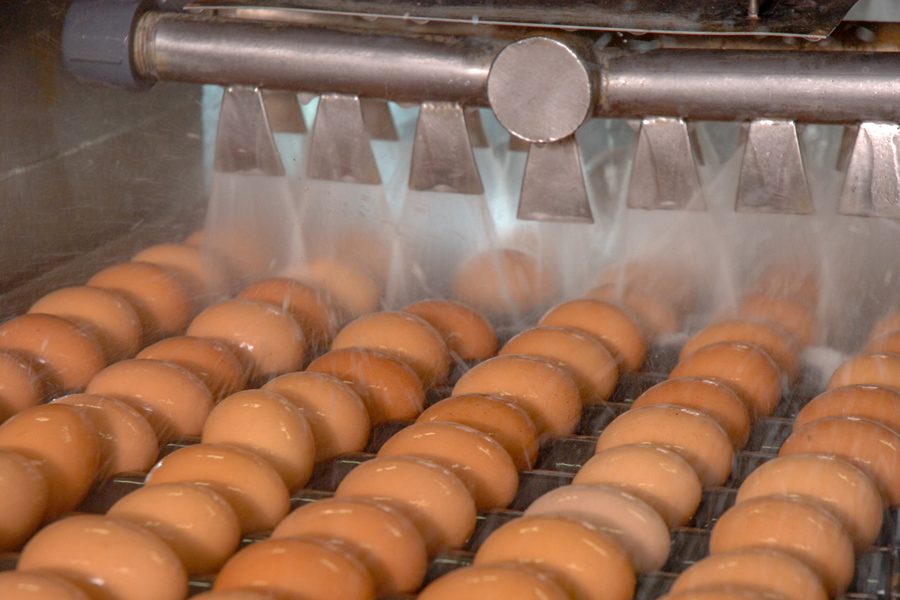
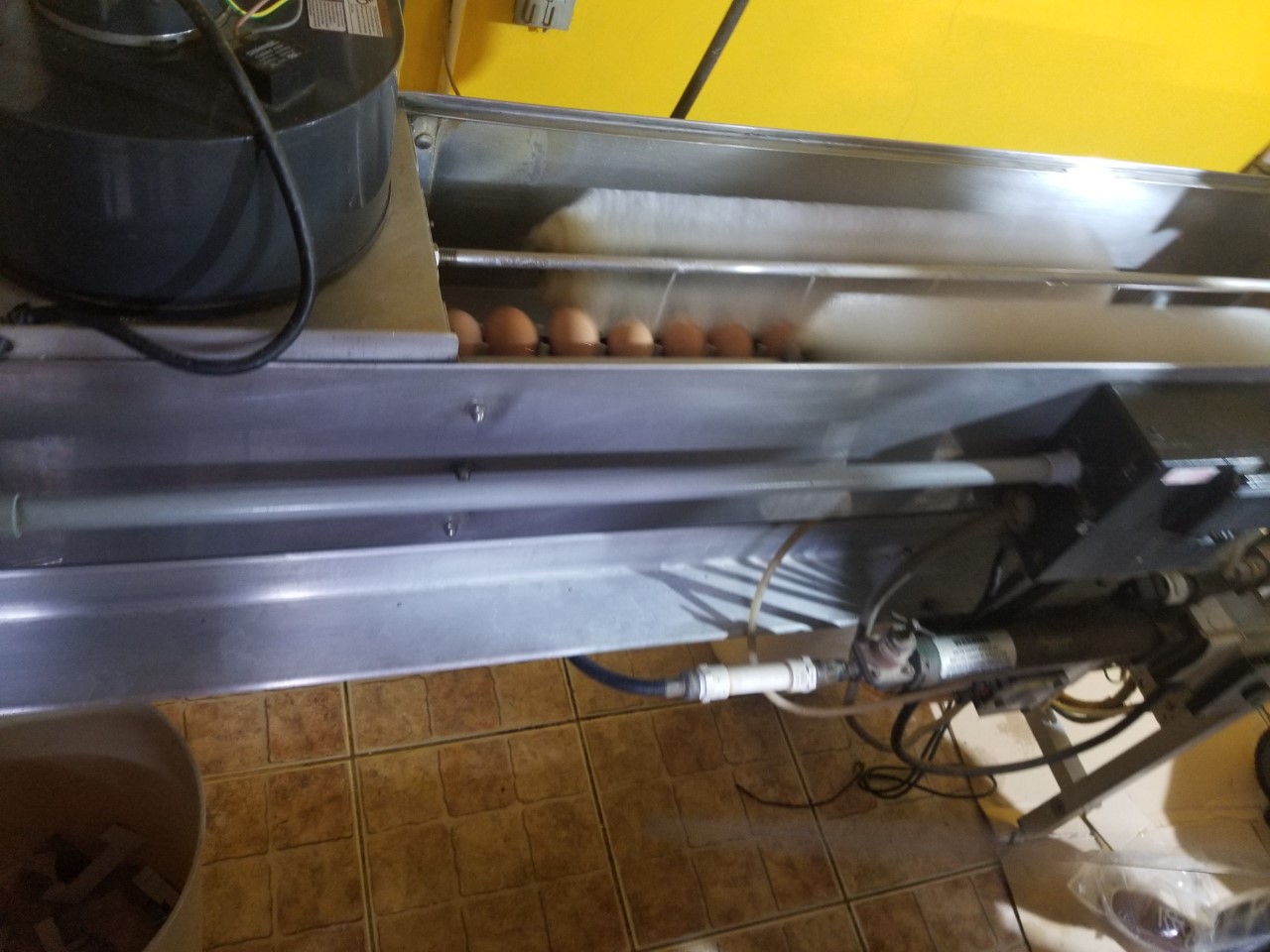
Unlike hatching eggs, dirty table eggs can be washed, but it is important to ensure that the temperature of the water is warmer than the temperature of the egg (about 105.8 degrees Fahrenheit). If you use an egg washing chemical, the pH should be greater than 10.5 to reduce the potential of contamination. The eggs should not be allowed to stand or soak in the water; the process should be continuous and the eggs should be dried after washing to reduce the risk of microorganisms entering the egg. Eggs can be rinsed to remove any residue of the sanitizer or debris from the shell but the water should be at least 120 degrees Fahrenheit to prevent the rinse water from drawing into the shell. Eggs should be quickly dried before packing.
Storing eggs
As with cleaning eggs, how you store your eggs will depend on whether they will be hatched or eaten.
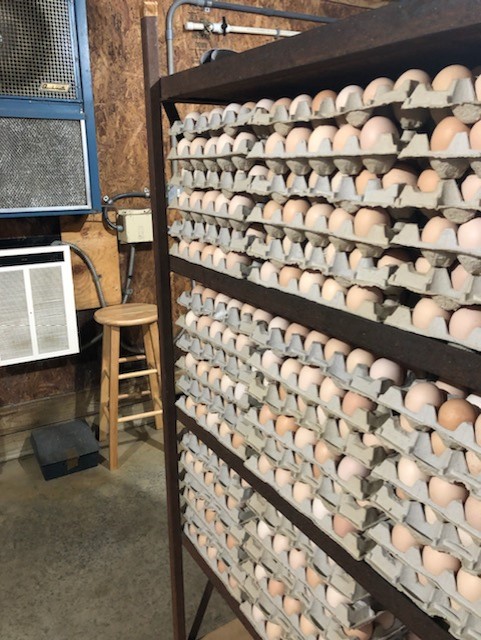
Hatching eggs are to be stored at a temperature below the threshold for embryonic development. They are to be stored in a refrigerator or cool room at a temperature of about 65 degrees Fahrenheit and can be stored at this temperature for about a week without reducing the hatchability of the eggs. After a week, the rate of hatch will begin to decline with each passing day.
Producers should refrigerate table eggs soon after they are collected and cleaned. Eggs should be refrigerated at temperatures of 45 to 55 degrees Fahrenheit within 72 hours of lay. This will maintain the eggs for extended periods. You should refrigerate table eggs at this temperature, as heat will cause the breakdown of the protein structure in the eggs and result in the loss of moisture in the eggs. If eggs are stored in a home refrigerator, it will slow down the process of albumin thinning and yolk thickening. Eggs that are stored at the proper temperature can be stored up to a month without any significant loss of quality.
Candling for interior qualities
Candling is a procedure in which a light is used to see the interior qualities of an egg. Producers can purchase candlers or make a simple one using a flashlight at the end of a cardboard cone. Candling is done in a dark room and the light is held on the egg so that you can see the interior of the egg.
Candling hatching eggs
Producers can candle hatching egg to determine whether the eggs in the incubator are fertile and the embryos are developing. Candling helps prevent the producer from incubating infertile eggs and allows them to assess the fertility of the breeding stock. Candling also allows the growers to cull bad eggs and free up space in the incubator. In addition, removing early dead and contaminated eggs will improve the sanitation during the incubation process.
You can candle light-colored shelled eggs at seven days. Dark-colored shelled eggs are better candled at 10 to 12 days of incubation. The key to successful candling of incubated eggs is to look for blood vessels. If the blood vessels are intact against the shell, you can be confident of a viable embryo.

Candling table eggs
Table eggs are candled to determine the grade of the egg. The U.S. Department of Agriculture egg grades are AA, A, B, and inedible/loss. This indicates the freshness of the egg, with AA being the freshest. The internal qualities that determine the grade of the egg include: 1) the air cell (AA: 1/8-inch in depth; A: 1/8- to 3/16-inch in depth; B: greater than 3/16-inch in depth), 2) the yolk (size, shape, defects, and germ development), and 3) the white (should be clear of discoloration and foreign bodies as well as blood spots and meat spots more than 1/8-inch in diameter). Loss eggs, meaning eggs that should not be eaten or sold, are inedible eggs, for example musty, moldy, frozen, bloody white, green white, or contaminated.


Marketing eggs
Producers planning to sell their eggs should obtain an Egg Candling Certificate from the Georgia Department of Agriculture by attending the certification class. Information regarding scheduling a candling class and information on the rules and regulations pertaining to egg processing and sale can be found at the Georgia Department of Agriculture website.
Summary points
- Good egg quality is important for both hatching eggs and table eggs.
- Egg quality includes both the external and internal qualities of the egg.
- Increasing the number of times eggs are collected each day will help to maintain good egg quality.
- Hatching eggs should not be washed, but table eggs can be washed in water that is warmer than the egg.
- Hatching eggs should be stored at a temperature of about 65 degrees Fahrenheit, while a temperature of 45 degrees Fahrenheit is ideal for storing table eggs.
- Candling hatching eggs allows you to assess the development of the embryo.
- Candling table eggs allows you to determine the grade of the egg.
References
Australian Egg Corporation Limited. (2010). Code of practice for shell egg production. Retrieved from www.australianeggs.org.au/dmsdocument/815-code-of-practice-for-shell-egg-production-grading-packing-and-distribution-2009-pdf
European Food Safety Authority. (2005). Opinion on the scientific panel on micro risks on washing table eggs. Retrieved from www.efsa.europa.eu/en/efsajournal/doc/269.pdf
Health Canada. (2013). Guidelines for egg washers. Retrieved from www.inspection.gc.ca/food/eggs-and-egg-products/manuals/shell-egg/chapter-18/eng/1375380670241/1375380672147#a18.10
U.S. Department of Agriculture. (2000). Egg grading manual. Retrieved from www.ams.usda.gov/publications/content/egg-grading-manual