
Additional authors: Bill Cline, North Carolina State University; Renee Threlfall, University of Arkansas; Mark Hoffmann, North Carolina State University; Elina Coneva, Auburn University; Margaret Worthington, University of Arkansas; Amanda McWhirt, University of Arkansas; Aaron Cato, University of Arkansas.
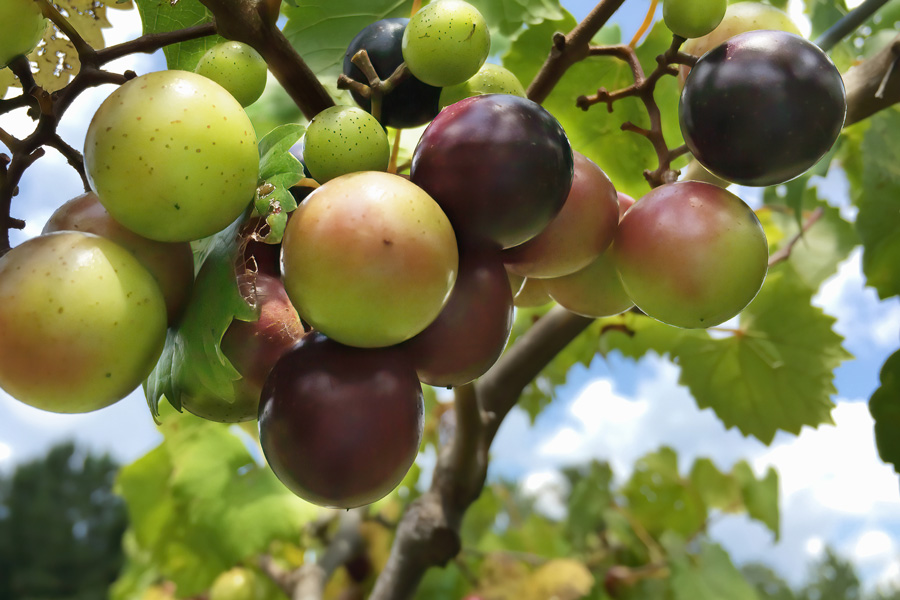
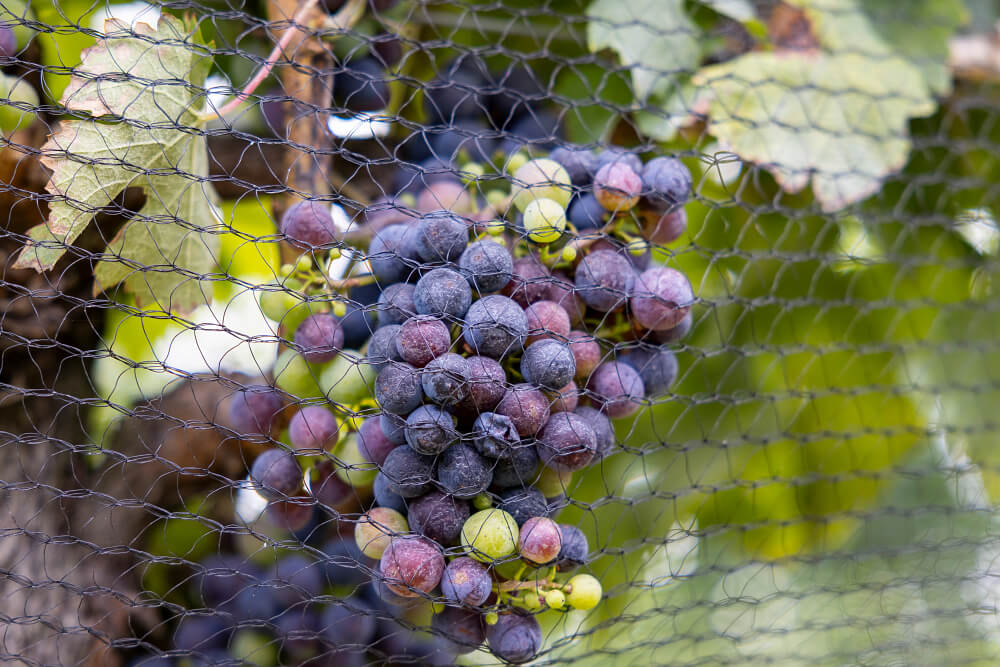
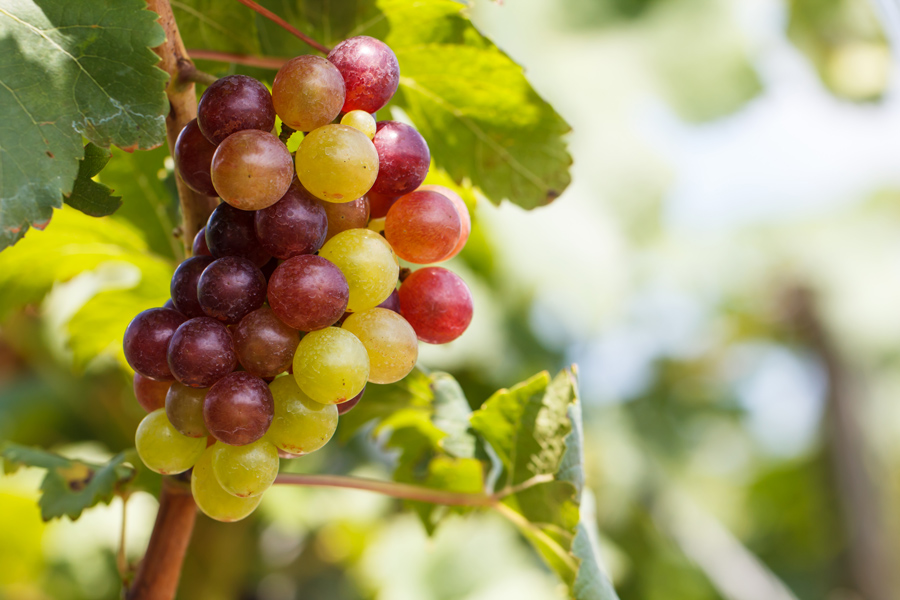
This phenology-based muscadine management poster (48 in. x 36 in.) provides a reference for sound viticultural, disease, and insect management practices in a digestible format.
Produced in cooperation with University of Tennessee, North Carolina State University, University of Arkansas, and Auburn University. A publication of the Southern Region Small Fruit Consortium.
How to use this calendar: Select one or more section checkboxes to show only those topics, such as Cultural Practices, Diseases, or Insects. Select one or more stage checkboxes to limit the calendar to those growth stages. If all section boxes are checked, all topics are shown. If no stage boxes are checked, all stages are shown. You can combine both filters at the same time—for example, you can view only Diseases at Bloom and Veraison. Uncheck boxes to hide information you do not need.
| Stage | Management Activities |
|---|---|
Dormant |
Cultural Practices
PruningSet the crop potential by pruning between December and March. Spurs generally should hold no more than five buds. High-bearing cultivars (e.g., ‘Carlos’) can be pruned to 30–35 buds per foot of cordon, while others (e.g., ‘Supreme’) should keep 20–25 buds. Assess cordon replacement needs annually and flag for pruning during dormancy.ScoutingDuring pruning, assess plants for trunk injury and signs of vine stress (poor bud set, aerial root production, dead or split wood, or cracking in the bark).Diseases
Botryosphaeria diebackMultiple fungi are involved in this disease complex. Applying a fungicide immediately after pruning can reduce infection. Prune infected cordons or trunks, based on disease location, and remove infected prunings from vineyard.Crown gallPlant clean nursery stock and remove dead vines. Galls may appear on the trunk or cordons following cold injury.Insects
Grape root borersWhen pulling out dead/dying vines, if larvae or tunneling damage to the roots are found, note that additional vines are likely infested and management may be warranted in the summer. |
Bud Swell |
Cultural Practices
ScoutingDuring pruning, assess plants for trunk injury and signs of vine stress (poor bud set, aerial root production, dead or split wood, or cracking in the bark).Insects
AphidsScout new shoots for aphid feeding. Treat if aphids are abundant and shoot terminals or foliage are becoming malformed. Aphids rarely reach damaging levels. Regularly scout areas with a history of injury to assess treatment needs. |
Bud Break |
Cultural Practices
ScoutingDuring pruning, assess plants for trunk injury and signs of vine stress (poor bud set, aerial root production, dead or split wood, or cracking in the bark).Diseases
Angular leaf spotDestroy leaf debris on the vineyard floor during dormancy to reduce inoculum for the growing season. Season-long use of effective fungicides will keep disease levels low.Bitter rotDuring dormant pruning, remove mummified fruit and any diseased tissues. Apply fungicides from bud break until harvest. Bloom and postbloom is a critical infection period.Leaf rustFairly minor, sporadic disease in southeastern United States. Use of typical protective fungicides will sufficiently reduce infection.Black rotDuring dormant pruning, remove mummified fruit and any diseased tissues. Apply fungicides from bud break until veraison. Early prebloom until 6 weeks postbloom is a critical infection period.Powdery mildewApply fungicides as soon as green tissue emerges in the spring and continue through veraison. The period of late prebloom through fruit set is particularly important for fruit infections.Insects
Climbing cutwormsMonitor bud feeding in early spring. If damage is present, look for cutworms under bark, on cordons, trunks, and at soil level. Cutworms are active at night and may not be apparent during the day.AphidsScout new shoots for aphid feeding. Treat if aphids are abundant and shoot terminals or foliage are becoming malformed. Aphids rarely reach damaging levels. Regularly scout areas with a history of injury to assess treatment needs.Grape leafhoppersInjury appears as colorless, clear stippling on leaves; heavy infestations can cause defoliation. Treat if 10 leafhopper nymphs or adults are present per leaf, or when grape leafhoppers and injury are evident.Grape flea beetlesCheck for feeding on unfolding leaves and buds from these small, metallic blue-green beetles. Beetles often feed at dusk or at night and may not be present during the day. Treat when a sample of 10 vines per acre shows 5% damaged buds or 10% foliar injury. Base treatments on regular scouting in areas with a history of injury. |
Early Prebloom |
Cultural Practices
Floor ManagementMow and/or reduce weeds in ground cover. This is most important for young or stressed vines.Diseases
Angular leaf spotDestroy leaf debris on the vineyard floor during dormancy to reduce inoculum for the growing season. Season-long use of effective fungicides will keep disease levels low.Bitter rotDuring dormant pruning, remove mummified fruit and any diseased tissues. Apply fungicides from bud break until harvest. Bloom and postbloom is a critical infection period.Leaf rustFairly minor, sporadic disease in southeastern United States. Use of typical protective fungicides will sufficiently reduce infection.Black rotDuring dormant pruning, remove mummified fruit and any diseased tissues. Apply fungicides from bud break until veraison. Early prebloom until 6 weeks postbloom is a critical infection period.Powdery mildewApply fungicides as soon as green tissue emerges in the spring and continue through veraison. The period of late prebloom through fruit set is particularly important for fruit infections.Insects
Climbing cutwormsMonitor bud feeding in early spring. If damage is present, look for cutworms under bark, on cordons, trunks, and at soil level. Cutworms are active at night and may not be apparent during the day.AphidsScout new shoots for aphid feeding. Treat if aphids are abundant and shoot terminals or foliage are becoming malformed. Aphids rarely reach damaging levels. Regularly scout areas with a history of injury to assess treatment needs.Grape leafhoppersInjury appears as colorless, clear stippling on leaves; heavy infestations can cause defoliation. Treat if 10 leafhopper nymphs or adults are present per leaf, or when grape leafhoppers and injury are evident.Grape flea beetlesCheck for feeding on unfolding leaves and buds from these small, metallic blue-green beetles. Beetles often feed at dusk or at night and may not be present during the day. Treat when a sample of 10 vines per acre shows 5% damaged buds or 10% foliar injury. Base treatments on regular scouting in areas with a history of injury. |
Late Prebloom |
Cultural Practices
Floor ManagementMow and/or reduce weeds in ground cover. This is most important for young or stressed vines.Diseases
Angular leaf spotDestroy leaf debris on the vineyard floor during dormancy to reduce inoculum for the growing season. Season-long use of effective fungicides will keep disease levels low.Bitter rotDuring dormant pruning, remove mummified fruit and any diseased tissues. Apply fungicides from bud break until harvest. Bloom and postbloom is a critical infection period.Leaf rustFairly minor, sporadic disease in southeastern United States. Use of typical protective fungicides will sufficiently reduce infection.Black rotDuring dormant pruning, remove mummified fruit and any diseased tissues. Apply fungicides from bud break until veraison. Early prebloom until 6 weeks postbloom is a critical infection period.Powdery mildewApply fungicides as soon as green tissue emerges in the spring and continue through veraison. The period of late prebloom through fruit set is particularly important for fruit infections.Insects
Climbing cutwormsMonitor bud feeding in early spring. If damage is present, look for cutworms under bark, on cordons, trunks, and at soil level. Cutworms are active at night and may not be apparent during the day.AphidsScout new shoots for aphid feeding. Treat if aphids are abundant and shoot terminals or foliage are becoming malformed. Aphids rarely reach damaging levels. Regularly scout areas with a history of injury to assess treatment needs.Grape leafhoppersInjury appears as colorless, clear stippling on leaves; heavy infestations can cause defoliation. Treat if 10 leafhopper nymphs or adults are present per leaf, or when grape leafhoppers and injury are evident.Grape flea beetlesCheck for feeding on unfolding leaves and buds from these small, metallic blue-green beetles. Beetles often feed at dusk or at night and may not be present during the day. Treat when a sample of 10 vines per acre shows 5% damaged buds or 10% foliar injury. Base treatments on regular scouting in areas with a history of injury.Grape berry mothsUncommon pest that can be very damaging if present. Monitor grape berry moths using commercially available pheromone-baited traps. Look for webbing in the clusters when berries are small as larvae will connect multiple berries with webs. |
Bloom |
Cultural Practices
Floor ManagementMow and/or reduce weeds in ground cover. This is most important for young or stressed vines.Tissue SamplingCollect at least 60 leaf blades or 90 petioles to sample for seasonal nutritional issues, particularly in varieties or blocks not growing as expected. Collect the leaf tissue from opposite the berry clusters, as indicated. Soil tests can be collected to monitor soil pH and other nutrients. If necessary, fertilizers can be added (in general, do not fertilize after July as this increases risk of winter injury).Diseases
Angular leaf spotDestroy leaf debris on the vineyard floor during dormancy to reduce inoculum for the growing season. Season-long use of effective fungicides will keep disease levels low.Bitter rotDuring dormant pruning, remove mummified fruit and any diseased tissues. Apply fungicides from bud break until harvest. Bloom and postbloom is a critical infection period.Leaf rustFairly minor, sporadic disease in southeastern United States. Use of typical protective fungicides will sufficiently reduce infection.Black rotDuring dormant pruning, remove mummified fruit and any diseased tissues. Apply fungicides from bud break until veraison. Early prebloom until 6 weeks postbloom is a critical infection period.Powdery mildewApply fungicides as soon as green tissue emerges in the spring and continue through veraison. The period of late prebloom through fruit set is particularly important for fruit infections.Ripe rotDuring dormant pruning, remove mummified fruit and any diseased tissues. Infected fruit do not show symptoms until they ripen. Apply fungicides from bloom until harvest. Harvest on time to avoid secondary spread from overripe fruit.Insects
AphidsScout new shoots for aphid feeding. Treat if aphids are abundant and shoot terminals or foliage are becoming malformed. Aphids rarely reach damaging levels. Regularly scout areas with a history of injury to assess treatment needs.Grape leafhoppersInjury appears as colorless, clear stippling on leaves; heavy infestations can cause defoliation. Treat if 10 leafhopper nymphs or adults are present per leaf, or when grape leafhoppers and injury are evident.Grape berry mothsUncommon pest that can be very damaging if present. Monitor grape berry moths using commercially available pheromone-baited traps. Look for webbing in the clusters when berries are small as larvae will connect multiple berries with webs. |
Fruit Set |
Cultural Practices
Floor ManagementMow and/or reduce weeds in ground cover. This is most important for young or stressed vines.HedgingHedge under the vines, then lightly on top and on both sides of the rows, if needed. Leave 3–4 ft between the ground and canopy. Additional hedging underneath the rows, called skirting, may be required at additional times during the season to prevent the vines from contacting the ground. Fresh-market varieties may require hedging through harvest. Use caution because excessive hedging will weaken vines and delay ripening. If using a horizontally divided trellis, also divide shoots through the center canopy.Diseases
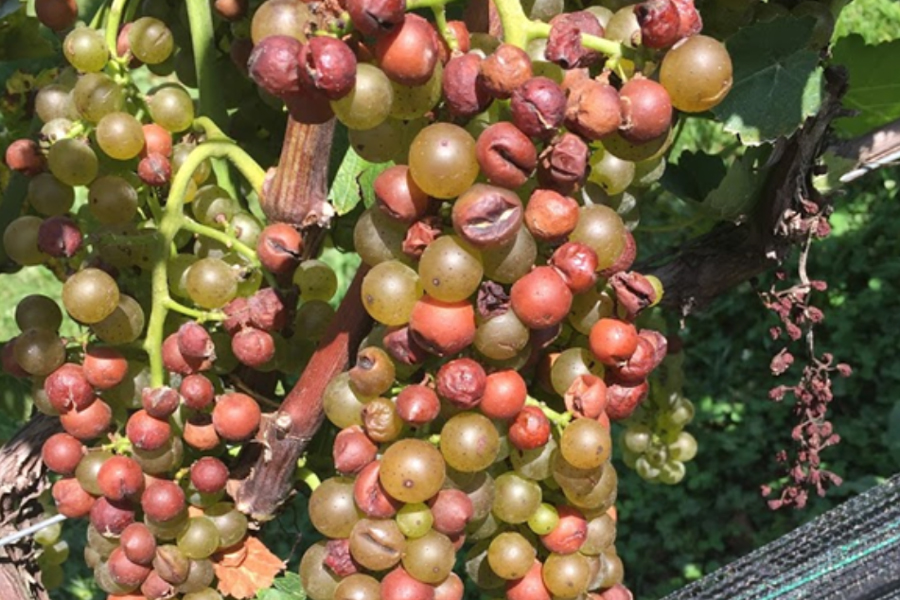
Angular leaf spotDestroy leaf debris on the vineyard floor during dormancy to reduce inoculum for the growing season. Season-long use of effective fungicides will keep disease levels low.Bitter rotDuring dormant pruning, remove mummified fruit and any diseased tissues. Apply fungicides from bud break until harvest. Bloom and postbloom is a critical infection period.Leaf rustFairly minor, sporadic disease in southeastern United States. Use of typical protective fungicides will sufficiently reduce infection.Black rotDuring dormant pruning, remove mummified fruit and any diseased tissues. Apply fungicides from bud break until veraison. Early prebloom until 6 weeks postbloom is a critical infection period.Powdery mildewApply fungicides as soon as green tissue emerges in the spring and continue through veraison. The period of late prebloom through fruit set is particularly important for fruit infections.Ripe rotDuring dormant pruning, remove mummified fruit and any diseased tissues. Infected fruit do not show symptoms until they ripen. Apply fungicides from bloom until harvest. Harvest on time to avoid secondary spread from overripe fruit.Macrophoma rotRemove leaf litter and other plant debris between rows and keep the canopy open to reduce infection. Apply fungicides from fruit set to harvest.Insects
AphidsScout new shoots for aphid feeding. Treat if aphids are abundant and shoot terminals or foliage are becoming malformed. Aphids rarely reach damaging levels. Regularly scout areas with a history of injury to assess treatment needs.Grape leafhoppersInjury appears as colorless, clear stippling on leaves; heavy infestations can cause defoliation. Treat if 10 leafhopper nymphs or adults are present per leaf, or when grape leafhoppers and injury are evident.Grape berry mothsUncommon pest that can be very damaging if present. Monitor grape berry moths using commercially available pheromone-baited traps. Look for webbing in the clusters when berries are small as larvae will connect multiple berries with webs.Japanese beetles and green June beetlesCheck for shiny, green and copper colored beetles. Feeding “skeletonizes” leaves and is concentrated in the inner part of the vine canopy. Leaf damage on established vines is rarely severe enough to require an insecticide spray. However, the larger green June beetles may feed on the fruit. |
Green Fruit |
Cultural Practices
Floor ManagementMow and/or reduce weeds in ground cover. This is most important for young or stressed vines.Diseases
Angular leaf spotDestroy leaf debris on the vineyard floor during dormancy to reduce inoculum for the growing season. Season-long use of effective fungicides will keep disease levels low.Bitter rotDuring dormant pruning, remove mummified fruit and any diseased tissues. Apply fungicides from bud break until harvest. Bloom and postbloom is a critical infection period.Leaf rustFairly minor, sporadic disease in southeastern United States. Use of typical protective fungicides will sufficiently reduce infection.Black rotDuring dormant pruning, remove mummified fruit and any diseased tissues. Apply fungicides from bud break until veraison. Early prebloom until 6 weeks postbloom is a critical infection period.Powdery mildewApply fungicides as soon as green tissue emerges in the spring and continue through veraison. The period of late prebloom through fruit set is particularly important for fruit infections.Ripe rotDuring dormant pruning, remove mummified fruit and any diseased tissues. Infected fruit do not show symptoms until they ripen. Apply fungicides from bloom until harvest. Harvest on time to avoid secondary spread from overripe fruit.Macrophoma rotRemove leaf litter and other plant debris between rows and keep the canopy open to reduce infection. Apply fungicides from fruit set to harvest.Insects
Grape leafhoppersInjury appears as colorless, clear stippling on leaves; heavy infestations can cause defoliation. Treat if 10 leafhopper nymphs or adults are present per leaf, or when grape leafhoppers and injury are evident.MitesCheck leaves for chlorotic (yellow/blanched) spots and “bronzing.” Using a hand lens, check the undersides of leaves and along the leaf veins for mites. Manage if more than 10 mites per leaf are present. If broad mites (Brevipalpid sp.) are present, scarring and shed mite skins will be visible around the stem-end of ripening fruit.Grape root borersMonitor flight activity of grape root borers using commercially available pheromone-baited traps and examine soil near base of vine for empty pupal skins. Pheromone-based mating disruption should be deployed prior to capture of grape root borer adults. Mounding up soil (1 ft high, 1.5 ft wide) around the bases of vines may disrupt emergence. However, mounded soil must be removed soon after leaf fall to prevent rooting.Grape berry mothsMonitor grape berry moths using pheromone-baited traps and check berries for holes, webbing, and dark tunneling underneath skin.Japanese beetles and green June beetlesCheck for shiny, green and copper colored beetles. Feeding “skeletonizes” leaves and is concentrated in the inner part of the vine canopy. Leaf damage on established vines is rarely severe enough to require an insecticide spray. However, the larger green June beetles may feed on the fruit.Grape rootwormsScout for distinctive chain-like markings on leaves from the feeding activity of these small black weevils. Foliar feeding does not result in yield reduction but can signify the presence of this pest in the vineyard. The root-feeding stage may reduce plant vigor over time. |
Veraison |
Cultural Practices
Floor ManagementMow and/or reduce weeds in ground cover. This is most important for young or stressed vines.Tissue SamplingCollect at least 60 leaf blades or 90 petioles to monitor nutritional issues, especially in varieties or blocks not growing as expected. Collect from the youngest fully expanded leaf, often 5–7 leaves from the tips of primary shoots. Nutrient deficiency symptoms may be more apparent at this time, but fertilizer input will be more helpful for the future season. Consider delaying application until early in the next season to avoid disrupting dormancy.Diseases
Angular leaf spotDestroy leaf debris on the vineyard floor during dormancy to reduce inoculum for the growing season. Season-long use of effective fungicides will keep disease levels low.Bitter rotDuring dormant pruning, remove mummified fruit and any diseased tissues. Apply fungicides from bud break until harvest. Bloom and postbloom is a critical infection period.Leaf rustFairly minor, sporadic disease in southeastern United States. Use of typical protective fungicides will sufficiently reduce infection.Black rotDuring dormant pruning, remove mummified fruit and any diseased tissues. Apply fungicides from bud break until veraison. Early prebloom until 6 weeks postbloom is a critical infection period.Powdery mildewApply fungicides as soon as green tissue emerges in the spring and continue through veraison. The period of late prebloom through fruit set is particularly important for fruit infections.Ripe rotDuring dormant pruning, remove mummified fruit and any diseased tissues. Infected fruit do not show symptoms until they ripen. Apply fungicides from bloom until harvest. Harvest on time to avoid secondary spread from overripe fruit.Macrophoma rotRemove leaf litter and other plant debris between rows and keep the canopy open to reduce infection. Apply fungicides from fruit set to harvest.Insects
Grape leafhoppersInjury appears as colorless, clear stippling on leaves; heavy infestations can cause defoliation. Treat if 10 leafhopper nymphs or adults are present per leaf, or when grape leafhoppers and injury are evident.MitesCheck leaves for chlorotic (yellow/blanched) spots and “bronzing.” Using a hand lens, check the undersides of leaves and along the leaf veins for mites. Manage if more than 10 mites per leaf are present. If broad mites (Brevipalpid sp.) are present, scarring and shed mite skins will be visible around the stem-end of ripening fruit.Grape root borersMonitor flight activity of grape root borers using commercially available pheromone-baited traps and examine soil near base of vine for empty pupal skins. Pheromone-based mating disruption should be deployed prior to capture of grape root borer adults. Mounding up soil (1 ft high, 1.5 ft wide) around the bases of vines may disrupt emergence. However, mounded soil must be removed soon after leaf fall to prevent rooting.Grape berry mothsMonitor grape berry moths using pheromone-baited traps and check berries for holes, webbing, and dark tunneling underneath skin.Japanese beetles and green June beetlesCheck for shiny, green and copper colored beetles. Feeding “skeletonizes” leaves and is concentrated in the inner part of the vine canopy. Leaf damage on established vines is rarely severe enough to require an insecticide spray. However, the larger green June beetles may feed on the fruit.Grape rootwormsScout for distinctive chain-like markings on leaves from the feeding activity of these small black weevils. Foliar feeding does not result in yield reduction but can signify the presence of this pest in the vineyard. The root-feeding stage may reduce plant vigor over time. |
Preharvest |
Cultural Practices
Floor ManagementMow and/or reduce weeds in ground cover. This is most important for young or stressed vines.ScoutingCommon grapevine stress responses, systemic grapevine diseases, and foliar nutritional deficiencies may become more apparent—if time is limited, flag suspicious vines for later assessment. Also, continue to look for other growth concerns, like disease or herbicide damage (pictured: 2,4-D damage).Diseases
Angular leaf spotDestroy leaf debris on the vineyard floor during dormancy to reduce inoculum for the growing season. Season-long use of effective fungicides will keep disease levels low.Bitter rotDuring dormant pruning, remove mummified fruit and any diseased tissues. Apply fungicides from bud break until harvest. Bloom and postbloom is a critical infection period.Leaf rustFairly minor, sporadic disease in southeastern United States. Use of typical protective fungicides will sufficiently reduce infection.Ripe rotDuring dormant pruning, remove mummified fruit and any diseased tissues. Infected fruit do not show symptoms until they ripen. Apply fungicides from bloom until harvest. Harvest on time to avoid secondary spread from overripe fruit.Macrophoma rotRemove leaf litter and other plant debris between rows and keep the canopy open to reduce infection. Apply fungicides from fruit set to harvest.Insects
Grape leafhoppersInjury appears as colorless, clear stippling on leaves; heavy infestations can cause defoliation. Treat if 10 leafhopper nymphs or adults are present per leaf, or when grape leafhoppers and injury are evident.MitesCheck leaves for chlorotic (yellow/blanched) spots and “bronzing.” Using a hand lens, check the undersides of leaves and along the leaf veins for mites. Manage if more than 10 mites per leaf are present. If broad mites (Brevipalpid sp.) are present, scarring and shed mite skins will be visible around the stem-end of ripening fruit.Japanese beetles and green June beetlesCheck for shiny, green and copper colored beetles. Feeding “skeletonizes” leaves and is concentrated in the inner part of the vine canopy. Leaf damage on established vines is rarely severe enough to require an insecticide spray. However, the larger green June beetles may feed on the fruit.Grape rootwormsScout for distinctive chain-like markings on leaves from the feeding activity of these small black weevils. Foliar feeding does not result in yield reduction but can signify the presence of this pest in the vineyard. The root-feeding stage may reduce plant vigor over time.Wasps: Yellow jackets and hornetsThe key for yellow jacket management is keeping the fruit intact (by minimizing disease, fruit splitting, and bird damage, and then harvesting before fruit integrity diminishes). Scout for wasp nests in the vineyard, in nearby buildings, or in nearby trees. Manage through nest removal or traps. |
Harvest |
Cultural Practices
Floor ManagementMow and/or reduce weeds in ground cover. This is most important for young or stressed vines.HarvestGrapes within a cluster can ripen at different times and may require recurring harvests to selectively harvest ripe berries.Diseases
Angular leaf spotDestroy leaf debris on the vineyard floor during dormancy to reduce inoculum for the growing season. Season-long use of effective fungicides will keep disease levels low.Bitter rotDuring dormant pruning, remove mummified fruit and any diseased tissues. Apply fungicides from bud break until harvest. Bloom and postbloom is a critical infection period.Ripe rotDuring dormant pruning, remove mummified fruit and any diseased tissues. Infected fruit do not show symptoms until they ripen. Apply fungicides from bloom until harvest. Harvest on time to avoid secondary spread from overripe fruit.Macrophoma rotRemove leaf litter and other plant debris between rows and keep the canopy open to reduce infection. Apply fungicides from fruit set to harvest.Insects
MitesCheck leaves for chlorotic (yellow/blanched) spots and “bronzing.” Using a hand lens, check the undersides of leaves and along the leaf veins for mites. Manage if more than 10 mites per leaf are present. If broad mites (Brevipalpid sp.) are present, scarring and shed mite skins will be visible around the stem-end of ripening fruit.Wasps: Yellow jackets and hornetsThe key for yellow jacket management is keeping the fruit intact (by minimizing disease, fruit splitting, and bird damage, and then harvesting before fruit integrity diminishes). Scout for wasp nests in the vineyard, in nearby buildings, or in nearby trees. Manage through nest removal or traps. |
References
Basiouny, F. M., & Himelrick, D. G. (Eds.). (2001). Muscadine grapes. ASHS Press.
Clayton, C. N. (1975). Diseases of muscadine grapes and bunch grapes in North Carolina and their control (Bulletin No. 451). North Carolina State University.
Hickey, C. C., Smith, E. D., Cao, S., & Conner, P. (2019). Muscadine (Vitis rotundifolia Michx., syn. Muscadinia rotundifolia (Michx.) Small): The resilient, native grape of the southeastern U.S. Agriculture, 9(6), 131. https://doi.org/10.3390/agriculture9060131
Hoffman, M., Hickey, C., & Burrack, H. (Eds). (2020). Muscadine grape production guide for the southeast. North Carolina State Extension. https://content.ces.ncsu.edu/muscadine-grape-production-guide
Millholland, R. D. (1991). Muscadine grapes: Some important diseases and their control. Plant Disease, 75(2), 113–117. https://doi.org/10.1094/PD-75-0113
Poling, E. B. (2016). A step-by-step approach to pruning Carlos muscadine grapevines. (Publication No. AG-776). North Carolina State Extension. https://content.ces.ncsu.edu/a-step-by-step-approach-to-pruning-carlos-muscadine-grapevines
Poling, E. B., Mainland, C. M., Bland, W. T., Cline, B., & Sorensen, K. A. (2003). Muscadine grape production guide for North Carolina (Original publication No. AG-94). North Carolina State Extension.
Southern Region Small Fruit Consortium. (2023). Southeast regional muscadine grape integrated management guide (Publication No. AP 126-2). University of Georgia Extension. https://extension.uga.edu/publications/detail.html?number=AP126-2
Wilcox, W. F., Gubler, W. D., & Uyemoto, J. K. (Eds.). (2015). Compendium of grape diseases, disorders, and pests (2nd ed.). APS Press.