

Introduction to Composting
Whether you are a seasoned grower, landscaper, or farmer, composting offers a sustainable way to reduce landscape or farm waste while delivering numerous environmental and agricultural benefits. It can boost crop yields and enrich the soil with organic matter. Compost can increase soil nutrients and help support a healthy, diverse community of microorganisms. Compost can also help prevent soil erosion and improve water quality by naturally filtering stormwater runoff.
Beyond its agricultural advantages, composting plays a critical role in reducing landfill waste. According to the U.S. Environmental Protection Agency, food is the most common material found in landfills, followed by yard trimmings, wood, paper, and paperboard. When these organic materials break down in anaerobic (oxygen-free) conditions in landfills, they produce methane—a greenhouse gas that can contribute to climate impacts.
Adopting composting practices is essential for growers, landscapers, and homeowners alike—not only to manage waste more responsibly but also to contribute to sustainable and resilient farms, gardens, and landscapes.
An effectively managed composting system transforms organic waste into a valuable soil amendment, enhancing soil structure, fertility, and water-holding capacity while diverting materials from landfills.
Benefits of Composting
- Agronomic: Composting improves soil health, reduces erosion, and increases yields.
- Environmental: Composting diverts waste from landfills, cuts methane emissions, and recycles nutrients.
Understanding Basic Composting and Decomposition
Composting is a biological, aerobic (oxygen-requiring) process in which microorganisms decompose organic materials into a valuable soil amendment known as compost. This natural process relies on the activity of microorganisms such as bacteria and fungi, which break down solid organic waste into both its individual mineral constituents and complex humic substances (stable, complex organic compounds), creating usable forms of these nutrients.
Key Players: Carbon and Nitrogen
Regardless of the size or scale of the composting program, one key factor to understand is the carbon-to-nitrogen (C:N) ratio—the balance between carbon-rich materials (commonly referred to as the “browns” of the compost bin, such as dried leaves and wood chips) and nitrogen-rich materials (the “greens,” like food scraps, grass clippings, and uneaten food). Browns are dry, whereas greens are still somewhat fresh (Figure 1).


Figure 1. Carbon and Nitrogen Sources for Compost. Carbon-rich sources (left) are “browns” and include leaf litter, twigs, cardboard, paper, etc. Nitrogen-rich sources (right) are “greens,” such as grass clippings, vegetable scraps, herbaceous plant waste, and coffee grounds.
This ratio plays a crucial role in determining the speed and efficiency of the decomposition process (Table 1). The ideal C:N ratio for promoting active microbial activity and producing high-quality compost is between 25:1 and 30:1, meaning you should have 25 to 30 times the amount of carbon to nitrogen, or 25 to 30 times more brown materials to green materials. When this balance is achieved, microorganisms are actively working and accelerating the breakdown of organic waste into nutrient-rich compost (see Figure 2).
Table 1. Typical Feedstock Carbon-to-Nitrogen Ratios.
| Material | C:N Ratio |
|---|---|
| Grass clippings | 15:1 |
| Food scraps | 15:1 |
| Cow manure | 20:1 |
| Dry leaves | 60:1 |
| Straw | 80:1 |
| Wood chips | 400:1 |

Factors Affecting Decomposition
When starting and maintaining a compost pile or program, several key factors must be considered to ensure proper decomposition. These include oxygen, moisture, temperature, and particle size.
Oxygen
Aerobic composting, which relies on microorganisms that require oxygen, depends heavily on adequate airflow and ventilation throughout the compost materials. Regular turning is essential to keep your compost pile healthy and active. Frequent turning helps the pile heat up faster, promotes more complete decomposition, and reduces odors. For most gardeners, turning the pile about once a week strikes the best balance between effort and results.
Moisture
Maintaining appropriate moisture levels during composting is essential for sustaining biological activity. Water in the compost pile acts as a medium for chemical reactions, facilitates nutrient transport, and allows microorganisms to move freely through the compost materials without drying out. The ideal moisture content for a compost pile is between 40% and 60% by weight.
If the pile becomes too dry, microbial activity and decomposition slow down significantly. On the other hand, if the pile is too wet, it can become anaerobic, leading to unpleasant odors and inefficient breakdown of compost waste materials.
Temperature
When starting and maintaining a compost pile, remember that the temperature of the pile influences both the rate of biochemical reactions and the types of microorganisms involved in the decomposition process. As organic materials break down, microbial activity generates heat, which raises the internal temperature of the compost pile. This heating process makes temperature a valuable indicator of composting progress.
At higher temperatures, decomposition tends to accelerate, while lower temperatures can slow microbial activity and prolong the process. Beneficial microorganisms involved in the decomposition process require temperatures between 131 and 160 °F for their biological activity (McClintock, 2024). Maintaining compost within this range not only promotes efficient microbial activity and accelerates decomposition but also helps destroy harmful soil pathogens and weed seeds (see Core Composting Principles).
You can monitor compost by inserting a long-stem thermometer into the pile for accurate internal temperature readings, using a temperature gun for surface checks, or performing the hand test—while wearing gloves, reach 8–12 in. into the pile to feel if it is warm or hot.
Core Composting Principles
- Carbon-to-nitrogen (C:N) ratio: Aim for ~30:1 at the start to balance microbial energy and growth. Too low a ratio leads to ammonia odors; too high a ratio slows decomposition (Cornell Waste Management Institute, 1996).
- Aeration: Maintain aerobic conditions by turning or forced aeration.
- Moisture: Keep at 40% to 60% moisture. Use the squeeze test: a few drops of moisture should come out when a handful of compost material is squeezed.
- Temperature: The active phase reaches 131–160 °F; monitor with a compost thermometer.
- Particle size: Smaller particles speed decomposition but require frequent turning.
Particle Size
As a grower or homeowner builds a compost pile, particle size is a key factor to consider when adding materials. Decomposition primarily occurs at the surface of each particle, so the size and distribution of materials can significantly affect how oxygen, moisture, and microorganisms move through the pile.
Shredding or chopping materials into smaller pieces increases their surface area, enhancing microbial activity and accelerating decomposition. However, adding materials that are too fine or compact can restrict airflow, reduce oxygen availability, and affect internal pile temperatures—potentially slowing the composting process.
Selecting composting materials with initial particle sizes between ¼ in. and 2 in. is ideal for promoting efficient decomposition. This range provides a good balance, offering enough surface area for microbial activity while still allowing adequate airflow and moisture movement through the pile (Natural Resources Conservation Service, 2010).
If the particles are generally small, the compost pile needs to be turned more often. After the active phase, compost should cure for several weeks to months to allow biological activity to slow and the material to stabilize. Finished compost will be dark, crumbly, and earthy-smelling, with little to no recognizable food scraps or leaves. A well-cured compost will no longer heat up after turning and is safe to use in gardens and landscapes.
Before Starting a Composting Program or Pile
Now that we have covered the key principles and players impacting the decomposition and composting process, it is important to determine the composting method, size, and scale that will work best for you and your operation. You can compost in virtually any size or location, be it a small backyard compost pile, participating in a community compost program, or establishing an on-farm composting facility.
The size and scope of your composting operation typically influence the choice of the composting method, the placement of your compost pile or equipment, and the volume and composition of materials and waste that must be processed to produce high-quality compost. Some questions that should be considered before selecting the appropriate compost method, composting location, and compost materials include:
- What are your goals for composting? (e.g., reduce waste, create a soil amendment, save money, and/or enhance operational sustainability)
- What type of organic waste will you be composting? (e.g., food scraps, yard waste, manure)
- How much organic waste will be generated daily, weekly, or monthly?
- How do you plan to manage your composting system?
- Do you have enough space available for the composting method you’re considering, and will the composting system be able to remain in the selected location for the long term?
- What equipment will be used to turn the pile? (e.g., a tractor for large piles or a shovel or pitchfork for smaller piles)
Composting Methods and Site Considerations
There are three commonly used composting methods: hot (or fast) composting, cold (or slow) composting, and worm composting (vermicomposting). Each method has its own requirements, benefits, and uses depending on the type of materials being composted, the desired processing speed, and the amount of time and effort the composter is willing to invest.
Table 2. Composting Methods and Stages.
| Method | Active phase (temperature) | Duration | Notes |
|---|---|---|---|
| Hot composting | 131–160 °F (55–71 °C) | Active phase: 3–8 weeks; curing: 1–3 months | Rapid decomposition; kills pathogens and weed seeds; requires regular turning |
| Cold composting | Ambient temperatures | 6 months–2 years | Low maintenance; slower process; less effective at pathogen and weed seed destruction |
| Vermicomposting | Ambient temperatures between 55–77 °F | 2–3 months | Worms (Eisenia fetida) process organic matter; must be kept cool and moist; not compatible with hot composting |
Hot Composting
The hot composting method is ideal for composters aiming to produce larger quantities of compost over time. However, this method requires regular monitoring and management. Key tasks for managing compost under this method include turning or aerating the pile, checking temperature and moisture levels, and maintaining proper conditions, such as the carbon-to-nitrogen (C:N) ratio, appropriate compost material particle size, and even material distribution.
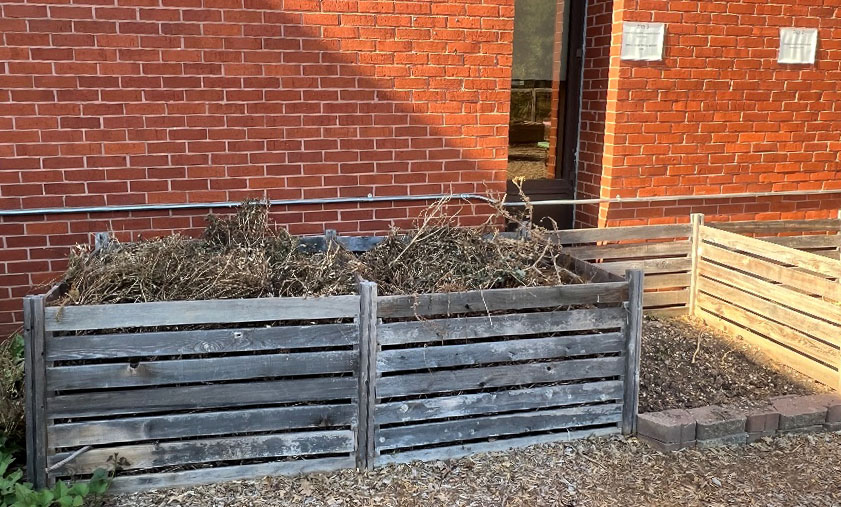
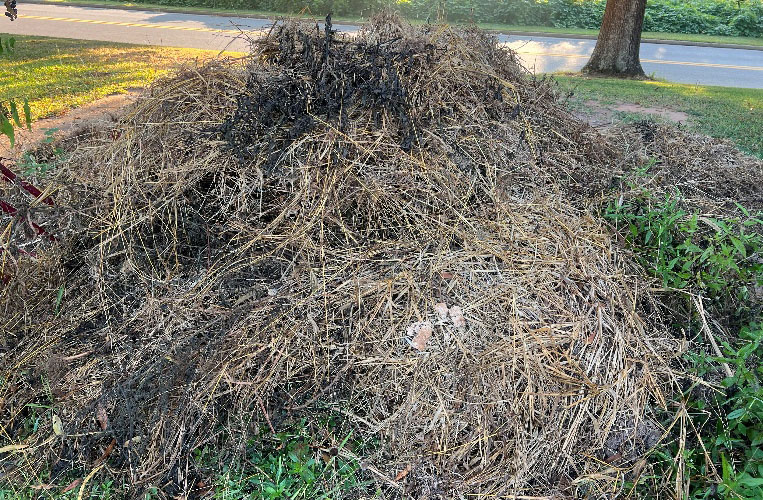
You can hot-compost using bins (Figure 3) or open piles (Figure 4). If using a pile, it’s essential to maintain a minimum volume of 27 cubic feet (3 ft wide, 3 ft deep, and 3 ft tall) to ensure the internal pile heat levels are sufficient to support effective decomposition (Table 2).
When using hot-composting methods, proper site selection is essential for ensuring food safety, easing maintenance, and minimizing runoff. Ideally, the composting site should be located downhill and as far away as possible from vegetable gardens or production areas to reduce the risk of contamination. Choose a location that is protected from flooding and surface water runoff, and that also remains accessible and workable year-round for managing the compost without interfering with other farm or landscape operations.
Additional considerations include placing the compost system in a shaded area to minimize moisture loss and locating the site near a water source, both of which help maintain adequate compost moisture levels—a key part of regular compost management.
Cold Composting
For some composters, cold composting may be the most practical option, as it typically requires less labor and management than hot composting. This method involves simply gathering leaves, crop residues, or other organic materials into a 3- to 4-cubic-foot pile or bin, adding water as needed, and allowing the materials to decompose naturally over time.
The main difference from hot composting is that cold composting does not require regular turning of the pile to supply oxygen and mix materials. Without this management, the pile is unlikely to reach the sustained high temperatures (131–170 °F) needed to rapidly kill pathogens and weed seeds. While turning and balancing the right mix of greens and browns can help a pile heat up, the minimal management of cold composting generally means it will not achieve hot compost conditions, and decomposition will be slower.
Decomposition in cold composting can take a year or longer, and because the pile does not reach the hot temperatures achieved in hot composting, weed seeds, pests, and pathogens may survive the process. The site location requires careful consideration, as the extended decomposition period of cold composting requires that a space that can remain undisturbed for long durations (see Table 2) without interfering with farm production or business operations.
Cold compost is a low-effort way to recycle organic matter and enrich soil, but to avoid foodborne illness, the end product should not be applied directly to edible crops unless it has aged for many months or gone through a hot phase. It can safely be used on ornamental beds, trees, and nonedible plants.
Composting With Worms
Worm composting, called vermicomposting, is a suitable alternative for composters with limited space, labor, or time for maintenance. This method relies on a specific species of earthworm, Eisenia fetida, to break down food scraps and other organic waste into nutrient-rich compost that improves soil structure and fertility (see Table 2).
A key advantage of vermicomposting is that it typically produces less odor than other composting methods. The system can be established in small-scale settings with limited space and is typically contained in a bin or tray, which helps minimize the attraction of insects and other vertebrate pests. Choosing a shaded area to prevent the worms from drying out and locating the system near a water source is necessary to help maintain proper moisture levels in the bin or tray system.
Summary and Key Takeaways
Composting offers growers, landscapers, and homeowners an effective way to manage organic waste while enhancing soil health, improving crop yields, and reducing environmental impacts such as landfill methane emissions. Successful composting relies on understanding key biological processes, including carbon-to-nitrogen ratios and the roles of oxygen, moisture, temperature, and particle size, all of which influence microbial activity and decomposition efficiency.
Before starting a composting program, it’s important to consider composting methods and the size and location that fit your goals and operation’s scale—whether it’s a small backyard pile or a large on-farm system. Key considerations include your composting objectives, the types and amount of organic waste you will generate, how you’ll manage the system, and whether you have an adequate, long-term space or location for your chosen method.
Different composting methods—hot, cold, and vermicomposting—can be selected based on factors such as the scale of your operation, site location, and compost management and maintenance practices. Choosing the right method is important to ensure efficient decomposition and should be aligned with your specific operational goals and compost uses. Choosing the appropriate method and site depends on the goals of the composter, available space, waste type and quantity, and adoptable composting management practices.
References
Cornell Waste Management Institute. (1996). Compost chemistry. Cornell Cooperative Extension. https://compost.css.cornell.edu/chemistry.html
McClintock, N. (2024, May 10). Compost production and use in sustainable farming systems (Publication No. AG-676-01). Center for Environmental Farming Systems, NC State Extension. https://content.ces.ncsu.edu/compost-production-and-use-in-sustainable-farming-systems
Natural Resources Conservation Service. (2010). Chapter 2: Composting (210–VI–NEH, Amend. 40). In National Engineering Handbook, Part 637: Environmental Engineering (pp. 10–15). U.S. Department of Agriculture. https://directives.nrcs.usda.gov/sites/default/files2/1720464003/Chapter%202%20-%20Composting.pdfBottom of Form
Rynk, R. (Ed.). (1992). On-farm composting handbook (Publication No. NRAES-54). Northeast Regional Agricultural Engineering Service, Cornell Cooperative Extension. https://campus.extension.org/pluginfile.php/48384/course/section/7167/NRAES%20FarmCompost%20manual%201992.pdf