
If vegetables are not harvested at the proper stage of maturity, physiological processes occur that permanently change their taste, appearance and quality. The texture, fiber and consistency of all vegetables are greatly affected by the stage of maturity at harvest, by post-harvest handling and by the time interval between harvesting and serving.
Some vegetables are more highly-perishable than others. Sweet corn and English peas are difficult to maintain in an acceptable fresh state for even a very short time, while other vegetables have a much longer shelf life.
Harvesting most vegetables when they are young and storing them properly will help extend their shelf life. In some cases, newer hybrid varieties have helped add shelf life to certain vegetables. Lowering the internal temperature also helps to slow both the respiration process and quality decline. This is one reason for harvesting vegetables early in the day before the heat from the sun has warmed them. After the harvest, most vegetables should be kept cool and out of direct sunlight until they are either processed or consumed.
While harvesting too soon may result in only a reduction in yield, harvesting too late can result in poor quality due to development of objectionable fiber and the conversion of sugars into starches. A late harvest can also cause plants to terminate, or stop producing as they complete their reproduction process. Fully-mature vegetables left on the plant also attract more disease and insect problems. The following table gives suggestions for determining the proper stage of maturity for harvesting many vegetables.
| Vegetable | Part Eaten | Too Early | Optimum Maturity | Too Late |
|---|---|---|---|---|
| Artichoke, Globe | Immature bloom | Small flower buds | When buds are 2″ to 4″ in diameter | Large buds with loose scales or bracts |
| Asparagus | Stem | Insufficient length | 6″ to 8″ long; no fiber | Excess woody fiber in the stem |
| Beans, Lima | Seed | Insufficient bean size | Bright green puffy pod; large seed | Yellow pods |
| Beans, Pole Green | Pod and seed | Insufficient size | Bean cavity full; seed ¼ grown | Large seed; fibrous pods |
| Beans, Snap Bush | Pod and seed | Insufficient size | Turgid pods; seeds just visible | Fibrous pods; large seed |
| Beets | Root and leaves | Insufficient size | Roots 2″ to 3″ in diameter | Pithy roots; strong taste |
| Broccoli | Immature bloom | Insufficient size | Bright green color; bloom still tightly closed | Loose head; some blooms beginning to show |
| Brussels Sprouts | Head | Insufficient size; hard to harvest | Bright green; tight head | Loose head; color changes to green-yellow |
| Cabbage | Head | Insufficient leaf cover | Heads firm; leaf tight | Loose leaf; heads cracked open |
| Cantaloupes | Fruit | Stem does not want to separate from fruit | Stem breaks away easily and cleanly when pulled | Yellow background color; soft rind |
| Carrots | Root | Insufficient size | ½” to ¾” at shoulder | Strong taste; oversweet |
| Cauliflower | Immature bloom | Head not developed | Compact head; fairly smooth | Curds open; separate |
| Celery | Stems | Stem too small | Plant stands 12″ to 15″ tall; medium-thick stem | Seed stalk formed; bitterness |
| Collards | Leaf | Insufficient leaf size | Bright green color; small midrib | Large midrib; fibrous |
| Corn, Sweet | Grain | Grain watery; small | Grain plump; liquid in milk stage | Grain starting to dent; liquid in dough stage |
| Cucumber | Fruit | Insufficient size | Dark green skin; soft seeds | Skin beginning to yellow; hard seeds |
| Eggplant | Fruit | Insufficient size | High glossy skin; side springs back when mashed | Brown seeds; side will not spring back when mashed |
| Lettuce, Head | Leaves | Head not fully formed | Fairly firm; good size | Heads very hard |
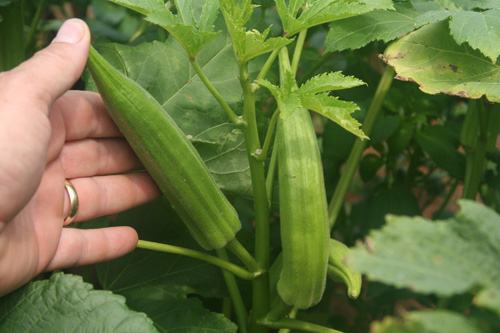
| Okra | Pod | Insufficient size | 2″ to 3″ long; still tender | Fiber development; tough pods |
| Onions, Dry | Bulb | Tops all green | Tops yellow; ¾ fallen over | All tops down; bulb rot started |
| Peas, English | Seed | Peas immature and too small to shell | Peas small to medium; sweet bright green | Yellow pods; large peas |
| Peas, Southern (green) | Seed and pod | Peas immature and too small to shell | Seeds fully developed but still soft; soft pods | Hard seeds; dry pods |
| Pepper, Pimiento | Pod | Insufficient size | Bright red and firm | Shriveled pod |
| Pepper, Red Bell | Pod | Chocolate-colored pods | Bright red and firm | Shriveled pod |
| Potato, Irish | Tuber | Insufficient size | When tops begin to die back | Damaged by freezing weather |
| Potato, Sweet | Root | Small size; immature | Most roots 2″ to 3″ in diameter | Early plantings get too large and crack; damaged by soil temperature below 50°F |
| Rhubarb | Stem | Small size; immature | Stem 8″ to 15″ long is best | Fleshy stem becomes fibrous |
| Soybeans | Seed | Seeds not developed | Thick pods; bright green | Dry pods; seed shatters out |
| Squash, Summer | Fruit | Insufficient size | Rind can be penetrated with thumbnail | Penetrating with thumbnail is difficult; large seed |
| Squash, Winter | Fruit | Soft rind | Rind difficult to penetrate with thumbnail | Damaged by frost |
| Tomatoes | Fruit | May be harvested in three stages: Mature green – tomato is firm and mature, color changes from green to light green, no pink color showing on blossom end. These tomatoes will store one to two weeks in the refrigerator. Pink – pink color about the size of a dime on the blossom end. At room temperature, these tomatoes will ripen in about three days. Ripe – tomato is full red but still firm. Should be used immediately. | ||
| Watermelon | Fruit | Green flesh; green stem is difficult to separate | Melon surface next to the ground turns from a light straw color to a richer yellow | Top surface has a dull look |
Acknowledgement is made to Willie O. Chance III and Darbie Granberry for authoring the original manuscript of this publication.