UGA College of Agricultural & Environmental Sciences Field Report
  • Stories
    Almanac

    Science in service of humanity and the environment

    Read our annual magazine here

    READ


    Dive into engaging stories that showcase our statewide, national and global impact.

    Check out our written stories here

    LOOK


    Browse curated photo galleries capturing the people, places and programs that bring CAES to life.

    Check out our photo galleries here

    WATCH


    Experience our stories through videos that highlight our people, projects and passions in action.

    Check out our video library here

    LISTEN


    Tune in to “Cultivating Curiosity,” our podcast featuring in-depth conversations with CAES experts.

    Check out our podcast here
  • Expert Resources

    Expert Resources


    Gardening
    Invasive species
    Food and food safety
    Ants, termites and other pests
    Pollinators
    Livestock
    Emergency preparedness
    Home safety and maintenance
    Health, family and finances
    Nutrition
    Water quality
    Lawn maintenance and landscaping
    Turfgrass
    View all topics

    What is an Expert Resource?


    We publish unbiased, research-backed expert advice to empower Georgians with practical, trustworthy information they can trust.

    These resources are written and reviewed by experts in the UGA College of Agricultural and Environmental Sciences and the UGA College of Family and Consumer Sciences.

    Learn how we produce science you can trust
  • Events
  • Contact
  • Read
  • Look
  • Watch
  • Listen
Subscribe
  • LinkedIn
  • Facebook
  • Instagram
  • Stories
    Almanac

    Science in service of humanity and the environment

    Read our annual magazine here

    READ


    Dive into engaging stories that showcase our statewide, national and global impact.

    Check out our written stories here

    LOOK


    Browse curated photo galleries capturing the people, places and programs that bring CAES to life.

    Check out our photo galleries here

    WATCH


    Experience our stories through videos that highlight our people, projects and passions in action.

    Check out our video library here

    LISTEN


    Tune in to “Cultivating Curiosity,” our podcast featuring in-depth conversations with CAES experts.

    Check out our podcast here
  • Expert Resources

    Expert Resources


    Gardening
    Invasive species
    Food and food safety
    Ants, termites and other pests
    Pollinators
    Livestock
    Emergency preparedness
    Home safety and maintenance
    Health, family and finances
    Nutrition
    Water quality
    Lawn maintenance and landscaping
    Turfgrass
    View all topics

    What is an Expert Resource?


    We publish unbiased, research-backed expert advice to empower Georgians with practical, trustworthy information they can trust.

    These resources are written and reviewed by experts in the UGA College of Agricultural and Environmental Sciences and the UGA College of Family and Consumer Sciences.

    Learn how we produce science you can trust
  • Events
  • Contact
  • Read
  • Look
  • Watch
  • Listen
Subscribe
  • LinkedIn
  • Facebook
  • Instagram
Subscribe
  • LinkedIn
  • Facebook
  • Instagram
  1. Home
  2. Stories
  3. Story Topics
  4. General Agriculture
  5. Agribusiness

Agribusiness

Use the Advanced Search
  • C 780

    Weights and Processed Yields of Fruits and Vegetables

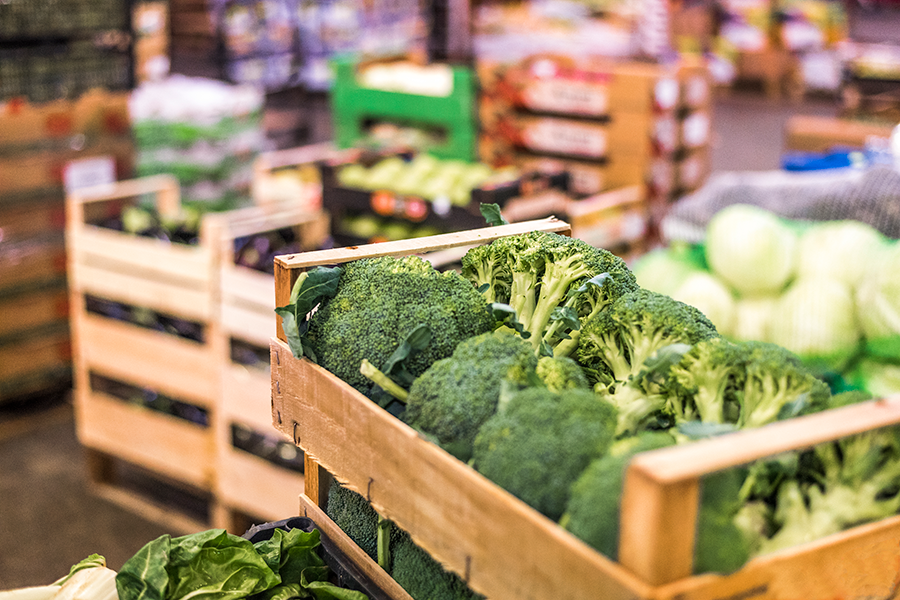
    Marketing fresh fruits and vegetables at farmers markets, roadside markets, and pick-your-own farms is an important and growing method of marketing. However, many of the containers used are not practical for consumers.

    Bob Westerfield and Timothy Coolong

    |

    Jan. 5, 2026
  • Income Tax Deduction on Timber and Landscape Trees Loss from Casualty

    C 1137

    Income Tax Deduction on Timber and Landscape Trees Loss from Casualty

    Linda Wang, National Timber Tax Specialist, USDA Forest Service

    Timber or landscape trees destroyed by the hurricane, fire, earthquake, ice, hail, tornado, and other storms are “casualty losses” that may allow the property owners to take a deduction on their federal income tax returns. The key for most cases is to figure out the “adjusted basis” of the timber. The “Adjusted Basis” of Timber Generally, the cost or the measure of your investment in the property you own is the property’s basis. The original basis is defined as follows: 1) for purchased timber property, it is the purchase price and related costs (such as legal fee and timber cruises); 2) for gifted timber property, it is the donor’s adjusted basis in most instances; 3) for inherited timber property, it is the fair market value (or alternative value if so elected) on the date of death (or alternative valuation date). The “adjusted basis” of a property is the original basis reduced or added by adjustments over the term of ownership (e.g., new purchase increases your timber basis while timber sale decreases your timber basis).

    Brent Peterson

    |

    Jan. 5, 2026
  • Tax Tips for Forest Landowners for the 2017 Tax Year

    C 1136

    Tax Tips for Forest Landowners for the 2017 Tax Year

    Linda Wang, National Timber Tax Specialist, Forest Service
    Specific Federal income tax laws and rules apply to timber-related income and expenses. The tax tips provided in this bulletin are intended to assist timber owners, foresters, or loggers and their tax preparers in filing their 2017 tax returns. This material is for informational purposes only and is not intended to provide tax, legal, or accounting advice. Please consult your own tax, legal, and accounting advisors before engaging in any transaction. The information is current as of September 30, 2017.

    Brent Peterson

    |

    Jan. 5, 2026
  • Bioenergy in the Southeast: Current and Past Policies Driving Markets

    C 1131

    Bioenergy in the Southeast: Current and Past Policies Driving Markets

    Helene Cser
    Extension Associate
    North Carolina State University
    Leslie Boby
    Extension Associate
    Southern Regional Extension Forestry

    Research and development on alternative sources of energy has been a priority for the United States since volatile energy prices in the 1970’s. This period of time, known as the “Energy Crisis,” occurred due to an oil embargo and limited global supply of oil. To combat these problems, Congress passed the Emergency Petroleum Act in 1973, the Energy Policy and Conservation Act in 1975, and created the Department of Energy in 1977. These congressional acts from more than 30 years ago were the beginnings of a national interest towards developing alternative energy sources. The outcome has been support for research and development of non-petroleum energy sources such as biomass, which is a renewable and carbon neutral source of energy used for heat, electricity and transportation fuels.

    Brent Peterson

    |

    Jan. 5, 2026
  • Georgia Farm Record Book

    B 722

    Georgia Farm Record Book

    This publication is intended to provide you with a useful aid in the business management of your farming operation. Spaces is provided for recording farm receipts and expenses, capital transactions, inventories, credit accounts, net worth statements, crop records, and individual labor records for Social Security purposes.

    Keith D. Kightlinger and Richard W. Schermerhorn

    |

    Jan. 5, 2026
  • Protecting Your Forest Asset: Managing Risks in Changing Times

    B 1495

    Protecting Your Forest Asset: Managing Risks in Changing Times

    Private forest owners control most of the southern forest resource and are critical to maintaining forest health in the South. Record droughts, rising temperatures, increased frequency and intensity of wildfires, insect and plant invasions, and more intense storm events all pose threats to the health of Southern forests. Scientists project that increases in temperature and changes in rainfall patterns will cause these disturbances to become more common, occurring with greater intensity or duration. This pamphlet reviews healthy forest strategies and approaches to decrease the risks associated with these disturbances on your forestland.

    Brent Peterson

    |

    Jan. 5, 2026
  • Economics of Farm Storage Buildings

    B 1173

    Economics of Farm Storage Buildings

    It is widely accepted that storing farm equipment under a shelter is better than storing it outside and that hay stored in a barn is better than hay stored in the field. But how can we determine just how much a farm storage building is worth? The answer is different for every individual operation, but there are some guidelines that will help you make an intelligent decision about whether or not you can afford a building (or afford not to have one).The following is a discussion of the costs and benefits of owning a building, along with some example calculations. In each example, you are given the opportunity to substitute your figures, which might more accurately reflect your local markets and conditions.

    John W. Worley and Levi A Russell

    |

    Jan. 5, 2026
  • C 1029

    Forest Farming and Forest Gardening: Growing Alternative Crops Under a Forest Canopy

    This publication describes forest farming (also known as forest gardening), which can be defined as cultivation of plants under a forest canopy. It includes suggestions for appropriate plants for cultivation in the Southeast.

    Holly Campbell

    |

    Oct. 6, 2025
  • B 1580

    Poinsettia Production

    Poinsettia is an important ornamental crop and holiday flower. This publication provides in-depth information on poinsettia production and helps growers with plant production planning and management. It also covers poinsettia history, economics, and details the management of growing media, irrigation, and pests.

    Shimat V. Joseph, Ping Yu, and Erich Schoeller

    |

    July 8, 2025
1 2
Next Page

About CAES

CAES Home

Overview

History

Administration

Jobs

Personnel Directory

Privacy Policy

Accessibility Policy

AI Guidelines

Affiliations

UGA Cooperative Extension

Tifton Campus

Griffin Campus

University of Georgia
  • Schools and Colleges
  • Directory
  • MyUGA
  • Employment Opportunities
  • Copyright and Trademarks
  • UGA Privacy Policy
  • Submit a Student Complaint
#UGA on
© University of Georgia, Athens, GA 30602
706‑542‑3000