Commercial Fertilizer Resources
-

This publication primarily focuses on rear discharge, twin spinner spreaders common for poultry litter application in the southeast.
|
-

Applicators used in granular applications should be calibrated to ensure uniformity and accuracy. An accurate and uniform application can reduce the quantity of an active ingredient required for a given degree of control.
|
-

This publication discusses the proper calibration methods sprayers and other liquid applicators.
|
-

Excessive fertilization does not equate to greater crop yields. Crop yields are optimized when nutrients are efficiently used, which requires fertilizer applications to be based on the right source, the right time, the right rate, and the right placement. These are referred as the four Rs of fertilizer management, whose purpose is to supply plants’ nutrient requirements, reduce production costs, and mitigate environmental impact.
|
-

Grower experiences have proven milled pine bark to be an excellent growing substrate for southern highbush blueberries. Although milled pine bark shares many characteristics with good blueberry soil, fundamental differences exist and need to be understood for rapid growth of young plants and high blueberry yields.
|
-

B 979
Orchard Sprayers
This publication contains comprehensive information about air blast and weed control sprayers for orchards.
|
-
B 1158
Sprayer Nozzle Selection
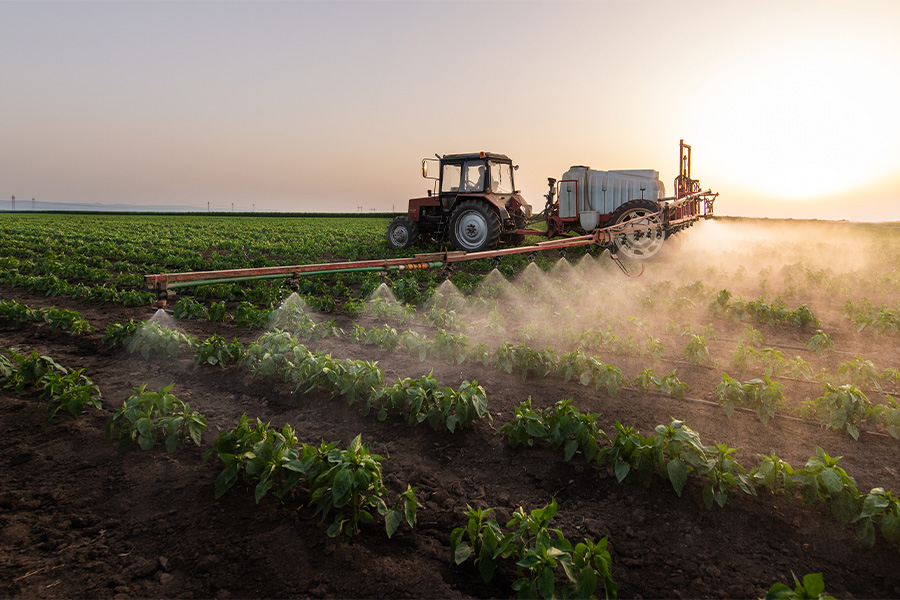
Nozzle selection is one of the most important decisions to be made related to pesticide applications. The type of nozzle affects not only the amount of spray applied to a particular area, but also the uniformity of the applied spray, the coverage obtained on the sprayed surfaces, and the amount of drift that can occur. Each nozzle type has specific characteristics and capabilities and is designed for use under certain application conditions. This publication describes the types that are commonly used for ground application of agricultural chemicals, including flat-fan, even flat-fan and cone nozzle.
|
-

This publication covers a procedure for applying wood ash as a lime substitute on agricultural lands. This method can be used by manufacturers and dealers who wish to supply wood ash or by landowners who wish to receive wood ash. If the practices in this publication are followed, there should be no adverse environmental effects or regulatory consequence from the land application of wood ash.
|
-
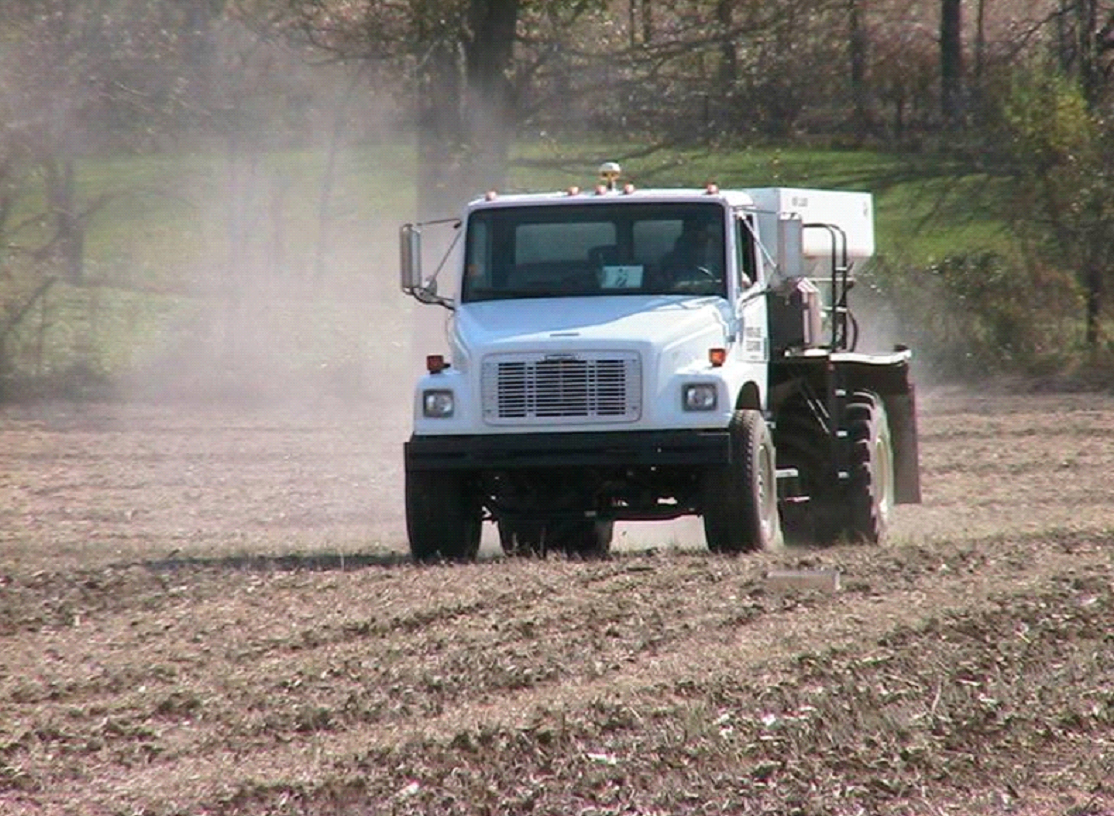
Lime mud is a by-product produced in pulp mills as part of the process that turns wood chips into pulp for paper. The pulp mill cooks wood chips with sodium hydroxide to extract the wood fiber used to make paper from the lignin that binds the wood together. During this process, sodium hydroxide is converted to sodium carbonate. The pulp mill than adds calcium oxide, also known as quicklime, to convert the sodium carbonate back to sodium hydroxide in order to use it again. In the process, calcium carbonate is formed.
|