Cotton Resources
-

In 2018, the Trump Administration proclaimed significant changes in tariff actions on a variety of U.S. imports, which led to retaliation by U.S. trading partners—including China and many U.S. allies. These actions led to a 2-year trade dispute between the United States and China. Global commercial ties were destabilized and the trade and investment transactions and flows were hampered by the resulting trade dispute. This paper documents the timeline of the U.S.–China trade dispute and the retaliation and responses from China to the Trump Administration’s tariffs. As cotton and its related products were caught in the middle of the trade dispute, this paper also provides discussions about the tariffs implemented by both countries on the cotton and textile sector.
|
-
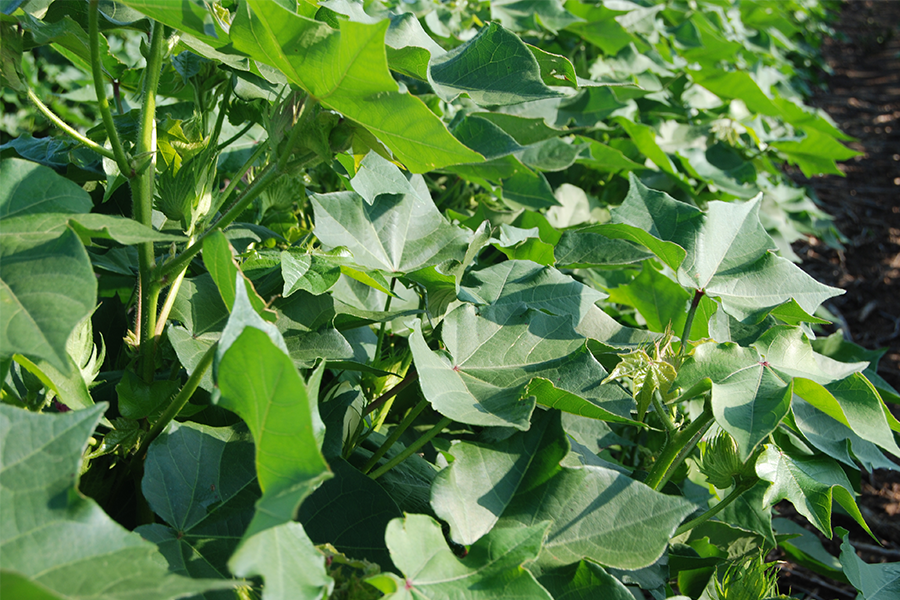
Cotton growth monitoring is vital to producing a healthy crop, making sure that the crop is growing on track, and that there are minimal stresses on the crop. Growth monitoring also can assist in making plant growth regulator (PGR) applications. PGR applications are complex, and many factors play into the decision of when to use them and at what rates. The goal of this publication is to discuss these factors and assist in determining when to make a PGR application.
|
-

Variety selection is one of the biggest decisions and investments cotton growers make each year. In 2010, the UGA Extension Cotton Agronomists implemented the UGA On-Farm Cotton Variety Evaluation Program to assist in this decision. Varieties are evaluated across a wide range of environments in the cotton producing regions of Georgia in cooperation with county agents and industry partners. The implementation of this program has made a tremendous impact on variety selection from year to year, and it will continue to have the same impact in the future.
|
-

Cotton byproducts offer a variety of feed ingredients that can lower the cost of beef cattle production. Cottonseed meal and whole cottonseed can be used in rations for any class of cattle. Gin trash and cottonseed hulls are low-energy feedstuffs that are used as a roughage source in high energy diets or as a partial energy replacement in mature cow diets. Cotton stalk residue can maintain a dry pregnant cow and will provide enough grazing for approximately 1 month if left standing or for three weeks if mowed prior to grazing. A reduction in fertility should not be a concern when recommended feeding rates are followed.
|
-

AP 124-1
2021 Georgia Cotton Production Guide
The 2021 cotton production guide provides an in-depth look at cotton production in Georgia and the southeastern United States. Issues discussed include economic outlook, fertility, weed management, insect management, disease and nematode management, irrigation decisions, precision ag technology, and general agronomics of the cotton crop (varieties, PGR applications, defoliation, etc.).
|
-

AP 124-2
2022 Georgia Cotton Production Guide
The cotton production guide provides an in-depth look at cotton production in Georgia and the southeastern United States. Issues discussed include economic outlook, fertility, weed management, insect management, disease and nematode management, irrigation decisions, precision ag technology, and general agronomics of the cotton crop (varieties, PGR applications, defoliation, etc.).
|
-

A farm’s return on investment is directly affected by the way water is applied to its crops. The wrong end-gun settings can result in overwatering or underwatering large portions of field acres. Clogged or partially clogged nozzles lead to obvious water shortages that can be visually observed or measured using yield monitors. Systems not properly checked and maintained can lead to significant losses in potential income. This irrigation reference guide will contain information provided by UGA Extension recommended irrigation scheduling rates for corn, cotton, peanuts and soybeans. The guide will also recognize specific center pivot application issues and how to correct them.
|
-

This publication presents the results of the 2019 statewide performance tests of peanut, cotton, and tobacco. The tests for various evaluations were conducted at several or all of the following locations: Bainbridge, Tifton, Plains and Midville in the Coastal Plain region and Athens in the Piedmont region.
|
-

This publication presents the results of the 2018 statewide performance tests of peanut, cotton, and tobacco. The tests for various evaluations were conducted at several or all of the following locations: Bainbridge, Tifton, Plains and Midville in the Coastal Plain region and Athens in the Piedmont region.
|