Fruit and Vegetable Production Resources
-

Price and expenditure elasticities at the retail level between 1960 and 1993 were estimated for 11 fresh fruits and 10 fresh vegetables by employing a composite demand system approach and using annual data. Most fresh fruits and vegetables were found to respond significantly to changes in their own prices but insignificantly
to changes in expenditures. The study partially incorporated the interdependent demand relationships between fresh fruits (vegetables) and all other commodities, yet effectively avoided the problems of insufficient degrees of freedom.|
-
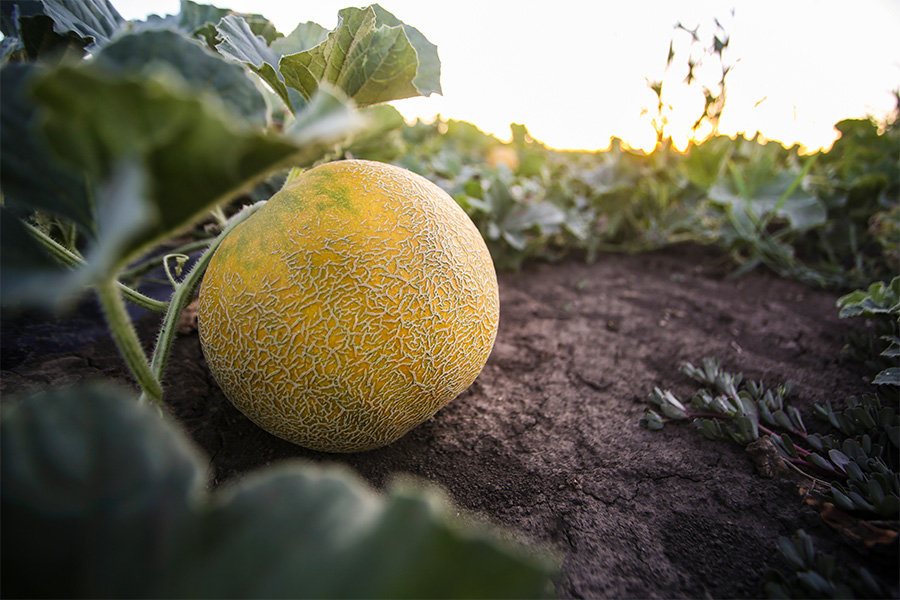
This publication was compiled to meet the needs of the growing cantaloupe industry in Georgia. It provides extensive information to help growers be successful in cantaloupe and specialty melon production.
|
-

AP 101-8
2016 Georgia Corn Performance Tests
In this research report, the results of the 2016 corn performance trials are presented. Short-season and mid-season hybrids were planted at Tifton, Plains, and Midville in the Coastal Plain region, at Griffin in the Piedmont region, at Calhoun in the Limestone Valley region, and at Blairsville in the Mountain region. Hybrids used for silage were evaluated at Tifton, Griffin, Calhoun, and Blairsville.
|
-

AP 101-7
2015 Georgia Corn Performance Tests
In this research report, the results of the 2015 corn performance trials are presented. Short-season and mid-season hybrids were planted at Tifton, Plains, and Midville in the Coastal Plain region, at Griffin in the Piedmont region, at Calhoun in the Limestone Valley region, and at Blairsville in the Mountain region. Hybrids used for silage were evaluated at Tifton, Griffin, Calhoun, and Blairsville.
|
-

This publication is a report of research and Cooperative Extension trials conducted on cole crops, beans and peas, sweet corn, cucurbits, peppers, and tomato at the University of Georgia College of Agricultural and Environmental Sciences.
|
-

This publication provides Southeast-specific information on approved National Organic Program (NOP) disease and pest management options for blueberry production and addresses the issues most commonly encountered under the unique growing conditions of the Southeast U.S. This publication is not intended to provide all details on organic blueberry production, although it does include the production methods that reduce the impact of plant disease and pest issues. Emphasis in an organic system should be on cultural practices that reduce disease and pest pressure rather than pesticide applications. NOP-approved pesticides are usually less efficacious than conventional products. The pesticide label is the law and supersedes any information on pesticide use contained in this guide. Because environmental conditions and grower application methods vary widely, suggested use does not imply that performance of the pesticide will always conform to the pest control standards indicated by experimental data.
|
-

This publication is a report of 2012-2014 onion research variety trials and Extension activity at the University of Georgia College of Agricultural and Environmental Sciences.
|
-

The southeastern peach industry is known for the high quality of its fresh peaches. As a new peach season approaches, it is time to ready the packinghouse for output of the best peach product.
|
-
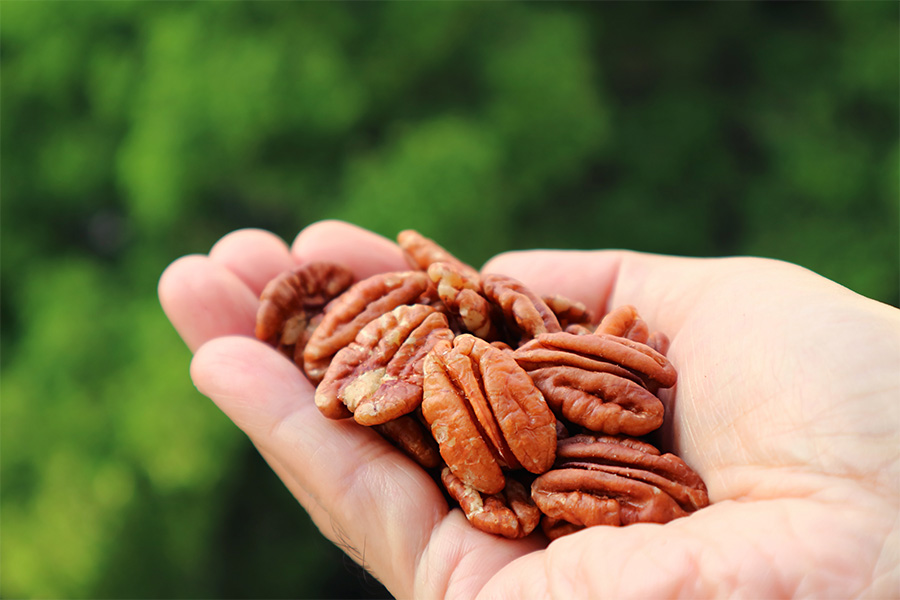
The most fundamental step in pecan production is the selection of varieties or cultivars to be planted in the orchard. Planting the wrong pecan variety can be a costly mistake, resulting in considerable expense. This publication includes descriptions and photos of pecan varieties suitable for planting in Georgia orchards.
|