Fruit and Vegetable Production Resources
-

This bulletin is intended to provide to provide both veteran and new growers an overview of commercially popular pruning strategies and a greater depth of understanding of the theory behind pruning method practice. Dormant pruning is an important vineyard management decision as it sets the crop level and canopy density before green tissues are present. Growers must take several considerations into account when choosing a pruning method, including vineyard design, cultivar, and labor force throughout the year. Some growers may choose to adopt several different pruning strategies to successfully manage their vineyard. Regardless of the pruning method, it is important to develop a plan that includes scheduling when and how each vineyard block will be pruned throughout the dormant season. Effective dormant pruning sets the stage for successful vineyard management throughout the forthcoming growing season.
|
-

This brief video shows examples of damage on vegetables caused by diamondback moths and pepper weevils. It discusses some of the challenges associated with the control of these pests in Georgia.
|
-

Whiteflies are a concern for Georgia’s vegetable industry, both as a direct pest and a vector for viruses. This brief video discusses at risk crops, shows plant damage, and describes what conditions increase the likelihood of whitefly damage.
|
-

Georgia pecan orchards are often found growing adjacent to fields of annual row crops, timber, and pastures. As a result, the tree canopies of these orchards are susceptible to injury from herbicide drift from the adjacent operations when herbicide applications are made under conditions unsuitable for spraying. Drift may also occur when cotton fields are sprayed with chemical defoliants in the fall. Pecan tree roots often extend into an adjacent row crop fields and can compete with the row crop for available soil, water, and nutrients. Under such conditions, trees may also absorb residual herbicides from the soil in these fields.
|
-

This bulletin contains guidelines to determine irrigation scheduling for vegetable production in Georgia. Irrigation scheduling varies with water management and growers may require different technologies to properly manage water application. This information is supplied to help irrigation managers schedule and operate irrigation systems to optimal capacity, applying water precisely to the crop for maximum effectiveness and high efficiency.
|
-
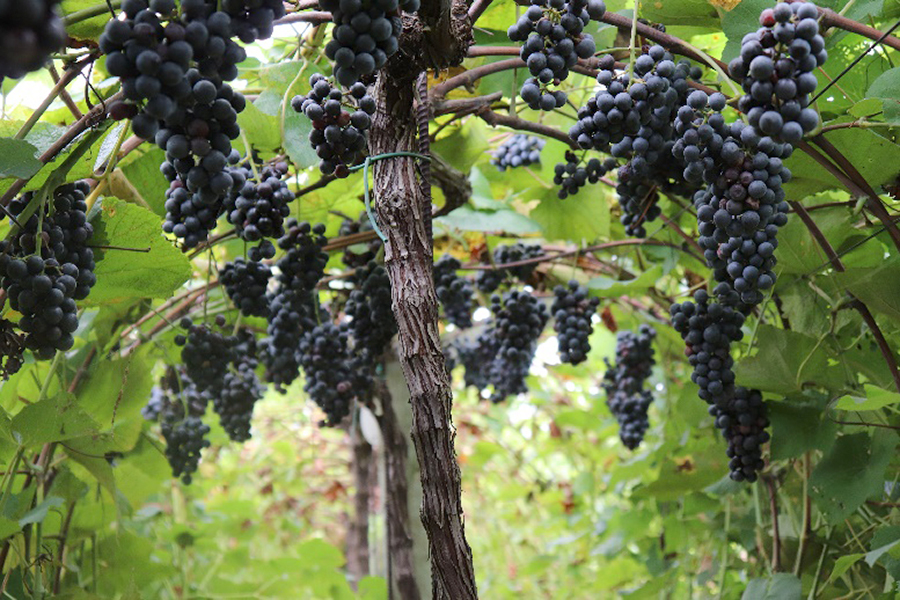
The “Vineyard Canopy Management Series” of Extension circulars reviews a number of canopy-management practices individually. Each circular advises how to effectively implement a canopy-management practice and why it is important to do so. The practices collectively known as “canopy management” aim to maximize canopy leaf exposure, maintain crop yield and quality, decrease disease, and improve vineyard health and sustainability. Though labor-intensive, canopy management should not be considered optional if the goal is annual production of high-quality grapes and wines.
|
-

Results from this study are preliminary, as only 2 years of data have been collected. Research over longer periods of time will be more revealing about how mechanical pruning will impact the perennial crop yield and health of the vineyard. Mechanical pruning is an option for dormant pruning ‘Carlos’ in situations where labor is unreliable and/or there is a low labor-to-acreage ratio which precludes the ability to finish pruning in the dormant period (December through March).
Concerns remain regarding the inaccuracy of mechanical pruning and the resultant amount of diseased and unproductive grapevine wood that remains in the canopy. It therefore may be a good practice to manually prune blocks of the vineyard on a recurring basis in order to reduce canopy congestion and the potential for disease buildup. Mechanical pruning may not be best practice in fresh-market muscadine cultivars, particularly those that produce bronze fruit that are less tolerant of rots and defects than purple fruit.
Mechanical pruning ‘Carlos’ and ‘Noble’ vineyards is worth consideration as these popular juice muscadine cultivars are vigorous and productive and may therefore sustain perennial health under high bud densities. Because of the preliminary nature of this report, it is recommended that mechanical, or “minimal” pruning, be trialed in vineyard blocks or sections before it is widely implemented with confidence.
|
-

This report provides research and extension results for trials conducted by the University of Georgia Vegetable Team and its collaborators in 2021. Contributing authors include county and regional faculty as well as specialists from UGA’s horticulture, plant pathology, crop and soil sciences, and entomology departments. All research has been supported by the Georgia Vegetable Commodity Commission.
|
-
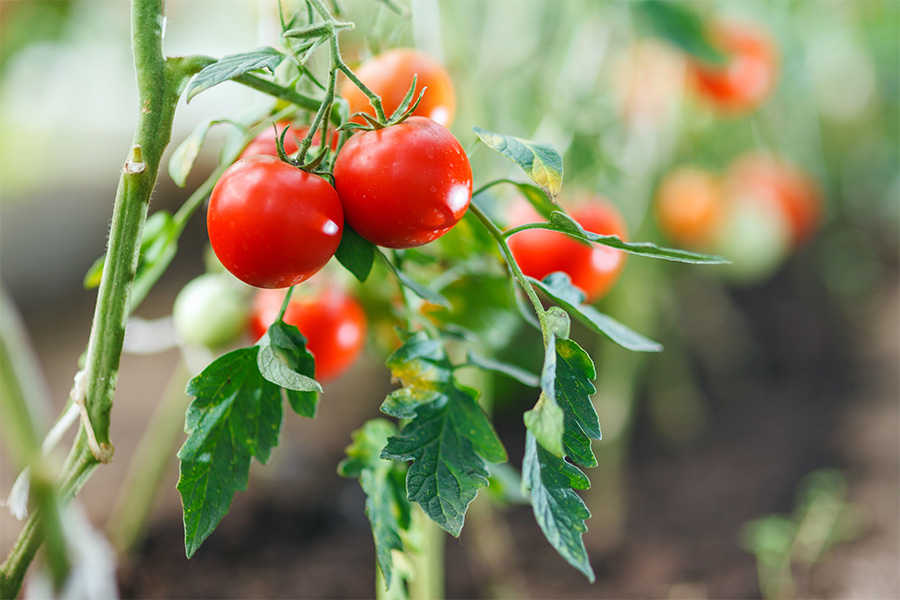
B 1271
Georgia Homegrown Tomatoes
This publication discusses the basics of growing tomatoes successfully, as well as avoiding common problems encountered by the home gardener.
|