Landscaping Resources
-

New ornamentals have long been considered the lifeblood of the green industry. This publication contains recommendations for best-performing new annuals based on research conducted at the Trial Gardens at the University of Georgia, showcasing the plants that were awarded the Classic City Award in 2016.
|
-

HORT Management is an allied program for estimating landscape management costs. This program assists the user in estimating labor, material and equipment costs on a particular job, a break-even price, and bid price on a job. Industry average data and time/task data is used throughout the program, such as the time it takes to mow 1,000 sq. ft. with a certain size mower and equipment cost per hour of operation. The user is encouraged to modify and tailor the program with his own data and costs. For more information, see https://www.hort.uga.edu/extension/programs/hortmanage.html
|
-

A regular fertilization program is important to maintain healthy, attractive turf and should include applying the correct analysis of fertilizer, using the correct amount, and fertilizing at the proper time. Turfgrasses require a number of nutrients for growth. Three of these—carbon, hydrogen, and oxygen—are rarely lacking because grasses get these elements from carbon dioxide in the atmosphere and water from the soil. Understanding fertilizer terminology and the different types of nitrogen sources is important when establishing a lawn management plant. Nontraditional or “organic” fertilizers are also an option.
|
-
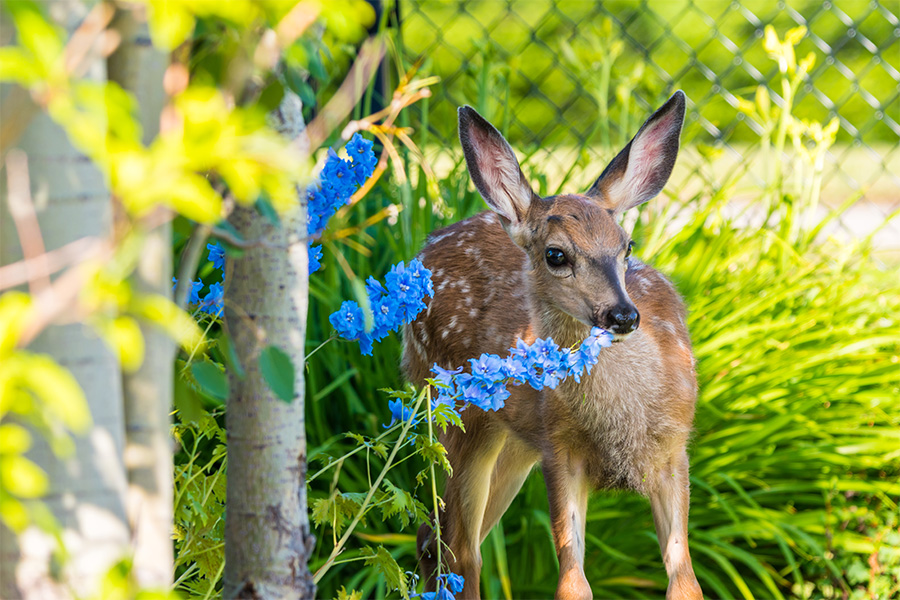
This resource lists several varieties of plants for your landscape that deer prefer to eat less.
|
-

B 1031
Shade and Street Tree Care
With proper care, trees can be valuable commodities around our homes, communities and urban landscapes. Providing care requires understanding tree biology, or how and why trees function. Trees constantly interact with the environment, including changes in soil, light, temperature, moisture, competitors and pests. Humans can produce additional stress by altering environments, but with proper care and maintenance trees can survive and thrive in your landscape.
|
-

With recent droughts and increased emphasis on water conservation, rainwater harvesting (RWH) has become an important alternative source for outdoor irrigation. RWH is the collection of runoff from roofs during a rainfall event. The water is conveyed through a gutter system, filtered and stored in a tank for later use. In Georgia, non-potable harvested rainwater can be an alternative water supply for uses such as washing vehicles, landscape irrigation, livestock and wildlife watering, cooling towers and toilet flushing.
|
-

B 1364
Chainsaw Safety Tips
This publication discusses tips for purchasing the correct chainsaw for your needs and how to use it safely.
|
-

In Georgia, irrigation supplements rainfall and most years, even in summer, irrigation isn’t needed every day. With a little careful observation, you can learn to determine your landscape plants’ water needs.
|
-
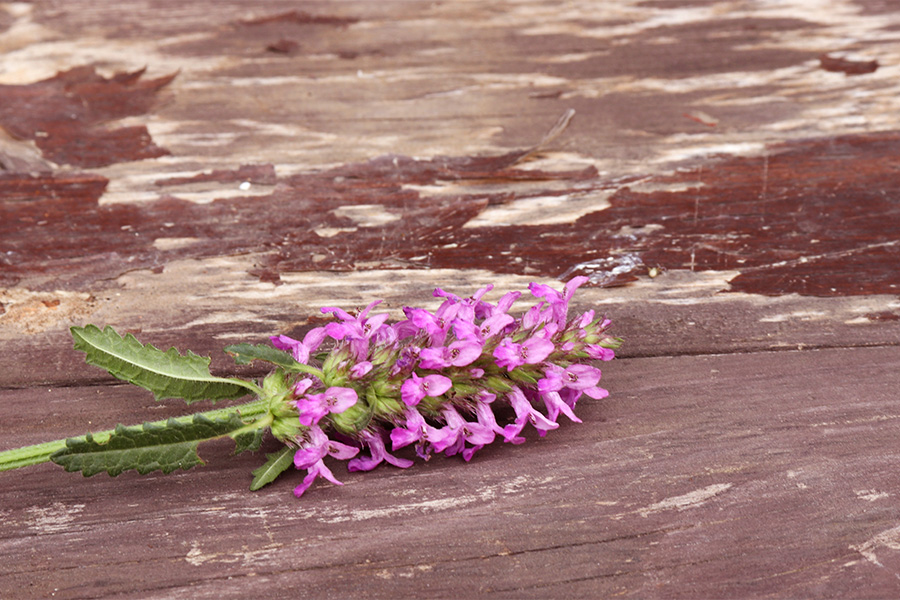
Florida betony is a “winter” perennial and has a square stem with opposite leaves. Florida betony (also called rattlesnake weed and hedge nettle) is a problem weed in both turfgrasses and ornamentals.
|